
Celestron NexStar 8SE vs Sky-Watcher 200P Dobsonian: Which 8-Inch Wins in 2026?
Telescope Advisor Logo Telescope Advisor
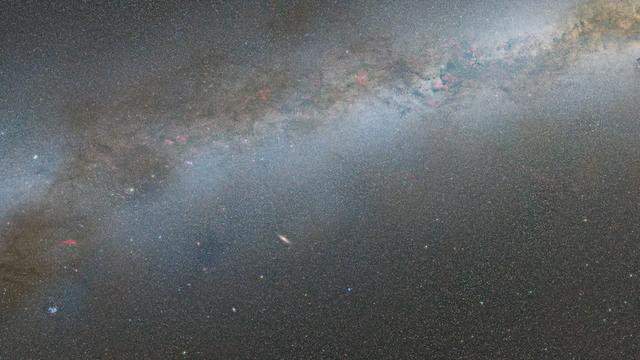
Andromeda Galaxy through an 8-inch telescope showing why aperture matters

Telescope Comparisons • 2026

NexStar 8SE vs Sky-Watcher 200P: Which 8-Inch Wins?

Both deliver 8 inches of aperture. One has GoTo tracking and a compact Schmidt-Cassegrain design; the other offers pure Dobsonian value, a faster focal ratio, and more of your budget going to the optics. The right choice depends on your sky, your patience, and what you most want to observe.

Both 8-inch

Aperture

~$1,500

NexStar 8SE

~$600

Classic 200P

~$900

Price Difference

By Telescope Advisor Editorial Team Published: Updated: Editorial Standards

Quick Answer: Which One Should You Buy?

Choose the Celestron NexStar 8SE if you want GoTo tracking, one-touch object finding, and high-magnification planetary viewing in a compact package. Its f/10 focal ratio delivers high native magnification for Saturn and Jupiter without additional eyepieces, and its 40,000-object database finds targets from any sky. The trade-off: roughly $900 more expensive and requires power.

Choose the Sky-Watcher Classic 200P Dobsonian if you want maximum deep-sky performance per dollar. Its f/5.9 focal ratio produces wide, bright fields ideal for galaxies and nebulae. The Dobsonian mount is simpler, faster to set up, and more stable at low to medium magnifications. The trade-off: no tracking, no GoTo, and a larger footprint.

Both scopes share identical 203mm (8-inch) apertures, so raw light-gathering power is equal. The real differences lie in how that light is delivered to your eye: the NexStar through a longer, narrower field optimized for planets; the 200P through a wider, brighter field optimized for deep-sky.

At a Glance: Both Telescopes

GoTo Tracking + Compact
Celestron NexStar 8SE Schmidt-Cassegrain GoTo telescope

Celestron NexStar 8SE

8-inch Schmidt-Cassegrain with 40,000+ object GoTo database, motorized tracking, and compact OTA. Best for planetary detail and city observing.

Best Value — Most Aperture Per Dollar
Sky-Watcher Classic 200P 8-inch Dobsonian telescope

Sky-Watcher Classic 200P

8-inch Newtonian on a manual Dobsonian mount. Zero electronics, 5-minute setup, and wide f/5.9 fields ideal for galaxies and nebulae.

Technical Comparison: Side by Side

SpecificationNexStar 8SEClassic 200PAdvantage
Optical designSchmidt-Cassegrain (folded light path)Newtonian reflector (straight light path)8SE: compact. 200P: fewer optical surfaces.
Focal length2032mm, f/101200mm, f/5.98SE: high native mag. 200P: wide bright fields.
Mount typeSingle-arm GoTo (motorized, 40K+ objects)Dobsonian (manual rocker box)8SE: auto find and track. 200P: zero setup time.
Weight (OTA alone)~12 lbs~26 lbs8SE: much easier to carry and transport.
Total weight~33 lbs (with mount and tripod)~41 lbs (tube plus base)8SE: lighter overall.
Setup time~10 minutes plus alignment routine~5 minutes, no alignment needed200P: grab and go.
Object findingAutomated with 40,000-object databaseManual star-hopping with charts8SE: decisive edge.
Power neededYes (AC adapter or 8xAA batteries)No power required200P: always ready.
Planets at high powerExcellent (tracking holds view steady)Very good (needs manual nudging every 30 seconds)8SE: tracking wins for high-mag study.
Deep-sky wide-fieldGood (long focal length limits field)Excellent (wide bright fields at f/5.9)200P: wide-field wins.
Cool-down time30 to 45 minutes (closed tube)15 to 25 minutes (open tube)200P: reaches stability faster.
CollimationRarely needed (sealed OTA)Check before each session8SE: less maintenance required.

When the NexStar 8SE Is the Right Choice

The NexStar 8SE excels in situations where GoTo tracking transforms the observing experience from frustrating to enjoyable. If you observe from a light-polluted city where star-hopping is difficult because only the brightest stars are visible, the GoTo database becomes a practical necessity. The scope finds M13, M57, or Saturn automatically even when you cannot see the star patterns needed for manual navigation.

Planetary observers gain a significant advantage from tracking. At 200x magnification, the Earth's rotation moves Saturn out of the eyepiece field in about 30 seconds. Without tracking, you must constantly nudge the Dobsonian. With the 8SE, the mount tracks smoothly, allowing you to study ring detail uninterrupted for minutes. The f/10 focal ratio also gives high native magnification with comfortable eyepieces: a 10mm eyepiece produces 203x in the NexStar versus only 120x in the 200P without a Barlow.

The sealed Schmidt-Cassegrain optical tube means the 8SE almost never needs collimation. If you frequently transport your scope in a car or break down your setup after each session, this saves significant time over a Newtonian that needs periodic alignment checks. The compact OTA fits into a padded case far more easily than the 200P's long tube. For observers with limited storage space or those who travel to dark sites, the 8SE's packability is a meaningful, real-world advantage.

When the Classic 200P Is the Right Choice

The Classic 200P wins decisively on value. At roughly $600, you get the same 8-inch aperture as the $1,500 NexStar. That $900 difference buys a full set of quality eyepieces, a collimation tool, a star atlas, and fuel for multiple dark-sky road trips. For a visual observer on a budget, the math is compelling: the extra money cannot buy more aperture at this price point, but it can buy accessories that tangibly improve every session.

Deep-sky observers benefit from the 200P's f/5.9 focal ratio, which produces a wider true field of view. The Andromeda Galaxy (M31), the Pleiades, and the Orion Nebula fill the eyepiece naturally without requiring expensive wide-field eyepieces. At f/10, the 8SE struggles to achieve the same fields: you would need longer focal-length eyepieces that narrow the exit pupil and dim extended objects slightly at equivalent magnification.

The Dobsonian mount requires no power, no alignment, and no electronics. You carry the base outside, drop the tube in, and observe. If a cloud bank rolls through, you simply wait it out. If you have only 20 minutes, you spend all 20 looking through the eyepiece rather than running alignment routines. For spontaneous, grab-and-go observing where you want the most aperture in the shortest time, nothing competes with a Dobsonian at this price.

The open tube design cools significantly faster than the sealed SCT. On a cold autumn night, the 200P reaches thermal equilibrium in 15 to 20 minutes. The 8SE needs 30 to 45 minutes before tube currents settle. If you observe in dropping temperatures or on short notice, the 200P delivers sharp views faster. For owners who observe from a backyard deck where the scope lives near ambient temperature, this difference is less important, but for anyone who stores their scope indoors and observes outside, it matters.

What Each Scope Shows on a Typical Night

TargetNexStar 8SE ViewClassic 200P View
SaturnCassini Division crisp at 200x. Tracking holds view steady for extended study.Same ring detail. Manual nudging needed every 30 seconds at 200x.
JupiterBelts, moons, GRS visible at 180x. Tracking enables sketching.Same detail visible. Push-to on Dobsonian becomes natural with practice.
Orion Nebula (M42)Bright core well framed. Trapezium stars sharp. Wings tight but visible.Wider field shows more surrounding nebulosity. Trapezium equally sharp.
Andromeda Galaxy (M31)Core and M32 fit in view. Milky haze extends across field.Wider field captures more of the disk. M32 and M110 in same field.
Globular Cluster (M13)Well-resolved core at 150x. Tracking holds cluster steady.Equally resolved. Wider field shows cluster in surrounding star context.

Why the Optical Design Matters More Than the Spec Sheet

The fundamental difference between these two scopes is not aperture — they share the same 203mm of light gathering. It is the optical architecture and what it means for your observing. The NexStar 8SE uses a Schmidt-Cassegrain design: the light enters the front corrector plate, bounces off a spherical primary mirror at the back, reflects forward to a convex secondary mirror, and then exits through a hole in the primary. This folded path gives the 8SE a 2032mm focal length in a tube only 430mm long. The result is a compact instrument with very high native magnification and a narrow field of view.

The Classic 200P uses a Newtonian design: light enters the top of the open tube, strikes a parabolic primary mirror at the bottom, reflects up to a flat secondary mirror near the top, and exits through the side of the tube. The light path travels the full 1200mm focal length in a straight line. The result is a longer tube with a faster f/5.9 focal ratio, wider fields of view, and brighter images of extended objects like nebulae and galaxies at equivalent magnification.

Neither design is objectively better — each optimizes for a different observing style. The SCT trades field of view for compactness and high native magnification, which benefits planetary and lunar observing. The Newtonian trades compactness and low maintenance for wide views and brighter extended-object images, which benefits deep-sky observing. Understanding this trade-off is the key to choosing correctly between these two instruments.

The SCT also has a third optical element (the corrector plate) which adds two air-to-glass surfaces that slightly reduce light transmission compared to the Newtonian's two-mirror system. In practice, the difference is small — perhaps 2 to 4 percent — and is not visually noticeable. What is noticeable is that the SCT's secondary mirror is larger (about 34 percent central obstruction versus about 25 percent for the 200P), which reduces contrast slightly on fine planetary detail. Experienced planetary observers sometimes describe the 200P's image as slightly snappier on planets, while the 8SE compensates with tracking stability that lets you linger on fine features. Additionally, Newtonian reflectors exhibit coma, an off-axis aberration that elongates stars near the edge of the field, which is absent from the SCT's inherently well-corrected design. This means the 8SE produces sharp stars across its entire narrower field, while the 200P delivers a wider field but with progressively distorted stars toward the edges unless a coma corrector is used.

Real-World Setup, Storage, and Daily Use

The practical experience of owning each scope matters at least as much as the optical differences. The NexStar 8SE's OTA is remarkably compact for an 8-inch instrument: short enough to fit into a padded airline carry-on bag, light enough at 12 pounds to carry one-handed down a flight of stairs. The mount and tripod add about 21 pounds and require a power source, but the modular design means you can carry the OTA, mount, and tripod as three separate manageable pieces. Setup involves leveling the tripod, attaching the mount, sliding the OTA onto the dovetail, and running a two-star alignment that takes about five minutes once you know the routine.

The Classic 200P is physically larger. The tube is about 1.2 meters long — roughly the height of a kitchen counter — and weighs 26 pounds. The particleboard Dobsonian base adds another 15 pounds. Carrying both requires two trips or a strong single carry. Setup, however, is zero steps: place the base on the ground, drop the tube into the rocker box, tighten the tension handles, and you are observing. No alignment, no power, no software. This simplicity is the Dobsonian's secret weapon for frequent observing. The barrier to setting up is so low that you will observe more often, and more observing time translates directly to more detail seen and more skill developed.

Storage considerations may tip the decision more than optical differences. The 8SE stores in a closet or corner easily. Its tripod folds, the OTA fits in a padded case, and the mount stacks on top. The 200P requires dedicated floor or wall space. Many 200P owners store the tube vertically in a corner and the base nearby. Neither scope is a problem in a typical apartment, but the 8SE is significantly more friendly to shared living spaces, stairs, and car transport.

Temperature acclimation is another practical differentiator. The SCT's closed tube and thick corrector plate hold heat and take 30 to 45 minutes to reach ambient temperature on a typical evening. During this time the image may appear soft due to tube currents. The Newtonian's open tube exchanges heat rapidly with the outside air and stabilizes in 15 to 25 minutes. If you observe on short notice or in rapidly cooling conditions, the 200P reaches sharp planetary views faster. Some SCT owners address this by storing the scope in an unheated garage or using active cooling fans, but these add cost and complexity.

Verdict and Decision Framework

There is no universal winner between these two telescopes. Each excels in a different observing context, and the right choice depends on how you intend to observe and where you will use it. The following decision table maps common observer profiles to the better instrument.

If You Are...Better ChoiceWhy
A planetary observerNexStar 8SETracking at high magnification and f/10 focal ratio for native high power.
A deep-sky observerClassic 200Pf/5.9 wide fields, brighter views of faint extended objects.
On a $600-800 budgetClassic 200PSame aperture for 60% less money. Spend the savings on eyepieces.
Observing from light-polluted cityNexStar 8SEGoTo finds targets you cannot star-hop to when few stars are visible.
Observing from dark rural skiesClassic 200PStar-hopping works well. Wider fields match dark-sky observing better.
Frequently traveling to dark sitesNexStar 8SECompact OTA fits in a padded case. Lighter overall to transport.
Must avoid power and electronicsClassic 200PNo batteries, no alignment, no software updates. Purely analog.
Want to sketch or photographNexStar 8SETracking keeps target in field during extended observation or capture.

A fair summary is this: the NexStar 8SE is the better 8-inch scope for convenience, tracking, and planetary observing. The Classic 200P is the better 8-inch scope for deep-sky value, wide-field observing, and budget-conscious buyers. Both deliver excellent optical performance. The difference is not in what you see but in how you get there and what you pay to do it.

For a first-time telescope buyer upgrading from a small refractor, the Classic 200P provides the most dramatic improvement at the lowest cost. For an observer who already owns a manual scope and wants the convenience of GoTo, the NexStar 8SE is a natural step up. Neither choice is wrong, and many experienced observers eventually own both a Dobsonian for wide-field deep-sky and an SCT for high-magnification planetary work.

Long-Term Ownership: Durability, Resale, and Upgrade Paths

Understanding what happens after the first year helps you choose with confidence. The NexStar 8SE's electronic mount is its weakest link: the single-arm motor, hand controller, and power connector are vulnerable to wear and moisture. If the electronics fail, the scope becomes essentially unusable. Replacement parts are available but expensive. That said, properly cared-for 8SEs routinely operate for a decade or more, and the sealed optical tube is extremely durable.

The Classic 200P has almost nothing that can break. The Dobsonian base is particleboard with Teflon bearings that resist moisture but should not be left in the rain. The mirrors may need recoating after 10 to 15 years, a service costing $100 to $200. The focuser and finder are the only moving parts and both are easily replaceable with standard aftermarket components. There is no electronics to fail, no firmware to update, and no batteries to die mid-session.

Resale value favors the 8SE slightly. GoTo scopes hold their value because the technology ages slowly. A five-year-old 8SE typically sells for 60 to 70 percent of its new price. The 200P depreciates more because used Dobsonians are abundant, but its lower initial cost means the absolute dollar loss is similar or smaller.

Upgrade paths differ. The 8SE's OTA can be moved to a heavier-duty equatorial mount for astrophotography, giving it growth potential as an imaging instrument. The 200P's tube can also be equatorial-mounted, but its fast f/5.9 ratio and bulky size make it less practical for imaging than the compact SCT. For visual observers who plan to stay visual, neither scope needs upgrading — both are lifetime instruments at their respective price points.

Frequently Asked Questions

Which scope is better for a beginner?
The Classic 200P is better for beginners who want to learn the sky through star-hopping. The NexStar 8SE is better for beginners who want the fastest path to seeing targets without learning the night sky, especially under light-polluted conditions.
Is the extra $900 for the NexStar 8SE worth it?
If you observe in a light-polluted city or value tracking at high magnification, yes. If you observe under dark skies and prefer spending your budget on eyepieces and accessories, the Classic 200P is the better value.
Can the 200P be used for astrophotography?
Not easily on a Dobsonian mount. The OTA can be moved to an equatorial mount, but its fast f/5.9 Newtonian design is better suited to wide-field visual observing. The 8SE's compact SCT OTA is more practical for mounting on an equatorial platform.
How long does each scope last?
Both can last 10 to 20 years or more with proper care. The 8SE's electronics are the most likely failure point. The 200P's mirrors may need recoating after 10 to 15 years. Both are repairable long-term instruments.