

Celestron StarSense Explorer DX Review (2026): Is It Better Than GoTo for Beginners?
Telescope Advisor Logo Telescope Advisor
Night sky background used for smartphone-guided telescope review

Telescope Review - 2026

Celestron StarSense Explorer DX Review: Better Than GoTo for First-Time Buyers?

StarSense Explorer telescopes promise easier nights by replacing traditional alignment with phone-guided plate solving. This review focuses on practical setup friction, object-finding reliability, and who should skip this category.

8.6/10

Our score

App-Guided

Main edge

No Motors

Push-to system

Beginner+

Best fit

By Telescope Advisor Editorial Team Published: Updated: Editorial Standards

Quick Verdict

StarSense Explorer is one of the best beginner workflows if your biggest problem is finding targets, not tracking them. The app-guided pointing model removes the classic early-stage frustration of "I cannot find anything."

The tradeoff is that this is not motorized GoTo. You still push manually and re-center at higher power. For many first-year observers that is a fair exchange for lower complexity and lower cost.
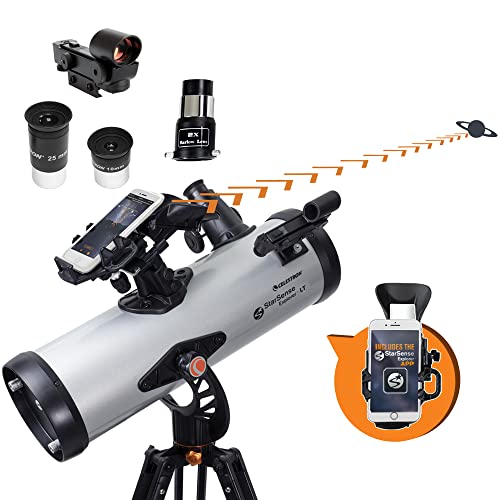
How StarSense Explorer Actually Works

StarSense Explorer is a smartphone-assisted push-to system. Your phone camera plate-solves the sky, then the app gives directional arrows so you move the telescope manually until the target is centered.

1) Dock + Calibrate

Mount phone once and perform quick calibration.

2) Pick Target

Select object in app catalog and follow arrows.

3) Push to Center

You push manually; there is no motorized slew.

Real-World Nightly Workflow

For most beginners, StarSense reduces failed sessions dramatically. You spend less time guessing star hops and more time observing known targets in the first 30 minutes.

The weak point appears at high magnification where manual re-centering becomes frequent. If long steady tracking is your top priority, a true GoTo mount still wins.

Who Should Buy StarSense Explorer

  • Beginners who struggle with object finding and want faster early wins.
  • Families and casual observers with short weeknight sessions.
  • Buyers who want app-guided targeting but do not need motor tracking.

Skip this category if you already know sky navigation well and care more about aperture-per-dollar or motorized tracking than app convenience.

Pros and Cons

Pros

  • Excellent beginner object-finding success rate.
  • No alignment ritual like many traditional GoTo workflows.
  • Lower complexity than motorized mounts.

Cons

  • No tracking: manual re-centering still required.
  • Phone compatibility and battery discipline matter.
  • App experience quality depends on mounting and calibration care.

Best Alternatives by Budget

Editor's Pick - Best App-Guided Starter Value
Celestron StarSense Explorer LT 114AZ telescope

Celestron StarSense Explorer LT 114AZ

Closest practical alternative when you want the StarSense guided workflow with lower total cost.

Sky-Watcher Heritage 130P telescope

Sky-Watcher Heritage 130P (manual value alternative)

If you can learn basic manual navigation, this category usually gives stronger aperture value per dollar.

View on Amazon -
Celestron NexStar 4SE telescope

Celestron NexStar 4SE (motorized GoTo alternative)

Choose this if tracking and motorized slewing are more important than low-friction app-guided setup.

View on Amazon -

FAQ: StarSense Explorer DX

Is StarSense Explorer a true GoTo telescope?

No. It is app-guided push-to. You move the telescope manually; there are no motors.

Can beginners use it on night one?

Yes. After initial calibration, most beginners find targets faster than with manual star-hopping alone.

What is the biggest limitation?

Lack of tracking at high magnification. Objects drift and must be re-centered manually.

Related Guides