Telescope Advisor Logo Telescope Advisor
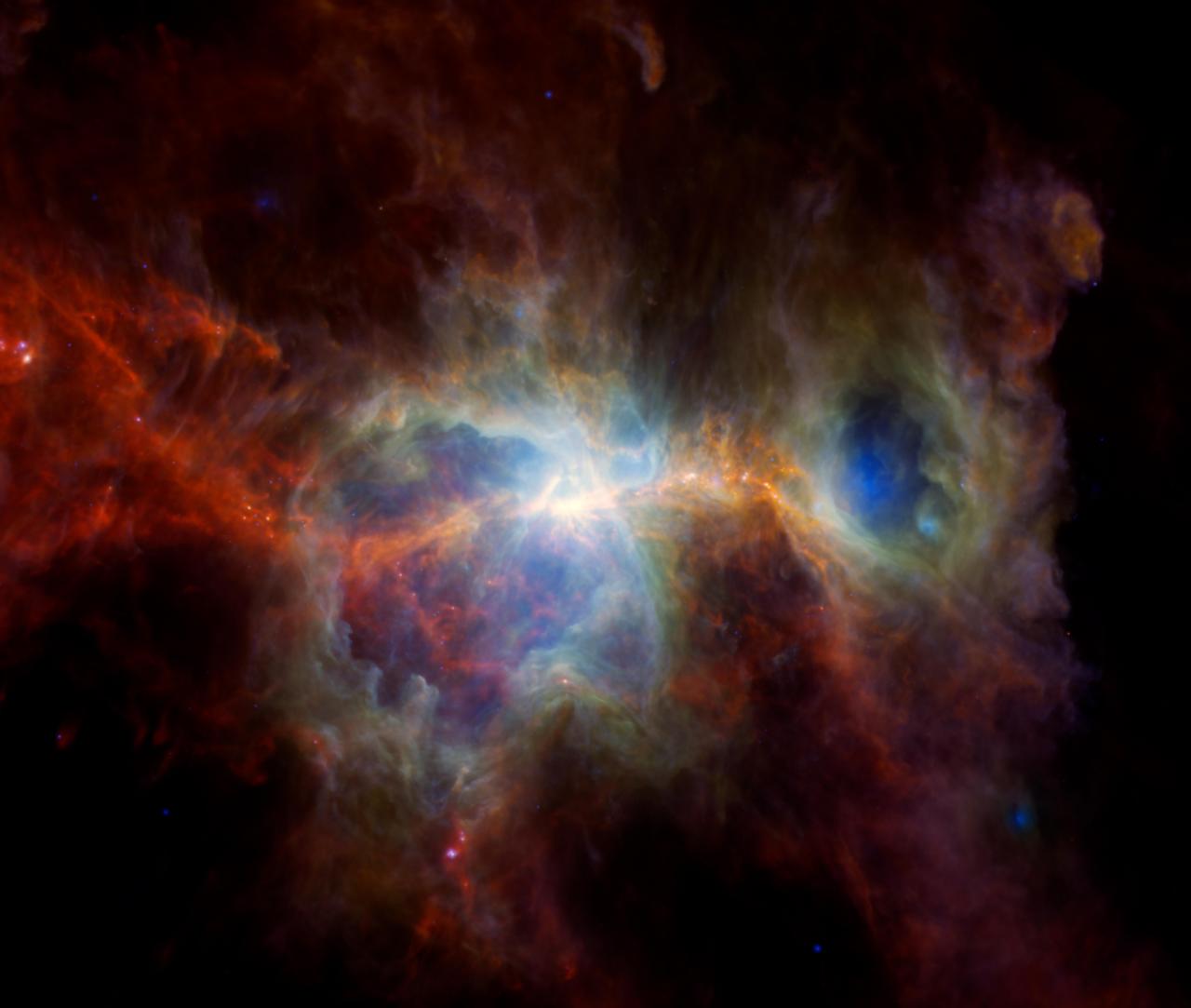
The Orion Nebula captured by Hubble — a Celestron Travel Scope 70 offers a portable way to explore the night sky

Telescope Review · Celestron Travel Scope

Celestron Travel Scope 70 Review: Portable Refractor Tested

The Celestron Travel Scope 70 promises a complete portable telescope kit in a single box — a 70mm refractor, a lightweight tripod, a backpack, and all the accessories you need to start observing. It is one of the fastest-growing searches in Celestron's lineup. We tested it on the Moon, Jupiter, and deep-sky targets to see whether it delivers on its promise of grab-and-go astronomy.

Aperture70mm refractor
Focal length400mm (f/5.7)
MountPanhandle alt-az
IncludesBackpack, tripod, eyepieces
By Elena Reyes Published: Updated: Reviewed & approved by Juhi Sahni, Senior Editor Editorial Standards

Quick Verdict: A Genuinely Portable Starter Scope

The Travel Scope 70 is the most portable complete telescope kit we have tested. The entire setup — telescope tube, tripod, two eyepieces, finderscope, diagonal, and tripod accessory tray — fits into the included backpack. From unboxing to first observation takes under five minutes. The optical tube at 70mm aperture delivers respectable views of the Moon, Jupiter's moons, and the brightest deep-sky objects. However, the tripod is wobbly at high magnification, the stock 20mm and 10mm eyepieces are basic, and the 70mm aperture limits what you can see on dim targets.


Celestron Travel Scope 70 telescope — a complete portable refractor kit with backpack

Celestron Travel Scope 70

70mm aperture, 400mm focal length (f/5.7), alt-az mount, includes backpack, two Kellner eyepieces, 2x Barlow, finderscope, and diagonal.

Optical Performance: What You Can Actually See

At 70mm aperture and 400mm focal length (f/5.7), the Travel Scope 70 is a fast, wide-field refractor. With the included 20mm eyepiece, you get 20x magnification and a generous 2.5-degree field of view — enough to take in the full Moon with room to spare, the Pleiades cluster fitting comfortably in the field, and the Andromeda Galaxy visible as a large, faint smudge.

With the 10mm eyepiece, magnification rises to 40x — the Moon fills about half the field, and Jupiter shows as a bright disc with its four Galilean moons clearly visible as points of light. Saturn's ring is visible as an elongation of the planet at 40x, but resolving it as a separate ring requires steady atmospheric conditions. The 70mm aperture is bright enough to show the Orion Nebula as a distinct hazy patch with a brighter core region, and the Andromeda Galaxy's core is clearly non-stellar.

Chromatic aberration is noticeable on bright targets — the Moon shows a purple fringe at the limb, and Jupiter has a blue halo on one side. This is normal for a fast achromatic refractor at this price point and is not a defect of this specific unit.

Build Quality and Tripod Stability

The optical tube is well-constructed with a metal body and a sliding dew shield. The rack-and-pinion focuser is functional but basic — it works smoothly for coarse focus but has noticeable backlash when fine-tuning. The included 45-degree correct-image diagonal is suitable for daytime use but produces a mirror-correct (not astronomically correct) orientation for night use. Switching to a 90-degree star diagonal is a worthwhile upgrade.

The tripod is the weakest component. It is lightweight and portable but prone to vibration at high magnification. Touching the focuser at 40x causes visible shaking that takes several seconds to settle. Extending the tripod legs fully makes this worse — keeping them partially collapsed improves stability significantly. The panhandle mount is simple and effective for slow, deliberate movements but lacks fine adjustment for precise tracking.

What's in the Box: Accessories Included

The Travel Scope 70 ships with an impressive accessory bundle. The included custom backpack is genuinely useful — padded, compact, and fits everything. The two Kellner eyepieces (20mm and 10mm) are basic but functional, providing 20x and 40x magnification respectively. A 2x Barlow lens doubles these to 40x and 80x, though image quality degrades noticeably at the highest settings. A 5x24 finderscope helps with target acquisition, and the 45-degree correct-image diagonal works for daytime spotting. This is a complete kit — nothing extra needed to start observing.

Travel Scope 70 vs the Competition

The Travel Scope 70 competes directly with the Gskyer 70mm AZ and the Astronomers Without Borders OneSky 70mm. The Celestron's advantage is the complete backpack kit — the Gskyer comes with a hard case rather than a backpack, and the OneSky has no carrying solution at all. Optically, all three are similar: 70mm achromatic refractors with comparable performance. The Celestron's build quality is slightly better than the Gskyer's, and the brand's warranty and support infrastructure is a genuine advantage for first-time buyers.

For those wanting a more portable option, the Travel Scope 50 is the smaller sibling — 50mm aperture, 360mm focal length, even lighter. But the 70mm version offers significantly better light gathering and is the recommended entry point. For our full list of top beginner telescopes across all categories, see Best Telescopes for Beginners.

The Hubble eXtreme Deep Field — a reminder that every telescope journey begins somewhere, and the Travel Scope 70 is an accessible starting point

Starting Your Telescope Journey

Every experienced astronomer began with a first telescope. The Celestron Travel Scope 70 serves as a capable starting point for exploring the Moon, bright planets, and the richest deep-sky objects — and the included backpack means you can take it anywhere. Credit: NASA / ESA.

What You Can See: A Tour of the Night Sky with the Travel Scope 70

With the Travel Scope 70's 400mm focal length and 70mm aperture, the Moon is by far the most rewarding target. The 20mm eyepiece (20x) shows the full lunar disc with the major maria and larger craters clearly visible. The 10mm eyepiece (40x) reveals finer detail — the Alpine Valley, the straight wall, and individual craterlets on the lunar surface. The best time to observe is along the terminator line (the boundary between day and night), where shadows cast by crater rims make the topography stand out in dramatic relief. A Moon filter is a worthwhile addition to reduce glare during the full Moon phase.

Jupiter is visible as a bright disc with its four Galilean moons strung out in a line — the moons are easily visible even at 20x. At 40x, Jupiter shows two dark equatorial cloud bands on steady nights, and the Great Red Spot may be glimpsed when it faces Earth. Saturn's rings are detectable at 40x as an elongation on either side of the planet, but resolving them as separate rings requires the 2x Barlow (80x) and steady atmospheric conditions. Venus shows a distinct crescent phase, and Mars appears as a small reddish disc at opposition. The Orion Nebula is the standout deep-sky object — visible as a distinct hazy patch with a brighter core, even from suburban skies. The Pleiades, Andromeda Galaxy, and the Double Cluster in Perseus are all within reach from dark skies.

Recommended Upgrades to Get the Most from Your Travel Scope

The Travel Scope 70 is a capable starter kit, but a few targeted upgrades transform its performance. The highest-impact upgrade is swapping the 45-degree correct-image diagonal for a 90-degree star diagonal. The correct-image diagonal is designed for daytime terrestrial use and produces a mirror-correct image orientation that is confusing for astronomy. A 90-degree star diagonal provides a more comfortable viewing angle when the telescope is pointed upward and delivers an astronomically correct orientation. This single upgrade costs approximately $15-$25 and makes a meaningful difference in usability.

A higher-quality eyepiece is the second most impactful upgrade. The stock 20mm and 10mm Kellner eyepieces are functional but basic. Replacing either with a budget Plossl eyepiece — such as the Celestron 32mm Plossl for low-power wide-field sweeping, or an 8mm or 6mm Plossl for higher-magnification planetary viewing — noticeably improves image sharpness and contrast. A Moon filter reduces glare during lunar observation. A sturdier tripod is the ultimate upgrade — the stock tripod is functional but the vibration damping is poor. A used photographic tripod with a fluid head can often be found for under $50 and transforms the viewing experience by eliminating the shake that plagues the stock tripod at higher magnifications.

Who Is the Travel Scope 70 For?

The Travel Scope 70 is an excellent choice for several specific buyer profiles. First-time telescope buyers who want a complete kit out of the box will appreciate that nothing additional is needed to start observing. Families looking for a telescope that children can carry and set up independently will find the lightweight design and backpack ideal. Travelers who want to bring a telescope on flights or road trips will value the size and portability — the entire kit fits in an overhead luggage compartment. Casual observers who want a quick-setup scope for occasional Moon and planetary viewing will find the Travel Scope 70 meets their needs without occupying permanent space in the home.

The Travel Scope 70 is less suitable for serious deep-sky observers who need larger aperture to resolve faint galaxies and nebulae. It is also less suitable for astrophotography — the alt-az mount does not track the stars, making long-exposure imaging impossible. For those use cases, a larger Dobsonian like the Sky-Watcher Classic 200P or a motorized GoTo scope like the Celestron NexStar 6SE would be more appropriate. But as a first telescope, a travel companion, or a quick-grab scope for casual observing, the Travel Scope 70 delivers on its promise of portable, accessible astronomy. See our Best Telescopes for Beginners guide for context on how it fits into the broader beginner telescope market.

Travel Scope 70: Pros, Cons, and Bottom Line

Pros: The Travel Scope 70's greatest strength is its completeness — the backpack, tripod, eyepieces, finderscope, and diagonal are all included in one box. No additional purchases are required to start observing. The setup time of under five minutes is genuinely impressive for a complete telescope kit, and the portability means it will be used more often than a larger scope that stays in storage. The optical quality is surprisingly good for a 70mm achromatic refractor at this price point — the Moon is spectacular, planets are recognizable, and the brightest deep-sky objects are within reach.

Cons: The tripod is the weakest component — its vibration damping is poor at higher magnifications, and upgrading it is strongly recommended. The chromatic aberration is noticeable on bright targets, though this is inherent to all fast achromatic refractors at this price. The 45-degree correct-image diagonal is designed for daytime use and should be replaced with a 90-degree star diagonal for comfortable night-time viewing. The stock eyepieces are functional but basic, and upgrading them reveals the telescope's true optical potential. The 70mm aperture limits deep-sky observation to the brightest objects — galaxies beyond M31 and M81 will be disappointing from suburban skies.

Bottom line: The Travel Scope 70 is the best complete portable telescope kit available at its price point. No competitor matches its combination of included backpack, quick setup, and usable optical performance. It is an excellent first telescope, a reliable travel companion, and a convenient grab-and-go scope for experienced observers. With a few targeted upgrades — a 90-degree diagonal, a 32mm Plossl eyepiece, and a sturdier tripod — it transforms into a genuinely capable instrument that will provide years of satisfying lunar and planetary observation.

Can you see Saturn's rings with the Travel Scope 70?

Barely. At 40x with the 10mm eyepiece, Saturn shows as a small disc with noticeable elongation where the rings are. To clearly resolve the rings as separate structures, you need 80x+ and steady atmospheric conditions. The included 2x Barlow can achieve this but the image will be dim and the tripod vibration becomes a limiting factor.

Is the Travel Scope 70 good for astrophotography?

Not really. The alt-az mount does not track stars, so long-exposure photography is impossible. You can take acceptable smartphone shots of the Moon through the eyepiece (afocal photography), but deep-sky astrophotography requires a different setup entirely.

What accessories should I buy for the Travel Scope 70?

A 90-degree star diagonal (replaces the 45-degree one for better night-time viewing), a Moon filter to reduce glare, and a wider-field eyepiece like a 32mm Plossl for low-power sweeping. A sturdier tripod is the single best upgrade if you plan to use it regularly.