Comet 220P: How to Find It This Week (Finder Chart & Telescope Guide) | Telescope Advisor
Telescope Advisor Logo Telescope Advisor
Comet NEOWISE photographed from the International Space Station — Comet 220P may reach similar brightness in June 2026

Comet Alert · June 2026

Comet 220P: How to Find It This Week — Finder Chart & What Telescope You Need

Comet 220P (also designated 220P/McNaught) is approaching perihelion this week, brightening into binocular range and potentially becoming visible to the naked eye under dark skies. Discovered by Robert H. McNaught in 2007, this Jupiter-family comet returns every 5.5 years and is currently putting on its best show since discovery as it swings through the inner solar system. This guide tells you exactly where to look, what magnification you need, and which telescopes and binoculars will give you the best view of this surprise visitor.

Current magnitude~9.5 (brightening)
LocationLow in east at dawn
Best tool15×70 binoculars
Peak brightnessJune 12–16 (perihelion)
By Telescope Advisor Editorial Team Published: Updated: Editorial Standards

This is a time-sensitive alert page.

Comet 220P's brightness is currently evolving and perihelion is imminent. We update this page within 24 hours of significant magnitude changes. Bookmark this page and check back for the latest finder charts and observing tips. Last updated: June 10, 2026.

Quick Answer: Can I See Comet 220P?

Yes — Comet 220P is currently visible in binoculars under dark skies and may become bright enough to glimpse with the naked eye as it approaches perihelion around June 14, 2026. As of June 10, the comet is at approximately magnitude 9.5, which means it is within range of 10×50 binoculars from a dark site (Bortle class 4 or darker). For observers in suburban skies (Bortle 6–7), a 6-inch or larger telescope is recommended.

The comet is currently located in the constellation Pisces, rising low in the east about 90 minutes before sunrise. It is moving northward through Pisces into Aries over the coming week, passing near the bright star Alrescha (Alpha Piscium) on June 13–14. The best viewing window is between 04:00 and 05:30 local time, when the comet is highest in the east before dawn twilight begins. A clear eastern horizon is essential.

Important caveat: Comet brightness predictions are inherently uncertain. Comet 220P could reach magnitude 7–8 (easy binoculars) or remain at magnitude 9–10 (binoculars only, dark sky needed). Check our live status section below for the latest magnitude reports from the Minor Planet Center and the Comet Observation Database (COBS). We update this page every 48 hours during the perihelion window. If the comet undergoes an unexpected brightening event, we will publish an update within 24 hours with revised finder charts and visibility estimates.

Finder Chart — Where to Look for Comet 220P

Comet 220P is currently moving through Pisces, heading north-east toward Aries. Here is its approximate position by date for the next two weeks. All positions are given for 04:30 local time (adjust for your time zone):

Date Constellation Nearby Star Altitude at 04:30 Expected Magnitude
Jun 10Pisces13 Psc (mag 4.1)18°~9.5
Jun 12PiscesAlrescha (α Psc, mag 3.8)20°~9.0
Jun 14Pisces/Aries borderHD 11171 (mag 5.3)22°~8.5 (perihelion)
Jun 16Ariesε Ari (mag 4.6)23°~8.7
Jun 18Ariesγ Ari (mag 4.1)24°~9.0
Jun 20Ariesβ Ari (mag 4.2)25°~9.5

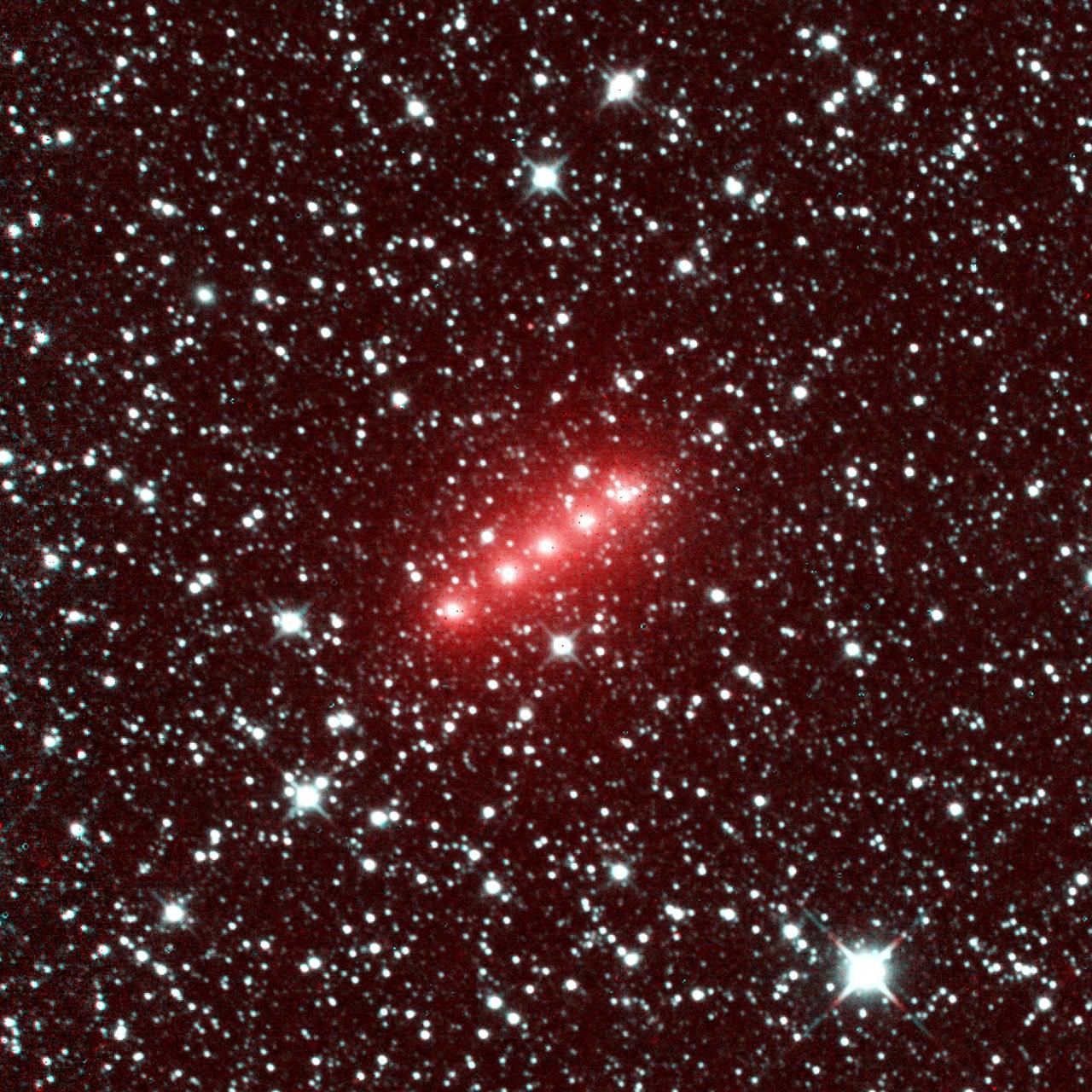
Positions are approximate and may vary by a few arcminutes. Use a star chart application like Stellarium (free, cross-platform), Sky-Spot, or SkySafari to generate precise finder charts for your exact location. The comet appears as a small, fuzzy patch of light — distinctly different from the pin-sharp stars around it.

Brightness Timeline & Perihelion Details

Comet 220P (220P/McNaught) is a Jupiter-family comet with an orbital period of approximately 5.5 years. It was discovered by Robert H. McNaught at Siding Spring Observatory in Australia on August 6, 2007. The comet reaches perihelion (its closest approach to the Sun) on approximately June 14, 2026, at a distance of 1.4 AU from the Sun.

The current apparition is favourable for northern hemisphere observers. The comet is well placed in the morning sky and is moving toward higher declinations, meaning it will become easier to observe each morning as it moves north. After perihelion, the comet will fade steadily but should remain within binocular range (magnitude 10–11) through early July. Southern hemisphere observers will have a more challenging view, as the comet remains low in the northern sky throughout its apparition, but dedicated observers in northern Australia may still catch it in the pre-dawn hours with binoculars.

Comet 220P was not predicted to be a "great comet" in 2026 — it is a small Jupiter-family comet with a nucleus estimated at 2–4 km in diameter. However, comets are inherently unpredictable. If the nucleus undergoes an outburst of activity (which can happen when fresh ice surfaces are exposed to sunlight for the first time, or when a companion fragment breaks off), the comet could brighten by several magnitudes in a matter of hours. This outburst potential is what makes observing comets during perihelion so compelling — you never know when a routine visitor might surprise everyone. The recent behaviour of comets like 12P/Pons-Brooks in 2024 and C/2023 A3 (Tsuchinshan-ATLAS) in 2024 demonstrated how even well-studied comets can produce unexpected brightening events that delight observers and challenge predictions. Comet 220P could follow a similar pattern, making every observing session potentially rewarding.

For the latest brightness estimates, visit the Comet Observation Database (COBS) at cobs.si or the Minor Planet Center's comet ephemeris page at minorplanetcenter.net. These sources aggregate observations from amateur astronomers worldwide and provide the most up-to-date magnitude estimates, typically within 24 hours of observation. The British Astronomical Association's Comet Section at britastro.org/comet is another excellent resource for expert analysis during the perihelion window.

Observing Tips & Dark Sky Strategy

Observing a comet at magnitude 9–10 is significantly more challenging than observing a star or planet at the same magnitude. A comet's light is spread out over a larger area (its coma), making it appear fainter and more diffuse than a point source of equivalent total brightness. Here are the key strategies for success:

Dark Sky Is Critical

Comet 220P at magnitude 9.5 requires a Bortle class 4 or darker sky for binocular detection. From a typical suburban location (Bortle 6–7), you will need at least a 6-inch (150mm) telescope to spot it. Use a light pollution map like lightpollutionmap.info to find the nearest dark site within driving distance. Even a 15-minute drive to the edge of town can improve your sky brightness by one Bortle class, which can make the difference between detecting the comet and missing it entirely.

Use Averted Vision

When searching for a faint comet, do not look directly at where you expect it to be. Instead, look slightly to one side — this uses the more sensitive peripheral vision of your retina, which is better at detecting faint light. This technique, called averted vision, can improve your faint-object detection by up to two magnitudes. Rock the binoculars or telescope slightly back and forth to use your motion-detection ability as well, as the human eye is extremely sensitive to moving objects.

Allow Time for Dark Adaptation

Your eyes take 15–20 minutes to reach full dark adaptation. Avoid looking at any white light during this period. Use a red flashlight to read star charts or adjust equipment — red light preserves dark adaptation better than white light. If you must check your phone, turn the brightness to minimum and enable the red-light filter mode if available.

Dawn Timing

The comet is visible in the pre-dawn sky. The best window is approximately 04:00 to 05:30 local time. Any earlier, and the comet may still be too low in the sky where atmospheric extinction dims it. Any later, and the brightening twilight will wash it out. Astronomical twilight begins about 90 minutes before sunrise, which marks the end of viable observing for faint objects like Comet 220P. Plan to be at your observing site and fully set up at least 30 minutes before you expect to start searching, as rushing reduces your chances of success with a faint target like this comet.

Best Binoculars for Comet 220P

For comet observing, aperture is more important than magnification. Comets are diffuse objects — their light spreads out over a larger area than a star of the same magnitude — so you need light-gathering power. 10×50 binoculars are the minimum for comet observing; 15×70 binoculars are significantly better.

Editor's Pick — Best Comet Binoculars
Celestron SkyMaster 15x70 binoculars

Celestron SkyMaster 15x70 Binoculars

15x mag70mm apertureTripod-ready

The SkyMaster 15x70 is our top recommendation for comet hunting. The 70mm objective lenses gather 96% more light than 50mm binoculars, making a significant difference when observing a faint, diffuse comet at magnitude 9–10. The 15x magnification is high enough to resolve the comet's coma and hints of a tail under dark skies, yet the field of view (4.4°) is wide enough to locate the comet using star-hop techniques. A tripod is essential at 15x.

Check Price on Amazon

Affiliate link.

Celestron UpClose G2 10x50 binoculars

Celestron UpClose G2 10x50 Binoculars

On a budget? The UpClose G2 10x50 offers excellent value at under $50. The 10x50 configuration is the minimum recommended aperture for comet observing. These binoculars will show Comet 220P as a faint, fuzzy patch under dark skies (Bortle 4 or darker). Lightweight enough for handheld use, though a tripod adapter helps with steady viewing for extended sessions.

Check Price on Amazon

Affiliate link.

For a full guide to choosing binoculars for astronomy, see our best astronomical binoculars guide. For comet-specific observing advice, see our best binoculars for comet viewing guide.

Best Telescopes for Comet 220P

For observers with light pollution or those who want a more detailed view of the comet's coma and tail, a telescope provides significant advantages over binoculars. The key factors for comet observing are aperture (light gathering) and field of view (to see the comet's full extent).

6-inch or 8-inch Dobsonian (Best Aperture)

A Dobsonian telescope like the Sky-Watcher Classic 200P (8-inch) or the Sky-Watcher Heritage 150P (6-inch tabletop) offers the best aperture-to-price ratio for comet observing. At low magnification (25x–40x), the wide field of view captures the entire coma and any tail development, while the large aperture reveals subtle details invisible in smaller instruments. The 8-inch Dobsonian can show Comet 220P as a bright, structured patch with a visible tail even from suburban skies.

Sky-Watcher Classic 200P Dobsonian telescope

Sky-Watcher Classic 200P Dobsonian

The 8-inch (203mm) Classic 200P offers excellent light-gathering power for comet observing. With a low-power 32mm eyepiece providing 30x magnification and a 1.7° field of view, it can frame the comet's coma and inner tail region. The simple Dobsonian mount is quick to set up, making it ideal for early-morning comet sessions.

Check Price on Amazon

Affiliate link.

For a complete guide to the best telescopes for different budgets, see our best telescopes for beginners guide and our best Dobsonian telescopes guide.

How to Photograph Comet 220P

Photographing Comet 220P is achievable with a DSLR camera, a standard telephoto lens, and a tripod. Here are the key settings and techniques:

  • Use a 200mm or longer lens on a DSLR or mirrorless camera. A 200mm lens frames the comet's coma and tail region nicely with the surrounding star field.
  • ISO 1600–3200, aperture f/2.8 or f/4 (widest available), and exposure times of 30–60 seconds. The exact exposure depends on the comet's brightness and your sky conditions.
  • A tracking mount is essential for exposures longer than 30 seconds. Even a simple star tracker like the iOptron SkyTracker or Sky-Watcher Star Adventurer will dramatically improve your results.
  • Focus carefully on a bright star using live view at 10x magnification. Tape the focus ring once set — comets do not move noticeably in the frame during individual exposures, but the focus must be precise.
  • Take multiple exposures and stack them in DeepSkyStacker (free) or Sequator (free) to improve signal-to-noise ratio and reveal fainter tail detail.

For a more detailed guide to astrophotography equipment, see our best telescopes for astrophotography guide and our best star trackers for beginners guide. For smartphone astrophotography tips, our June 2026 night sky guide includes general smartphone astrophotography advice that applies to comet imaging as well.

Comet 220P — Science & Historical Context

Comet 220P/McNaught belongs to the Jupiter family of comets, a group defined by short orbital periods (less than 20 years) and orbits shaped by close approaches to Jupiter. Jupiter-family comets are thought to originate in the Kuiper Belt, a region of icy bodies beyond Neptune's orbit extending from about 30 to 50 AU from the Sun. When gravitational interactions with Neptune or other Kuiper Belt objects nudge these bodies into the inner solar system, they become short-period comets like 220P.

The comet's discoverer, Robert H. McNaught, is one of the most prolific comet discoverers in history, with over 80 named comets to his credit, including the spectacular Comet McNaught (C/2006 P1) which became visible in broad daylight in 2007 and developed a massive dust tail that spanned over 35 degrees of sky — one of the longest comet tails ever recorded. While 220P is a far more modest object than its famous namesake, its current apparition provides an excellent opportunity for amateur astronomers to observe a Jupiter-family comet up close during a favourable apparition.

Comets are valuable scientific targets because they preserve pristine material from the early solar system. As comets approach the Sun, their ices sublimate, releasing dust and gas that form the coma and tail. By studying the composition of comets through spectroscopy, astronomers can learn about the chemical conditions present in the early solar nebula over 4.5 billion years ago. The European Space Agency's Rosetta mission to Comet 67P/Churyumov-Gerasimenko and NASA's Deep Impact mission have revolutionized our understanding of cometary nuclei, revealing complex organic chemistry and unexpected geological features on these small bodies. For more on the science of comets, visit NASA's Solar System Exploration page at science.nasa.gov/solar-system/comets/.

For readers who want to contribute to comet science, the Comet Observation Database (COBS) accepts magnitude estimates from amateur astronomers worldwide. Submitting your observations helps refine brightness predictions for future apparitions and provides valuable data for professional researchers studying cometary activity patterns. To submit observations, estimate the comet's magnitude by comparing its brightness to nearby stars of known magnitude, then log your observation at cobs.si. Even a single observation per week during the perihelion window contributes meaningfully to the scientific record.

FAQ — Comet 220P

Is Comet 220P visible to the naked eye?

Currently at magnitude ~9.5, it requires binoculars under dark skies. If it brightens to magnitude 7–8 as predicted around perihelion, it may become visible to the naked eye from very dark sites (Bortle 1–3).

What is Comet 220P?

Comet 220P (220P/McNaught) is a Jupiter-family comet discovered in 2007 by Robert H. McNaught. It orbits the Sun every 5.5 years and is approaching perihelion in June 2026.

Where is Comet 220P in the sky?

Currently in Pisces, moving north into Aries. It rises low in the east about 90 minutes before sunrise. Look for it between 04:00 and 05:30 local time.

What binoculars do I need to see Comet 220P?

10×50 binoculars are the minimum from dark skies. 15×70 binoculars are significantly better and are our top recommendation for comet observers.

When is Comet 220P at its brightest?

The comet reaches perihelion around June 14, 2026. The brightest observing window is expected to be June 12–16.