Quick Answer: How to Find and Observe the Lagoon Nebula
Find M8 in Sagittarius, just above the "Teapot" asterism's spout — about 1.5° north of the star Alnasl (Gamma Sagittarii). It's visible to the naked eye as a faint patch of light on dark summer nights, and through any binoculars it resolves into a bright, elongated glow with a distinct dark lane splitting the nebula in half — the "lagoon" that gives it its name.
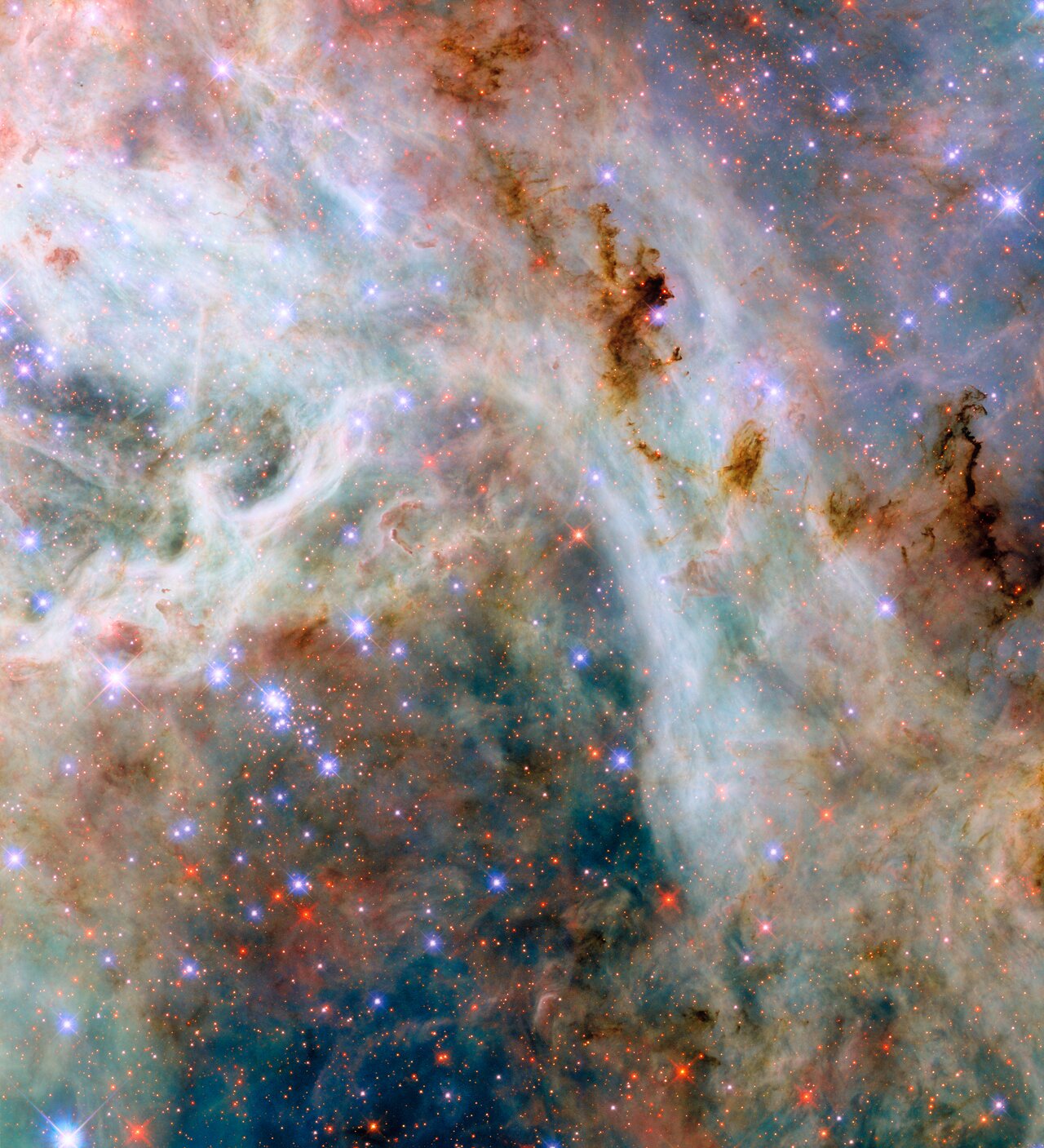
Through a 4-inch telescope at low power, M8 is one of the finest deep-sky objects in the sky. The bright Hourglass region at the nebula's core, illuminated by the hot young star Herschel 36, appears as a brilliant knot of light. A UHC or O-III filter dramatically enhances the nebula's structure, revealing wispy tendrils and dark Bok globules (collapsing protostars) silhouetted against the glowing gas. Through an 8-inch scope, the view is breathtaking — the nebula fills the entire field with intricate detail.
Binoculars (10×50)
Bright elongated glow, 30×20 arcmin — larger than the full Moon. Dark lane visible as a clear split. Open cluster NGC 6530 visible as 5–6 stars superimposed on the nebula.
4–6 inch telescope
Hourglass region clearly visible. Dark lagoon stands out. UHC filter dramatically improves contrast. Best eyepiece: 25mm or 32mm wide-field for full framing.
8+ inch telescope
Intricate filamentary structure. Bok globules visible as dark dots. O-III filter reveals faint outer shells. The southern "cliff" of the nebula shows 3D depth.