
Telescope Advisor Logo Telescope Advisor
The Whirlpool Galaxy M51 photographed by the Hubble Space Telescope — one of the finest Messier objects for amateur telescopes

Deep-Sky Observing · Messier Catalog

Complete Messier Catalog Guide: All 110 Deep-Sky Objects for Telescope Observers

The Messier catalog is a beginner's roadmap to the universe — 110 galaxies, nebulae, and star clusters that transform a casual stargazer into a deep-sky observer. This guide tells you which ones to start with, what aperture you need, and how to see all 110 in a single marathon night.

Total objects110 (M1–M110)
Best starter scope4-inch refractor
Marathon windowMarch–April
Top beginner pickM42 Orion Nebula
By Elena Reyes Published: Updated: Reviewed & approved by Juhi Sahni, Senior Editor Editorial Standards

Quick Answer: What Is the Messier Catalog and Where Should You Start?

The Messier catalog is a list of 110 astronomical objects compiled by French comet hunter Charles Messier between 1758 and 1782. Messier was frustrated by faint "fuzzy" objects that looked like comets but didn't move — so he created a catalog of "things that are not comets" to help himself and other comet hunters avoid false alarms. Ironically, his catalog of "non-comets" became the most famous deep-sky observing list in history.

Start with the "Big 5" beginner objects: M42 (Orion Nebula), M31 (Andromeda Galaxy), M45 (Pleiades), M13 (Hercules Globular Cluster), and M57 (Ring Nebula). All are visible with binoculars or a small telescope. From there, work through the top 30 brightest objects, then tackle the complete catalog at your own pace.


What Is the Messier Catalog?

Charles Messier compiled his catalog between 1758 and 1782, publishing the first version in 1774 (45 objects) and the final version in 1781 (103 objects). Seven additional objects (M104–M110) were added later by other astronomers based on Messier's notes. The catalog includes galaxies, emission nebulae, planetary nebulae, reflection nebulae, globular clusters, open clusters, and even a supernova remnant (M1, the Crab Nebula).

What makes the Messier catalog so useful for amateur astronomers is that every object is observable with modest equipment. All 110 objects are visible through a 6-inch telescope under dark skies. Over 60 objects are visible through binoculars. About 25 objects are visible to the naked eye from a dark site. This makes it the perfect curriculum for a beginner deep-sky observer — start at M1 and work your way through, or follow a seasonal guide to see what's up tonight.

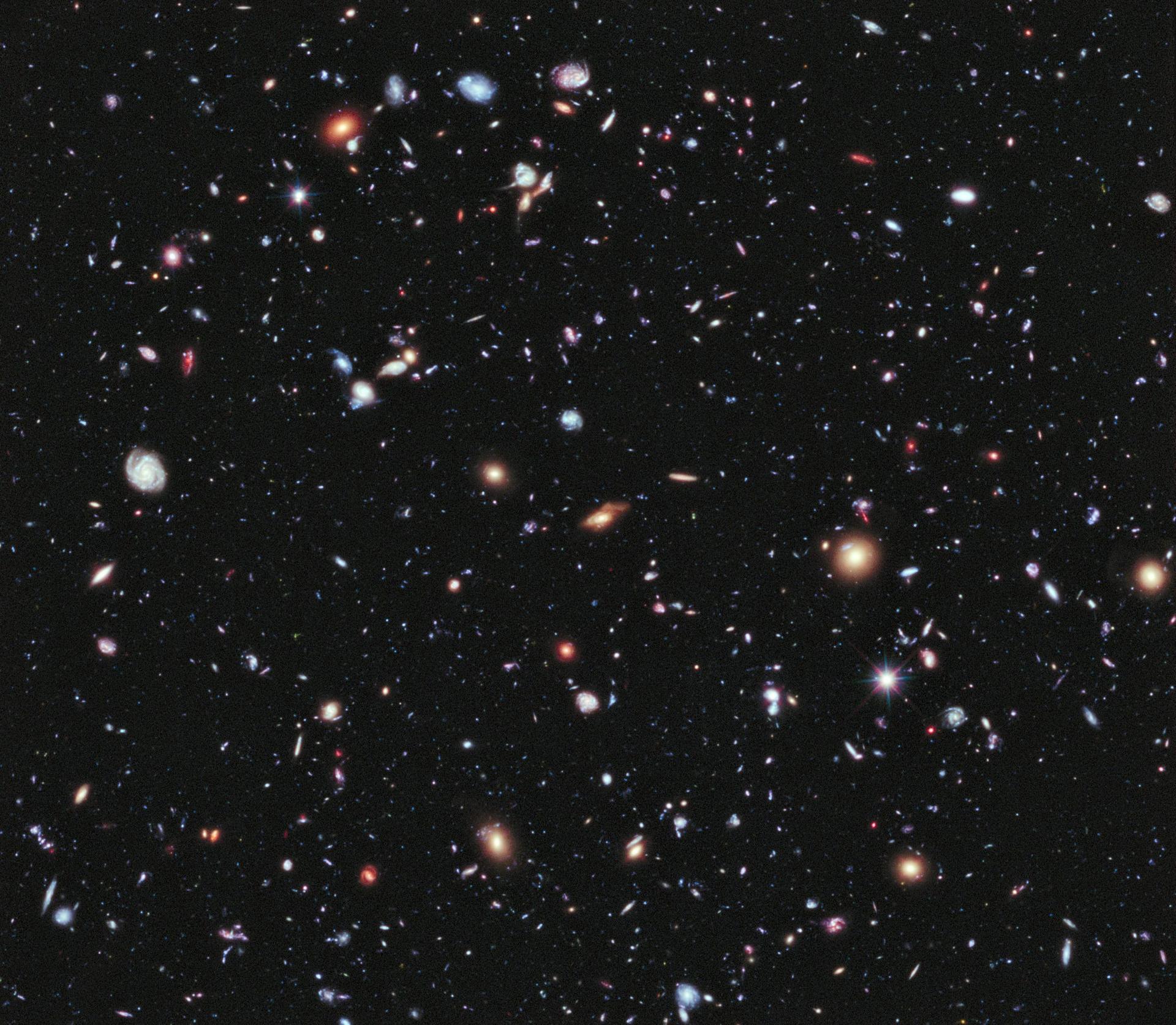
The Hubble eXtreme Deep Field composite image showing thousands of galaxies across the universe — represents the kind of deep-sky wonders the Messier catalog guides observers toward

The Universe Through the Messier Catalog

The 110 Messier objects include galaxies, nebulae, and star clusters that guide amateur astronomers on a journey from nearby star clusters to distant galaxies. The Hubble eXtreme Deep Field represents the kind of cosmic depth that awaits dedicated observers. Credit: NASA / ESA / Hubble Collaboration.

Top 10 Messier Objects for Beginners

ObjectTypeConstellationBest SeasonMin ApertureDifficulty
M42Orion NebulaOrionWinterBinocularsEasy
M31Andromeda GalaxyAndromedaAutumnNaked eyeEasy
M45PleiadesTaurusWinterNaked eyeEasy
M13Hercules ClusterHerculesSummerBinocularsEasy
M57Ring NebulaLyraSummer4-inch scopeModerate
M27Dumbbell NebulaVulpeculaSummer4-inch scopeEasy
M44Beehive ClusterCancerSpringNaked eyeEasy
M8Lagoon NebulaSagittariusSummerBinocularsEasy
M51Whirlpool GalaxyCanes VenaticiSpring6-inch scopeModerate
M11Wild Duck ClusterScutumSummerBinocularsEasy

For detailed observing guides to each object, see our individual Messier object guides below. We've already built detailed guides for the most popular objects — each includes finder charts, eyepiece recommendations, and what to expect through different aperture scopes.

Frequently Asked Questions About the Messier Catalog

How many Messier objects are there?

There are 110 officially recognized Messier objects, numbered M1 through M110. Charles Messier himself cataloged 103. The remaining 7 (M104–M110) were added later by other astronomers based on his notes and observations.

What telescope do I need to see all 110 Messier objects?

A 6-inch (150mm) Dobsonian under dark skies is the minimum for reliably seeing all 110 objects. With an 8-inch scope, all 110 are comfortable. Through a 4-inch scope, about 85 are visible. The remaining 25 require dark skies and averted vision even through larger apertures.

What is a Messier marathon?

A Messier marathon is an annual challenge to observe all 110 Messier objects in a single night. It's only possible during the new moon period in March–April, when the Sun's position relative to the catalog allows every object to be visible between dusk and dawn. Experienced observers can complete the marathon with an 8-inch scope.

Why is there no M object between M101 and M104?

M102 and M103 are a historical controversy. M102 may have been a duplicate observation of M101 (the Pinwheel Galaxy) or a real object (NGC 5866, the Spindle Galaxy). Most modern catalogs list M102 as NGC 5866. M103 is an open cluster in Cassiopeia.