M57 Ring Nebula: How to Find and Observe the Ring Nebula
Telescope Advisor Logo Telescope Advisor
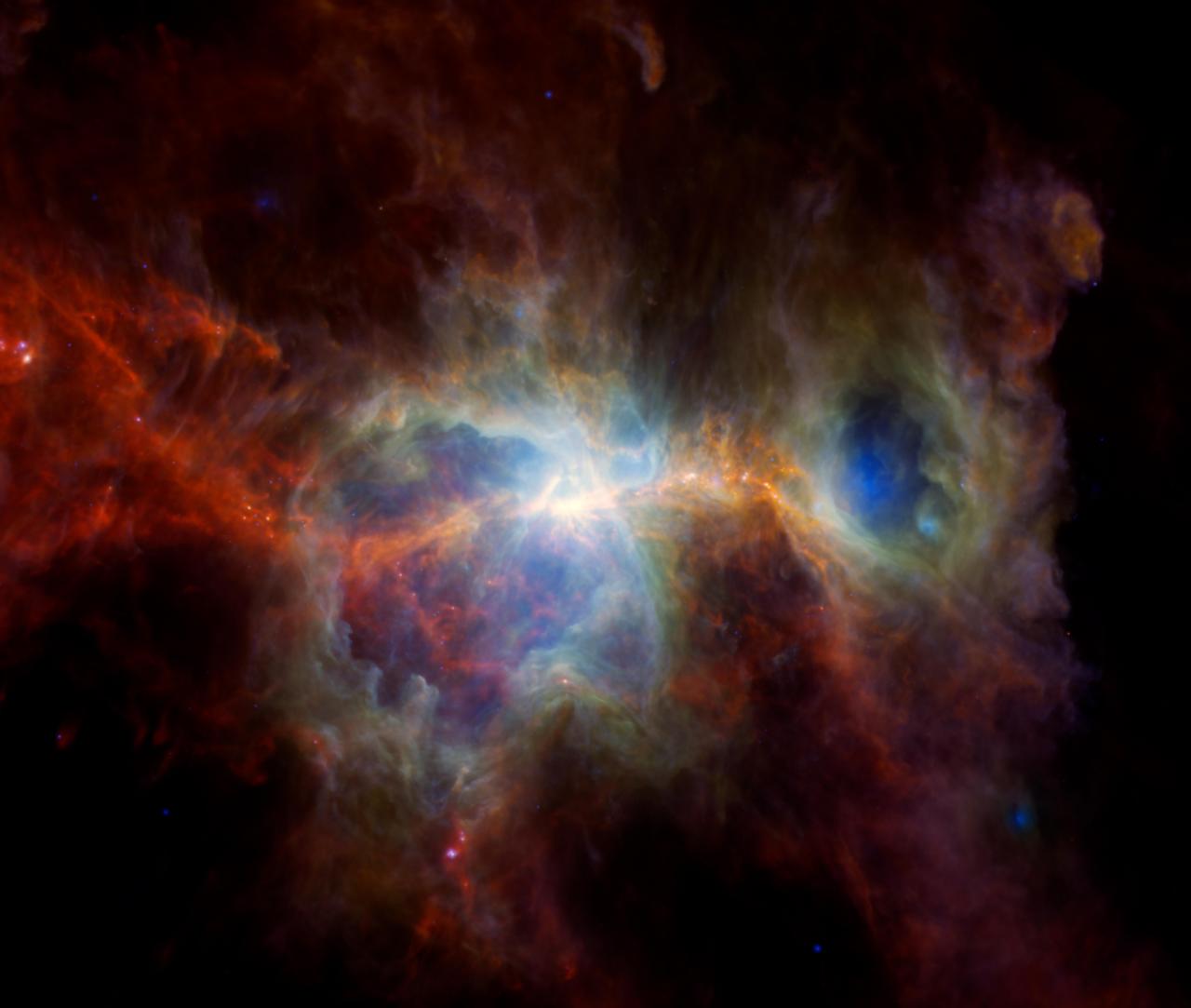
The Orion Nebula — the M57 Ring Nebula is one of the most observed planetary nebulae in the summer sky

Deep-Sky Guide · Messier 57

M57 Ring Nebula: How to Find and Observe the Ring Nebula

The M57 Ring Nebula is the most famous planetary nebula in the northern sky — a glowing smoke ring of gas expelled by a dying star 2,500 light-years away. Located in the constellation Lyra, M57 is a favourite summer target for telescope owners of all skill levels. This guide covers how to find it, what to expect through different apertures, and how to photograph it.

TypePlanetary nebula
ConstellationLyra
Magnitude8.8 (telescope required)
Best seasonMay – October
By Elena ReyesPublished: Updated: Reviewed & approved by Juhi Sahni, Senior EditorEditorial Standards

What Is the M57 Ring Nebula?

The M57 Ring Nebula (NGC 6720) is a planetary nebula in the constellation Lyra, approximately 2,500 light-years from Earth. Despite the name, planetary nebulae have nothing to do with planets — the term originated with William Herschel, who noted their round, planet-like appearance through early telescopes. M57 formed when a Sun-like star exhausted its nuclear fuel and expelled its outer layers into space, leaving behind a hot white dwarf core. The white dwarf, visible through larger telescopes as a tiny point at the centre of the ring, has a surface temperature of approximately 120,000 degrees Celsius. Its intense ultraviolet radiation causes the surrounding gas to fluoresce, producing the nebula's characteristic greenish glow (from doubly ionized oxygen) and reddish hue (from hydrogen alpha emission). The nebula spans approximately 1.3 light-years across and is expanding at about 20 km per second. The ring shape is actually a barrel structure viewed end-on — if we could see it from the side, it would look more like a dumbbell.


The Discovery and History of M57

M57 was discovered by the French astronomer Antoine Darquier de Pellepoix in January 1779 while he was observing the path of a comet. Darquier described it as "a very dull but perfectly defined nebula, as large as Jupiter and resembling a fading planet." Charles Messier independently observed M57 later that month and added it to his catalog on January 31, 1779. William Herschel studied M57 extensively and was the first to note its ring-like structure, describing it as "a ring of stars" — though he later correctly identified it as a gaseous nebula. The name "Ring Nebula" was popularized in the 19th century as larger telescopes revealed its distinctive donut shape. Lord Rosse's 72-inch Leviathan telescope at Birr Castle in Ireland showed the nebula in unprecedented detail in the 1840s, revealing the subtle brightness variations around the ring that modern astrophotographers capture. The central star, a white dwarf of magnitude 15.8, was first detected photographically in 1887. It was not until the 20th century that astronomers understood the true nature of planetary nebulae as the ejected shells of dying stars, with the Ring Nebula becoming one of the most studied and photographed objects in the night sky.

The Ring Nebula M57 as captured by the Hubble Space Telescope — a glowing smoke ring of gas expelled by a dying star, showing blue helium at the centre, green hydrogen and oxygen in the inner ring, and red nitrogen and sulfur in the outer ring

The Ring Nebula (M57) as imaged by the Hubble Space Telescope. The deep blue centre represents helium, the light blue inner ring is hydrogen and oxygen, and the reddish outer ring is nitrogen and sulfur. Credit: NASA, ESA and the Hubble Heritage (STScI/AURA)-ESA/Hubble Collaboration

The Science Behind the Ring Nebula

M57 is a planetary nebula, a phase in the life cycle of Sun-like stars that occurs when they exhaust their nuclear fuel and shed their outer layers into space. The progenitor star of M57 was similar to our Sun, and in approximately 5 billion years, our Sun will undergo the same transformation, creating a planetary nebula that will be visible from distant worlds. The central star of M57 is now a white dwarf — an incredibly dense object about the size of Earth but containing roughly 60% of the Sun's mass. This white dwarf has a surface temperature of approximately 120,000 degrees Celsius, making it one of the hottest stars known. Its intense ultraviolet radiation energizes the surrounding gas, causing it to fluoresce. The characteristic greenish colour of the nebula comes from doubly ionized oxygen (O-III) at 501 nanometres, while the reddish hue visible in photographs comes from hydrogen alpha emission at 656 nanometres. The nebula is expanding at approximately 20 kilometres per second, and the entire structure is about 1.3 light-years in diameter. The ring shape we see is actually a barrel or cylinder viewed nearly end-on — if we could view M57 from the side, it would resemble the Dumbbell Nebula (M27) in shape. The nebula is approximately 2,500 light-years from Earth.

How to Find M57

M57 is one of the easiest deep-sky objects to find, thanks to its location near the bright star Vega. Vega (magnitude 0.0) is the brightest star in the summer sky and the westernmost star of the Summer Triangle. M57 is located about 8 degrees south of Vega, roughly halfway between Vega and Sulafat (Gamma Lyrae). The most reliable method is to find the parallelogram of Lyra — Vega at the top, with a small rectangle of four fainter stars below it. M57 sits midway between the two southernmost stars of this parallelogram, Beta Lyrae and Gamma Lyrae (Sulafat). Through a finderscope, M57 appears as a faint star-like point — its small angular size (just 1.3 x 1 arcminutes) means it looks stellar at low magnification until you apply enough power to see the ring shape. At 50x in a 114mm telescope, the ring is unmistakable. For more on navigating Lyra, see our Lyra constellation guide.

What M57 Looks Like Through Different Telescopes

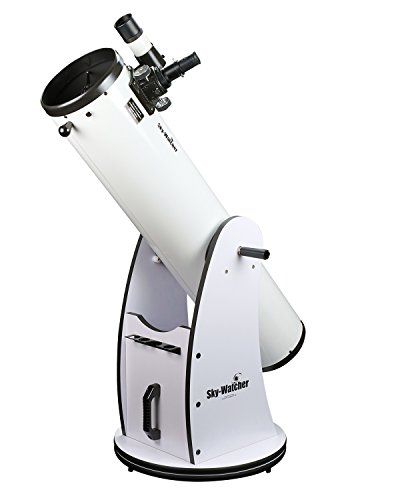
M57 appears different through every telescope size, making it a useful benchmark for comparing instruments. Through 10x50 binoculars like the Celestron UpClose G2 10x50, M57 is not visible at all — the nebula is too small and faint for binocular detection. A 60-70mm telescope at 40-50x shows M57 as a small, oval patch of grey light — the ring shape is not clearly defined, but the non-stellar appearance is unmistakable. Through the FirstScope 76mm at 75x, the ring structure begins to emerge, appearing as a small donut with a darker centre. Through the StarSense Explorer LT 114AZ (114mm) at 80-100x, the Ring Nebula is a clear, crisp smoke ring — the central hole is well-defined, and the ring shows subtle brightness variations around its circumference. Through a 200mm (8-inch) Dobsonian like the Sky-Watcher Classic 200P at 150-200x, M57 is a showpiece: the ring is large, bright, and detailed, with the central white dwarf star visible on steady nights. An O-III filter enhances the ring's contrast, making it appear brighter against the sky background. A 2x Barlow lens combined with a 9mm eyepiece provides 240x magnification for close-up views of the ring's structure. For more on recommended telescopes, see our best telescopes for beginners guide.

Comparing Views by Aperture: Detailed Breakdown

The Ring Nebula's appearance changes dramatically with aperture, making it an excellent benchmark for comparing telescopes. In a 60mm refractor at 50x, M57 appears as a small, oval patch of light with a slightly brighter edge — the ring structure is not clearly defined, but the non-stellar appearance is unmistakable. This is enough to confirm a planetary nebula detection. In an 80mm refractor like the Celestron PowerSeeker 80EQ at 80x, the ring shape becomes visible as a small donut with a darker centre — the famous "smoke ring" appearance begins to emerge. In a 114mm telescope at 100x, the Ring Nebula is a clear, crisp smoke ring with subtle brightness variations around its circumference. The central hole is well-defined and dark. In a 150mm (6-inch) telescope at 150x, the ring is large enough to study in detail — the inner edge is sharper than the outer edge, and the nebula appears slightly elliptical rather than perfectly round. In a 200mm (8-inch) telescope at 200x, M57 is a showpiece. The ring structure shows distinct brightening at the edges, the central region is clearly dark, and the central white dwarf star (magnitude 15.8) can be glimpsed on nights of exceptional seeing. An O-III filter at this aperture transforms the view, making the ring appear brighter and more detailed against the dark sky background. In a 300mm (12-inch) telescope at 250-300x, the Ring Nebula fills a significant portion of the field, showing intricate structure with variations in surface brightness around the ring.

Observing Tips for the Best View

M57 rewards careful observing technique. The nebula is visible from most locations, even under moderate light pollution, because its emission is concentrated in specific spectral lines. An O-III (oxygen-III) filter significantly improves contrast by transmitting only the doubly ionized oxygen wavelength (501 nm) that M57 emits most strongly. Without a filter, use 80-100x magnification to see the ring shape clearly. At lower power, M57 appears stellar and may be mistaken for a star. At higher power (150-200x), the ring structure is fully resolved and the central hole is obvious. The nebula benefits from high magnification because of its small size — it is only 1.3 arcminutes across, roughly one-twelfth the diameter of the full Moon. A night of good seeing (steady atmosphere) is important for high-power views. M57 is bright enough to be visible from suburban skies (Bortle 5-6) but shows more detail from darker locations. The best time to observe M57 in July 2026 is after midnight when Lyra is high overhead. The nebula reaches transit at approximately 1:00 AM local time in July, placing it at its highest and clearest.

Recommended Equipment for Observing M57

Observing the Ring Nebula successfully requires the right equipment choices. A minimum of 60mm aperture at 50x is needed to detect the nebula as non-stellar. For a satisfying ring view, an 80mm telescope at 80-100x shows the donut shape clearly. The best views come from a 150mm or 200mm telescope at 150-200x, where the ring structure, brightness variations, and the central star become accessible. A 2-inch O-III filter in a wide-field eyepiece is the single most impactful accessory for M57 observation — it increases contrast dramatically and reveals subtle structure in the ring that is invisible without the filter. A 2x Barlow lens combined with a 9mm eyepiece provides 200x magnification for close-up views of the ring structure. The nebula is small enough that a tracking mount is helpful but not essential — at 200x, the nebula drifts across the field in about 30 seconds without tracking, which is enough time for a good observation. For sketching the nebula's structure, a red LED flashlight and a sketch pad are useful. For the best results, observe when the Moon is not visible and Lyra is high overhead. For more on recommended telescopes, see our best telescopes for beginners guide and our best telescope for viewing nebulae guide.

Other Objects in the Lyra Region

Lyra is a small but rich constellation that rewards careful exploration. After observing M57, turn your telescope to Epsilon Lyrae, the famous "Double-Double" star. At low magnification, Epsilon appears as a close pair of stars. At 150x or higher in a 150mm telescope, each of these two stars splits into a close binary, revealing four stars in total — a spectacular sight that tests telescope quality and seeing conditions. Beta Lyrae is an eclipsing binary star whose brightness varies over a 13-day cycle. Delta Lyrae is a wide optical double consisting of a red giant and a blue-white companion. M56 is a globular cluster in Lyra, located about halfway between Albireo (Beta Cygni) and Sulafat (Gamma Lyrae). It is magnitude 8.3 and spans 7 arcminutes — fainter and smaller than M13 but a rewarding target in 150mm telescopes. NGC 6791 is an open cluster in Lyra, one of the oldest known open clusters at approximately 8 billion years, appearing as a faint patch of stars in 200mm telescopes. The bright star Vega itself is worth examining at high power — its blue-white colour and occasional diffraction effects make it a striking sight. For more on Lyra, see our Lyra constellation guide.

Photographing M57

M57 is an excellent target for both DSLR and planetary camera astrophotography. Its small size means it frames well with longer focal lengths (1000-2000mm). For DSLR imaging, 30-60 second exposures at ISO 1600 through a telescope at f/10 capture the ring structure clearly. For lucky imaging with a planetary camera, take 60-90 seconds of video at 30 frames per second and stack the best 20% of frames. An IR-cut filter improves star sharpness. M57's bright central ring structure makes it one of the most photogenic small deep-sky objects, and even modest equipment produces satisfying results. Colour processing brings out the blue-green from oxygen emission and the subtle reddish halo from hydrogen alpha emission. For more astrophotography guidance, see our astrophotography for beginners guide and our best filters for light pollution guide.

M57 Observing Log: What to Look for at the Eyepiece

When you centre M57 in your eyepiece, follow this observing sequence. Start at 50x — the nebula appears stellar at this power and may be mistaken for a star. Verify it is the nebula by checking its position relative to Beta and Gamma Lyrae. Increase to 80-100x — the ring shape emerges as a small, grey donut with a darker centre. The brightest portions of the ring are the east and west edges, which appear thicker in photographs and slightly brighter at the eyepiece. At 150x with an O-III filter, the ring structure becomes crisp and well-defined. The central hole is clearly dark, and the inner edge of the ring appears sharper than the outer edge. Look for subtle brightness variations around the ring — the northern and southern edges may appear slightly brighter or fainter depending on observing conditions and telescope aperture. At 200x or higher, search for the central star. This magnitude 15.8 white dwarf is an extreme challenge — it requires at least a 250mm telescope, excellent seeing, and a dark sky. Most observers report the central star as a tiny point that flickers in and out of visibility at the limit of perception. If you do not see it, try removing the filter and observing on a night of exceptional transparency. Sketch what you see and compare your observations with photographs to understand how the eye interprets faint structure differently from a camera.

Observing Challenges in the Lyra Region

Beyond M57, the Lyra region offers several observing challenges that test your equipment and skill. The Double-Double (Epsilon Lyrae) is the most famous challenge in Lyra — resolving all four stars requires a telescope of at least 75mm aperture at 150x or higher. The two main components are separated by 208 arcseconds (visible in any finderscope), but splitting each component into its binary pair requires resolving separations of 2.6 and 2.3 arcseconds respectively — a good test of both telescope optics and atmospheric seeing. The Veil Nebula (NGC 6960/6992) in nearby Cygnus is a supernova remnant that provides one of the most dramatic demonstrations of O-III filter effectiveness. Without a filter, the Veil is invisible from most locations. With a 2-inch O-III filter in a wide-field eyepiece on a 200mm telescope, the delicate filaments appear as glowing wisps against a dark sky — one of the most memorable sights in amateur astronomy. The Blinking Planetary (NGC 6826) in Cygnus is another fascinating target: when you look directly at it, the central star is visible and the nebula seems to disappear; when you look away, the nebula "blinks" back into view. This effect demonstrates the difference between central and peripheral vision. For more challenging targets, see our best nebulae for light-polluted skies guide.

Variable star observers can also find rewarding targets in the Lyra region. Beta Lyrae (Sheliak) is an eclipsing binary star that varies from magnitude 3.3 to 4.4 over a period of 12.9 days. The brightness changes are detectable with the naked eye when compared to nearby stars of known magnitude. RR Lyrae is the prototype of an important class of variable stars used as standard candles for measuring cosmic distances. Its brightness varies from magnitude 7.1 to 8.1 every 13.6 hours, making it an excellent target for small telescope observation over a single evening. Observing these variables connects your backyard astronomy to fundamental astrophysical research — RR Lyrae stars are used to determine distances to globular clusters and nearby galaxies. M57 itself can serve as a photometric reference for calibrating your estimates of variable star brightness. Tracking these changes over time builds a deeper understanding of stellar evolution and contributes to citizen science projects like the American Association of Variable Star Observers (AAVSO).

Frequently Asked Questions

Can you see the Ring Nebula with binoculars?

No. M57 is too small and faint at magnitude 8.8 for binocular detection. Even 15x70 binoculars show it only as a very faint star-like point. A telescope of at least 60mm aperture at 50x+ magnification is needed to see the ring shape.

What telescope do I need to see the Ring Nebula?

A 60-70mm telescope at 40-50x shows M57 as a small non-stellar patch. A 114mm telescope at 80-100x reveals the ring shape clearly. An 8-inch (200mm) telescope at 150-200x shows the ring in stunning detail with the central star visible.

What colour is the Ring Nebula through a telescope?

Through the eyepiece, M57 appears greyish-white to most observers. Long-exposure photographs reveal the characteristic blue-green colour from doubly ionized oxygen. The colour is visible through larger telescopes (10-inch+) on very dark nights.

Can you see the central star in the Ring Nebula?

The central white dwarf star (magnitude 15.8) requires at least a 10-inch (250mm) telescope under dark skies to detect visually. It is a challenging target even in larger telescopes because of the contrast with the bright nebula.