What You Will See vs What Photographs Show
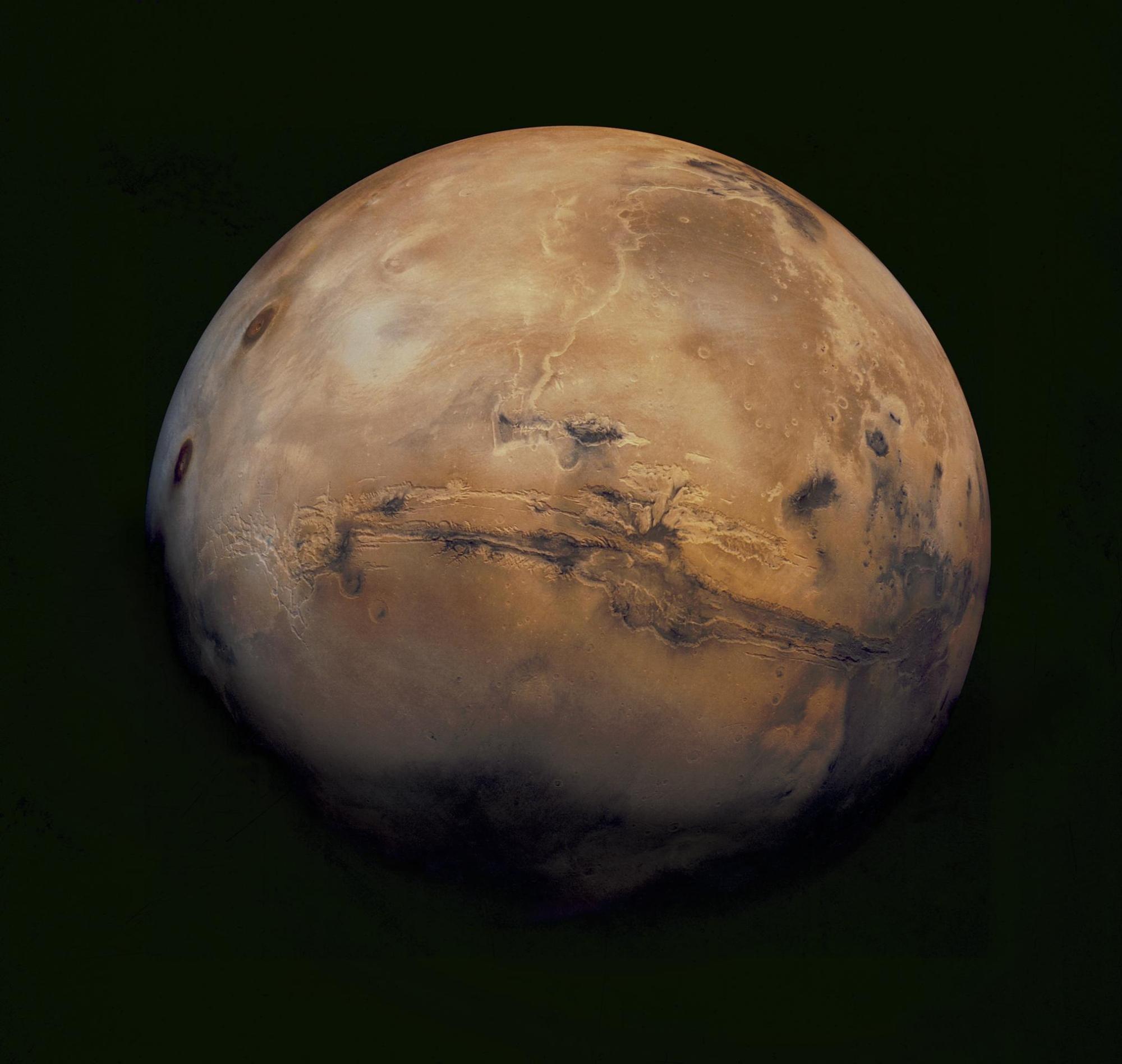
There is a large gap between the Mars you will see through a telescope and the Mars you see in photographs from NASA missions or even from amateur astrophotographers with specialised equipment. Understanding this gap prevents disappointment.
Photographs of Mars are typically taken with high-speed planetary cameras that capture thousands of video frames. The best 10% of those frames — those moments when the atmosphere momentarily stabilises — are stacked and sharpened to produce a clear image. Through the eyepiece, you are seeing a continuous live view, with none of this computational enhancement. The Mars you see is smaller, softer, and less colourful than any photograph. That is normal. That is what visual astronomy is.
The joy of observing Mars is not about seeing crisp, photograph-like detail. It is about real-time detection: noticing that the tiny orange disk has a slightly brighter patch at its north pole (the polar cap), or that one side appears subtly darker (a dark surface feature rotating into view). These are genuine detections that connect you directly with the planet, and they become more accessible as Mars approaches its 2027 opposition. Over weeks and months of regular observing, you will train your eye to see finer detail — the same way a birdwatcher learns to distinguish subtle plumage differences through practice.
Using Colour Filters for Mars
Colour filters can enhance specific Martian features when the planet is large enough. A red filter (Wratten #25 or #23A) increases contrast between the bright orange desert regions and the darker surface markings. A blue filter (#80A or #38A) enhances the polar caps and any atmospheric haze or cloud activity. A green filter (#56) improves contrast of the polar caps and helps with surface feature detection at moderate magnifications. These filters are most effective when Mars exceeds 10 arcseconds in apparent diameter, which will not occur until late 2026. For now, the honest answer is that Mars is too small for filters to make a meaningful difference. But if you already have a set of planetary filters from observing Jupiter and Saturn, they are worth trying when Mars grows larger. See our best filters guide for our recommendations.
Tracking Mars Month by Month
Mars's visibility improves steadily through 2026. Here is the month-by-month progression: June 2026 — Mars rises about 2–3 hours before sunrise, magnitude +1.1, apparent diameter 4.5 arcseconds. It appears as a modest orange star near the Pleiades cluster. July 2026 — Mars brightens to magnitude +0.8 and reaches 5.0 arcseconds. It moves eastward through Taurus. August 2026 — Magnitude +0.4, diameter 5.8 arcseconds. Mars enters Gemini. September 2026 — Magnitude +0.0, diameter 6.5 arcseconds. The planet is now visible for several hours before dawn. October 2026 — Magnitude -0.3, diameter 7.5 arcseconds. The polar cap becomes suspectable in 8-inch scopes at 200× on steady nights. November 2026 — Magnitude -0.8, diameter 9.0 arcseconds. Dark surface markings may be glimpsed with 8-inch or larger scopes at high magnification. December 2026 — Magnitude -1.2, diameter 10.5 arcseconds. Mars is now unmistakable in the evening sky, showing a distinct orange disk in any telescope at 100×. The dark feature Syrtis Major becomes visible on good nights. By January 2027, Mars will be brighter and larger still as it races toward opposition and its best appearance since 2025.