Moon Occults Venus June 17, 2026: Exact US Daytime Times and How to Watch Safely
Telescope Advisor Logo Telescope Advisor
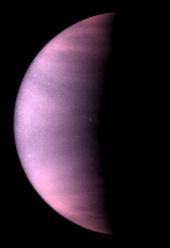
Venus viewed by NASA Mariner 10 spacecraft as it sped away

Rare Daytime Event · June 2026

Moon Occults Venus June 17, 2026:
Exact US Times and Safe Viewing Plan

On June 17, the Moon passes directly in front of Venus in broad daylight across the US. This guide gives practical local time conversions, gear setup, and a strict safety workflow so you can actually catch the disappearance and reappearance.

Jun 17

Event Date

~19:45 UTC

Mid-Event

Daytime

US Visibility

10x50+

Best Starter Gear

By Telescope Advisor Editorial Team Published: Updated: Editorial Standards

Quick Answer

The Moon occults Venus on June 17, 2026 during US daytime hours. A practical conversion for most US observers is around 3:45 PM ET / 2:45 PM CT / 1:45 PM MT / 12:45 PM PT for the middle of the event, with local ingress and egress varying by location.

This is a binocular and small-telescope event. You do not need high magnification, but you do need careful positioning and strict Sun avoidance. Never sweep near the Sun without verified separation and obstruction.
🔭

Not sure which telescope actually fits your goals?

Answer 5 quick questions about your budget, observing targets, and experience level — our Telescope Finder Tool recommends a specific model in under 2 minutes.

Find My Telescope →

Exact Time by US Time Zone

The table below is a practical planning conversion for the center of the event window. Exact ingress and egress depend on your precise coordinates. Verify your city before observing.

Time Zone Approx Mid-Event Practical Note
Eastern (ET) ~3:45 PM Use a building edge to block direct sunlight before aiming.
Central (CT) ~2:45 PM Stable tripod greatly improves acquisition speed.
Mountain (MT) ~1:45 PM Short tube refractors are easiest for wide-field daytime aiming.
Pacific (PT) ~12:45 PM Choose a site with clear southern sky and solid shade options.

Planning times are based on the daytime US window for June 17, 2026 and should be refined by city-level occultation calculators before the session.

Where It Is Visible

Most of the contiguous US has daytime visibility for at least part of this occultation. Conditions vary by altitude of the Moon, local haze, and daytime sky brightness. West and central US observers often get cleaner geometry, but the event is broadly accessible nationwide with careful setup.

The most important practical variable is not just "is it visible?" but "how high is the Moon above your local horizon when each contact occurs?" A high-altitude Moon in a dry sky can produce very clean contact moments even in bright afternoon light. A low-altitude Moon in humid conditions can make Venus harder to acquire, especially with handheld optics.

If local weather is marginal, prioritize a short travel radius for clearer skies. This event is short enough that a 30 to 45 minute drive to better transparency can make the difference between a miss and a clean observation. Treat this like an eclipse mini-expedition: choose a backup location with a flat horizon, open parking access, and a building edge that can block direct sunlight while you aim.

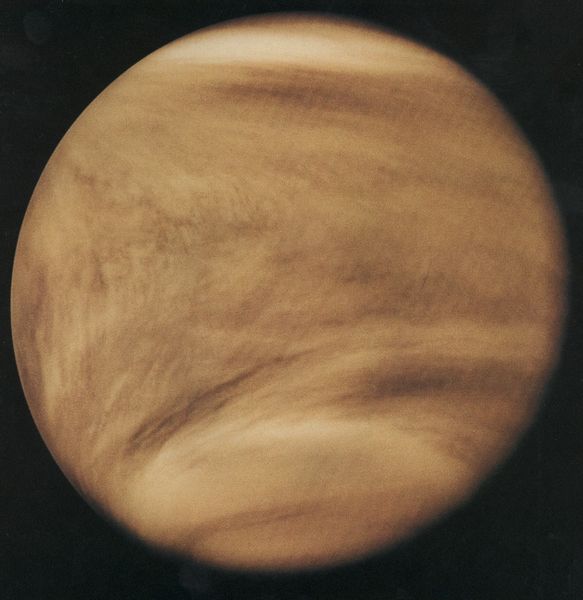
Global view of Venus from NASA Pioneer Orbiter mission
Venus from NASA's Pioneer Orbiter mission. Useful as a full-disk visual reference when planning daytime Venus acquisition and limb contrast. Image credit: NASA/JPL-Caltech.

Occultation Geometry: What Is Actually Happening in the Sky

A lunar occultation happens when the Moon passes directly between Earth and a background object along your line of sight. In this case, the background object is Venus. Although Venus is physically much closer to Earth than most occulted stars, the geometry is still a precise line-of-sight event: if your location shifts, your contact times shift too.

This is why one city can report a clean full occultation while another reports only a near miss. The Moon is close enough to Earth that parallax is significant. Move a few hundred miles and the Moon appears in a slightly different position against the background sky, changing whether Venus tucks behind the lunar limb, just skims it, or remains separated.

For observers, the event has two headline moments:

  • Ingress: Venus disappears behind the Moon's leading limb.
  • Egress: Venus reappears from the opposite limb after the hidden interval.

In a stable setup, ingress can look abrupt because Venus is compact and brilliant. Egress often feels even more dramatic since the planet pops back into view quickly against a bright daytime background. If you are recording video through a telescope, contact frames are usually the most valuable deliverable from the entire session.

One key planning advantage for this event is that the Moon itself is your acquisition anchor. Unlike daylight Venus hunts where you must locate the planet in an empty sky, here you can lock onto the Moon first, then move to the expected contact point on the limb. That greatly reduces search time and stress in the field.

City Planning Table: How to Build Your Local Contact Window

The time-zone table above gives you a center-of-window estimate. The table below is a practical checklist format for major US metros. It does not replace a precision occultation calculator, but it helps you structure your timeline and reduce failure points. The most common reason people miss daytime occultations is starting setup too late.

City Planning Mid-Event Setup Start Best Practical Note
New York, NY~3:45 PM ET2:45 PM ETUse rooftop edge or tall building as Sun block.
Atlanta, GA~3:45 PM ET2:40 PM ETHumidity can soften contrast; prioritize clean optics and shade.
Chicago, IL~2:45 PM CT1:45 PM CTTripod-mounted binoculars improve contact confidence.
Dallas, TX~2:45 PM CT1:35 PM CTHeat shimmer can be strong; start earlier while air is steadier.
Denver, CO~1:45 PM MT12:50 PM MTHigh-altitude transparency can make Venus acquisition easier.
Phoenix, AZ~12:45 PM MST11:45 AM MSTUse a lens hood and keep equipment shaded between checks.
Salt Lake City, UT~1:45 PM MT12:45 PM MTPick a site with wide sky plus nearby hard shadow line.
Los Angeles, CA~12:45 PM PT11:40 AM PTMarine haze can reduce contrast; inland backup site helps.
San Francisco, CA~12:45 PM PT11:35 AM PTWind can shake gear; add weight to tripod center column.
Seattle, WA~12:45 PM PT11:30 AM PTCloud breaks can be short; pre-focus and rehearse quickly.

For precision, run your coordinates through a city-level occultation tool 24 to 48 hours before the event and write down both ingress and egress times in local clock time. Then set three alarms: T-30 minutes, T-10 minutes, and T-2 minutes for each contact. This simple alarm workflow dramatically improves capture rate in real sessions.

Safe Daytime Viewing Workflow

Daytime observing is not hard, but it is unforgiving. If your procedure is loose, you can waste the window searching. If your Sun separation discipline is poor, you can create an eye-safety hazard. Follow this exact sequence and do not improvise during contact minutes.

  1. T-24 hours: charge batteries, format memory cards, and verify tripod plate compatibility. Build your full kit in one place and run a dry check.
  2. T-2 hours: pre-align finder and main optics on a distant terrestrial object. Confirm that what is centered in finder is centered in eyepiece.
  3. T-60 minutes: arrive at site and choose a position where the Sun is physically blocked by a roofline, wall, or pole from your observing stance.
  4. T-30 minutes: acquire the Moon first at low power. If using binoculars, mount them before contact window begins.
  5. T-10 minutes: move to predicted contact limb. Focus carefully and avoid unnecessary eyepiece changes.
  6. At contact: keep hands off mount as much as possible. For imaging, run continuous short video bursts through ingress and egress.
  7. After contact: log times immediately. Notes made later are often inaccurate.

Safety non-negotiable: never sweep near the Sun with unfiltered optics. This event is daytime, so Sun proximity planning is mandatory.

Fast field checklist

Tripod locked, Sun blocked, Moon acquired, focus locked, time alarms active, video rolling before expected contact.

Best Gear for This Event

For most observers, 10x50 to 15x70 binoculars on a stable support are the highest-value setup. A short focal length 70mm refractor is ideal if you want a cleaner, larger Venus disk during contacts. The single biggest mistake people make is assuming magnification alone wins. For this event, fast acquisition and stable framing are more important than pushing power.

Think in three tiers:

  • Tier 1 (most reliable): 10x50 binoculars handheld or on monopod. Quickest way to confirm Venus and follow the limb.
  • Tier 2 (best detail/value): 15x70 binoculars on tripod. Better planetary contrast and cleaner contact confidence.
  • Tier 3 (best for recording): 70mm refractor on steady alt-az mount with 20mm and 10mm eyepieces ready.

If you already own a long-focal telescope, do not force it to be your primary search instrument. Use binoculars first, then move to the telescope for close-up contact work. This two-step approach is how experienced observers avoid last-minute misses.

Editor's Pick - Best Value for Daytime Occultation
Celestron SkyMaster 15x70 binoculars

Celestron SkyMaster 15x70

Wide enough to acquire quickly and powerful enough to hold Venus distinctly against daytime sky glow. Works best on a tripod.

Celestron AstroMaster 70AZ telescope

Celestron AstroMaster 70AZ

Simple manual mount and easy daytime targeting make this a practical first telescope for occultation sessions.

Need a full beginner setup plan? Check current AstroMaster 70AZ price ->

Goal Recommended Tool Magnification Range Why It Works
Fast acquisition10x50 binoculars10xWide field and forgiving handoff from naked-eye Moon.
Best budget detail15x70 binoculars on tripod15xNoticeably stronger Venus contrast in daytime sky.
Contact timing capture70mm refractor + phone adapter20x to 50xStable limb framing and easy video capture workflow.
Fine visual confirmation70 to 100mm refractor40x to 80xSharper Venus disk near ingress and egress transitions.

What You Will Actually See at Ingress and Egress

Most first-time observers expect a dramatic cinematic fade. In practice, contact behavior is quick and subtle unless your optics are stable and focused. Here is what a successful session typically looks like:

  1. Pre-contact: Venus appears as a tiny bright point near the lunar limb with slight shimmering from daytime turbulence.
  2. Ingress seconds: the point appears to kiss the limb and then vanish rapidly, often within a very short interval.
  3. Hidden phase: Venus is fully behind the Moon. Use this time to recheck framing, focus, and timestamp logging.
  4. Egress seconds: a bright spark returns at the opposite limb and quickly separates into a clean point as the Moon advances.
  5. Post-contact: Venus drifts away from the limb and becomes easier to hold as your eye adapts to the exact sky location.

If you observe with 15x70 binoculars, you may not resolve a distinct Venus disk shape, but you can still record very usable contact timing and produce compelling visual confirmation. With a small refractor above 40x in steady air, Venus can look more planetary and less stellar, making the disappearance and reappearance even more memorable.

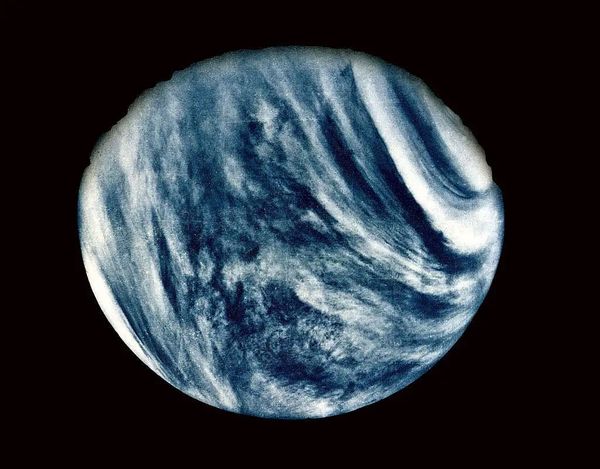
Venus cloud tops viewed by Hubble in ultraviolet light
Venus cloud tops viewed by Hubble (PIA01544). This ultraviolet view illustrates atmospheric structure and why Venus remains a high-interest target for observers and educators. Image credit: NASA/JPL.

How to Photograph the Event (Phone, Mirrorless, or Planetary Camera)

For discover-friendly visual content, this event is excellent because the Moon provides strong framing and Venus provides a clear point target. You do not need a deep-sky rig. The most repeatable strategy is short video bursts around predicted contacts plus stills before and after.

Recommended capture approaches:

  • Smartphone through eyepiece: easiest path for most users. Use a phone adapter, lock focus/exposure, and shoot 4K clips of 15 to 30 seconds.
  • Mirrorless/DSLR at prime focus: cleanest single-frame quality if tracking is stable. Start around fast shutter speeds because daytime sky brightness is high.
  • Dedicated planetary camera: best contact timing and frame extraction if you can process video afterward.

Do not chase perfect artistic framing during ingress. Prioritize keeping the contact limb and Venus in the same stable field. A centered, stable, slightly less artistic frame is more valuable than a dramatic frame that drifts at the key second.

Baseline phone settings

  • 4K 30fps video
  • Exposure compensation: -0.3 to -1.0
  • Focus locked manually if app supports it
  • Clip length: 20s bursts every minute near contact

Baseline telescope settings

  • Start at low power for acquisition
  • Move to 40x to 60x only after lock
  • Use slow-motion controls, not quick pushes
  • Keep one eyepiece unchanged during contact window

Cloud and Backup Strategy: How Not to Lose the Event

Because this is a daytime event, thin cloud can be more destructive than many people expect. Venus is bright, but contrast against a bright sky drops quickly when haze thickens. Build two backup layers: a nearby mobility plan and a remote documentation plan.

Layer 1: mobility plan. Keep at least one alternate location within a 45 minute drive that historically has better transparency. Leave early enough that you can still complete setup at the backup site. If cloud breaks are moving fast, the team that is pre-set in multiple clearings usually wins.

Layer 2: documentation plan. If full observation is blocked, still capture context frames of the Moon position, sky conditions, and your setup timeline. For content publication and discover feed relevance, process transparency and methodology notes are valuable even when the primary contact clip is partial.

Practical go/no-go threshold

If Venus is not consistently visible in your optics by T-15 minutes, switch from high-detail plan to contact-only plan: wider field, lower power, and continuous recording.

Why This Event Matters Scientifically and Educationally

Lunar occultations remain one of the best gateway events for practical positional astronomy. They turn abstract orbital mechanics into a direct visual result you can time, document, and compare against predictions. For outreach groups, this event is especially useful because participants can understand it immediately: the Moon covers Venus and then reveals it again.

Historically, occultation timings have been used to refine orbital models and validate positional catalogs. Modern precision tools are far better, but amateur observations still matter for education, public engagement, and observational training. Learning to prepare for contact timing builds strong habits that transfer directly to eclipses, transits, and close conjunction work.

From a skills perspective, this event trains five core capabilities:

  • Daytime target acquisition without computerized hand-holding.
  • Instrument stability and focus discipline under time pressure.
  • Logbook rigor using local time, UTC reference, and contact notes.
  • Short-form planetary imaging workflow for social and educational sharing.
  • Weather risk management and backup observing strategy.

If your goal is to grow from casual skywatching into repeatable, high-quality observation, this is one of the best events of 2026 to practice on. It is rare enough to be exciting, predictable enough to plan, and practical enough that beginner equipment can still succeed.

FAQ

Can I see this without a telescope?
Yes, but binoculars make daytime acquisition far easier and improve confidence on contact timing.
Is this safe to observe?
Yes, if and only if you keep optics well away from the Sun and use a blocked-sun observing position.
Why is this event trending?
Daytime lunar occultations of bright planets are uncommon, practical to observe, and highly shareable, which drives short-burst search demand.
Can I observe this from a city with heavy light pollution?
Yes. Light pollution is much less important in daytime than transparency, haze, and glare control. A shaded observing position and stable optics matter more than dark-sky quality.
What is the biggest reason people miss occultation contacts?
Late setup. Most misses happen because observers start searching too close to ingress. Be on target 10 minutes early with focus already locked.