Telescope Advisor Logo Telescope Advisor
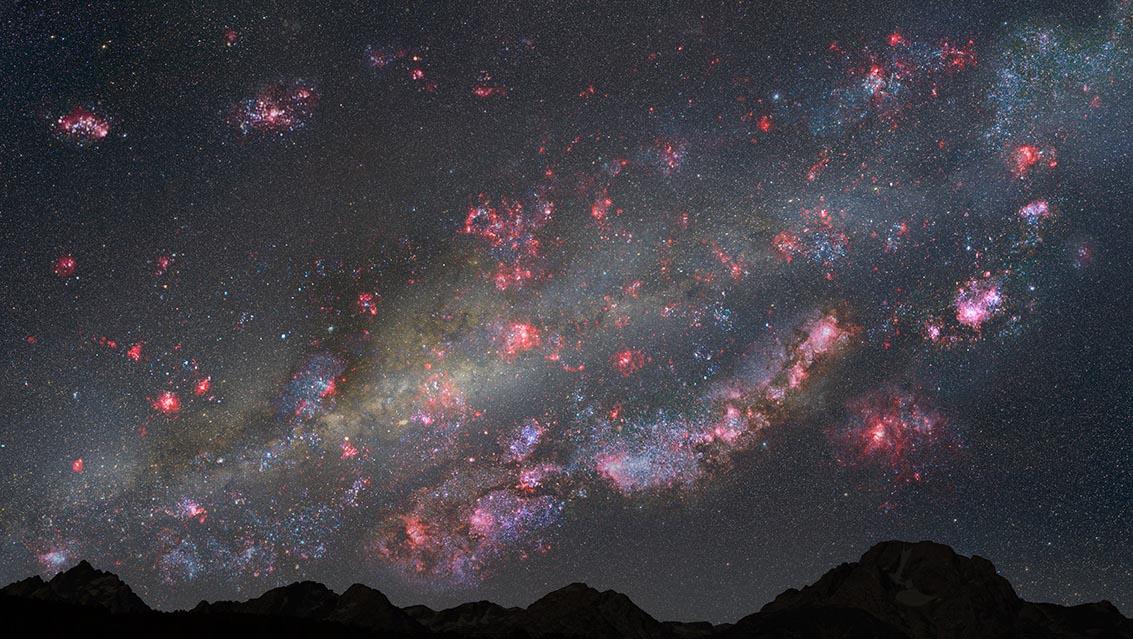
Milky Way over a dark observing site used as a hero image for the monthly sky guide

Monthly Observing Plan

Night Sky This Month (June 2026):
What to See Tonight with Binoculars and Telescopes

This is the practical monthly sky guide for real observers, not a generic star chart list. We cover what is actually visible this month, when to look, what each target really looks like, and which beginner-friendly setup gives the best return per night under real skies.

June 9

Venus-Jupiter conjunction

June 25

New Moon dark-sky window

3 Tiers

Naked eye, binocular, telescope

3000+

Word tactical field guide

By Telescope Advisor Editorial Team Published: Updated: Editorial Standards

Quick Answer: What Should You Observe This Month?

Start with the June 9 Venus-Jupiter conjunction at dusk, then use the June 25 new-moon week for deep-sky targets. If you have only one short session this week, look west-northwest 30 to 50 minutes after sunset to catch Venus and Jupiter paired in twilight. If you can schedule longer sessions, reserve your best nights for the new-moon window when the sky is darkest and galaxies, globular clusters, and faint nebulae become far easier.

For most readers, the highest success setup this month is 10x50 or 15x70 binoculars plus one simple telescope session plan. Binoculars frame large conjunctions, star clouds, and wide open clusters quickly. A moderate telescope then helps with planetary detail and compact deep-sky objects. The point is not to chase every object. The point is to complete successful sessions you actually enjoy and repeat.

If you are still choosing gear, we recommend building around one all-purpose telescope and one practical binocular pair. Use the picks below only as examples of the class of instrument that performs consistently for beginners and intermediates under suburban skies.

This Month at a Glance: The Practical Plan

Most monthly sky guides overwhelm beginners with long object lists but do not tell you where to invest your time. This guide uses a simple objective: maximize successful sessions with minimal frustration. That means prioritizing bright, high-confidence targets in shorter sessions, then stacking in deeper targets once you have momentum and darker skies.

In June 2026, your highest-reward order is straightforward. First, capture the dusk conjunction window while Venus and Jupiter still share the same region of sky. Second, transition to deep-sky work centered on the June 25 new moon. Third, keep one moon-focused session as a backup for nights with haze, humidity, or poor seeing. Moon and bright double stars remain productive when faint targets do not.

The most common reason people quit is not bad gear; it is mismatched expectations. A 70mm to 130mm beginner scope will not deliver magazine-level galaxy structure from a suburban driveway. It will, however, give beautiful lunar detail, clear Jupiter moon lines, Saturn ring shape, bright clusters, and enough deep-sky wins to make you come back the next night. Treat this month as a training cycle: high-confidence targets first, then progressive difficulty.

If you follow one rule only, use this: match target type to sky condition. Transparent dark nights are for galaxies and nebulae. Average suburban nights are for clusters and bright doubles. Humid bright-moon nights are for lunar terrain and planets. This one decision rule improves results more than buying an extra accessory.

Week-by-Week Observing Calendar (June 2026)

Use this as your operating schedule. Instead of asking what is visible in theory, ask what is worth observing this week with your available time and local sky quality.

Week Best Focus When to Observe Primary Targets
June 1-8 Conjunction buildup Dusk, 30-60 min after sunset Venus-Jupiter pairing, bright crescent moon when present
June 9-15 Event capture + transition Dusk for planets, late evening for clusters Conjunction peak, M13, M3, Albireo, Scorpius region from darker sites
June 16-23 Dark-sky ramp Late evening to midnight Leo and Virgo galaxies, Lagoon and Trifid from lower latitudes
June 24-30 New moon deep-sky week Full dark window Milky Way structure, globulars, faint open clusters, wide-field scanning

Treat this as a living guide. Your local weather, smoke, humidity, and horizon obstructions matter more than a generic list. If transparency is poor, downgrade to brighter targets immediately instead of forcing faint objects and ending with frustration.

Must-See Events This Month

1) Venus-Jupiter Conjunction (June 9)

This is the signature event of the month. Venus and Jupiter appear within roughly 1.5 degrees, close enough to fit comfortably in binoculars. For many observers, this is the easiest high-impact sky event to share with family because it happens at a convenient evening time and is visible even from light-polluted locations. Use low-power binoculars first for framing, then switch to telescope for planet-by-planet detail.

If clouds block June 9 itself, do not abandon the event. June 7 to June 11 still gives an excellent visual pairing. The practical win is consistency over one perfect date. For deeper field details and optics strategy, see our dedicated conjunction playbook at the Venus-Jupiter guide.

2) New Moon Dark-Sky Window (June 25 centered)

Your highest deep-sky success probability this month sits around the new moon week. Plan your longest session here. If you have never attempted galaxy and nebula work from a darker location, this is the time to do it. Focus on easy wins first: M13, M3, M11, and bright Sagittarius targets if your southern horizon is clear.

3) Summer Milky Way Opening

By late June, the summer Milky Way becomes a major visual feature from dark sites. Binocular sweeping through Cygnus, Scutum, and Sagittarius can deliver a memorable session without chasing difficult catalog objects. This is where wide-field observing beats maximum magnification. A stable chair, printed list, and disciplined adaptation to darkness produce better outcomes than constant eyepiece swapping.

Planet Visibility and Realistic Expectations

Planet observing is where expectation gaps hurt beginners most. This section is intentionally honest. What you see through amateur telescopes can be beautiful, but it is subtle compared to stacked astrophotography images. Learning what to look for is a skill, and this month gives a strong training set.

Venus

Venus is brilliant in twilight and ideal for quick sessions. Through a telescope, expect phase shape, not cloud detail. The most valuable learning point is recognizing how quickly phase and apparent size change over weeks. Record short notes after each session and compare. This builds your observing eye faster than chasing one high-power perfect view.

Jupiter

Jupiter remains a productive target early in the month, especially in the conjunction window. In steady seeing, you can catch two major equatorial cloud belts and moon transits with modest aperture. If seeing is unstable, lower magnification rather than forcing blurrier high-power images. Jupiter rewards patience and repeated short looks more than long continuous staring.

Saturn

Saturn is still more of a pre-dawn target this month as it builds toward better positioning later in the year. If you can only observe evenings, prioritize Venus and Jupiter now and save your Saturn campaign for the months closer to opposition. If you do catch Saturn before dawn, keep magnification moderate and wait for stable moments to resolve ring shape cleanly.

Mars

Mars is not a prime target in 2026. This is not a gear problem; it is orbital geometry. Manage expectations and allocate your time to stronger targets. Save intensive Mars efforts for the approach to the 2027 opposition window when apparent size improves significantly.

Best Deep-Sky Targets This Month (Ranked by Difficulty)

Deep-sky success improves when you group targets by difficulty and sky requirement. Instead of random object hopping, use a staircase approach: complete all easy targets first, then climb. That structure increases completion rates and confidence.

Easy Tier (Suburban Friendly)

M13 (Hercules Globular Cluster) is the month-defining easy win for telescopes of almost any size. In small scopes it appears as a bright textured ball; in larger apertures it begins to resolve into stars. M3 is similarly rewarding and often cleaner depending on local sky quality. Albireo, while not deep-sky in the strict sense, is an excellent color-contrast double star that performs even when transparency is average.

Medium Tier (Needs Better Transparency)

M11 (Wild Duck Cluster) in Scutum is a rich and highly satisfying target once it climbs enough for your latitude. M27 (Dumbbell Nebula) can be attempted in darker suburban skies, especially with UHC-type filters, though filter usage should come after basic target acquisition skill is stable.

Dark-Site Tier (New-Moon Priority)

Use your June 25 dark window for Lagoon Nebula (M8), Trifid (M20), and galaxy sweeps in Leo and Virgo. From moderate latitudes, altitude and horizon quality matter. If these sit low and washed out, switch immediately to globular clusters overhead for better results. The practical skill here is not stubbornness, but target substitution.

For constellation-based navigation to these targets, our dedicated guides for Sagittarius, Lyra, and Scorpius provide practical star-hop routes.

Moon Phase Strategy That Actually Works

The Moon is not the enemy. Poor planning is. Most disappointing sessions happen because observers attempt faint targets under bright moonlight and then blame optics. Split your month by lunar phase and assign target categories before you go out.

Bright moon nights: prioritize lunar terrain, bright double stars, and Jupiter. Half moon and lower: begin cluster and brighter nebula work. New-moon window: reserve for faint galaxy and nebula attempts. This three-mode approach dramatically improves perceived success and keeps observing momentum high across the entire month.

If weather compresses your available nights, do not wait for perfect conditions to observe at all. Run shorter moon-night training sessions focused on alignment, finder usage, and focus control. Those skills compound and directly improve dark-sky performance later in the month.

Best Equipment Plan for This Month

You do not need a complex gear stack to win this month. One binocular setup and one telescope setup are enough for nearly every target listed above. Choose based on use case and time available, not spec-sheet maximalism.

Editor's Pick - Most Versatile This Month
Celestron NexStar 8SE telescope

Celestron NexStar 8SE

For users who want one instrument to cover lunar detail, Jupiter moon tracking, and brighter deep-sky targets with GoTo convenience, this remains a strong monthly all-rounder. It is not a true wide-field conjunction tool, but for object-by-object observing it is efficient and repeatable.

Sky-Watcher Heritage 130P telescope

Sky-Watcher Heritage 130P

A strong value option for this month, especially for observers who want bright deep-sky performance without heavy cost. Great for M13, M3, and wide training sessions from suburban skies when paired with realistic expectations.

Celestron SkyMaster 15x70 binoculars

Celestron SkyMaster 15x70 Binoculars

The best fast-response companion for this month. Perfect for conjunction framing, wide-field sweeps, and low-friction sessions when setup time is limited. Use with tripod support for cleaner star-point performance.

🔭

Not sure which telescope actually fits your goals?

Answer 5 quick questions about your budget, observing targets, and experience level — our Telescope Finder Tool recommends a specific model in under 2 minutes.

Find My Telescope →

Session Blueprints: 30, 60, and 120 Minutes

30-Minute Quick Win Session

Goal: end with visible success every time. Start at dusk with Venus and Jupiter framing in binoculars. Switch to one telescope object only, either Jupiter detail or lunar terrain depending on moon phase. Finish with one easy cluster (M13 or M3) if sky allows. Do not over-rotate eyepieces and do not chase faint targets.

60-Minute Balanced Session

Goal: one planetary observation plus two deep-sky targets. Run 10 minutes alignment and focus calibration, 15 minutes planet work, 20 minutes easy deep-sky targets, 10 minutes note-taking and sketching, 5 minutes teardown. The note-taking block is critical; it compounds future performance and target confidence.

120-Minute Dark-Sky Session

Goal: maximize new-moon potential. Start with bright setup targets, then move into medium targets while your eyes adapt. Save faintest object attempts for the middle of the session once your workflow is stable. End with a high-confidence object to avoid finishing on a miss. This simple sequencing prevents morale collapse and keeps long sessions productive.

9 Mistakes That Waste This Month's Best Opportunities

  1. Waiting for perfect weather instead of running short fallback sessions.
  2. Using high magnification too early in unstable seeing.
  3. Ignoring moon phase and attempting faint targets under bright lunar sky.
  4. Skipping finder alignment before full darkness.
  5. Trying too many objects and finishing with zero completed observations.
  6. Assuming poor views mean bad optics instead of poor transparency or thermals.
  7. Not recording what worked, so every night restarts from zero.
  8. Treating accessory purchases as a substitute for target and session discipline.
  9. Ignoring horizon obstructions when planning conjunction and low-altitude events.

If you fix only three of these, fix moon-phase matching, magnification control, and short-session discipline. Those three changes alone typically double useful observation output for beginners in the first month.

City Sky vs Dark Sky: What Changes, What Does Not

A large percentage of monthly sky guides quietly assume near-dark conditions, then readers in Bortle 7 to 9 suburbs feel that they are doing something wrong when faint objects fail. You are not doing something wrong. The sky context changes target economics. Once you adjust target selection and session sequencing to your local sky, your results improve immediately even with the same gear.

Under city skies, planetary and lunar sessions remain excellent. Bright clusters remain very workable. Double stars can be fantastic. What degrades hardest are low surface-brightness galaxies and diffuse nebulae. This is why the same telescope can feel incredible one night and disappointing another night. It is not only aperture. It is contrast budget.

The practical model is simple. In city skies, run high-contrast targets on weekdays and reserve deep-sky travel sessions for new-moon weekends. The month becomes sustainable and you stop betting every session on rare perfect conditions. This is how experienced observers maintain frequency and still get deep-sky rewards.

Bortle-Adjusted Target Stack

Bortle 8-9: Moon, Jupiter, Venus, double stars, M13, M3, brightest open clusters. Bortle 6-7: add brighter nebulae with good transparency and careful adaptation. Bortle 4-5: broad deep-sky program is practical, including medium galaxies. Bortle 2-3: wide-field binocular work becomes a headline experience, not just a warm-up.

If your goal is to improve from city conditions, do not start by buying new optics. Start by protecting dark adaptation, reducing local glare, and selecting targets above 35 degrees altitude where extinction and haze are lower. This one shift can produce a bigger improvement than moving from one beginner scope to a slightly larger one.

Urban Optimization Checklist

  1. Use a hood, balcony wall, or dark cloth to block direct local light sources.
  2. Let your eyes adapt for at least 20 minutes before faint-target attempts.
  3. Keep screen brightness extremely low and use red-shifted display modes.
  4. Prioritize targets near meridian transit for maximum altitude and contrast.
  5. Use a narrower target list with higher completion probability.
  6. Schedule one dark-site trip per lunar cycle if possible.

Most observers who apply this checklist report that they stop feeling random luck and start feeling repeatable control. The key outcome is consistency. Consistency is what keeps skills improving month after month, which in turn makes each dark-sky session dramatically more productive.

Advanced Workflow: How to Turn Monthly Guides into Compounding Skill

If your goal is long-term progress, you should treat each month as a cycle with planning, execution, and review. Most people only execute. They go outside, point the scope, and hope. The compounding approach is to decide what you are training this month, then measure whether that training happened. This is how intermediate observers quickly become confident independent planners.

Step 1: Set a Monthly Training Goal

Pick one core skill objective. Examples: improve star-hopping speed, improve focus and seeing judgment, improve planetary detail recognition, or improve deep-sky detection confidence. Do not choose five goals. Choose one primary and one secondary. This keeps sessions coherent and prevents decision fatigue.

For June 2026, a high-value primary goal is twilight event execution plus dark-window deep-sky transition. That means you train two linked skills: fast setup and framing at dusk for conjunctions, and then disciplined object sequencing during new-moon nights.

Step 2: Build a Tiered Target Card

Create three target tiers before the session. Tier A is guaranteed success. Tier B is moderate challenge. Tier C is stretch. Your session begins with one Tier A target to stabilize confidence and calibration, then one Tier B target when conditions are confirmed, then one Tier C attempt only if both time and transparency support it.

This avoids the common failure mode where observers start with a faint stretch object, fail early, and mentally downgrade the entire night. Early wins are not trivial. They create anchor confidence and reveal whether your optical train, focus, and sky assumptions are valid.

Step 3: Use Time Boxes, Not Endless Target Hopping

Assign time boxes: 12 minutes for acquisition, 8 minutes for observing notes, 5 minutes for transition. If acquisition fails after the time box, downgrade one tier and move on. This preserves momentum and increases total completed observations. A month of completed observations teaches more than a month of stubborn failed hunts.

Time boxes also make shorter weeknight sessions useful. You can complete two quality observation blocks in 40 minutes and still build skill. Many people overestimate the need for long sessions when the real missing piece is structure.

Step 4: Keep a Minimal Observing Log That You Actually Maintain

A practical log has five fields: date/time, sky condition, instrument setup, completed targets, and one lesson. Keep it minimal so you maintain it. Overly detailed logs are often abandoned after a few sessions. Your log should be light enough to survive real life and busy schedules.

By the end of three months, your own data will outperform generic advice because it reflects your exact latitude, local horizon, equipment, and schedule constraints. That personal model becomes your strategic edge.

Step 5: Run a Monthly Debrief and Carry Forward One Improvement

At month end, ask three questions. Which sessions had the highest completion rate? Which targets repeatedly failed and why? What one change would improve next month's baseline? Then carry one improvement forward. Do not carry ten improvements. One improvement sustained over six months beats ten short-lived experiments.

For many observers, the best carry-forward improvement is pre-session preparation: target card finalized before sunset, eyepiece plan fixed, and backup moon or planet targets selected in case transparency collapses. This single habit often doubles completed observations because it eliminates field-time decision drift.

Performance Benchmarks You Can Use Immediately

  • Beginner monthly benchmark: 6 completed sessions, 18 completed target observations.
  • Intermediate benchmark: 8 completed sessions, 30 completed target observations, with at least 6 logged retries of the same object under different conditions.
  • Dark-sky benchmark: at least one session around new moon with a pre-ranked target stack and full debrief.
  • Planetary benchmark: at least three separate looks at Jupiter or Venus across the month to train comparison skill, not one single night impression.

The reason this framework matters for this monthly page is simple. Ranking pages bring traffic, but recurring monthly observers build trust. Trust drives return visits, tool usage, and conversions over time. A monthly guide that helps readers execute real sessions becomes an asset that compounds, not a one-time article.

FAQ: Night Sky This Month

What is the single best night to observe this month?

If you want one standout event, choose June 9 for the Venus-Jupiter conjunction. If you want maximum deep-sky performance, choose a clear night centered around the June 25 new moon.

Can I use binoculars instead of a telescope this month?

Yes. In fact, binoculars are often better for conjunction framing, open clusters, and wide Milky Way sweeps. A telescope adds detail, but binoculars deliver faster success in short sessions.

How dark does my sky need to be for deep-sky targets?

Bright globular clusters and open clusters are accessible from many suburban skies. Fainter nebulae and galaxies improve dramatically under darker skies and during the new-moon window.

Should I chase high magnification for better views?

Not by default. Start lower, confirm focus and stability, then increase gradually. Atmospheric seeing usually sets the real limit before your optics do.

How often is this page updated?

This page is designed as an evergreen monthly hub and is updated each month with new target priorities, event timings, and sky-window strategy.