Neptune Opposition September 2026: Best Date, Time, and Telescope Guide
Telescope Advisor Logo Telescope Advisor
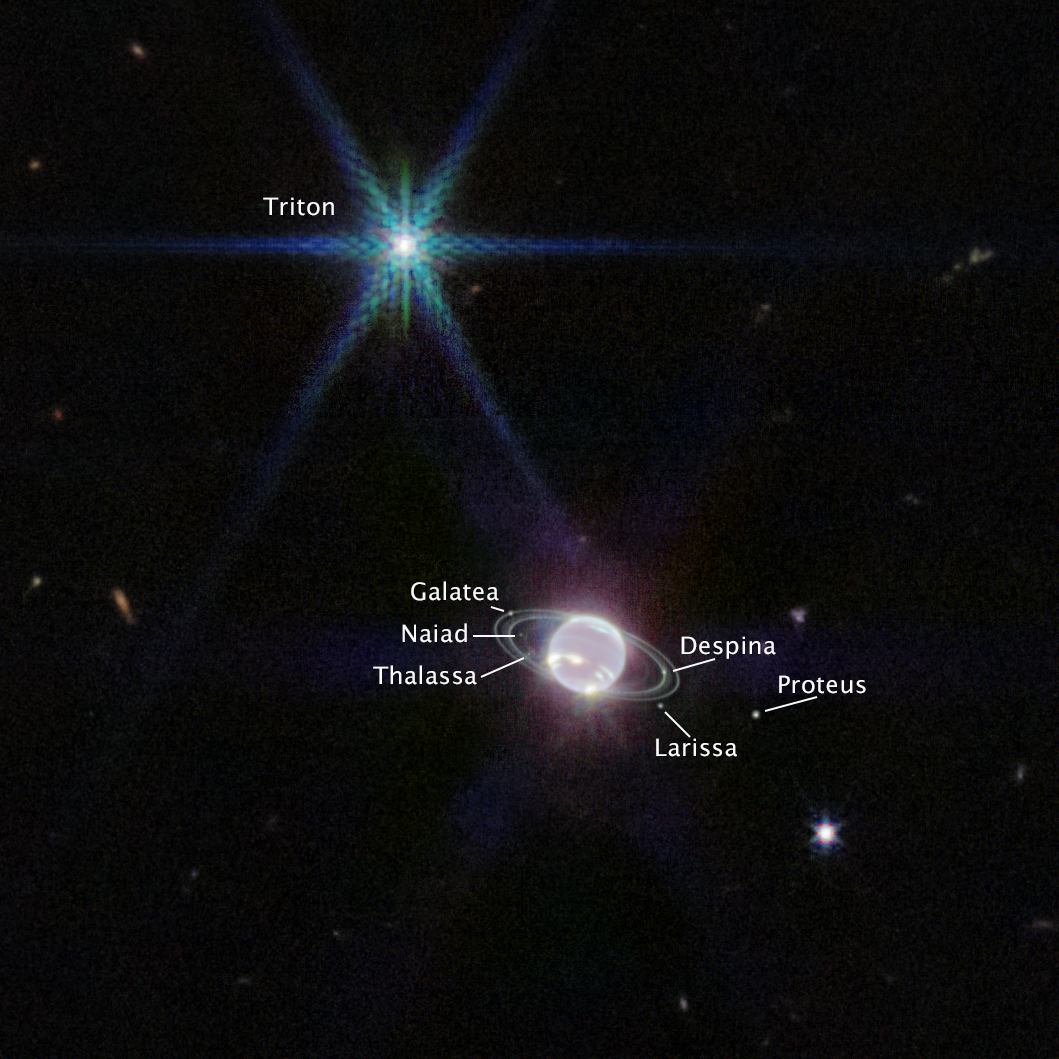
Neptune with labeled moons in a NASA Webb image

Planet Event Guide

Neptune Opposition September 2026:
How to See It with a Telescope

Neptune reaches opposition in late September 2026, giving you the best annual window to spot the most distant major planet. Here is the exact timing, the realistic visual view, and the setup that gives beginners the highest chance of success.

Sep 23

Opposition date (2026)

7.8

Approx visual magnitude

2.4″

Tiny apparent disc

150x+

Useful magnification

By Telescope Advisor Editorial Team Published: Updated: Editorial Standards

Quick Answer

Neptune is easiest to observe around opposition, but you will not see rings or cloud details visually.

At opposition, Neptune is opposite the Sun in our sky, rises around sunset, and stays visible all night. That means longer observing time, slightly brighter appearance, and better chances to identify the planet as a blue-gray disc with medium to high magnification.

Neptune Opposition 2026: Date and Best Observing Window

Neptune opposition falls on September 23, 2026. Your best practical viewing window is from about September 10 through October 10, when the planet is already high enough after dark and remains up most of the night.

Time Window What Improves What to Do
2-3 weeks before Longer evening visibility Practice star-hop with low power
Opposition week Peak brightness and all-night access Use 120x-200x on steady nights
2-3 weeks after Still strong visibility Try for Triton with larger aperture

What Neptune Looks Like Through Different Telescopes

70mm-90mm

Neptune appears star-like at low power. At around 100x you may notice a tiny blue tint, but resolving a clear disc is difficult.

100mm-150mm

At 120x-200x, Neptune becomes a very small blue-gray disc. This is the sweet spot for most backyard observers.

200mm+

Disc is easier to hold, and Triton may be visible in dark steady skies. Rings remain invisible in visual observing.

Deep dive: Can You See Neptune's Rings with a Telescope?

How to Find Neptune in 5 Steps

  1. Open a sky app like Stellarium or SkySafari and set your exact location and time.
  2. Locate Neptune in Pisces before your session and note a nearby reference star pattern.
  3. Start with a low-power eyepiece (25mm-32mm) to identify the target field quickly.
  4. Center the suspected point, then switch to medium/high magnification (10mm to 6mm equivalent).
  5. Confirm over multiple nights: Neptune will shift slowly against background stars.
Beginner tip: If the object never looks slightly non-stellar at 150x on a calm night, you likely centered the wrong star. Re-check with your app and finder alignment.

Good Telescope Types for Neptune Opposition

Editor's Pick - Easy Tracking for Planet Nights
Celestron NexStar 8SE telescope

Celestron NexStar 8SE

Great for high-magnification planetary sessions with GoTo tracking that keeps Neptune centered while you dial in focus.

View on Amazon →
Sky-Watcher Heritage 130P

Sky-Watcher Heritage 130P

Affordable aperture with enough light-gathering to resolve Neptune's tiny disc when seeing conditions cooperate.

View on Amazon →

Frequently Asked Questions

Can I see Neptune with binoculars at opposition?

Under dark skies, large binoculars can show Neptune as a faint star-like point. To identify it as a planet, a telescope is strongly recommended.

Can I see Neptune's rings in 2026?

No. Neptune's rings are far too faint for amateur visual observing. Opposition improves planet visibility, not ring detectability.

What is the best magnification for Neptune?

For most scopes, 120x-200x is the practical range. Higher power only helps when atmospheric seeing is stable.

Sources and Review Notes

Last reviewed: . Opposition timing and observing constraints are based on standard planetary ephemerides and practical backyard-observing limits.

  • NASA Neptune fact sheet and mission data context.
  • Observer reports from advanced amateur forums on Neptune/Triton visibility.
  • Sky and Telescope guidance for planetary high-magnification observing.

Related Guides