
Telescope Advisor Logo Telescope Advisor
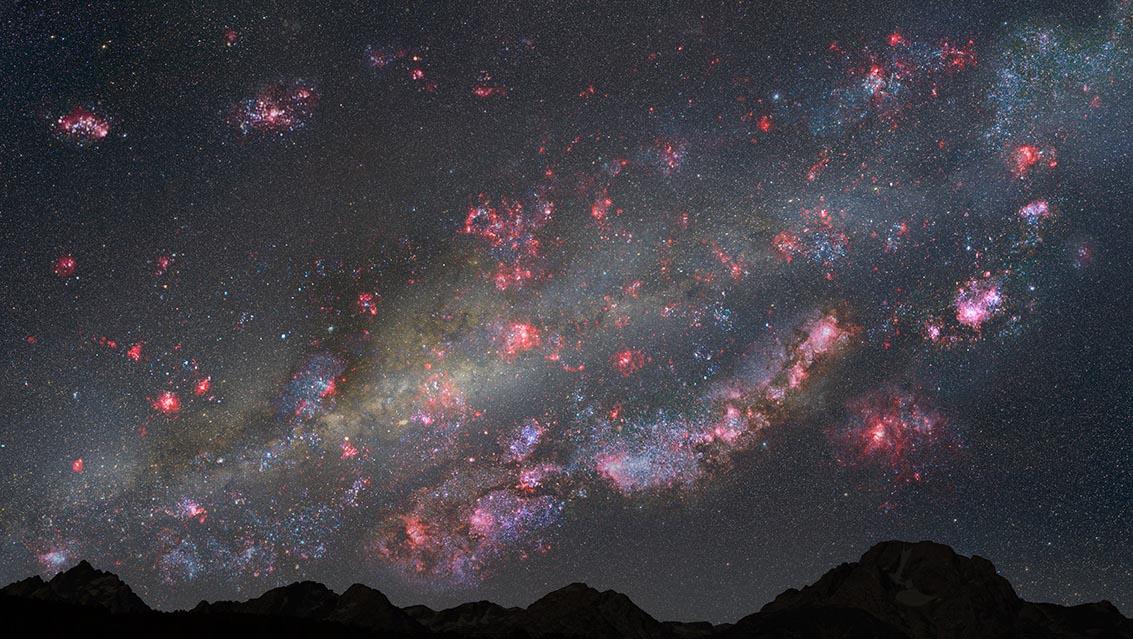
The Milky Way rising over the southern summer sky — Ophiuchus and the galactic center are a dominant feature of the southern summer sky band

Constellation Guide · Summer 2026

Ophiuchus: The Serpent Bearer — Complete Constellation Guide

Ophiuchus is a sprawling summer constellation that straddles the celestial equator and extends into the heart of the Milky Way — home to more globular clusters than any other constellation, the Barnard's Star (the fastest-moving star in the sky), and the center of the ongoing debate about whether it should be considered the 13th zodiac sign.

Best visibilityJune–August (culminates July)
Brightest starRasalhague (α Oph) — mag 2.07
Deep-sky objects7 Messier globular clusters
Constellation size948 sq deg (11th largest)
By Telescope Advisor Editorial Team Published: Updated: Editorial Standards

Ophiuchus at a Glance

Ophiuchus (oh-FEE-yoo-kus) — the Serpent Bearer — is one of the most underappreciated constellations in the night sky. Despite being the 11th largest constellation by area and dominating the summer Milky Way between Scorpius and Sagittarius, it lacks the popular name recognition of neighboring Scorpius or the mythology familiarity of Sagittarius.

For amateur astronomers, Ophiuchus is a treasure chest. The constellation contains seven Messier globular clusters — M9, M10, M12, M14, M19, M62, and M107 — more than any other constellation in the sky. These ancient spherical star cities, some containing hundreds of thousands of stars, are all within reach of a 4-inch telescope under dark skies.

Ophiuchus also contains Barnard's Star — the fourth-nearest star to Earth and the fastest-moving star visible to amateur astronomers, moving 10.3 arcseconds per year across the sky. At this rate, over a human lifetime, its position shifts noticeably against the background of faint stars.

Ophiuchus Quick Facts

IAU designationOph (Ophiuchus)
Right Ascension16h 57m – 18h 40m
Declination−30° to +14°
Area948 square degrees
Stars (naked eye)~35 (V < 5.5)
Messier objects7 (all globular clusters)
Bordering constellationsSerpens (×2), Scorpius, Sagittarius, Aquila, Hercules, Libra
Best viewingCulminates July (southern horizon N. hem.)


How to Find Ophiuchus in the Night Sky

Ophiuchus is best observed during summer evenings from the northern hemisphere, culminating (reaching its highest point in the sky) in July. Despite its large size, it can be difficult to identify because its stars are moderately bright rather than brilliant — it lacks the easily recognizable shape of neighboring constellations Scorpius and Sagittarius.

Step-by-Step Guide to Finding Ophiuchus

  1. Start with Scorpius — Find the J-shaped hook of Scorpius low in the south on summer evenings. Scorpius's curved tail with Shaula (λ Sco, the stinger) is unmistakable. Scorpius forms Ophiuchus's southern border.
  2. Look for Antares — The bright red star Antares (α Sco, magnitude +0.96) marks the heart of the Scorpion. Ophiuchus lies directly above Antares in the sky.
  3. Find Rasalhague — Ophiuchus's brightest star, Rasalhague (α Oph, magnitude +2.07), is a pure white star about 25° north of Antares. It marks the head of the Serpent Bearer and is clearly visible from any dark sky.
  4. Trace the keystone shape — Ophiuchus forms a roughly house-shaped or pentagonal outline: Rasalhague at the top, Cebalrai (β Oph) to the northeast, Yed Prior (δ Oph) and Yed Posterior (ε Oph) at the lower left, Han (ζ Oph) and Sabik (η Oph) at the lower right.
  5. Note Serpens — Ophiuchus is flanked by two separate parts of the Serpens constellation: Serpens Caput (the head) to the west and Serpens Cauda (the tail) to the east. In mythology, Ophiuchus is grasping a serpent in both hands.

Visibility from the northern hemisphere

Ophiuchus is centered on the celestial equator (dec. 0° to −30°), which means it lies low in the southern sky for northern observers. From latitude 40°N (typical US latitude), Ophiuchus's southern extreme barely clears the horizon, and the best globular clusters (M62, M19, M9) are at modest altitudes (<25°). From latitudes south of 35°N, the view improves substantially. Observers in the southern US, Mexico, southern Europe, and all of the southern hemisphere have better access to Ophiuchus's deep-sky riches.

Seasonal visibility in 2026

Evening sky visibility:May – October
Culmination (due south):~21:00 local in July
Transit altitude at 40°N:~50° (Rasalhague)
Optimal observing window:June 15 – Aug 31, 2026

The Principal Stars of Ophiuchus

Ophiuchus contains a handful of bright naked-eye stars that define its shape, plus several fascinating systems of interest to double-star and variable-star observers.

Star Designation Mag. Type Distance Notes
Rasalhagueα Oph+2.07A5 III (white giant)47 lyMarks the head; name means "the head of the serpent collector" in Arabic
Sabikη Oph+2.43A2 V binary pair88 lyClose visual binary; two A-type stars orbiting each other with a 88-year period
Yed Priorδ Oph+2.74M0.5 III (red giant)171 lyName means "the hand that precedes"; deep red color contrasts beautifully with nearby Yed Posterior
Yed Posteriorε Oph+3.24G9.5 III (yellow giant)106 lyPaired optically with Yed Prior; together they form the "hand" grasping the serpent
Cebalraiβ Oph+2.77K2 III (orange giant)82 lyName from Arabic for "shepherd dog of the serpent handler"; marks the right shoulder
Hanζ Oph+2.56O9 V (hot blue star)366 lyA runaway star — ejected from its original stellar association at high velocity. One of the hottest naked-eye stars visible.
Barnard's StarV2500 Oph+9.54M4 V (red dwarf)5.96 ly4th nearest star; requires binoculars or small telescope; proper motion of 10.3″/yr — fastest in the sky
RS OphiuchiRS Oph+4.3 – 12.3Recurrent nova~5,200 lyRecurrent nova that has erupted in 1898, 1933, 1958, 1985, 2006, 2021. Next eruption unpredictable.

Barnard's Star: The Fastest-Moving Star You Can Observe

One of the most remarkable objects in Ophiuchus is also one of the most overlooked: Barnard's Star, a dim red dwarf (magnitude +9.54) that requires binoculars or a small telescope to see. Named after Edward Emerson Barnard who first measured its motion in 1916, it has the largest proper motion of any star visible from Earth — moving 10.3 arcseconds per year relative to background stars.

Why proper motion matters for observers

At 10.3 arcseconds per year, Barnard's Star moves the equivalent of the Moon's full diameter across the sky every 180 years. Over a human lifetime (70 years), it moves 12 arcminutes — about 40% of the Moon's diameter. Photographs taken 5–10 years apart clearly show its motion against the stationary background stars. This is a rare and visually verifiable demonstration of stellar proper motion — something that for almost all stars requires centuries of observations to detect.

Barnard's Star observing facts

Distance: 5.96 light-years (4th nearest stellar system to Earth)
Magnitude: +9.54 — needs binoculars or telescope
Minimum aperture: 35mm binoculars in good conditions
Spectral type: M4 Ve (red dwarf, flare star)
Current position (2026): ~RA 17h 57.9m, Dec +04° 40' (shifts yearly)
Motion: Moving almost directly toward us at 110 km/s; will reach closest approach (~3.75 ly) in ~9,800 years

Exoplanet candidates around Barnard's Star

In 2018, a team led by Ignasi Ribas of the Institute of Space Sciences (CSIC-IEEC) announced strong evidence for a super-Earth (Barnard's Star b) orbiting in the star's snowline at 0.4 AU with a 233-day period. The discovery, published in Nature, used radial velocity data from multiple observatories. Subsequent analysis has cast some doubt on the planetary interpretation, and as of 2026 the detection remains debated. The star's proximity and the ongoing observational interest mean this will be one of the most studied planetary systems for the foreseeable future.

Seven Messier Globular Clusters in Ophiuchus

No other constellation contains as many Messier globular clusters as Ophiuchus. The reason is simple: Ophiuchus lies toward the galactic center — the dense core of the Milky Way where stars are most tightly packed. Globular clusters are themselves concentrated toward the galactic center, which is why we see so many of them in Sagittarius, Scorpius, and especially Ophiuchus.

M10 — NGC 6254

★ Best

Mag +6.6 · 20' diameter · RA 16h 57m · Dec −04°

One of the two finest globulars in Ophiuchus. At magnitude +6.6 and with a relatively loose concentration (richness class VII), M10 begins to resolve into individual stars in an 80mm telescope at moderate magnification. At 20' apparent diameter it is large and satisfying — visible to the naked eye from dark skies. Distance: 14,300 light-years.

M12 — NGC 6218

★ Best

Mag +6.7 · 16' diameter · RA 16h 47m · Dec −01°

The companion of M10, only 3.5° away and of similar brightness. M12 is classified richness class IX (looser than M10) with stars that begin to resolve at lower magnification. A 4-inch telescope at 60× begins to pick out individual stars across the face. M10 and M12 make an excellent double-feature for a single eyepiece session — both fit in a wide-field eyepiece simultaneously. Distance: 15,700 light-years.

M14 — NGC 6402

Mag +7.6 · 11' diameter · RA 17h 38m · Dec −03°

Larger (at 11') but fainter and more condensed than M10/M12. M14 hosted a nova in 1938 (discovered only after the fact in archive plates) and remains one of the most studied globulars for stellar populations. Resolves in 6-inch+ telescopes at 100×. Distance: 30,000 light-years.

M9 — NGC 6333

Mag +7.7 · 9' diameter · RA 17h 19m · Dec −18°

The southernmost Messier globular in Ophiuchus, lying close to the Milky Way. M9's proximity to dark dust clouds in the galactic plane means it lies behind significant interstellar dust that dims it by about 1 magnitude. It is the 10th-closest globular cluster to Earth at ~26,000 light-years. The NGC 6356 and NGC 6342 globular clusters nearby make for an interesting comparison study.

M19 — NGC 6273

Mag +6.8 · 17' diameter · RA 17h 02m · Dec −26°

One of the most oblate (flattened) globular clusters in Messier's catalog — noticeably elliptical rather than spherical when observed at higher magnification. The flattening is thought to be due to the tidal forces of the galactic center, which M19 orbits at a relatively close distance (~5,200 ly from the galactic core). At magnitude +6.8 it is bright but very low in the sky for northern observers.

M62 — NGC 6266

Mag +6.5 · 14' diameter · RA 17h 01m · Dec −30°

Among the most massive globular clusters in the Milky Way, and one of the closest to the galactic center (~6,100 light-years). Its asymmetric appearance (the core is distinctly off-center) is caused by tidal distortion from the galactic center's gravity. Challenging for northern hemisphere observers at −30° declination. One of the 13 known globulars that may contain an intermediate-mass black hole.

M107 — NGC 6171

Mag +7.9 · 10' diameter · RA 16h 32m · Dec −13°

The faintest of Ophiuchus's Messier globulars and one of the few to show obvious dust obscuration within the cluster itself — dark lanes crossing its face are faintly visible in 8-inch and larger telescopes. Added to the Messier catalog by Helen Sawyer Hogg in 1947. At distance 21,000 light-years, it is one of the nearest globular clusters to Earth.

Globular Cluster Observing Notes

For observers with 4-inch (100mm) telescopes, M10 and M12 are the priority targets — both show obvious resolution into stars at 80–100×. M14 and M9 are rewarding in a 6-inch (150mm) instrument. M19 and M62 require a very clear, dark horizon due to their southern declination. All seven can be checked off in a single summer night session in sequence, moving southeast across Ophiuchus from M107 through M10/M12 to M62 near the Scorpius border. Ambitious observers combine this with the neighboring M4 and M80 in Scorpius for a comprehensive globular cluster marathon.

Is Ophiuchus the 13th Zodiac Sign? The Astronomical Answer

This is the most frequently searched question about Ophiuchus, and the answer requires separating astronomy from astrology — two very different systems that share historical roots but diverged centuries ago.

The Astronomical Reality

The ecliptic — the apparent annual path the Sun traces across the sky as Earth orbits it — actually passes through 13 constellations, not 12. In addition to the traditional 12 zodiac constellations, the Sun spends approximately 18 days (November 29 – December 17) passing through Ophiuchus each year. In strictly astronomical terms, Ophiuchus is an "ecliptic constellation" — the ecliptic does cross its southern tip.

Why Astrology Uses 12, Not 13

Ancient Babylonian astronomers who developed the zodiac around 500 BCE deliberately chose 12 signs to match the 12 months of their lunar calendar. Ophiuchus was recognized but excluded to maintain the tidy 12-sign system. Modern Western astrology — which is based on fixed 30-degree divisions of the ecliptic rather than actual constellation boundaries — has never recognized Ophiuchus as a zodiac sign, and this is unlikely to change since astrology's system is not based on current constellation positions anyway (precession has shifted all constellations since antiquity).

The IAU's position

The International Astronomical Union (IAU), which sets official stellar boundaries, defined the modern constellation boundaries in 1930. Under the IAU definitions, the ecliptic passes through 13 constellation areas: Aries, Taurus, Gemini, Cancer, Leo, Virgo, Libra, Scorpius, Ophiuchus, Sagittarius, Capricornus, Aquarius, and Pisces. NASA's statement in 2016 on this topic clarified that they were not "changing" anything — simply that the astronomical constellation system has always included Ophiuchus as an ecliptic constellation, independent of astrology.

The Mythology of Ophiuchus

The figure in the constellation is most commonly identified with Asclepius (Greek: Ἀσκληπιός, Latin: Aesculapius) — the legendary healer and god of medicine in Greek mythology. Son of Apollo and the mortal Coronis, Asclepius was so skilled at healing that he could (according to different versions of the myth) restore the dead to life.

The snake held by Ophiuchus is central to the mythology: according to Pindar and later sources, Asclepius once saw a serpent using herbs to revive a dead snake companion. He captured the herbs and used them to develop his art of healing — a story that explains both the snake's association with medicine and the constellation's dual representation with Serpens.

The Rod of Asclepius

Asclepius is typically depicted holding a staff with a single serpent entwined around it — the Rod of Asclepius, which remains the symbol of medicine and healthcare worldwide (used by the WHO, American Medical Association, and most other medical organizations). This symbol, derived directly from the Ophiuchus mythology, connects the night sky to the very emblem of modern medicine.

Death and Apotheosis

Zeus struck Asclepius dead with a thunderbolt — either because he restored a dead man to life (Hippolytus, at Artemis's request), or because Hades complained that too few souls were arriving in the underworld. Apollo protested the killing of his son, and Zeus — acknowledging Asclepius's extraordinary gifts — placed him among the stars as Ophiuchus, where he continues to hold the serpent as a symbol of healing.

Telescope Observing Guide: An Evening in Ophiuchus

A summer evening tour of Ophiuchus is one of the most productive globular cluster sessions you can have with almost any telescope. Here is a suggested sequence, moving from northwest to southeast across the constellation, that works well on a July or August evening when Ophiuchus is well placed in the south:

Target Type Mag Min Aperture Best Magnification What You'll See
Barnard's StarRed dwarf+9.535mm binoculars30–60×Faint reddish star — use sky atlas for exact 2026 position as it moves year-to-year
M107Globular cluster+7.960mm refractor60–120×Small, concentrated haze in binoculars; partial resolution into stars at 100× in 4-inch+
M12Globular cluster+6.750mm binoculars60–120×Large, loose globular — stars begin resolving at 80× in a 4-inch. One of the best in the northern sky.
M10Globular cluster+6.650mm binoculars80–150×Slightly more concentrated than M12; stunning at 100× in 5-inch+. M10 and M12 are 3.5° apart — a classic pair.
M14Globular cluster+7.660mm refractor80–150×Dense core difficult to resolve; spectacular in 8-inch+ at 150×. One of the largest globulars in angular size.
M9Globular cluster+7.780mm refractor80–120×Southern cluster near Milky Way dust lanes; compare with nearby NGC 6356 and NGC 6342
M19Globular cluster+6.850mm binoculars80–150×Very bright but very low for northern observers; notice the oblate (flattened) shape at 120×+
M62Globular cluster+6.550mm binoculars60–120×Brightest Ophiuchus globular but extremely low (−30°) from northern hemisphere; off-center core visible

Best Telescopes for Observing Ophiuchus

Ophiuchus's globular clusters are some of the most accessible deep-sky objects in the summer sky — the priority is aperture (more light = more star resolution in globulars) and portability (Ophiuchus sits low in the south, requiring a clear southern horizon, which often means observing from a field or elevated location).

Editor's Pick — Best for Ophiuchus Globular Cluster Observing
Sky-Watcher Heritage 130P tabletop Dobsonian — excellent portable telescope for globular cluster observing in Ophiuchus

Sky-Watcher Heritage 130P Tabletop Dobsonian

130mm (5.1") aperture 650mm focal length (f/5) Collapsible tabletop Ultra-portable

The Heritage 130P is the go-to recommendation for Ophiuchus globular cluster observing because it hits the aperture-portability sweet spot perfectly. The 5.1-inch mirror gathers enough light to resolve individual stars across the faces of M10, M12, and M14 at 80–100× — the threshold where globular clusters transform from blurry balls into sparkling spheres of stars. The collapsible tube means you can carry it to a dark observing spot (a field with a clear southern horizon, which Ophiuchus requires) in a single trip with one hand. Set on a camping table or car roof, it points at anything in the sky without a full-size tripod.

For Ophiuchus specifically: The 650mm focal length pairs well with eyepieces from 6.5mm (100×, for resolving cluster stars) to 25mm (26×, for finding clusters and wide-field Milky Way sweeping). The Heritage 130P's combination of aperture, portability, and price makes it the top pick for summer Milky Way exploration. See also our complete Dobsonian telescope guide.

Celestron AstroMaster 130EQ reflector telescope — excellent for observing globular clusters in Ophiuchus

Celestron AstroMaster 130EQ — Best for tracking while observing clusters

130mm aperture 650mm focal length (f/5) Equatorial mount

The 130EQ has the same optical performance as the Heritage 130P — identical aperture, focal length, and mirror quality — but on an equatorial mount with slow-motion controls. The EQ mount lets you track objects as they drift across the eyepiece (just turn the RA knob to compensate for Earth's rotation), which significantly improves high-magnification globular cluster observing sessions. At 100–150× on M10 or M12, the constant drift without tracking makes it difficult to study fine star resolution — the EQ mount solves this. The trade-off is more setup time and bulk compared to the tabletop Heritage. Our full AstroMaster 130EQ review covers all details.

Celestron SkyMaster 15x70 binoculars — excellent for finding and observing Ophiuchus globular clusters

Celestron SkyMaster 15×70 Binoculars — Essential for Milky Way sweeping

For a first encounter with Ophiuchus's globular clusters, 15×70 binoculars are the perfect introduction. All seven Messier globulars appear as distinct fuzzy "stars" in binoculars — immediately identifiable against the stellar background, and with the SkyMaster's 70mm objectives, bright enough to be obvious from Bortle 4–5 skies. The wide 4.4° field also makes Milky Way sweeping through the Ophiuchus-Sagittarius star clouds a spectacular experience on its own, independent of the Messier catalog.

Ophiuchus Constellation FAQ

What is Ophiuchus and how do you pronounce it?

Ophiuchus (pronounced oh-FEE-yoo-kus) is the Serpent Bearer — an ancient constellation representing a man holding a large snake. It is one of the 88 official IAU constellations, the 11th largest by area, and contains seven Messier globular clusters — more than any other constellation in the sky. It is best visible from the northern hemisphere during summer (June–September).

Is Ophiuchus really the 13th zodiac sign?

Astronomically speaking, the Sun does pass through the boundaries of the Ophiuchus constellation for approximately 18 days each year (November 29 – December 17). However, astrology does not use actual astronomical constellation boundaries — it uses a mathematical system of twelve 30-degree divisions of the ecliptic that was set in antiquity and has not changed. No mainstream astrological tradition (Western, Vedic, Chinese) recognizes Ophiuchus as a 13th sign, and this is unlikely to change.

What are the best deep-sky objects in Ophiuchus?

The showpieces are the globular clusters M10 and M12 — two of the finest globulars visible from the northern hemisphere, both above +7 magnitude and large enough to show obvious star resolution in a 4-inch telescope. Beyond these, Barnard's Star is a fascinating binocular target for its extreme proper motion, and RS Ophiuchi (a recurrent nova) is worth monitoring given its unpredictable eruption schedule (last eruption: 2021).

When is the best time to observe Ophiuchus?

Ophiuchus is best observed during summer evenings from the northern hemisphere. It culminates (reaches its highest point in the southern sky) around 21:00 local time in late June and around 23:00 in early June. The optimal observing window is mid-June through mid-September 2026, when Ophiuchus is high enough (for northern observers) to overcome atmospheric turbulence near the horizon. It reaches culmination at ~50° altitude for observers at 40°N latitude — the full southern horizon is important for reaching M62 and M19 at −26° to −30° declination.