

Telescope Advisor Logo Telescope Advisor
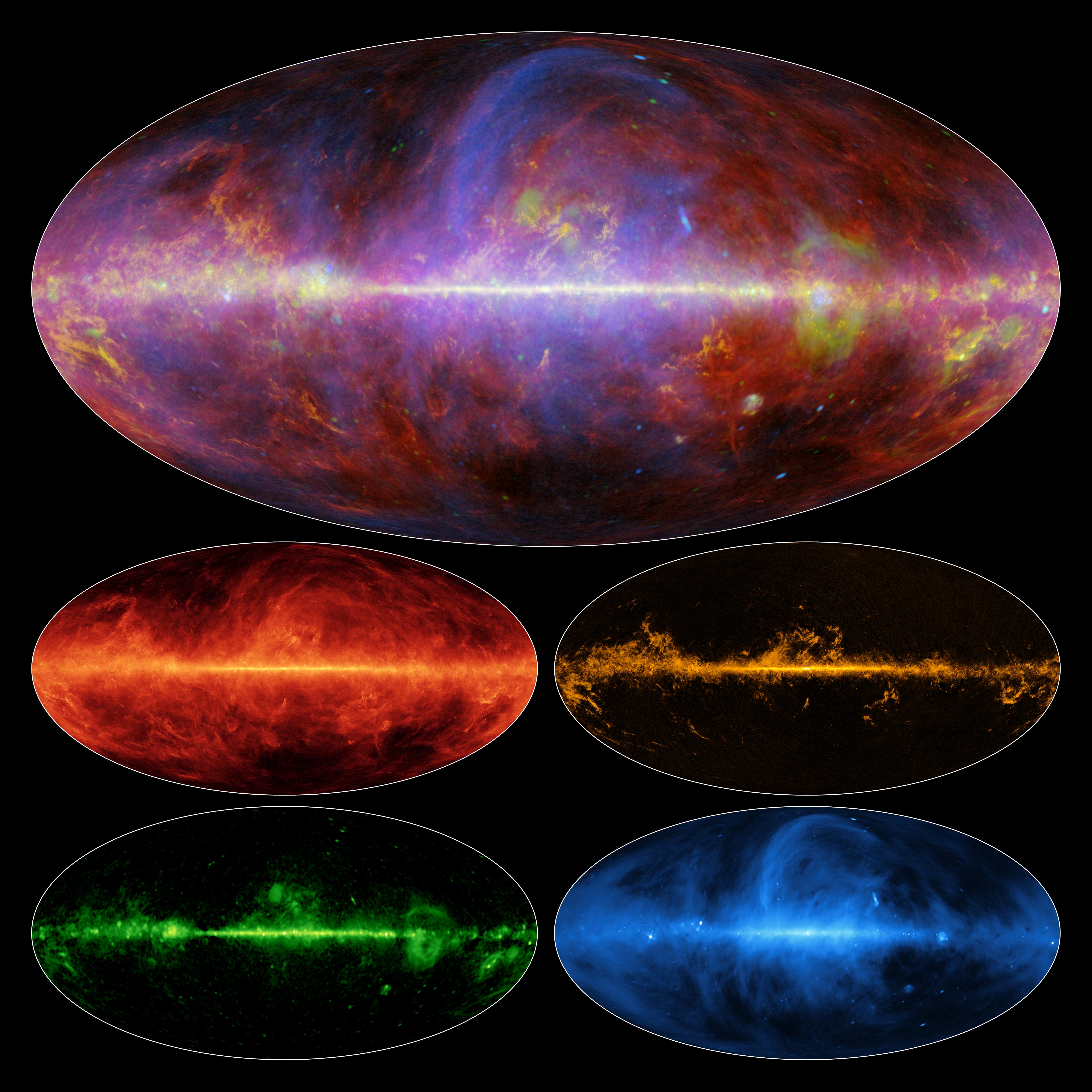
A star-filled night sky with the Milky Way arching overhead — the kind of dark sky needed to fully appreciate a planetary alignment event

Observing Guide · Planetary Alignment · 2026

Planetary Alignment 2026: When and How to See the Planet Parade

Planetary alignments — sometimes called planet parades — occur when several planets gather in the same region of sky, creating a striking line visible to the naked eye. In 2026, several notable alignments will be visible, offering skywatchers multiple opportunities to see two, three, four, or even five planets strung across the sky at once. This guide covers every alignment you can see in 2026 and how to observe them.

Next eventAugust 14, 2026
PlanetsJupiter, Saturn, Mars
Best viewingPre-dawn, eastern sky
EquipmentNaked eye or binoculars
By Elena Reyes Published: Updated: Reviewed & approved by Juhi Sahni, Senior Editor Editorial Standards
Elena Reyes — Senior Science Editor

Elena Reyes

Senior Science Editor

Covers NASA missions, space science discoveries, and astronomical events for Telescope Advisor. Translates complex astrophysical research into practical insights for backyard observers. Based in the San Francisco Bay Area.

What Is a Planetary Alignment?

A planetary alignment, popularly known as a planet parade, occurs when several planets in our solar system gather in a relatively small region of the sky as seen from Earth. This happens because the major planets all orbit the Sun in roughly the same plane (the ecliptic), so from Earth's perspective, they appear to follow a similar path across the sky. When multiple planets happen to cluster along this path at the same time, they create the visual effect of a line or cluster.

Planetary alignments are not physically significant — the planets are not actually lined up in space. They are simply in the same general direction from our viewpoint. But visually, they can be spectacular, especially when bright planets like Jupiter, Venus, and Saturn appear close together in the same patch of sky. The most dramatic alignments involve the five naked-eye planets — Mercury, Venus, Mars, Jupiter, and Saturn — all visible simultaneously.

Alignments are classified by how many planets are involved: a conjunction (two planets), a trio (three), and sometimes a quartet or quintet. The 2026 alignments range from conjunctions of Jupiter and Saturn to a potential four-planet lineup visible in the pre-dawn sky. All of these are visible without a telescope, though binoculars enhance the view.
Planetary Alignments in 2026 at a Glance

Date Type Planets Involved Best Viewing Time Notes
Aug 14, 2026 Trio Jupiter, Saturn, Mars Pre-dawn, 4–6 AM All visible to naked eye; Mars reddish
Sep 11, 2026 Conjunction Venus & Jupiter Evening twilight Two brightest planets, very close
Oct 22, 2026 Quartet Venus, Jupiter, Saturn, Mars Pre-dawn, 5–6:30 AM Four planets; best alignment of 2026
Dec 10, 2026 Conjunction Jupiter & Saturn Evening, 7–9 PM Great winter conjunction
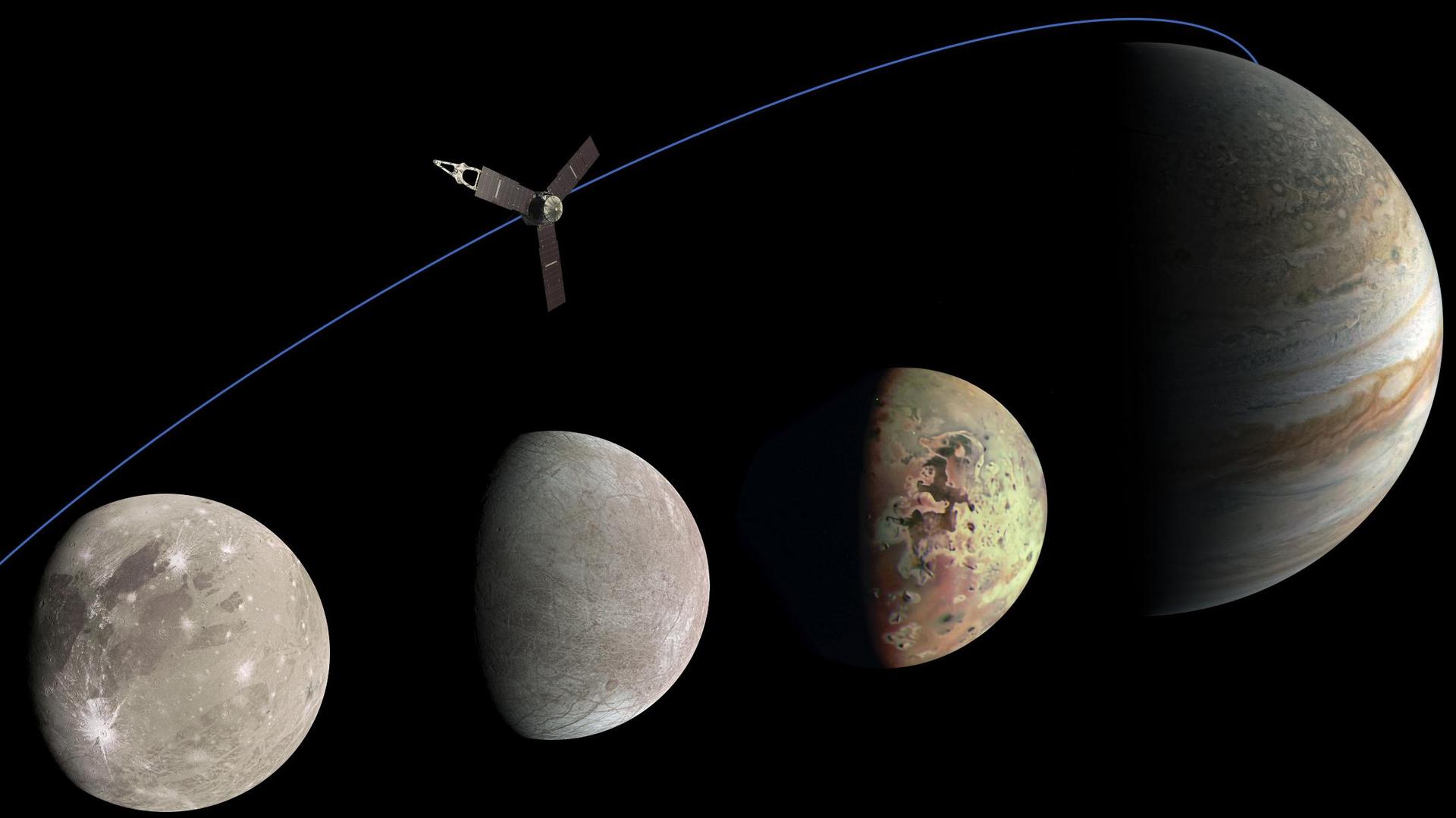
Montage of Jupiter and its four largest moons — Jupiter is one of the brightest planets often featured in planetary alignments
Jupiter — King of the Planets — As the brightest planet after Venus, Jupiter is a standout in any planetary alignment. Through binoculars, its four Galilean moons are visible as tiny stars flanking the planet. Credit: NASA.

How to Observe a Planetary Alignment

One of the best things about planetary alignments is that they require no special equipment. The brightest planets — Venus, Jupiter, Mars, and Saturn — are visible to the naked eye even from moderately light-polluted suburban skies. Here is what to expect at different experience levels:

Naked Eye

All five naked-eye planets appear as bright stars, but they do not twinkle like stars — they shine with a steady light. Venus is unmistakable as the brightest object after the Moon. Jupiter is the second brightest, followed by Mars (distinctly reddish), then Saturn (yellow-white), and Mercury (elusive, near the horizon). To identify planets, use a stargazing app or check online planet visibility charts for your location.

With Binoculars

10×50 binoculars transform the view. Jupiter's four Galilean moons become visible as tiny stars flanking the planet. Saturn's disc appears elongated, and on very steady nights, you can glimpse the rings. Venus shows a distinct crescent phase when it is between Earth and the Sun. Mars remains a reddish point but appears brighter and more colourful. Binoculars also fit all the planets in a single wide field, making it easy to compare them side by side.

With a Telescope

A 4-inch telescope at 50–100× reveals Jupiter's cloud bands and the Great Red Spot (when facing Earth), Saturn's rings in stunning detail, and Venus's crescent phase. Mars shows polar ice caps and dark surface features during opposition years. A 6-inch or larger scope at 150–200× provides even more detail. For planet viewing tips, see our Best Telescopes for Planets guide.

Best Alignments of 2026 in Detail

While all the alignments listed above are worth watching, two stand out as must-see events for 2026:

October 22, 2026 — Four-Planet Alignment: This is the highlight of the year. In the pre-dawn sky, Venus, Jupiter, Saturn, and Mars will form a line stretching roughly 30 degrees across the eastern horizon. Venus and Jupiter will be particularly striking — the two brightest planets separated by only 8 degrees. Saturn sits above them, with Mars glowing red to the upper right. This alignment is visible from both hemispheres and requires no equipment beyond your eyes.

September 11, 2026 — Venus and Jupiter Conjunction: Venus and Jupiter will appear exceptionally close — less than a degree apart — in the evening twilight sky. This conjunction will be visible across the globe shortly after sunset. The two planets will appear as a brilliant pair, with Venus outshining Jupiter by a factor of six. Through a telescope at low power, both planets fit in the same eyepiece field — Venus showing its crescent phase alongside Jupiter with its cloud bands and moons.

Tips for Photographing a Planetary Alignment

Capturing a planetary alignment on camera is rewarding and accessible. A DSLR or mirrorless camera with a standard zoom lens (18–55mm) on a tripod is ideal. Use a wide-angle setting to capture all the planets in one frame, with a foreground element (trees, buildings, a landscape) for composition. Set the aperture to f/2.8–f/4, ISO 800–1600, and start with a 5–10 second exposure, adjusting based on results. Smartphone users can try Night Mode with the phone braced against a solid surface.

For more detailed astrophotography, a telephoto lens (200mm+) or a small telescope with a camera adapter can capture individual planet detail during an alignment. During the October four-planet alignment, try a composite image sequence showing the planets' positions over several mornings to create a time-lapse of their movement. The free software Stellarium or mobile app SkySafari can help you plan the exact framing — they show the planets' positions at any date and time from your location. For astrophotographers with tracking mounts, you can capture detailed images of each planet individually in a single session — Jupiter's cloud bands and Great Red Spot, Saturn's rings, Mars's polar cap, and Venus's crescent phase.

Famous Planetary Alignments in History

Planetary alignments have fascinated humanity for millennia. In 1999, a rare alignment of the Sun, Moon, and all five naked-eye planets — Mercury through Saturn — created worldwide media attention, though in reality the planets were spread across 30 degrees of sky. The 2020 Great Conjunction of Jupiter and Saturn was the closest visible from Earth since 1623, with the two giants appearing just one-tenth of a degree apart — so close they appeared as a single "Christmas Star" to the naked eye.

Perhaps the most famous historical alignment is the Star of Bethlehem theory, which suggests that the biblical star was actually a rare triple conjunction of Jupiter and Saturn in 7 BCE. Whether or not you accept that interpretation, it demonstrates how planetary alignments have captured human imagination for over two thousand years. The 2026 alignments, while not as rare as the 2020 Great Conjunction, are still well worth waking up early or staying out after sunset to witness. Mark your calendar for October 22 — the four-planet alignment — and prepare for a memorable skywatching experience.

Frequently Asked Questions

What is a planetary alignment?

A planetary alignment occurs when several planets appear close together in the sky from Earth's perspective. They are not physically aligned in space but share the same line of sight along the ecliptic plane.

When is the next planetary alignment in 2026?

The next alignment is August 14, 2026 (Jupiter, Saturn, Mars trio), followed by the Venus-Jupiter conjunction on September 11, and the year's best four-planet alignment on October 22, 2026.

Can you see a planetary alignment without a telescope?

Yes. All planetary alignments involving Venus, Mars, Jupiter, and Saturn are visible to the naked eye. Binoculars enhance the view by revealing Jupiter's moons and Venus's crescent phase.

How rare is a planetary alignment?

Two-planet conjunctions occur several times per year. Three-planet alignments happen once or twice per year. Five-planet alignments are rarer, occurring roughly once every 20 years. A true full-planet alignment (all eight planets) is extremely rare.

What time of day is best to see a planet parade?

Most alignments are best visible either just before sunrise (pre-dawn, 4–6 AM) or just after sunset (evening twilight, 7–9 PM), depending on which planets are involved and their positions relative to the Sun.

What is the difference between a conjunction and an alignment?

A conjunction is when two objects appear close together. An alignment (or planet parade) generally refers to three or more planets appearing in a line. Every conjunction is a mini-alignment, but not every alignment is a conjunction.