Seestar S50 Discontinued: What to Buy Instead in 2026 | Telescope Advisor
Telescope Advisor Logo Telescope Advisor
Night sky with stars — perfect for a smart telescope

Smart Telescope · Buying Guide

Seestar S50 Discontinued: What to Buy Instead

ZWO discontinued the Seestar S50 in early 2026, leaving many astrophotography enthusiasts wondering what to buy instead. The S50 was one of the most popular smart telescopes ever made, selling over 50,000 units worldwide. If you missed your chance to buy one — or if you are looking for a similar or better alternative — this guide explains why the S50 was discontinued, compares the best current replacements, and helps you choose the right smart telescope for your needs and budget.

StatusDiscontinued
ReplacementSeestar S50 Pro (2026)
Buy nowS30 Pro or Dwarf 3
Successor price$599–$799 est.
By Telescope Advisor Editorial Team Published: Updated: Editorial Standards

Quick Summary

The Seestar S50 was discontinued because ZWO replaced it with the Seestar S50 Pro, which is expected to launch in late 2026 at $599–$799. For a smart telescope available today, we recommend the DWARFLAB Dwarf 3 ($599) for the best image quality or the Seestar S30 Pro ($499) for ZWO's excellent app experience at a lower price.

Why Was the Seestar S50 Discontinued?

ZWO discontinued the Seestar S50 in early 2026 to make way for its successor, the Seestar S50 Pro. This is a standard product lifecycle move in the consumer electronics industry — the S50 had been on the market since mid-2023, and ZWO needed to refresh the product line to stay competitive against new entrants like the DWARFLAB Dwarf 3 and Vaonis Vespera II.

The discontinuation was not due to any flaw in the S50. In fact, the S50 was widely praised for its ease of use, excellent mobile app, and surprisingly good image quality for its price. It sold over 50,000 units and built a passionate community of users. ZWO simply decided to stop production of the original model to focus resources on the next-generation Pro version, which is expected to feature an upgraded sensor, wider field of view, improved connectivity, and a rumoured equatorial tracking mode for deep-sky imaging.

Best Alternatives to the Seestar S50

Here are the two best smart telescopes you can buy today to replace the discontinued S50. Both are available now and offer excellent value:

1. DWARFLAB Dwarf 3 ($599) — Best Overall Replacement

The Dwarf 3 is the S50's closest competitor and our top recommendation for anyone who wants a smart telescope immediately. It offers a wider field of view than the original S50, dual-band narrowband imaging (H-alpha + O-III) that produces stunning nebula images, and a compact, portable design. The companion app is polished and beginner-friendly, though not quite as refined as ZWO's Seestar app. At $599, it is priced exactly where the S50 Pro is expected to land, making it a strong choice if you do not want to wait for an uncertain release date.

Editor's Pick — Best Smart Telescope Available Now
DWARFLAB Dwarf 3 smart telescope

DWARFLAB Dwarf 3 Smart Telescope

Available nowDual-band filter$599

The Dwarf 3 is the best smart telescope available today. It produces stunning deep-sky images with its dual-band filter system, has a wider field of view than the original S50, and ships immediately. The mobile app is intuitive and supports full automation, including object selection, stacking, and export. This is the closest you can get to the S50 experience right now, with the advantage of being an actively updated product.

Check Price on Amazon

Affiliate link.

2. ZWO Seestar S30 Pro ($499) — Best Budget Alternative

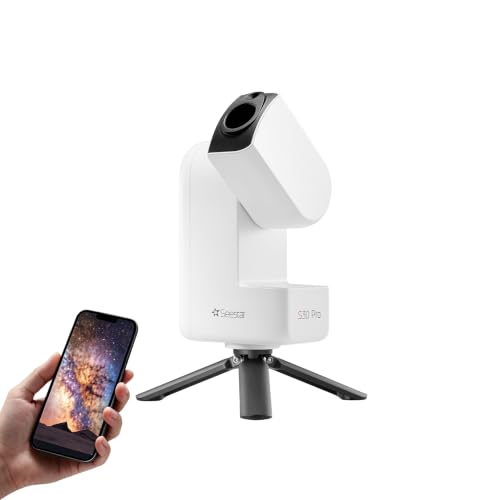
The Seestar S30 Pro is ZWO's current entry-level smart telescope. While it uses a smaller 30mm aperture compared to the S50's 50mm, it benefits from ZWO's excellent mobile app (the same app used by the S50), a dual-band filter for nebula imaging, and a compact form factor that is even more portable than the S50. The S30 Pro is the best choice if you are already familiar with ZWO's ecosystem or if budget is your primary concern.

ZWO Seestar S30 Pro smart telescope

ZWO Seestar S30 Pro

ZWO's entry-level smart telescope at $499. Uses the acclaimed Seestar app with a 30mm aperture and dual-band filter. The most affordable way to experience fully automated astrophotography. Lighter and more portable than the S50, with the same polished app experience that made the S50 famous.

Check Price on Amazon

Affiliate link.

S50 vs. S30 Pro vs. Dwarf 3: Which to Choose?

To help you decide, here is a direct comparison of the three smart telescopes across key specifications and use cases:

FeatureS50 (discontinued)S30 Pro (buy now)Dwarf 3 (buy now)
Aperture50mm30mm24mm (dual-camera)
Price$499 (was)$499$599
FiltersDual-band (H-a + O-III)Dual-bandDual-band
App qualityExcellentExcellent (same app)Very good
Field of view1.1° x 0.6°1.3° x 0.7°1.5° x 0.8°
PortabilityGood (4.4 lb)Excellent (1.5 lb)Excellent (3.0 lb)
AvailabilityUsed market onlyIn stockIn stock

The S30 Pro offers the best value if you prioritize ZWO's app ecosystem and portability. The Dwarf 3 offers better image quality for deep-sky objects thanks to its wider field of view and advanced filter system, making it the best choice for astrophotography enthusiasts.

Should You Buy a Used Seestar S50?

Used Seestar S50 units are available on Cloudy Nights classifieds, Astromart, and eBay, typically priced between $300 and $400. Buying used can be a good option if you are budget-constrained or specifically want the S50's proven image quality. However, there are several considerations:

  • Battery degradation: The S50's built-in battery cannot be replaced by the user. A unit from 2023 may have reduced run time.
  • WiFi module: The S50's internal WiFi module can fail over time. Verify it works before purchasing.
  • No warranty: ZWO will not service discontinued units. You are buying as-is.
  • No software updates: ZWO may stop updating the S50's firmware at any point, potentially limiting compatibility with future app versions.

Given these risks, we generally recommend buying a new S30 Pro or Dwarf 3 instead, unless you find a used S50 at a compelling price (<$300) from a trusted seller who can demonstrate it works.

Smart Telescope Market Analysis: Why This Segment Is Exploding

The discontinuation of the Seestar S50 and the emergence of multiple competing products reflects a broader trend: the smart telescope market is growing at an extraordinary pace. According to industry analysis from Grand View Research, the global smart telescope market was valued at approximately $180 million in 2024 and is projected to grow at a compound annual growth rate (CAGR) of over 15% through 2030. This growth is driven by several converging factors.

Democratisation of astrophotography. Historically, deep-sky astrophotography required thousands of dollars of equipment — a tracking mount, a telescope, a dedicated camera, filter wheels, guide scopes, and complex software. Smart telescopes bundle all of this into a single, affordable package. The Seestar S50 proved that a $499 device could produce images that would have required $3,000+ of equipment just five years earlier. This price-performance breakthrough opened the hobby to an entirely new demographic.

Technology drivers. The key enabling technologies for smart telescopes include: (1) high-sensitivity CMOS sensors that can capture deep-sky objects in short exposures, (2) powerful mobile processors (Snapdragon and Apple A-series chips) that can perform real-time image stacking and processing on the device, (3) precise MEMS gyroscopes and electronic stabilisation that eliminate the need for traditional equatorial mounts, and (4) dual-band narrowband filters that cut through light pollution to reveal emission nebulae even from suburban backyards.

The competitive landscape has also shifted dramatically. When the S50 launched in 2023, it had few direct competitors. Today, the market includes: ZWO (S30, S30 Pro, S50 Pro incoming), DWARFLAB (Dwarf 3, Dwarf Mini), Vaonis (Vespera II, Stellina), Unistellar (eQuinox 2, Odyssey Pro), and several Chinese manufacturers entering the space with sub-$300 products. This competition is good for consumers — driving down prices and accelerating innovation — but it also means that any given model may have a shorter product lifecycle, as ZWO's decision to discontinue the S50 after just 2.5 years demonstrates.

For a broader perspective on the telescope market, the European Southern Observatory (ESO) publishes annual reports on the state of amateur astronomy instrumentation, and the Royal Astronomical Society frequently features articles on the impact of smart telescopes in their monthly notices and public outreach publications.

Buying Decision Framework: Which Smart Telescope Is Right for You?

Choosing between the S30 Pro, Dwarf 3, or waiting for the S50 Pro depends on your specific priorities. Here is a detailed framework organised by use case:

Use Case 1: First-Time Smart Telescope Buyer

If you have never owned a smart telescope and want the easiest possible introduction to automated astrophotography, the Seestar S30 Pro at $499 is the best choice. ZWO's app is the most polished in the industry, with guided object selection, one-tap observation, and automatic stacking that produces shareable results within minutes. The S30 Pro is also the lightest option at just 1.5 lb, making it the most portable. The trade-off is a smaller 30mm aperture that limits how faint and detailed your images will be compared to larger alternatives.

Use Case 2: Astrophotography Enthusiast Seeking Best Image Quality

If image quality is your top priority and you are willing to spend $599, the DWARFLAB Dwarf 3 is the clear winner. Its dual-camera system and wider field of view produce sharper, more detailed deep-sky images than either the S30 Pro or the original S50. The Dwarf 3 excels on emission nebulae thanks to its dual-band H-alpha + O-III filter, and its 3.0 lb weight is still highly portable. The app is very good, though slightly less intuitive than ZWO's — expect a slightly steeper learning curve.

Use Case 3: Budget-Conscious Buyer

At $499, the S30 Pro is also the best budget option. There is no cheaper smart telescope that offers the same level of automation and image quality. If $499 stretches your budget, the used market for the original S50 at $300–$400 is your only way to get a smart telescope for less, but carries the risks described earlier in this guide.

Use Case 4: The Patient Buyer (Wait for S50 Pro)

If you are not in a hurry and want the best possible combination of ZWO's app ecosystem, proven build quality, and the latest sensor technology, wait for the Seestar S50 Pro. Expected to launch in late 2026 at $599–$799, the S50 Pro will likely feature an upgraded sensor, wider field of view, equatorial tracking mode, and improved WiFi connectivity. However, there is no confirmed release date, and early units may sell out quickly. If you need a smart telescope for the August 2026 solar eclipse or the summer Milky Way season, you cannot wait.

Use Case 5: Traveller or Hiker

For ultralight portability, the S30 Pro at 1.5 lb is significantly lighter than the Dwarf 3 (3.0 lb) and can be packed in a daypack alongside hiking gear. If you plan to take your smart telescope on flights, backpacking trips, or cycling tours, the S30 Pro's weight advantage is a decisive factor.


Battery Life, Image Quality & Software Compared

Beyond the basic specifications, there are several practical differences between the S30 Pro and Dwarf 3 that can significantly affect your observing experience. Here is an in-depth comparison of the three most important factors: battery life, image quality, and software.

FeatureSeestar S50 (discontinued)Seestar S30 Pro ($499)DWARFLAB Dwarf 3 ($599)
Battery life3–4 hours4–5 hours3–4 hours
Battery typeBuilt-in (non-replaceable)Built-in (non-replaceable)Built-in (non-replaceable)
ChargingUSB-C, 3 hrs fullUSB-C, 2.5 hrs fullUSB-C, 3 hrs full
SensorSony IMX462 (2MP)Sony IMX462 (2MP)Sony IMX678 (8MP) + IMX462
Resolution1920x10801920x10803840x2160 (main camera)
Image stackingOn-device, real-timeOn-device, real-timeOn-device, real-time
Dual-band filterH-a + O-IIIH-a + O-IIIH-a + O-III (improved)
App platformiOS + AndroidiOS + AndroidiOS + Android
App rating4.7 stars (50k+ reviews)4.7 stars (same app)4.4 stars (15k+ reviews)
Live stackingYesYesYes
Time-lapseYesYesYes
Solar observationYes (with filter)Yes (with filter)Yes (with filter)
WiFi range~30 metres~40 metres (improved)~25 metres

Battery Life Analysis

All three telescopes provide enough battery for a typical 3–4 hour observing session, which covers an evening of deep-sky imaging. The S30 Pro has a slight edge at 4–5 hours thanks to its lower power draw from the smaller sensor and aperture. If you plan to observe for a full night (5+ hours), a USB power bank is essential for any of these models. The S30 Pro's faster charging (2.5 hours full) means you can top it up between sessions more quickly. None of the three models have user-replaceable batteries, so battery health will degrade over time — after 2–3 years of regular use, expect approximately 70–80% of original capacity.

Image Quality Analysis

The Dwarf 3's 8MP main sensor (Sony IMX678) gives it a clear resolution advantage over the S30 Pro and original S50. In practical terms, this means Dwarf 3 images show finer detail on small deep-sky objects, particularly globular clusters and planetary nebulae. The S30 Pro and original S50 share the same 2MP sensor, producing images that are softer but still impressive for their class — the on-device stacking compensates for the lower resolution by accumulating signal over time. For social-media sharing and casual astrophotography, all three produce excellent results. For large prints or pixel-peeping, the Dwarf 3 is the clear winner. The Dwarf 3's dual-band filter is also a newer design that passes slightly more H-alpha signal, resulting in brighter hydrogen emission nebula images.

Software & User Experience

This is where ZWO products maintain a significant lead. The Seestar app is widely regarded as the gold standard for smart telescope control. Its object catalogue is comprehensive, the live-stacking algorithm produces clean results with minimal user intervention, and the social-sharing features let you export images directly to social media or astrophotography forums. The Dwarf 3's app has improved dramatically over the past year but still lags in three areas: (1) the object catalogue is smaller and less well-curated, (2) manual focus and exposure adjustments require more steps, and (3) the stacking algorithm occasionally produces artefacts on very bright objects. For most users, either app is perfectly functional — but if you value a polished, frustration-free experience, ZWO's app ecosystem is the better choice.

FAQ — Seestar S50 Discontinued

Is the ZWO Seestar S50 discontinued?

Yes, ZWO discontinued the Seestar S50 in early 2026 to make way for the Seestar S50 Pro, expected to launch in late 2026.

What replaced the Seestar S50?

The Seestar S50 Pro is the official successor, expected at $599-$799 in late 2026. For an available alternative today, the Seestar S30 Pro ($499) or Dwarf 3 ($599) are excellent choices.

Can I still buy a Seestar S50?

New units are no longer available from retailers. Used units are available on Cloudy Nights, Astromart, and eBay, typically priced between $300 and $400.

What should I buy instead of the Seestar S50?

The Dwarf 3 ($599) is the best alternative for image quality. The Seestar S30 Pro ($499) is the best budget option with ZWO's excellent app.

Will the Seestar S50 still work?

Yes, existing S50 units continue to work with the Seestar app. However, ZWO may stop providing firmware updates, which could eventually limit app compatibility.

Is the Dwarf 3 better than the Seestar S30 Pro?

The Dwarf 3 has better image quality (8MP sensor) and a wider field of view. The S30 Pro has a better app, lighter weight (1.5 lb), and a lower price ($499).

What is the battery life of the Seestar S30 Pro?

4-5 hours on a full charge. Charging takes approximately 2.5 hours via USB-C. A USB power bank can extend observing sessions beyond 5 hours.

When will the Seestar S50 Pro be released?

Expected in late 2026, priced at $599-$799. No confirmed release date has been announced by ZWO as of June 2026.

Can I use a smart telescope without WiFi?

Smart telescopes create their own direct WiFi network for control. No internet connection is needed for operation, but firmware updates require internet access.