

Telescope Advisor Logo Telescope Advisor
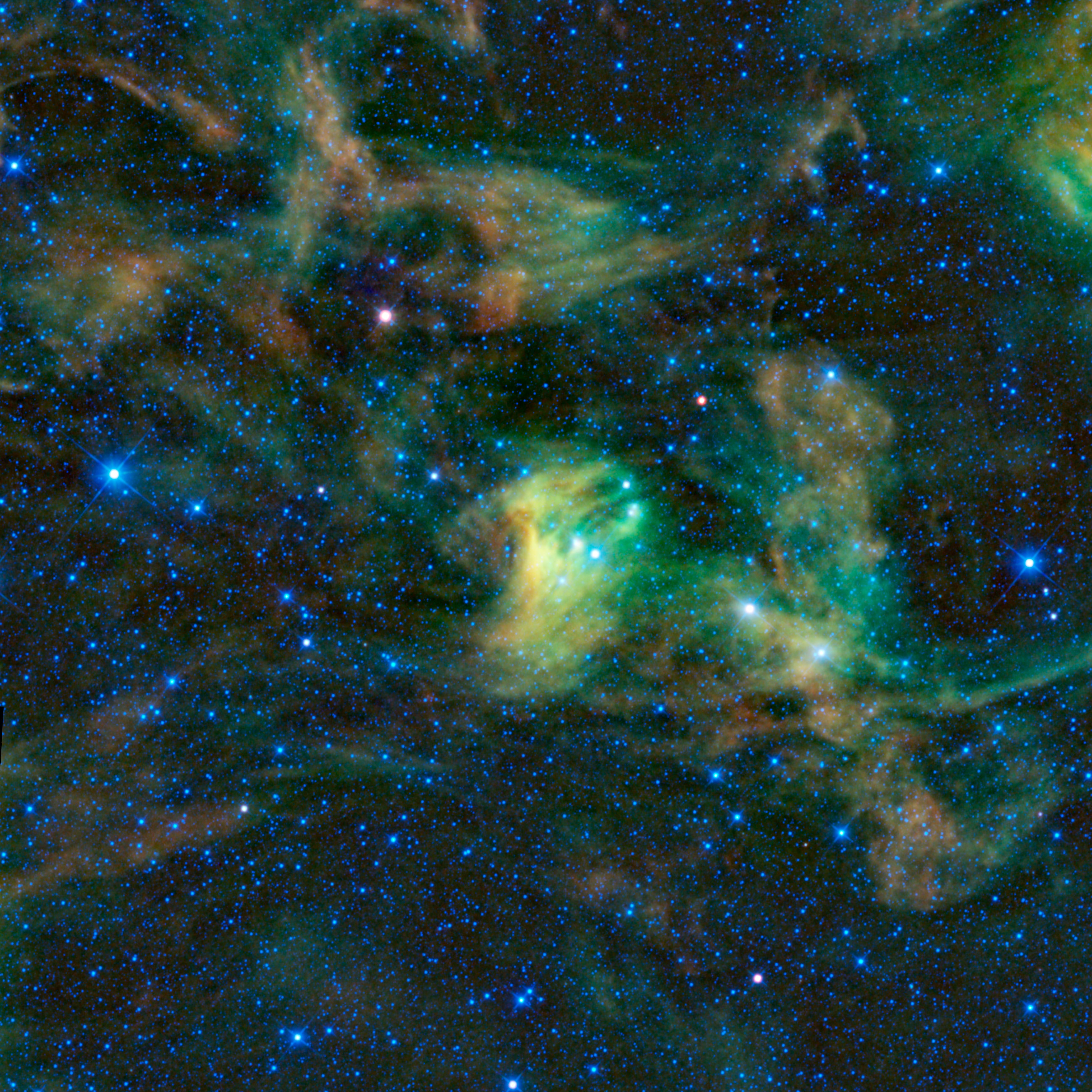
Scorpius region star field with colourful nebulae — Sky-Watcher Evostar ED refractors reveal the universe in natural colour

Refractor Guide · Sky-Watcher ED Series

Sky-Watcher Evostar ED Refractor Guide: 72ED, 80ED & 100ED Compared

Sky-Watcher's Evostar ED refractor series has earned a loyal following among astrophotographers who demand sharp, colour-free images without spending thousands on premium apochromats. The Evostar 72ED, 80ED, and 100ED — along with the premium Esprit 100ED — offer varying combinations of aperture, focal ratio, and imaging performance. This guide compares every model to help you find the right ED refractor for your camera, mount, and astrophotography goals.

CompactEvostar 72ED
Best SellerEvostar 80ED
Light BucketEvostar 100ED
PremiumEsprit 100ED
By Elena Reyes Published: Updated: Reviewed & approved by Juhi Sahni, Senior Editor Editorial Standards
Elena Reyes — Senior Science Editor

Elena Reyes

Senior Science Editor

Covers NASA missions, space science discoveries, and astronomical events for Telescope Advisor. Translates complex astrophysical research into practical insights for backyard observers. Based in the San Francisco Bay Area.

Quick Answer: Which Evostar ED Refractor Should You Choose?

The Evostar 80ED is the most popular and best-balanced model for most astrophotographers. It offers a forgiving 80mm aperture with a fast f/7.5 focal ratio that pairs beautifully with the HEQ5 Pro mount. The Evostar 72ED is the budget-friendly travel option for lightweight mounts like the Star Adventurer GTi. The Evostar 100ED is the aperture upgrade for deep-sky imagers with an EQ6-R Pro or heavier mount. The Esprit 100ED is the premium choice with a dedicated field flattener, dual-speed focuser, and the most demanding optical correction — ideal for serious astrophotographers using full-frame cameras.

This guide explains the ED glass technology, compares each model's imaging characteristics, and helps you match the telescope to your mount and camera.


What Is an ED Refractor and Why Does It Matter for Astrophotography?

ED stands for Extra-low Dispersion — a type of optical glass that bends different wavelengths of light more evenly than standard crown or flint glass. In a standard achromatic refractor, blue and red light focus at slightly different points, producing purple fringing around bright objects known as chromatic aberration. This fringing is particularly noticeable in astrophotography, where it ruins the colour accuracy of stars and degrades overall image sharpness. ED glass elements reduce chromatic aberration by roughly 90 percent compared to standard achromats, producing sharp, colour-accurate images across the entire field.

Sky-Watcher's Evostar ED refractors use a doublet lens design: one element made of ED glass and one element of standard optical glass. This doublet ED design offers approximately 90 percent of the colour correction of a true apochromatic (APO) triplet refractor at roughly 60 percent of the cost. The Evostar series uses FPL-53 ED glass — the same material used in many premium refractors — ensuring high-quality colour correction. The Esprit series uses a triplet air-spaced design with two ED elements for even better colour correction and a flat field suitable for full-frame cameras.

For a broader overview of telescope types and their suitability for imaging, see our best telescopes for astrophotography guide and the types of telescopes explained guide.

Sky-Watcher Evostar 72ED: Compact Travel Refractor

🔭

Sky-Watcher Evostar 72ED

72mm f/6 ED doublet refractor, 420mm focal length, 1.25" Crayford focuser, retractable dew shield, mounting plate, includes 9x50 finderscope and diagonal.

The Evostar 72ED is the smallest and most portable member of the Evostar ED family. With a 72mm aperture, 420mm focal length, and f/6 focal ratio, it was designed as an entry-level ED refractor for beginners and travellers. The fast f/6 focal ratio means short exposure times — a significant advantage for those using unguided mounts or living in areas with variable weather where imaging time is limited. The short 420mm focal length provides a wide 2.1-degree field of view with a typical APS-C DSLR, making it excellent for large nebulae like the North America Nebula (NGC 7000), the Heart Nebula (IC 1805), and the Rosette Nebula (NGC 2237).

The 72ED weighs only 2.2 kg without accessories, making it light enough for the Star Adventurer GTi, the AZ-GTi (with equatorial wedge), and any full-sized equatorial mount. This mount compatibility is the 72ED's greatest strength — it is one of the few ED refractors that works on lightweight star trackers. The 1.25-inch Crayford focuser is adequate for APS-C sensors but vignettes with full-frame cameras. The retractable dew shield is a practical feature that reduces the storage length from 42 cm to 32 cm, making it a genuine airline carry-on option.

The main trade-off of the 72ED is its limited resolution compared to larger apertures. At 72mm, it resolves roughly 1.6 arc-seconds, which is adequate for wide-field imaging but does not reveal the fine detail that 80mm or 100mm apertures show. The smaller aperture also limits its performance on smaller deep-sky objects like galaxies and planetary nebulae. For the astrophotographer who wants a lightweight, quick-to-deploy ED refractor for wide-field projects, the 72ED is an excellent value.

Sky-Watcher Evostar 80ED: The Astrophotography Workhorse

🔭

Sky-Watcher Evostar 80ED

80mm f/7.5 ED doublet refractor, 600mm focal length, 2" Crayford focuser, retractable dew shield, tube rings and dovetail plate, 9x50 finderscope, 2" star diagonal.

The Evostar 80ED is the most popular ED refractor in Sky-Watcher's lineup, and for good reason. Its 80mm aperture, 600mm focal length, and f/7.5 focal ratio represent a sweet spot that balances portability, resolution, and field of view. The 80mm aperture resolves approximately 1.45 arc-seconds, which is sufficient to reveal detailed structure in galaxies, nebulae, and globular clusters. The 600mm focal length on an APS-C camera produces a 1.5-degree field of view — wide enough for most Messier objects while providing enough magnification for detailed galaxy images.

The f/7.5 focal ratio is considered the ideal starting point for deep-sky astrophotography. It is fast enough to keep exposure times manageable — typically 3 to 5 minute subs for narrowband imaging — while being slow enough to avoid the optical challenges of faster refractors. The ED doublet design with FPL-53 glass provides colour correction that satisfies most imagers, with only minimal blue halos visible on the brightest stars in unprocessed images. The 2-inch Crayford focuser is smooth and holds heavy imaging trains without slippage.

The 80ED requires a mount in the HEQ5 Pro class or heavier. The optical tube weighs 3.6 kg, and with a guide scope, camera, filter wheel, and dew heater, the total imaging payload is approximately 6 to 7 kg — well within the HEQ5's recommended imaging payload. The 80ED is also available with a field flattener that corrects for field curvature, producing sharp stars across the entire frame. For the astrophotographer looking for one refractor that handles everything from the Andromeda Galaxy to the Veil Nebula, the Evostar 80ED is the benchmark choice.

Sky-Watcher Evostar 100ED: Deep-Sky Aperture Upgrade

🔭

Sky-Watcher Evostar 100ED

100mm f/9 ED doublet refractor, 900mm focal length, 2" Crayford focuser, retractable dew shield, tube rings and dovetail, 9x50 finderscope, 2" star diagonal.

The Evostar 100ED is the aperture upgrade for astrophotographers who have outgrown the 80ED and want more resolution and light-gathering. The 100mm aperture gathers 56 percent more light than the 80mm version and resolves approximately 1.16 arc-seconds, revealing finer detail in galaxies, globular clusters, and planetary nebulae. The 900mm focal length at f/9 is significantly slower than the 80ED, requiring longer sub-exposures — typically 5 to 8 minutes for narrowband — but the increased focal length provides higher native magnification for smaller targets.

The f/9 focal ratio also means the Evostar 100ED has minimal chromatic aberration — slower focal ratios naturally reduce colour fringing even before ED glass is considered. The Evostar 100ED is an excellent match for the EQ6-R Pro mount, which has the payload capacity to carry the 4.8 kg optical tube plus a full imaging train comfortably. On an APS-C camera, the 900mm focal length produces a 1.0-degree field, which frames smaller deep-sky objects like the Ring Nebula (M57), the Dumbbell Nebula (M27), and the Whirlpool Galaxy (M51) beautifully.

The main consideration with the Evostar 100ED is the mount requirement. The tube alone weighs 4.8 kg, and with a full imaging train — camera, filter wheel, guide scope, autoguider, dew heater, and cables — the payload approaches 8 to 9 kg. This puts it at the limits of the HEQ5 Pro's comfortable imaging capacity, making the EQ6-R Pro the recommended mount. The 100ED also benefits from a field flattener, which Sky-Watcher sells as an optional accessory specifically matched to this model.

Sky-Watcher Esprit 100ED: Premium Apochromatic Refractor

🔭

Sky-Watcher Esprit 100ED

100mm f/5.5 ED triplet refractor, 550mm focal length, 3" dual-speed Crayford focuser, integrated field flattener, tube rings, dovetail, hard carrying case.

The Esprit 100ED is a different class of instrument from the Evostar series. It is a true apochromatic triplet refractor — three glass elements, two of which are ED — that delivers colour correction and field flatness that the doublet Evostars cannot match. The 100mm aperture at f/5.5 is significantly faster than the Evostar 100ED's f/9, making it much better suited for deep-sky imaging with shorter exposure times. The 550mm focal length provides a generous 1.7-degree field on APS-C cameras and covers full-frame sensors without vignetting.

The Esprit 100ED includes several premium features not found on the Evostar series. The 3-inch dual-speed Crayford focuser provides ultra-precise focusing with a 1:10 reduction ratio, essential for critical focus with high-resolution cameras. The integrated field flattener produces sharp stars across the entire frame — no additional flattener needed. The tube rings with dovetail plate and the hard carry case are included as standard. The optical tube weighs 5.5 kg, and the complete imaging payload with accessories typically reaches 8 to 9 kg, requiring an EQ6-R Pro mount or similar.

The Esprit 100ED won recognition in our best telescopes for astrophotography guide for its exceptional value in the premium refractor category. It competes directly with refractors costing significantly more, delivering true apochromatic colour correction and a flat field suitable for the most demanding imaging projects. For the serious astrophotographer who wants professional-quality results without spending professional-grade money, the Esprit 100ED is the clear choice within Sky-Watcher's lineup.


🔭

Not sure which telescope actually fits your goals?

Answer 5 quick questions about your budget, observing targets, and experience level — our Telescope Finder Tool recommends a specific model in under 2 minutes.

Find My Telescope →

Evostar vs Esprit Comparison Table

Model Aperture Focal Ratio Design Focuser Minimum Mount
Evostar 72ED72mmf/6ED doublet1.25"Star Adventurer GTi
Evostar 80ED80mmf/7.5ED doublet2"HEQ5 Pro
Evostar 100ED100mmf/9ED doublet2"EQ6-R Pro
Esprit 100ED100mmf/5.5ED triplet APO3" dual-speedEQ6-R Pro

Matching Your Refractor to Your Mount

Choosing an ED refractor is only half the equation — you also need a mount that can carry it with authority. The 2:1 payload rule for astrophotography states that your total imaging rig should not exceed half your mount's rated capacity. This means the Evostar 72ED (2.2 kg tube) with a full imaging train (4 to 5 kg total) is appropriate for the Star Adventurer GTi (5 kg payload) only if you are careful to stay within limits. The HEQ5 Pro (13.6 kg payload) is a better match, allowing comfortable headroom for guide scope and accessories.

The Evostar 80ED with a full imaging train weighs approximately 6 to 7 kg, which is comfortable on the HEQ5 Pro and leaves room for future upgrades like an off-axis guider or filter wheel. On the EQ6-R Pro, the 80ED setup is laughably underloaded, but that is not a problem — more mount capacity than needed is always better for tracking stability. The Evostar 100ED and Esprit 100ED with full imaging trains weigh 8 to 9 kg, requiring the EQ6-R Pro as the minimum mount. For detailed mount selection advice, see our Sky-Watcher mounts guide and the astrophotography mount guide.


Frequently Asked Questions

What does ED mean in a telescope?

ED stands for Extra-low Dispersion — a type of optical glass that significantly reduces chromatic aberration (colour fringing) compared to standard glass. ED refractors produce sharper, more colour-accurate images, making them the preferred choice for astrophotography.

Is the Evostar 80ED good for astrophotography?

Yes. The Evostar 80ED is one of the most popular refractors for deep-sky astrophotography. Its 80mm aperture, f/7.5 focal ratio, and FPL-53 ED glass provide an excellent balance of resolution, field of view, and colour correction. It pairs perfectly with the HEQ5 Pro mount for a complete beginner-intermediate imaging setup.

What is the difference between Evostar and Esprit?

The Evostar series uses ED doublet lens designs (two glass elements) and is focused on value. The Esprit series uses ED triplet designs (three elements) for true apochromatic colour correction, with premium features like 3-inch dual-speed focusers, integrated field flatteners, and hard carry cases. Esprit refractors are significantly more expensive but deliver professional-grade optical performance.

What mount do I need for an Evostar 80ED?

The HEQ5 Pro is the recommended minimum mount for the Evostar 80ED with a full imaging train. The total setup weight of approximately 6 to 7 kg is well within the HEQ5's comfortable imaging capacity. The EQ6-R Pro provides additional stability and room for future upgrades.

Can I use the Evostar 72ED on a Star Adventurer GTi?

Yes, the Evostar 72ED is light enough for the Star Adventurer GTi. The 2.2 kg tube, with camera and guide scope, keeps the total payload within the GTi's 5 kg limit. This combination is one of the lightest full-capability astrophotography setups available, ideal for travel or quick deployment.

Do I need a field flattener for an Evostar ED refractor?

For visual observing, no. For astrophotography, a field flattener is strongly recommended. The Evostar 80ED and 100ED show noticeable field curvature at the edges of camera sensors, particularly with APS-C and full-frame sensors. Sky-Watcher sells dedicated field flatteners for each Evostar model. The Esprit 100ED includes an integrated field flattener as standard.