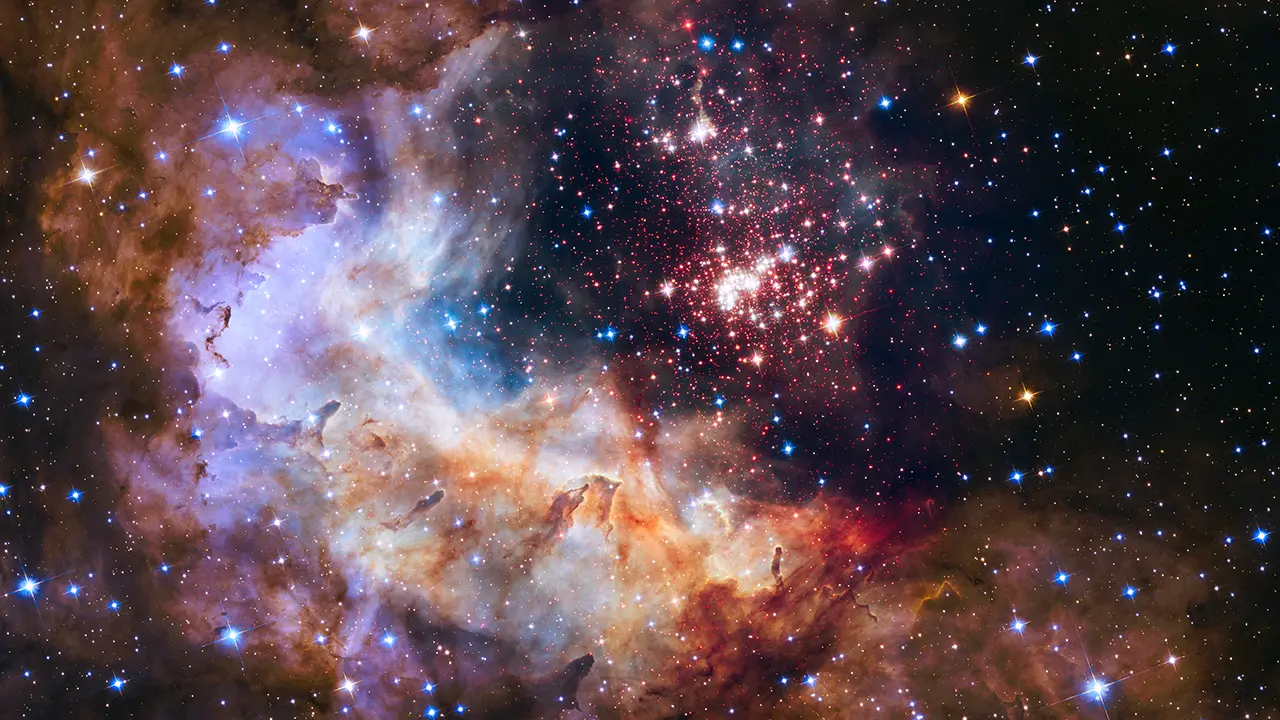
The most forgiving first telescope: no collimation, usable views in under ten minutes.
🏆 Best Beginner Telescope 2026
Refractor
70mmAperture
Alt-azimuthMount
Very portablePortability
10 minTypical setup
Best for:
The Moon, Planets, Learning the sky. Trade-off: 70mm limits faint deep-sky objects

Scope, tripod and eyepieces pack into one carry-on backpack under 4 lbs.
Refractor
70mmAperture
Alt-azimuthMount
Very portablePortability
5 minTypical setup
Best for:
Travel, The Moon, Planets. Trade-off: Wobbly tripod at high magnification

The lowest-cost real telescope on our list - honest optics, often under $80.
Refractor
70mmAperture
Alt-azimuthMount
Very portablePortability
10 minTypical setup
Best for:
Kids & family, The Moon, Planets. Trade-off: Plastic eyepiece barrel - upgrade the eyepieces

A commonly gifted starter refractor: real lunar detail, but mount stability decides the night.
Refractor
70mmAperture
Alt-azimuthMount
Very portablePortability
—Typical setup
Best for:
The Moon, Planets, Kids & family. Trade-off: Tripod stability is the weak point

The cheapest Celestron that still works - fine for the Moon if expectations stay honest.
Refractor
60mmAperture
Alt-azimuthMount
Very portablePortability
—Typical setup
Best for:
The Moon, Kids & family, Learning the sky. Trade-off: 60mm cannot gather enough light for suburban deep-sky
Image
loading
A genuine German equatorial at a beginner price - the cheapest way to learn EQ tracking.
Refractor
80mmAperture
EquatorialMount
Moderately portablePortability
—Typical setup
Best for:
The Moon, Planets, Learning the sky. Trade-off: EQ-1 mount is light and vibration-prone

A 100mm achromat with a built-in phone adapter - a real aperture step up from 70mm starters.
Refractor
100mmAperture
Alt-azimuthMount
Moderately portablePortability
—Typical setup
Best for:
The Moon, Planets, Learning the sky. Trade-off: No slow-motion controls on the alt-az mount

Sky-Watcher Startravel 80
Short-tube 80mm that folds to 33cm and under 2kg - our 2026 portability winner.
🏆 Best Portable Telescope 2026
Refractor
80mmAperture
Alt-azimuthMount
Very portablePortability
—Typical setup
Best for:
Travel, The Moon, Planets. Trade-off: Fast achromat shows colour fringing on bright targets

Celestron Omni XLT 102
Our 2026 planetary award winner: XLT coatings and a real CG-4 equatorial mount.
🏆 Best Planetary Telescope 2026
Refractor Imaging-capable
102mmAperture
EquatorialMount
Moderately portablePortability
15 minTypical setup
Best for:
Planets, The Moon, Astrophotography. Trade-off: Achromat still shows some false colour on bright stars

Sky-Watcher Evostar 80EDX
APO doublet optical tube for imaging: high contrast, low false colour, mount not included.
Refractor Imaging-capable
80mmAperture
EquatorialMount
Very portablePortability
—Typical setup
Best for:
Astrophotography, Deep sky, Planets. Trade-off: Needs a quality equatorial mount, sold separately

A genuinely complete out-of-the-box kit: scope, tripod, phone adapter and backpack.
Refractor
80mmAperture
Alt-azimuthMount
Very portablePortability
—Typical setup
Best for:
Kids & family, The Moon, Planets, Travel. Trade-off: Supplied eyepieces limit you to fixed magnifications
Image
loading
A 45mm five-element Petzval astrograph built purely for wide-field imaging, not eyepiece use.
Refractor Imaging-capable
45mmAperture
EquatorialMount
Very portablePortability
—Typical setup
Best for:
Astrophotography, Travel, Deep sky. Trade-off: Imaging-only design - not a visual telescope

The widest aperture you can buy under $200 - and our 2026 People's Choice winner.
🏆 People's Choice Award 2026
Reflector
127mmAperture
EquatorialMount
Moderately portablePortability
—Typical setup
Best for:
Planets, The Moon, Deep sky. Trade-off: Equatorial mount has a real learning curve
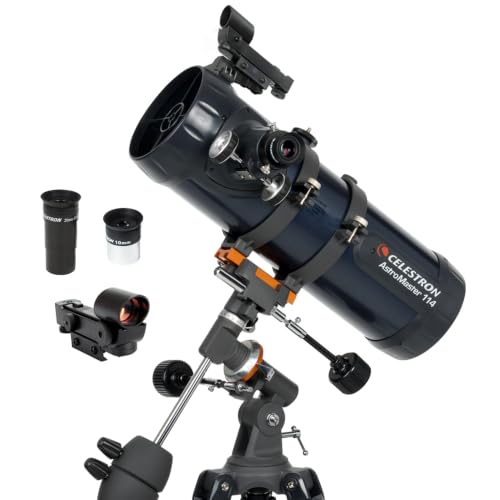
A 114mm Newtonian on a manual German equatorial - a slow, planet-friendly focal ratio.
Reflector
114mmAperture
EquatorialMount
Moderately portablePortability
—Typical setup
Best for:
The Moon, Planets, Learning the sky. Trade-off: German equatorial mount requires polar alignment

The best upgrade path on a budget: 130mm of aperture on a real equatorial platform.
Reflector
130mmAperture
EquatorialMount
Moderately portablePortability
30 minTypical setup
Best for:
Planets, Deep sky, Learning the sky. Trade-off: Polar alignment adds 20-30 minutes to every session
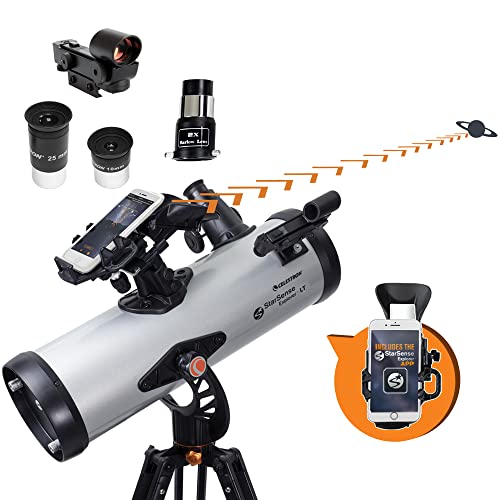
Your phone reads the star field and arrows you to the target - the easiest first night under $200.
Reflector
114mmAperture
Alt-azimuthMount
Very portablePortability
15 minTypical setup
Best for:
Learning the sky, Planets, The Moon, City skies. Trade-off: The key feature needs a compatible smartphone
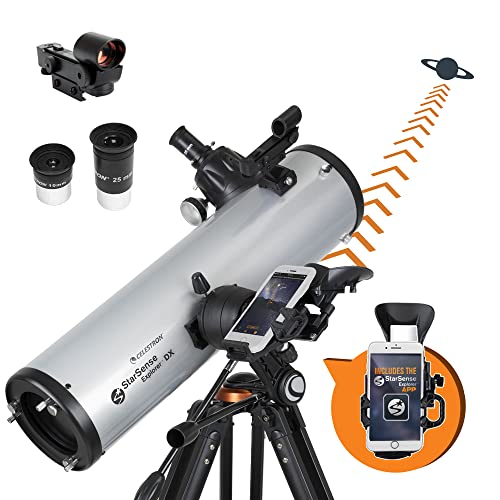
130mm of real aperture with smartphone plate-solving instead of a GoTo motor and its price.
Reflector
130mmAperture
Alt-azimuthMount
Moderately portablePortability
15 minTypical setup
Best for:
Deep sky, Planets, Learning the sky. Trade-off: Push-to only - no motorised tracking

The definitive beginner GoTo: 130mm of aperture and a 40,000-object NexStar+ controller.
Reflector GoTo
130mmAperture
Computerized GoToMount
Moderately portablePortability
—Typical setup
Best for:
Deep sky, Planets, Learning the sky. Trade-off: Alt-az field rotation rules out long-exposure imaging

King of aperture-per-dollar: a parabolic 130mm mirror in a collapsible tabletop Dob.
🏆 Best Budget Telescope 2026
Dobsonian
130mmAperture
DobsonianMount
Very portablePortability
15 minTypical setup
Best for:
Deep sky, Planets, Travel. Trade-off: Needs a table or raised surface - no tripod

33% more light than the 130P in the same collapsible tabletop form - M13 resolves to stars.
Dobsonian
150mmAperture
DobsonianMount
Very portablePortability
—Typical setup
Best for:
Deep sky, Planets. Trade-off: Still needs a stable table or surface

Sky-Watcher Virtuoso GTi 130P
A tabletop Dobsonian with full WiFi GoTo - it slews to and tracks 42,000+ objects.
Dobsonian GoTo
130mmAperture
Computerized GoToMount
Very portablePortability
—Typical setup
Best for:
Deep sky, Planets, City skies. Trade-off: Needs a smartphone or tablet for the app

The 8-inch benchmark and our highest-scoring telescope of 2026 - unmatched aperture per dollar.
🏆 Best Overall Telescope 2026
Dobsonian
203mmAperture
DobsonianMount
Stays putPortability
—Typical setup
Best for:
Deep sky, Planets. Trade-off: 55 lbs - needs dedicated space, not a travel scope

Sky-Watcher Classic 250P Dobsonian
Ten inches of parabolic mirror - galaxy spiral arms and globulars resolved to the core.
Dobsonian
254mmAperture
DobsonianMount
Stays putPortability
—Typical setup
Best for:
Deep sky. Trade-off: Large and heavy - needs a vehicle and a storage plan

Sky-Watcher FlexTube 250P Dobsonian
A 10-inch Dobsonian whose collapsible tube shortens for transport and storage.
Dobsonian
254mmAperture
DobsonianMount
Stays putPortability
—Typical setup
Best for:
Deep sky. Trade-off: Collapsible tube needs collimation after every setup
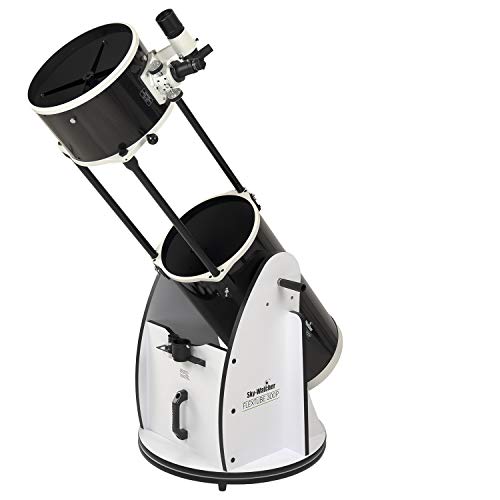
Sky-Watcher FlexTube 300P Dobsonian
A 12-inch collapsible Dobsonian for observers chasing the faintest visual targets.
Dobsonian
305mmAperture
DobsonianMount
Stays putPortability
—Typical setup
Best for:
Deep sky. Trade-off: Very large and heavy - dedicated storage required

Our 2026 kids' winner: a 5 lb tabletop Dob a child can be using minutes after unboxing.
🏆 Best Telescope for Kids 2026
Dobsonian
76mmAperture
DobsonianMount
Very portablePortability
2 minTypical setup
Best for:
Kids & family, The Moon, Learning the sky. Trade-off: Spherical mirror goes soft above about 75x

The compact GoTo Mak: high-contrast planetary views and 40,000 objects at the push of a button.
Maksutov-Cassegrain GoTo Imaging-capable
102mmAperture
Computerized GoToMount
Moderately portablePortability
20 minTypical setup
Best for:
Planets, The Moon, City skies. Trade-off: 102mm and f/13 limit deep-sky reach and field of view

Celestron C90 Mak
Mak optical quality at the lowest price - a tube small enough to pack for a flight.
Maksutov-Cassegrain
90mmAperture
Alt-azimuthMount
Very portablePortability
—Typical setup
Best for:
Travel, Planets, The Moon. Trade-off: No GoTo or tracking

Celestron NexStar 127SLT
A 127mm GoTo Mak gathering 54% more light than the 4SE - the step-up planetary pick.
Maksutov-Cassegrain GoTo Imaging-capable
127mmAperture
Computerized GoToMount
Moderately portablePortability
—Typical setup
Best for:
Planets, The Moon, City skies. Trade-off: SLT mount is light for the tube at high power

Sky-Watcher Skymax 127
A bare 5-inch Mak tube for observers who already own a mount they trust.
Maksutov-Cassegrain
127mmAperture
Alt-azimuthMount
Very portablePortability
—Typical setup
Best for:
Planets, The Moon. Trade-off: No mount included

Celestron Astro Fi 102
WiFi GoTo driven entirely from the SkyPortal app - no hand controller to learn.
Maksutov-Cassegrain GoTo Imaging-capable
102mmAperture
Computerized GoToMount
Very portablePortability
—Typical setup
Best for:
Planets, The Moon, City skies. Trade-off: Needs a charged phone and the SkyPortal app

The most travel-friendly GoTo SCT: 28 lbs assembled and set up in under five minutes.
Schmidt-Cassegrain GoTo Imaging-capable
127mmAperture
Computerized GoToMount
Moderately portablePortability
5 minTypical setup
Best for:
Planets, The Moon, Travel. Trade-off: Falls short of the 6SE on deep-sky objects

The best all-round telescope under $1,000 - real aperture, real GoTo, one-person portable.
Schmidt-Cassegrain GoTo Imaging-capable
150mmAperture
Computerized GoToMount
Moderately portablePortability
5 minTypical setup
Best for:
Planets, Deep sky, The Moon. Trade-off: Single-arm alt-az mount is unsuitable for long exposures

The gold-standard GoTo SCT: eight inches of aperture in a tube you can still carry alone.
Schmidt-Cassegrain GoTo Imaging-capable
203mmAperture
Computerized GoToMount
Moderately portablePortability
—Typical setup
Best for:
Planets, Deep sky, Astrophotography. Trade-off: Needs 30-45 minutes to thermally stabilise

Our 2026 deep-sky winner: an 8-inch SCT with WiFi control and a 10-hour internal battery.
🏆 Best Deep-Sky Telescope 2026
Schmidt-Cassegrain GoTo Imaging-capable
203mmAperture
Computerized GoToMount
Moderately portablePortability
—Typical setup
Best for:
Deep sky, Planets, Astrophotography. Trade-off: 44 lbs and a more careful setup than the 6SE

Celestron Advanced VX 8 EdgeHD
Our 2026 astrophotography winner: flat-field EdgeHD optics on a GoTo German equatorial.
🏆 Best Astrophotography Telescope 2026
Schmidt-Cassegrain GoTo Imaging-capable
203mmAperture
EquatorialMount
Stays putPortability
—Typical setup
Best for:
Astrophotography, Deep sky, Planets. Trade-off: Heavy, multi-part setup - not a grab-and-go rig

Celestron C9.25 EdgeHD
A 9.25-inch aplanatic SCT sold as an OTA - flat fields across large imaging sensors.
Schmidt-Cassegrain Imaging-capable
235mmAperture
EquatorialMount
Stays putPortability
—Typical setup
Best for:
Astrophotography, Deep sky, Planets. Trade-off: OTA only - needs a CGX-class equatorial mount

Celestron C11 EdgeHD
The top of Celestron's SCT range - 11 inches for faint galaxy clusters and planetary detail.
Schmidt-Cassegrain Imaging-capable
279mmAperture
EquatorialMount
Stays putPortability
—Typical setup
Best for:
Astrophotography, Deep sky, Planets. Trade-off: 24.4 lb OTA demands a CGX-L class mount

The S50 app, sensor and dual-band filter on a 30mm aperture - the budget travel Seestar.
Smart Telescope GoTo Smart Imaging-capable
30mmAperture
App-drivenMount
Very portablePortability
5 minTypical setup
Best for:
Astrophotography, Travel, City skies. Trade-off: 30mm gathers only about 64% of the S50's light
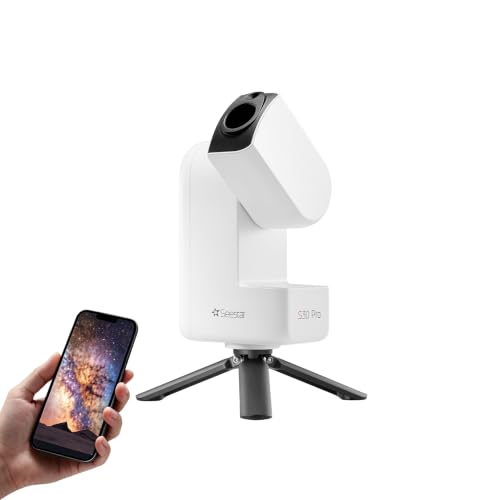
ZWO's current pick: an 8.3MP quadruplet APO with a 4.6-degree field and EQ mode.
Smart Telescope GoTo Smart Imaging-capable
50mmAperture
App-drivenMount
Very portablePortability
5 minTypical setup
Best for:
Astrophotography, Deep sky, City skies, Travel. Trade-off: Costs more than the entry Dwarf and S30 models
Image
loading
The S50's replacement: 4-element APO optics, dual 8.3MP cameras and EQ mode.
Smart Telescope GoTo Smart Imaging-capable
50mmAperture
App-drivenMount
Very portablePortability
5 minTypical setup
Best for:
Astrophotography, Deep sky, City skies, Travel. Trade-off: Aperture is unchanged at 50mm - the upgrades are optics and sensors

Best-value smart scope in production: dual wide plus telephoto cameras and a 48MP sensor.
Smart Telescope GoTo Smart Imaging-capable
24mmAperture
App-drivenMount
Very portablePortability
5 minTypical setup
Best for:
Astrophotography, Travel, City skies. Trade-off: 24mm aperture struggles on the faintest targets

The most portable smart telescope made - 1.85 lb, jacket-pocket sized, 64GB onboard.
Smart Telescope GoTo Smart Imaging-capable
30mmAperture
App-drivenMount
Very portablePortability
5 minTypical setup
Best for:
Travel, Astrophotography, Kids & family. Trade-off: Small aperture limits planetary and faint-object detail
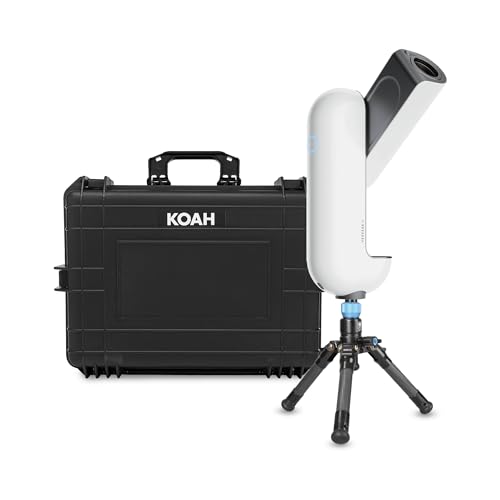
The widest field of any portable smart scope - whole nebulae in frame at 8.3MP.
Smart Telescope GoTo Smart Imaging-capable
50mmAperture
App-drivenMount
Moderately portablePortability
5 minTypical setup
Best for:
Astrophotography, Deep sky, City skies. Trade-off: 11 lbs and a 4-hour battery limit long sessions

The only smart telescope with a real eyepiece - an OLED view plus SETI citizen science.
🏆 Best Smart Telescope 2026
Smart Telescope GoTo Smart Imaging-capable
114mmAperture
App-drivenMount
Moderately portablePortability
5 minTypical setup
Best for:
Deep sky, Astrophotography, City skies. Trade-off: Premium price and about 13 lbs to carry

Unistellar eQuinox 2
Same 114mm optics as the eVscope 2 without the eyepiece - and an 11-hour battery.
Smart Telescope GoTo Smart Imaging-capable
114mmAperture
App-drivenMount
Moderately portablePortability
5 minTypical setup
Best for:
Deep sky, Astrophotography, City skies. Trade-off: No physical eyepiece

A 6-inch RASA at f/2.2 - the deepest-reaching smart telescope, for backyard use only.
Smart Telescope GoTo Smart Imaging-capable
154mmAperture
App-drivenMount
Stays putPortability
5 minTypical setup
Best for:
Astrophotography, Deep sky, City skies. Trade-off: Runs on mains power - it does not travel

The 2026 Origin refresh: improved sensor, stiffer base, native EQ mode and StarSense autoguiding.
Smart Telescope GoTo Smart Imaging-capable
154mmAperture
App-drivenMount
Stays putPortability
5 minTypical setup
Best for:
Astrophotography, Deep sky, City skies. Trade-off: Mains powered - a backyard instrument, not a travel one

Meade ETX60AT
A 60mm fork-mounted refractor with an electronic hand controller and a flip-mirror for daytime use.
Refractor GoTo
60mmAperture
Computerized GoToMount
Very portablePortability
15 minTypical setup
Best for:
The Moon, Planets, Travel. Trade-off: 60mm aperture is too small for most deep-sky objects

Sky-Watcher Flextube 200P Dobsonian
Eight inches of aperture in a tube that collapses to about half its length for storage.
Dobsonian
203mmAperture
DobsonianMount
Moderately portablePortability
15 minTypical setup
Best for:
Deep sky, Planets, The Moon. Trade-off: Still a bulky two-piece load to carry outside
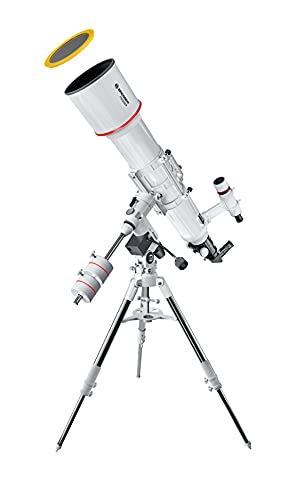
Bresser Messier AR-152L EXOS-2
A six-inch achromat on an EXOS-2 equatorial: huge lunar and planetary views, and huge bulk.
Refractor
152mmAperture
EquatorialMount
Stays putPortability
20 minTypical setup
Best for:
Planets, The Moon, Deep sky. Trade-off: About 32 kg complete - effectively a permanent-setup telescope

National Geographic 114/900 AZ Reflector
A long-focus 114mm reflector on a plain alt-az tripod, aimed squarely at first-time owners.
Reflector
114mmAperture
Alt-azimuthMount
Moderately portablePortability
15 minTypical setup
Best for:
The Moon, Planets, Learning the sky. Trade-off: The advertised 675x magnification is unusable in practice

Bresser Newtonian 130/650 EQ3
A fast 130mm Newtonian on an EQ3-style mount with slow-motion cables for manual tracking.
Reflector
130mmAperture
EquatorialMount
Moderately portablePortability
20 minTypical setup
Best for:
The Moon, Planets, Deep sky. Trade-off: Equatorial mounts take longer to set up and understand
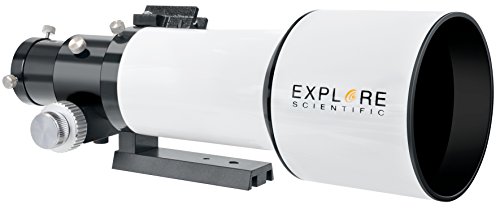
Explore Scientific ED80 Essential
An 80mm air-spaced triplet APO built for imaging: sharp, colour-free stars in a small tube.
Refractor Imaging-capable
80mmAperture
EquatorialMount
Very portablePortability
—Typical setup
Best for:
Astrophotography, Deep sky, Travel. Trade-off: Optical tube only - mount, tripod and camera are extra

Gskyer 80mm AZ Refractor
A wide-field 80mm refractor sold as a kids' kit: three eyepieces, a Barlow and a full tripod.
Refractor
80mmAperture
Alt-azimuthMount
Very portablePortability
10 minTypical setup
Best for:
Kids & family, The Moon, Learning the sky. Trade-off: Lightweight tripod wobbles at higher magnifications

Sky-Watcher GoTo Collapsible Dobsonian 8-inch
Eight inches of Dobsonian aperture with SynScan GoTo and Wi-Fi control from your phone.
Dobsonian GoTo
203mmAperture
Computerized GoToMount
Moderately portablePortability
15 minTypical setup
Best for:
Deep sky, Planets, The Moon. Trade-off: Costs roughly twice the manual version of the same optics

Sky-Watcher Classic 150 Dobsonian
Six inches of aperture with no electronics to learn: set it down, point it, look.
Dobsonian
150mmAperture
DobsonianMount
Moderately portablePortability
15 minTypical setup
Best for:
Deep sky, Planets, The Moon. Trade-off: 40 lbs assembled - carried outside in two pieces

Sky-Watcher Flextube 300 SynScan GoTo Dobsonian
Twelve inches of light grasp with SynScan GoTo - the aperture end of the Dobsonian range.
Dobsonian GoTo
305mmAperture
Computerized GoToMount
Stays putPortability
20 minTypical setup
Best for:
Deep sky, Planets. Trade-off: Very heavy and bulky - two people and a large car

Sky-Watcher Quattro 200P Imaging Newtonian
A fast f/4 imaging Newtonian: short exposures, full-frame coverage, and no mount included.
Reflector Imaging-capable
203mmAperture
EquatorialMount
Moderately portablePortability
—Typical setup
Best for:
Astrophotography, Deep sky. Trade-off: Optical tube only - needs a heavy equatorial mount

Sky-Watcher Skymax 180 Maksutov-Cassegrain
A 180mm Maksutov for planetary detail, sold as a tube you pair with your own mount.
Maksutov-Cassegrain
180mmAperture
Alt-azimuthMount
Moderately portablePortability
—Typical setup
Best for:
Planets, The Moon, City skies. Trade-off: Optical tube only - no mount or tripod in the box

Bresser Classic 70/350 Refractor
A 70mm refractor with a short 350mm tube for wide star fields, smartphone holder included.
Refractor
70mmAperture
Alt-azimuthMount
Very portablePortability
10 minTypical setup
Best for:
The Moon, Travel, Learning the sky. Trade-off: The quoted 18x-140x range is optimistic for a 70mm f/5

Explore Scientific FirstLight 102mm Refractor
Four inches of refractor on the Twilight Nano alt-az mount - point it, nudge it, no alignment.
Refractor
102mmAperture
Alt-azimuthMount
Moderately portablePortability
10 minTypical setup
Best for:
The Moon, Planets, Learning the sky. Trade-off: Only one 25mm Plossl eyepiece is supplied
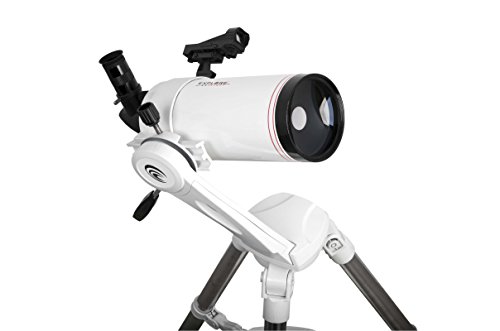
Explore Scientific FirstLight 100mm Maksutov-Cassegrain
A compact f/14 Maksutov on an alt-az mount: planets and the Moon from a small balcony.
Maksutov-Cassegrain
100mmAperture
Alt-azimuthMount
Very portablePortability
10 minTypical setup
Best for:
Planets, The Moon, City skies. Trade-off: Narrow field of view makes objects harder to find

Explore Scientific FirstLight 114mm Newtonian
A fast 114mm Newtonian on a simple alt-az mount - wide, bright views for very little money.
Reflector
114mmAperture
Alt-azimuthMount
Moderately portablePortability
10 minTypical setup
Best for:
Deep sky, The Moon, Learning the sky. Trade-off: Fast Newtonians need careful collimation

Explore Scientific ED127 Carbon Fiber APO
A 127mm air-spaced triplet APO in a carbon-fibre tube - a serious imaging refractor.
Refractor Imaging-capable
127mmAperture
EquatorialMount
Moderately portablePortability
—Typical setup
Best for:
Astrophotography, Deep sky, Planets. Trade-off: Optical tube only - needs a substantial equatorial mount

Levenhuk Skyline Travel 70
A 70mm travel refractor that packs into its own backpack and sets up in a couple of minutes.
Refractor
70mmAperture
Alt-azimuthMount
Very portablePortability
10 minTypical setup
Best for:
Travel, The Moon, Kids & family. Trade-off: Short tripod is best used on a table

National Geographic 70mm Carbon Fiber Refractor
A 70mm refractor with slow-motion controls and a phone adapter for well under a hundred dollars.
Refractor
70mmAperture
Alt-azimuthMount
Very portablePortability
10 minTypical setup
Best for:
The Moon, Planets, Kids & family. Trade-off: Focal length is not stated in the listing

Celestron Travel Scope 80
The bigger Travel Scope: 80mm of aperture with tripod and backpack, still cabin-bag sized.
Refractor
80mmAperture
Alt-azimuthMount
Very portablePortability
5 minTypical setup
Best for:
Travel, The Moon, Kids & family. Trade-off: The light tripod flexes at higher powers

Celestron StarSense Explorer DX 102AZ
A four-inch refractor your phone aims for you: dock, follow the arrows, look through the eyepiece.
Refractor
102mmAperture
Alt-azimuthMount
Moderately portablePortability
15 minTypical setup
Best for:
The Moon, Planets, Learning the sky. Trade-off: Manual mount, so objects drift and must be re-centred
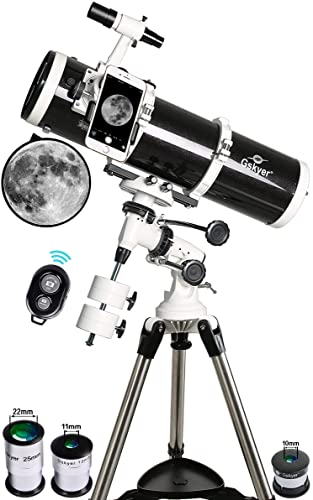
Gskyer 130EQ Reflector
A 130mm f/5 reflector on an equatorial mount, with a Bluetooth remote for phone snapshots.
Reflector
130mmAperture
EquatorialMount
Moderately portablePortability
20 minTypical setup
Best for:
The Moon, Planets, Deep sky. Trade-off: Equatorial setup is a learning curve for beginners

SVBONY SV503 80ED
An 80mm ED doublet bundled with its 0.8x flattener - SVBONY's standard entry into imaging.
Refractor Imaging-capable
80mmAperture
EquatorialMount
Very portablePortability
—Typical setup
Best for:
Astrophotography, Deep sky, Travel. Trade-off: Optical tube only - no mount, rings or finder

Askar FRA400 Quintuplet Astrograph
A quintuplet flat-field astrograph at 400mm f/5.6 - no separate flattener to work out.
Refractor Imaging-capable
—Aperture
EquatorialMount
Very portablePortability
—Typical setup
Best for:
Astrophotography, Deep sky, Travel. Trade-off: Optical tube only, and the aperture is not stated in the listing
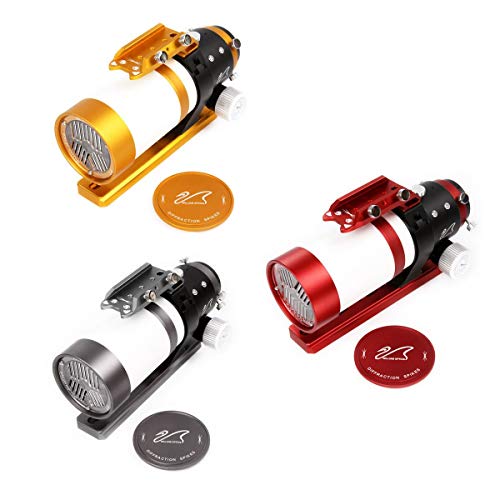
William Optics ZenithStar II 61mm
A 61mm doublet apo - the classic small travel astrograph for star-tracker imaging.
Refractor Imaging-capable
61mmAperture
EquatorialMount
Very portablePortability
—Typical setup
Best for:
Astrophotography, Travel, Deep sky. Trade-off: Optical tube only - no mount, rings or accessories listed

Celestron StarSense Explorer DX 5" SCT
A 5-inch SCT that your phone aims for you - compact optics with app-guided star hopping.
Schmidt-Cassegrain
130mmAperture
Alt-azimuthMount
Moderately portablePortability
15 minTypical setup
Best for:
Planets, The Moon, City skies. Trade-off: Manual mount, so objects drift and must be re-centred

SVBONY SV503 102ED
SVBONY's 102mm ED doublet: 714mm at f/7, with a rotator and dual-speed focuser for imaging.
Refractor Imaging-capable
102mmAperture
EquatorialMount
Moderately portablePortability
—Typical setup
Best for:
Astrophotography, Deep sky, Planets. Trade-off: Optical tube only - mount and finder are sold separately
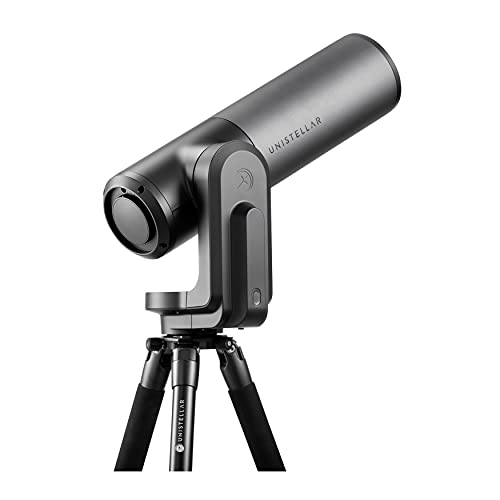
Unistellar eVscope Equinox
Unistellar's phone-only smart scope: field detection puts you on target in about a minute.
Smart Telescope GoTo Smart Imaging-capable
—Aperture
App-drivenMount
Very portablePortability
5 minTypical setup
Best for:
Deep sky, City skies, Astrophotography. Trade-off: No eyepiece - everything is viewed on a phone or tablet

Bresser Space Explorer 90/900 EQ3
A 90mm f/10 achromat on an EQ3 mount - long focal length aimed at Saturn and Jupiter.
Refractor
90mmAperture
EquatorialMount
Moderately portablePortability
20 minTypical setup
Best for:
Planets, The Moon, Deep sky. Trade-off: The equatorial mount needs polar alignment to be useful
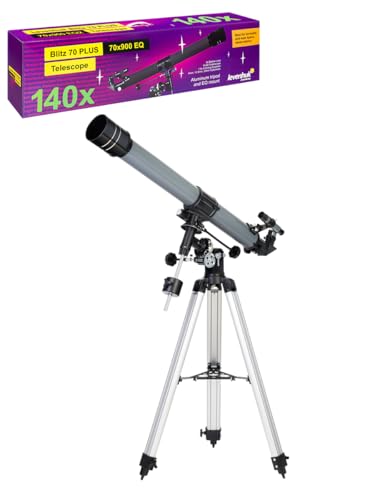
Levenhuk Blitz 70 Plus
A long-focus 70mm achromat on an equatorial mount, with slow-motion knobs for tracking.
Refractor
70mmAperture
EquatorialMount
Moderately portablePortability
20 minTypical setup
Best for:
The Moon, Planets, Learning the sky. Trade-off: An equatorial mount adds setup time for a small scope

Levenhuk Blitz 114s Plus
A short-focus 114mm Newtonian on an equatorial mount for wide, bright deep-sky views.
Reflector
114mmAperture
EquatorialMount
Moderately portablePortability
20 minTypical setup
Best for:
Deep sky, The Moon, Planets. Trade-off: Short-focus Newtonians need regular collimation

Levenhuk LabZZ TK76
A 76mm reflector for children that travels in its own hard case with every accessory inside.
Reflector
76mmAperture
Alt-azimuthMount
Very portablePortability
10 minTypical setup
Best for:
Kids & family, The Moon, Learning the sky. Trade-off: 76mm aperture limits it to bright targets

Celestron StarSense Explorer 10" Dobsonian
Ten inches of aperture with your phone as the finder - the app points, the Dob does the rest.
Dobsonian
254mmAperture
DobsonianMount
Stays putPortability
15 minTypical setup
Best for:
Deep sky, Planets, The Moon. Trade-off: Large and heavy - a two-trip telescope
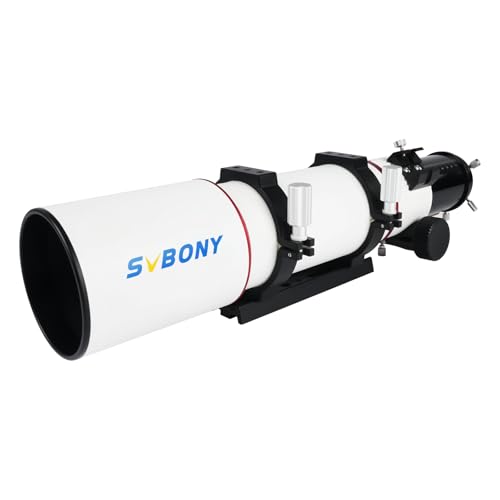
SVBONY SV550 80mm APO
An 80mm f/6 triplet apo with a 2.5-inch dual-speed focuser, built for full-frame cameras.
Refractor Imaging-capable
80mmAperture
EquatorialMount
Very portablePortability
—Typical setup
Best for:
Astrophotography, Deep sky, Travel. Trade-off: Optical tube only - no mount, rings or flattener included

Sky-Watcher Virtuoso GTi 150P
A collapsible 150mm tabletop Dob with Wi-Fi GoTo - real aperture that still sits on a table.
Dobsonian GoTo
150mmAperture
Computerized GoToMount
Moderately portablePortability
5 minTypical setup
Best for:
Deep sky, Planets, The Moon. Trade-off: The tabletop base needs a sturdy surface at the right height

SVBONY MK105 Maksutov-Cassegrain
A 105mm f/13 Maksutov tube under 5 lbs - planetary reach that fits in a camera bag.
Maksutov-Cassegrain
105mmAperture
Alt-azimuthMount
Very portablePortability
—Typical setup
Best for:
Planets, The Moon, City skies. Trade-off: Optical tube only - no mount, tripod or eyepieces
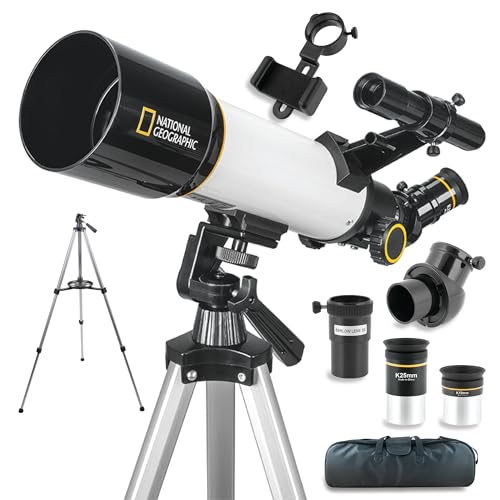
National Geographic Sky View 70mm
The cheapest honest starter scope here: 70mm, a panhandle mount and a phone adapter.
Refractor
70mmAperture
Alt-azimuthMount
Very portablePortability
10 minTypical setup
Best for:
Kids & family, The Moon, Learning the sky. Trade-off: The lightweight mount and tripod wobble easily
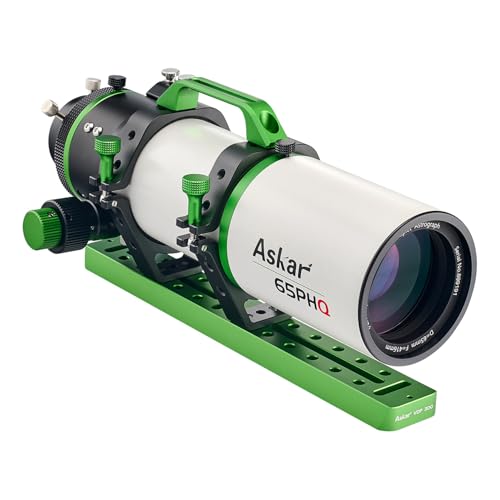
Askar 65PHQ Flat-Field Astrograph
A 65mm quadruplet flat-field astrograph that needs no flattener and covers full frame.
Refractor Imaging-capable
65mmAperture
EquatorialMount
Very portablePortability
—Typical setup
Best for:
Astrophotography, Deep sky, Travel. Trade-off: Optical tube only - mount and camera are separate purchases

Askar 80PHQ Flat-Field Astrograph
An 80mm quadruplet super-apo at f/7.5 - the long-focus member of Askar's PHQ family.
Refractor Imaging-capable
80mmAperture
EquatorialMount
Moderately portablePortability
—Typical setup
Best for:
Astrophotography, Deep sky, Planets. Trade-off: Optical tube only - a solid equatorial mount is essential

Askar 107PHQ Flat-Field Astrograph
A 107mm flatfield quadruplet apo: no flattener, no back-focus maths, full-frame coverage.
Refractor Imaging-capable
107mmAperture
EquatorialMount
Moderately portablePortability
—Typical setup
Best for:
Astrophotography, Deep sky, Planets. Trade-off: Optical tube only - needs a heavy-duty equatorial mount

SVBONY SV550 122mm APO
A 122mm FPL-51 triplet at f/7 - SVBONY's largest apo, for imaging and high-power visual.
Refractor Imaging-capable
122mmAperture
EquatorialMount
Moderately portablePortability
—Typical setup
Best for:
Astrophotography, Deep sky, Planets. Trade-off: Optical tube only - needs a substantial equatorial mount

Celestron StarSense Explorer 130mm Tabletop
A 130mm tabletop Dob with the StarSense app doing the finding - the easiest route to aperture.
Dobsonian
130mmAperture
DobsonianMount
Very portablePortability
5 minTypical setup
Best for:
Deep sky, The Moon, Planets. Trade-off: Needs a table, stool or crate at the right height

Unistellar Odyssey
Unistellar's compact smart scope: 85mm optics, autofocus and observing inside two minutes.
Smart Telescope GoTo Smart Imaging-capable
85mmAperture
App-drivenMount
Very portablePortability
5 minTypical setup
Best for:
Astrophotography, Deep sky, City skies. Trade-off: Viewing is app-only - there is no eyepiece

Unistellar Odyssey Pro
The only smart telescope with a real eyepiece, on the same 85mm f/3.9 Odyssey platform.
Smart Telescope GoTo Smart Imaging-capable
85mmAperture
App-drivenMount
Very portablePortability
5 minTypical setup
Best for:
Astrophotography, Deep sky, City skies. Trade-off: Nearly double the price of the eyepiece-free Odyssey

Bresser Junior 70/400
A 70mm kids' refractor with backpack, phone holder and a 20x-100x range, rated for age 8 up.
Refractor
70mmAperture
Alt-azimuthMount
Very portablePortability
10 minTypical setup
Best for:
Kids & family, The Moon, Travel. Trade-off: 70mm f/5.7 shows little beyond the Moon and bright planets

Vaonis Vespera Pro
Vaonis' flagship station: a Starvis 2 sensor, live mosaics and an expert mode for manual control.
Smart Telescope GoTo Smart Imaging-capable
—Aperture
App-drivenMount
Very portablePortability
5 minTypical setup
Best for:
Astrophotography, Deep sky, City skies. Trade-off: Aperture and focal length are not stated in the listing
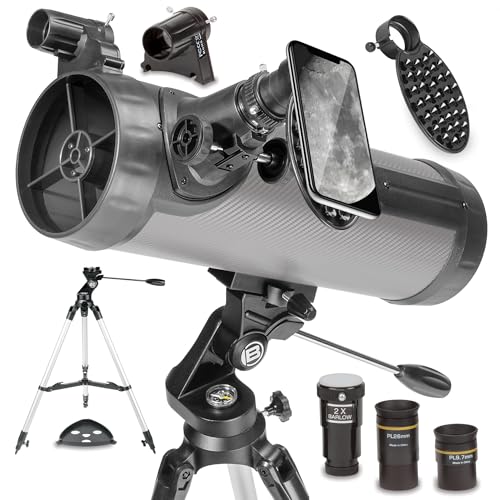
National Geographic 114mm Reflector
A 114mm reflector for under a hundred dollars, with a full tripod and a phone adapter.
Reflector
114mmAperture
Alt-azimuthMount
Moderately portablePortability
10 minTypical setup
Best for:
The Moon, Deep sky, Kids & family. Trade-off: A fast f/4.4 mirror needs collimation to look its best

Bresser 80/500 Refractor
An 80mm f/6.25 refractor with a metal tripod, backpack and phone adapter for about $110.
Refractor
80mmAperture
Alt-azimuthMount
Very portablePortability
10 minTypical setup
Best for:
The Moon, Planets, Travel. Trade-off: The claimed 150x is optimistic for an 80mm achromat

Vaonis Hestia Smartphone Telescope
A battery-free optical box that turns your phone into both the eyepiece and the camera.
Smart Telescope Smart Imaging-capable
30mmAperture
Alt-azimuthMount
Very portablePortability
5 minTypical setup
Best for:
The Moon, Travel, Kids & family. Trade-off: 30mm of aperture shows only the Moon and the brightest targets

SVBONY SV520 90mm Refractor
A 90mm f/8.9 achromat on a worm-gear alt-az mount - smoother pointing than most kits this cheap.
Refractor
90mmAperture
Alt-azimuthMount
Moderately portablePortability
10 minTypical setup
Best for:
The Moon, Planets, Learning the sky. Trade-off: Achromatic optics show colour fringing on bright objects
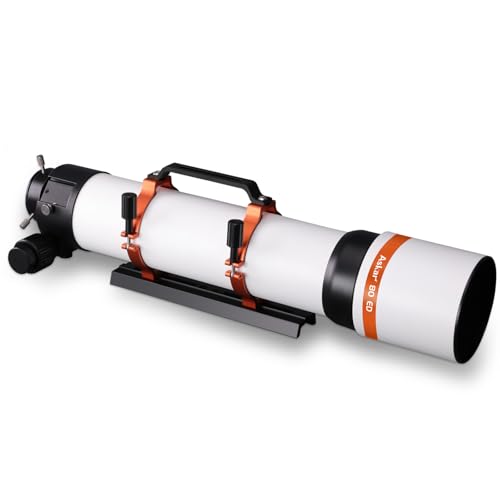
Askar 80ED
Askar's entry ED doublet: 80mm at f/7 with a dual-speed 2-inch focuser and retractable hood.
Refractor Imaging-capable
80mmAperture
EquatorialMount
Very portablePortability
—Typical setup
Best for:
Astrophotography, Deep sky, Travel. Trade-off: Optical tube only - reducers and flatteners are extra

ZWO FF65 APO Astrograph
A 65mm flat-field apo astrograph from ZWO, sized to sit in front of a cooled camera.
Refractor Imaging-capable
65mmAperture
EquatorialMount
Very portablePortability
—Typical setup
Best for:
Astrophotography, Deep sky, Travel. Trade-off: Optical tube only - no mount, rings or camera included
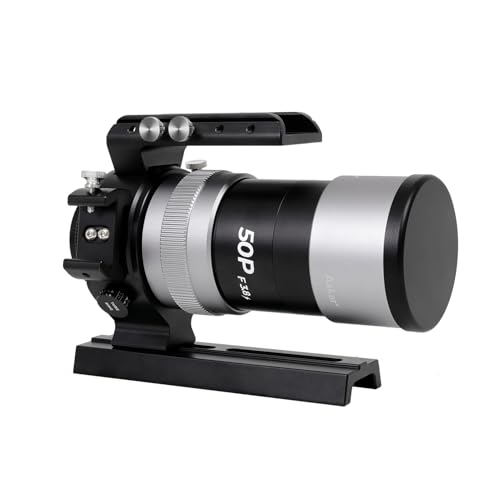
Askar 50P Quadruplet Astrograph
A 190mm-focal-length quadruplet apo at f/3.8 - very wide fields on a small tracker.
Refractor Imaging-capable
50mmAperture
EquatorialMount
Very portablePortability
—Typical setup
Best for:
Astrophotography, Travel, Deep sky. Trade-off: Optical tube only, and 50mm is too small for visual use

Askar N160 Newtonian Astrograph
A 160mm f/3.4 Newtonian astrograph with the coma corrector included - fast deep-sky imaging.
Reflector Imaging-capable
160mmAperture
EquatorialMount
Moderately portablePortability
—Typical setup
Best for:
Astrophotography, Deep sky. Trade-off: Optical tube only - needs a heavy equatorial mount