Best Telescope for 10-Year-Old (2026): Real Starter Scopes
Telescope Advisor Logo Telescope Advisor
A 10-year-old stargazer using a beginner telescope at dusk

Age-Specific Buying Guide · 2026

Best Telescope for a 10-Year-Old (2026): Beginner Scopes That Build Real Skills

At age 10, kids can handle more than a toy telescope. This guide ranks scopes that still feel simple but now allow independent observing, better pointing control, and stronger first-year progress.

Age 10

Learning stage

5

Ranked picks

Moon + planets

First wins

Skill growth

Year-1 ready

By Telescope Advisor Editorial Team Published: Updated: Editorial Standards

Quick Answer: What Is the Best Telescope for a 10-Year-Old?

For most 10-year-olds, the best telescope is the Celestron AstroMaster 70AZ. It balances true optical capability with simple controls, so kids can start seeing Saturn's rings and Jupiter's moons while still learning basic observing habits.

Age 10 is a transition point. Children can now follow step-by-step setup, align a simple finder with help, and manage short observing checklists. That means you can move from ultra-basic tabletop scopes to more capable beginner refractors without overwhelming them.

The goal is not just one exciting night. The right age-10 telescope should support repeated sessions and growing independence across a full season.

Top 5 Telescopes for 10-Year-Olds (Ranked)

Editor's Pick - Best Overall for Age 10
Celestron AstroMaster 70AZ telescope

1) Celestron AstroMaster 70AZ

Best age-10 balance of ease and performance. A true starter refractor with enough detail for meaningful planetary sessions and straightforward manual control.

View on Amazon →
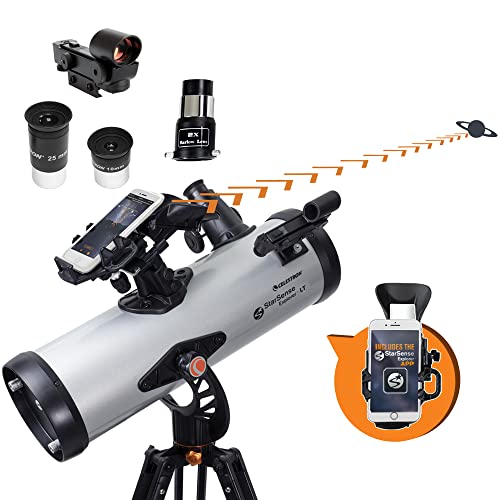
Celestron StarSense Explorer LT 114AZ

2) Celestron StarSense Explorer LT 114AZ

Best for kids who get discouraged finding targets. App-guided navigation increases successful sessions and reduces "I can't find it" frustration.

View on Amazon →
Gskyer 70mm AZ Refractor

3) Gskyer 70mm AZ Refractor

Budget-first pick for families who want a complete entry kit at lower cost while still getting usable lunar and bright-planet results.

View on Amazon →
Sky-Watcher Heritage 130P

4) Sky-Watcher Heritage 130P

Best stretch pick for motivated kids ready for more aperture and parent-guided skill building, especially for deeper dark-sky nights.

View on Amazon →
Celestron NexStar 4SE

5) Celestron NexStar 4SE (Premium Assisted Option)

Premium pick when parents want GoTo automation and are willing to manage alignment. Great for reducing failed target hunts after setup.

View on Amazon →

Side-by-Side Comparison: Our Age-10 Picks at a Glance

All five picks can be operated by a motivated 10-year-old, but they demand different levels of skill and adult backup. The table below shows how they compare on the factors that actually decide whether a scope gets used every week: format, aperture, independence level, and budget.

Telescope Type Aperture Typical Price Solo Use at 10?
Celestron AstroMaster 70AZRefractor on alt-az tripod70mm~$110Yes, after a few guided sessions
StarSense Explorer LT 114AZReflector + app guidance114mm~$180Yes, app removes the hardest skill
Gskyer 70mm AZRefractor on alt-az tripod70mm~$90Yes, simplest budget option
Sky-Watcher Heritage 130PTabletop Dobsonian130mm~$260Yes, once a parent places it on a table
Celestron NexStar 4SEGoTo Maksutov-Cassegrain102mm~$500+Partially; alignment needs an adult at first

For deeper technical detail, read our standalone reviews of the AstroMaster 70AZ, the StarSense Explorer LT 114AZ, the Gskyer 70mm AZ, the Heritage 130P, and the NexStar 4SE. Each one covers optics, mount behavior, and assembly in the depth that a purchase decision deserves.

The aperture jump from 70mm to 130mm is meaningful: it is nearly three and a half times the light-gathering area. Our guides to what a 70mm telescope shows and what a 130mm telescope shows illustrate the difference target by target, which is the honest way to decide whether the Heritage 130P is worth the stretch for your family.


🔭

Not sure which telescope actually fits your goals?

Answer 5 quick questions about your budget, observing targets, and experience level — our Telescope Finder Tool recommends a specific model in under 2 minutes.

Find My Telescope →

Age-10 Framework: Independence Without Overload

Compared with age 8, 10-year-olds can handle a little more process: basic finder alignment, short target lists, and eyepiece swaps with supervision. But they still benefit from simple control schemes and fast feedback. The optimal telescope at this age teaches skills without creating frequent failure loops.

  • Prioritize stable mount behavior over max magnification claims.
  • Choose scopes that can deliver strong Moon and planet views in ordinary suburban conditions.
  • Use short checklist routines to develop repeatable observing habits.
  • Treat app guidance as a tool, not a crutch, when target-finding confidence is low.

Telescope Features a 10-Year-Old Can Operate Alone

The defining difference between buying for age 8 and age 10 is independence. A typical 10-year-old can carry a small scope outside, set it up, find the Moon and bright planets, swap eyepieces, and pack everything away — but only if the telescope's design cooperates. When you compare models, evaluate each feature through one question: can my child do this alone, in the dark, on the third night, without me?

Alt-azimuth motion, not equatorial

Up-down and left-right movement is intuitive; an equatorial mount's tilted axes are not. Every pick on this page moves the way a child expects it to move, which is why targets stay findable without adult translation.

A red-dot or app-based finder

Red-dot finders project a simple dot on the sky with no confusing magnified, flipped view. The StarSense app goes further and turns the phone into a guide that points the way. Both let a 10-year-old aim successfully on night one.

Weight they can actually carry

A scope a child can carry in one trip is a scope they will set up without asking. The 70mm refractors and tabletop Dobsonians here weigh roughly what a loaded school backpack does; the NexStar 4SE is the one pick that usually needs adult hands.

Tool-free setup and big control knobs

Thumb screws instead of hex keys, large focus wheels, and eyepieces that drop in and lock with one screw all matter more at this age than any optical specification on the box.

Independence also needs a family agreement: where the scope may be set up, what the child does if something jams (stop, do not force it), and the absolute rule that the Sun is off-limits without a parent and a certified filter. With those boundaries set, most 10-year-olds handle a full session alone within a month — and owning the whole process, start to finish, is exactly what converts casual interest into a real skill-building hobby.

What a 10-Year-Old Can Actually See (Realistic Expectations)

Ten-year-olds have usually seen Hubble and Webb images, so honest expectation-setting is the kindest thing you can do before the first night. Through a beginner telescope, planets are small but sharp, and deep-sky objects are subtle gray glows rather than colorful clouds. What the pictures cannot deliver — and the eyepiece can — is the fact that the light hitting your child's eye left Saturn over an hour ago. Kids who understand that difference are thrilled by views that would disappoint a child expecting a poster.

Target Difficulty What They Will See
MoonEasyHundreds of craters, mountain ranges, shadows that change nightly along the terminator
JupiterEasyA bright disk with two dusky cloud belts and four moons that rearrange every night
SaturnMediumRings clearly separated from the planet — small, but unmistakably real
Double stars (e.g., Albireo, Mizar)MediumOne star splitting into two, sometimes in contrasting colors
Pleiades and bright clustersEasyDozens of blue-white stars filling the eyepiece
Orion Nebula (M42)MediumA gray-green glowing fan around the Trapezium stars — the first real deep-sky trophy
Andromeda Galaxy (M31)HarderAn elongated soft glow; modest to look at, astonishing once they know it is 2.5 million light-years away

Jupiter deserves special mention as the perfect age-10 target: its four Galilean moons visibly change position from night to night, which turns observing into a running experiment. Our Jupiter moons observing guide shows how to track and identify them, a project a 10-year-old can own completely.

Learning Star-Hopping: The Skill That Makes It a Hobby

Star-hopping — navigating from a bright, known star to a faint target through a chain of recognizable patterns — is the fundamental skill of amateur astronomy, and age 10 is when kids become genuinely good at it. It exercises the same pattern-matching instincts as a video game map, and a child who learns it owns the sky for life, with or without electronics.

  1. Start with naked-eye anchors. Teach three or four seasonal landmarks first: the Big Dipper, Orion's Belt, the Summer Triangle. These become the "home screens" every hop starts from.
  2. Align the finder in daylight. Center a distant chimney in the eyepiece, adjust the red-dot to match, and every night hop gets ten times easier. A misaligned finder is the top cause of the frustration described in "why can't I see anything through my telescope?"
  3. Hop with the lowest-power eyepiece. Low power means a wide field of view, and a wide field forgives small aiming errors. Magnify only after the target is centered.
  4. Practice one two-step hop per night. Orion's Belt down to the Orion Nebula. The Big Dipper's pointer stars to Polaris. Cassiopeia toward Andromeda. Short, repeatable hops build a mental map fast.
  5. Let them fail a little. Five minutes of searching followed by success teaches more than instant answers. Step in before frustration, not before effort.

This is also the honest case for the StarSense Explorer at this age: the app teaches pointing by showing the child where the scope is aimed in real time, training the same mental map star-hopping builds. Used as a coach rather than a chauffeur, it accelerates the skill instead of replacing it.

First-Month Plan for a 10-Year-Old Telescope Owner

Week Goal Target Type
Week 1Setup confidence and focus controlMoon details and bright stars
Week 2Planet pointing and tracking practiceJupiter and Saturn sessions
Week 3Simple target hoppingPleiades and bright clusters
Week 4Independent mini-sessionTwo-target checklist night

From the Moon to Planets to First Deep-Sky: The Year-One Ladder

The best way to keep a 10-year-old engaged for a full year is a progression ladder: each rung uses the skills from the last one and delivers a visibly new kind of reward. Rushing to the hard targets early is the classic mistake; climbing in order makes every stage feel like leveling up.

Stage one is the Moon, and it deserves a full month, not a single glance. Follow the terminator as it moves night by night and the same craters transform under changing shadow angles. This stage builds the two core mechanical skills — aiming and focusing — on a target that is impossible to miss.

Stage two is the bright planets. Jupiter's moons shift positions nightly, Saturn's rings reward steady patience at the eyepiece, and both teach a subtler skill: waiting for moments of still air when the image sharpens. Planets also introduce the eyepiece swap — find at low power, then step up the magnification.

Stage three is bright deep-sky. The Pleiades, the Orion Nebula, the Albireo double star, and — from darker skies — the Andromeda Galaxy. These faint targets are where star-hopping pays off and where a young observer starts to feel like a real astronomer rather than a sightseer. This is also the stage where the Heritage 130P's extra aperture visibly earns its price.

A simple paper logbook multiplies the effect of every stage: date, target, sky conditions, and one sketch or sentence. Ten-year-olds love watching their own list grow, and flipping back to a wobbly first-page Moon sketch six months later is the clearest proof of progress a young observer can hold. Our stargazing for beginners guide pairs well with this ladder for the family's first season.

Growing Into the Hobby: Clubs, Apps, and the Long Game

A telescope alone entertains a child for a season; a telescope plus a community can shape a decade. Age 10 is the right time to plug a young observer into the wider hobby, because they are old enough to participate and young enough to be adopted as everyone's favorite junior member.

  • Visit an astronomy club star party. Local clubs run free public observing nights where your child can look through instruments twenty times the size of their own and meet adults who share the obsession. Find one near you in our US astronomy club directory.
  • Install one good planetarium app. A phone app that shows what is up tonight turns cloudy-day planning into part of the fun. Our roundup of the best stargazing apps flags which ones have proper red night modes.
  • Set a challenge list. A "first ten targets" checklist — Moon, Jupiter, Saturn, Pleiades, Orion Nebula, a double star, and so on — gives the year a game structure. Completing it feels like finishing a quest line.
  • Mark the year's sky events. Meteor showers, eclipses, and close planetary pairings give the family free appointment viewing all year and reasons to get the scope out on schedule.

Resist the urge to upgrade hardware too quickly. A 10-year-old who fills a logbook with a 70mm refractor learns more than one who owns a large scope that stays in the garage. When the current scope is genuinely maxed out — usually after a year or two of regular use — the upgrade conversation continues in our best telescope for teens guide.

What to Avoid When Buying for a 10-Year-Old

The same traps that ruin younger kids' telescopes apply at 10, plus one new one that specifically targets this age group's bigger budgets.

Magnification marketing. A box advertising "525x zoom!" is the most reliable warning label in the industry. Useful magnification is capped by aperture at roughly 2x per millimeter, so a 60mm scope claiming 500x is promising four times its physical limit — and delivering a dark, shaky blur. The full breakdown is in the magnification lie, explained, and it is worth two minutes of any gift-buyer's time.

Department-store telescope kits. Wobbly tripods, plastic optics, and unusable high-power eyepieces, dressed in NASA-style box art. They cost real money and produce views worse than decent binoculars. Check any tempting listing against our telescopes to avoid in 2026 list before clicking buy.

The premature astrophotography rig. This is the age-10-specific trap: a well-meaning buyer sees a child's real enthusiasm and jumps to an equatorial mount, tracking motors, and camera adapters. Astrophotography is a wonderful second chapter, but as a first setup it buries a child in calibration steps before they have ever simply looked at Saturn. Visual observing first; photons onto a camera sensor later.

Skipping the mount check. Whatever the tube, press on it gently in the store or read reviews for wobble complaints. If the view shakes for three seconds after every touch, a child cannot focus it. A steady mediocre telescope beats a shaky good one every single night.

Setup on Christmas Morning: Making Night One Actually Work

If this telescope is a holiday gift, a small amount of December preparation decides whether it becomes a hobby or a closet ornament. Unlike an 8-year-old's gift, a 10-year-old's scope should be assembled with the child — the assembly is part of the present — but the parent should still scout the process in advance.

  1. Open the box before wrapping. Verify every part is present and skim the manual so you can play calm expert later. Re-pack it loosely for wrapping.
  2. Build it together on the 25th, in daylight. Let your child lead with the manual while you assist. Aim at a distant rooftop, practice focusing, and align the finder while the Sun does the lighting. Our step-by-step setup guide covers each stage in order.
  3. Plan the first target before dark. Check an app that afternoon: if the Moon is up, it wins; otherwise the brightest planet visible that week. Have the child find it themselves with you standing by.
  4. Keep spare batteries and hot drinks ready. Red flashlights and StarSense phones drain in the cold, and warm observers last three times longer than cold ones.
  5. End on success. One found target, one round of high-fives, and pack up together while enthusiasm is still high. Tomorrow night sells itself.

Comparing gift options across ages and budgets? Our complete telescope Christmas gift guide ranks picks for every recipient, and the best telescopes for kids overview covers the full age-by-age picture.

Accessories That Matter for a 10-Year-Old Observer

A short list of inexpensive accessories does more for a young observer than any hardware upgrade. Each of these supports the independence that defines this age.

Red LED flashlight

The badge of a real astronomer. It preserves night vision, finds dropped caps in the grass, and lets a child read charts and logbook pages without resetting their eyes for twenty minutes.

Moon filter

Near full phase, the Moon is uncomfortably bright through any telescope. A screw-in neutral-density filter tames the glare and reveals more surface detail. Our moon filter guide explains the options.

Planisphere and paper logbook

A spin-wheel star chart teaches sky layout without a screen, and a logbook turns scattered sessions into a visible, growing achievement — the single best motivation tool at this age.

One quality medium-power eyepiece

Stock eyepieces work, but one better ~10mm eyepiece sharpens planetary views noticeably and makes a perfect birthday follow-up gift. See our eyepiece buying guide before choosing.

Everything above except the eyepiece costs under $25, and our astronomy gifts under $50 roundup collects these plus books and other add-ons that pair well with any scope on this page.

Buying for a younger sibling too? The picks and expectations change meaningfully two years down. Our best telescope for an 8-year-old guide covers parent-supervised first scopes, durability priorities, and no-frustration setups for younger stargazers.

FAQ: Best Telescope for a 10-Year-Old

What can a 10-year-old actually see with a telescope?

Moon craters, Jupiter's moons, Saturn's ring shape, and bright clusters are realistic first-month targets with a quality beginner scope. By the end of year one, double stars, the Orion Nebula, and the Andromeda Galaxy from a dark site are all achievable.

Is a 70mm telescope enough at age 10?

Yes. A good 70mm refractor is often the best balance of simplicity and performance for age 10. It handles the Moon, planets, and bright clusters well, and it is light enough for a child to set up alone — which matters more than raw aperture at this stage.

Should I buy manual or computerized for a 10-year-old?

Manual is usually better for first learning, because finding targets by star-hopping is the core skill of the hobby. Computerized GoTo can help later if target-finding frustration is the main issue, and app-guided options like the StarSense Explorer sit usefully in between.

Can a 10-year-old use a telescope by themselves?

Yes, with the right design. A lightweight alt-azimuth scope with a red-dot finder can be carried, set up, aimed, and packed away by most 10-year-olds after a few guided sessions. Agree on ground rules first, including the absolute rule that the Sun is off-limits without a parent and a certified solar filter.

How is buying for a 10-year-old different from buying for an 8-year-old?

At 8, the priority is a no-frustration shared experience with a parent running setup. At 10, the priority shifts to independence and skill-building: a scope the child can operate alone, finder skills, star-hopping, and a progression from the Moon to planets to first deep-sky targets.

What is a realistic budget for an age-10 telescope?

Every scope in this guide except the premium GoTo option sits in the beginner price band. The middle of that range — where the StarSense Explorer LT 114AZ and Heritage 130P sit — is the sweet spot for a child showing sustained interest. Our budget guide and mid-range guide track current pricing at each tier.

Should a 10-year-old start with astrophotography?

Not as a first step. Astrophotography adds tracking mounts, cameras, and calibration on top of every basic skill. Learn visual observing first; a phone held to the eyepiece for a Moon photo is the right amount of photography in year one.

When should we upgrade to a bigger telescope?

Upgrade when the current scope is genuinely maxed out — typically after a year or two of regular use, a filled logbook, and targets the child can find but the aperture cannot resolve. At that point a larger Dobsonian or a computerized scope becomes a meaningful step rather than a shortcut.


Continue Exploring

Keep the session going with the next useful answer

Choose the next page based on whether you need a recommendation, a comparison, or a practical observing plan.

Use Finder Tool →

🎄 Holiday season: Telescope Christmas Gift Guide 2026 · Black Friday deal tracking