Total Solar Eclipse August 12, 2026 — Europe Ultimate Guide | Telescope Advisor
Telescope Advisor Logo Telescope Advisor
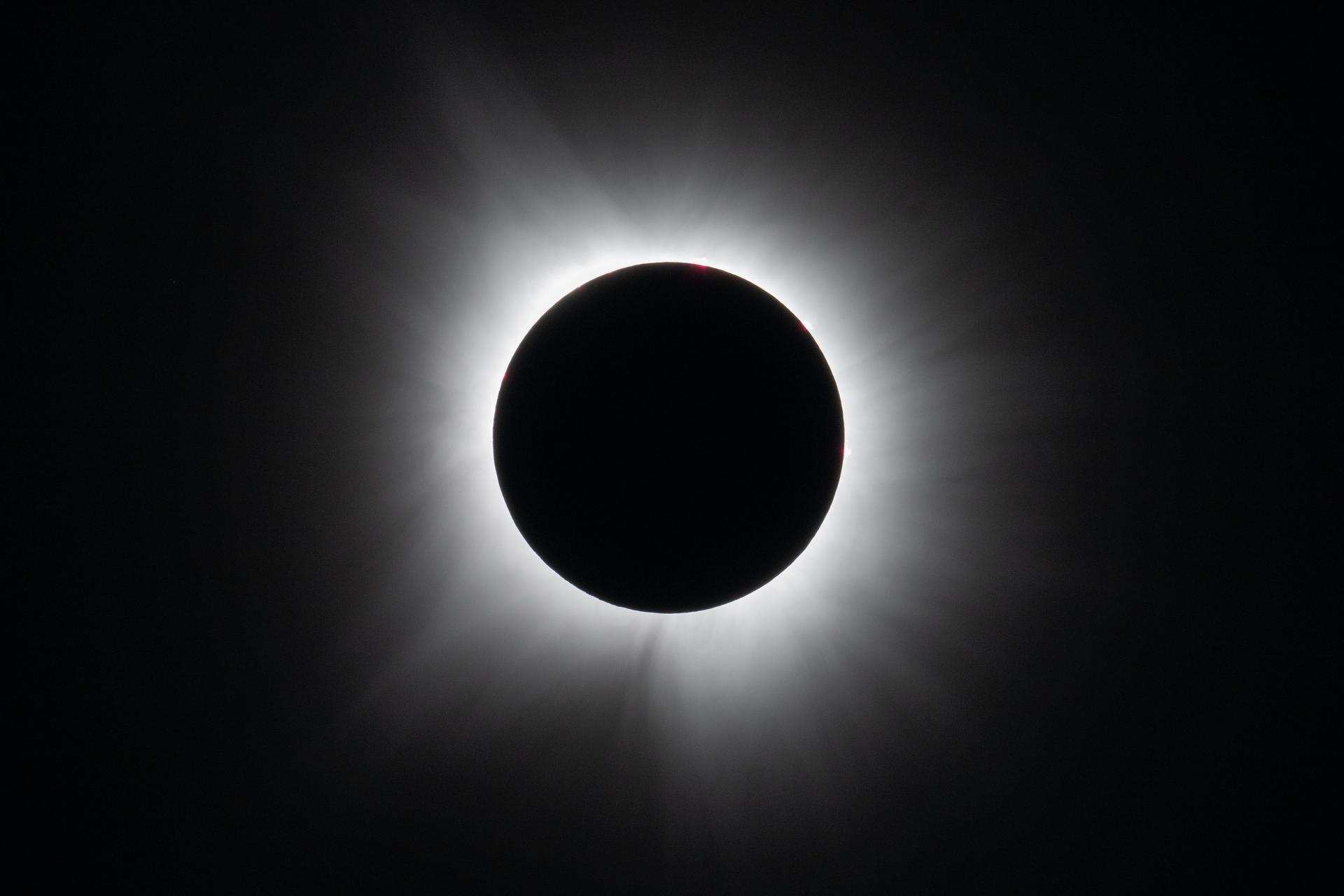
Total solar eclipse corona — the Sun's outer atmosphere visible during totality, with streaming plasma and a dark lunar silhouette

Eclipse Guide · August 12, 2026

Total Solar Eclipse August 12, 2026 — Europe Ultimate Guide

The first total solar eclipse visible from mainland Europe since 1999 crosses Spain, Iceland, and Greenland on August 12, 2026. Here is everything you need to know to experience it — where to go, when to look, how to view it safely, and what gear to bring.

DateAugust 12, 2026
TotalityUp to 2 min 18 sec
PathSpain · Iceland · Greenland
Partial visibleAll Europe · N. Africa
By Telescope Advisor Editorial Team Published: Updated: Editorial Standards

Quick Answer: What Is the August 12, 2026 Eclipse?

The total solar eclipse of August 12, 2026 is the most significant astronomical event visible from Europe this decade. It is the first total solar eclipse whose path of totality touches mainland Europe since August 11, 1999 — 27 years ago. The Moon's shadow crosses Greenland, Iceland, and northern Spain, with maximum totality lasting 2 minutes and 18 seconds near the Faroe Islands.

For the rest of Europe — including the UK, Ireland, France, Germany, Italy, the Benelux countries, Scandinavia, and Central Europe — a deep partial eclipse will be visible, with the Sun's crescent ranging from 50% to 95% covered depending on your location. No special equipment is needed to see a partial eclipse IF you use proper eye protection at all times. ISO-certified solar eclipse glasses are mandatory for direct viewing. This guide covers everything: selecting your viewing location, timing by city, safety equipment, telescope and camera gear, and travel planning for totality.

The Path of Totality — Where to See the Full Eclipse

The path of totality — the narrow corridor where the Moon completely covers the Sun — crosses three territories on August 12, 2026. Totality begins at sunrise in the central Pacific Ocean, tracks northeast across Greenland, passes over Iceland's western coast and the Faroe Islands, and makes landfall in northern Spain before ending at sunset in the Mediterranean.

The table below shows the key totality locations with local times and duration. All times are in local daylight-saving time for each location.

Location Partial begins Totality start Totality duration Sun altitude
Spain — Burgos20:34 CEST21:41 CEST1 min 10 sec
Spain — Palencia20:34 CEST21:42 CEST1 min 24 sec
Spain — Valladolid20:34 CEST21:42 CEST1 min 30 sec
Spain — Zaragoza20:36 CEST21:43 CEST30 sec
Spain — Lleida20:37 CEST21:44 CEST45 sec
🇮🇸 Iceland — Reykjavik (west coast)17:40 UTC18:48 UTC2 min 02 sec28°
🇫🇴 Faroe Islands — Tórshavn18:03 UTC19:11 UTC2 min 18 sec18°
🇬🇱 Greenland — Kangerlussuaq14:40 UTC15:48 UTC1 min 50 sec35°

Times are approximate and vary by exact location within the path. Check detailed predictions at timeanddate.com or use a dedicated eclipse app. Source: NASA Eclipse Web Site / Fred Espenak.

Spain — The Mainland Totality Destination

Spain is the most accessible totality destination for European eclipse chasers. The path crosses the northern Spanish provinces of Castilla y León, Aragón, and Catalonia, passing through cities including Burgos, Palencia, Valladolid, Zaragoza, and Lleida. The centreline runs approximately from Burgos to Lleida, offering between 60 and 90 seconds of totality depending on exact location.

August in northern Spain typically offers good weather prospects. The northern meseta (plateau) around Burgos and Palencia has some of the lowest cloud cover statistics in Europe for August. However, the Sun will be very low in the sky — only 5–8 degrees above the horizon — so an unobstructed north-western horizon is essential. Choose a viewing site with a clear view to the north-west, ideally on a hill or elevated plain. Avoid valley locations where hills may block the low Sun.

Travel logistics: Burgos is the most practical base. It has a high-speed AVE rail connection from Madrid (approx 1 hour 40 minutes), a regional airport, and extensive hotel accommodation. Palencia and Valladolid are also well-connected by rail and road. Rental cars are recommended for the final leg to your chosen viewing site, as flexibility is essential for cloud avoidance. Book accommodation well in advance — August is peak Spanish holiday season and eclipse chasers from across Europe will fill rooms within the path.

Weather note: Historical August cloud cover data for Burgos shows approximately 35% chance of clear skies at sunset, with 40% partly cloudy and 25% overcast. Have a backup plan to move east or west along the path to find clear skies. Mobile apps like Clear Outside and Windy are essential for last-minute decisions.

🇮🇸 Iceland — Longer Totality, Higher in the Sky

Iceland offers the best combination of long totality and solar altitude for the 2026 eclipse. The path crosses Iceland's western coast, including the Reykjanes Peninsula and the capital region around Reykjavik, with totality lasting up to 2 minutes 2 seconds at an altitude of 28 degrees — significantly higher and more comfortably placed than in Spain.

The Iceland advantage: The Sun will be at 28° altitude during totality, compared to only 5–8° in Spain. This means better atmospheric stability, less atmospheric extinction, a darker sky, and easier photography. The higher altitude also means you do not need a perfect western horizon — you can view from any location with an open sky.

The Iceland challenge: August weather in Iceland is notoriously unpredictable. The south and west coasts average 50–70% cloud cover in August, and the path of totality crosses exactly the cloudiest part of the country. However, Icelandic weather is highly localised — a 30-minute drive can be the difference between thick cloud and clear skies. Renting a 4×4 vehicle and monitoring satellite imagery in real time is the recommended strategy.

Pro tip for Iceland: Consider basing yourself in Reykjavik and using real-time cloud radar (available via the Icelandic Meteorological Office website) to make a same-day decision on which direction to drive. The path runs roughly north-south along the west coast, giving you flexibility to move north toward Stykkishólmur or south toward the Reykjanes Peninsula. For astronomy travellers, Iceland offers the bonus of possible aurora borealis activity in the same trip if you extend your stay after the eclipse.

Partial Eclipse Across Europe

Even if you cannot reach the path of totality, the partial eclipse visible from across Europe will be a dramatic sight. At maximum eclipse, the Sun will appear as a thin crescent — the thinner the crescent, the more dramatic the effect, and the more noticeable the dimming of daylight. The table below shows key times for major European cities.

What to expect during the partial eclipse: As the Moon takes an increasingly larger bite out of the Sun, the daylight will take on an unusual quality. The light becomes muted, shadows sharpen, and the colours of the landscape shift toward a metallic, silvery tone. Birds may begin their evening roosting behaviour, mistaking the dimming light for dusk. If you are near trees, look at the ground beneath them — the gaps between leaves act as pinhole projectors, casting hundreds of tiny crescent-shaped shadows on the ground. This pinhole effect is one of the most charming and accessible ways to experience the eclipse, and it requires no equipment at all. Simply stand under a leafy tree during the maximum partial phase and look at the ground.

For UK observers specifically: The eclipse occurs very close to sunset, which adds both beauty and challenge. The partially eclipsed Sun may be visible as a thin crescent setting through clouds or haze on the western horizon — this can produce spectacular photographs but also means you must have a completely unobstructed view. Choose a location with a low western horizon: a hilltop, coastal cliff, or high building with a west-facing balcony. In London, Hampstead Heath and Primrose Hill offer good western views. In Edinburgh, Calton Hill or Arthur's Seat provide elevation. In Dublin, Killiney Hill or Howth Head offer excellent western horizons over the sea.

City Eclipse begins (local) Maximum coverage Magnitude
London19:50 BST20:54 BST87%
Dublin19:45 IST20:48 IST92%
Paris20:02 CEST21:06 CEST79%
Berlin20:15 CEST21:18 CEST71%
Rome20:24 CEST21:25 CEST58%
Amsterdam20:05 CEST21:09 CEST80%
Brussels20:03 CEST21:07 CEST81%
Zurich20:12 CEST21:16 CEST73%
Copenhagen20:09 CEST21:13 CEST81%
Stockholm20:16 CEST21:19 CEST73%
Oslo20:07 CEST21:11 CEST85%
Lisbon19:50 WEST20:52 WEST66%
Madrid20:31 CEST21:35 CEST81%
Warsaw20:24 CEST21:26 CEST59%

All times are in local daylight-saving time. Magnitude = fraction of Sun's diameter covered. Times vary by exact location within each city; these are approximate central values. Source: NASA Eclipse Web Site.

Solar Eclipse Safety — Protect Your Eyes

Warning: Never look directly at the Sun without proper eye protection. Viewing any part of the Sun through a camera lens, binoculars, or a telescope without a certified solar filter will cause instantaneous and permanent eye damage. This applies during all partial phases — both before and after totality.

ISO 12312-2 certification is mandatory. Only eclipse glasses and solar viewers that meet the ISO 12312-2 international safety standard should be used. These filters reduce the Sun's visible and infrared light to safe levels. Discard any glasses that are scratched, punctured, or damaged. Do not use ordinary sunglasses, welding goggles (unless shade 14 or darker), or improvised filters — they do not block the invisible infrared radiation that can still damage your eyes even if the visible light feels comfortable.

The only exception: During the brief moments of totality (when the Moon completely covers the Sun's bright disk), it is safe to view with the naked eye. This is the only time you can safely look at the Sun without filters. The instant the first bead of sunlight reappears (the diamond ring effect), you must put your glasses back on or re-cover your telescope.

For telescope users: A certified solar filter must be securely attached to the front of the telescope. Never use eyepiece filters — the concentrated sunlight can shatter them instantly. For our full telescope safety guide, see the dedicated solar eclipse page with detailed filter recommendations.

Best Viewing Gear for the Eclipse

For most European observers, the eclipse occurs near sunset. The Sun will be low on the western horizon, which means you need an unobstructed view and equipment suited to observing or photographing a very low-altitude Sun. Here is the gear we recommend for different types of viewing.

Eclipse Glasses (Mandatory)

Every observer needs ISO 12312-2 certified eclipse glasses. Do not reuse old eclipse glasses from previous years if they are scratched or more than three years old — the filter material can degrade. Purchase from reputable suppliers; counterfeit eclipse glasses are unfortunately common. The American Astronomical Society maintains a list of approved vendors for European buyers. Expect to pay £3–£10 per pair.

Binoculars (with Solar Filters)

Binoculars provide a spectacular magnified view of the partial phases, revealing Sun-spots and the intricate shape of the solar crescent as the Moon moves across the Sun. However, solar filters must be attached to the front of both objectives — never use eyepiece filters. The Celestron SkyMaster 15×70 with 70mm solar filters gives the most dramatic views, but a smaller 10×50 is easier to manage and still shows excellent detail. For European buyers, these are available through Amazon UK and Amazon DE. See our best binoculars for stargazing guide for specific recommendations.

Celestron SkyMaster 15x70 binoculars — ideal for solar eclipse viewing with solar filters

Celestron SkyMaster 15×70 Binoculars — Best for eclipse detail

The 15×70 provides the magnification to resolve sunspot groups and the detailed shape of the solar crescent during partial phases. The 70mm objectives gather enough light that the image remains bright even with a solar filter attached. A tripod is essential at this magnification. Pair with two 70mm solar filters (one for each objective) for safe viewing. Available on Amazon UK and Amazon DE.

Check on Amazon UK

Affiliate link. Available on Amazon UK, DE, FR.

Photographing the Eclipse from Europe

The August 12 eclipse presents specific photographic challenges because of the Sun's low altitude across Europe. Here is how to approach it at three skill levels.

Smartphone Photography

A smartphone can capture the partial phases and the sunset scene, but not the Sun's detail directly. The best approach: frame the eclipse low over a landscape or landmark. The Sun will be a small bright crescent in a twilight sky — this is actually a striking composition. Use a solar filter over the phone's lens for the partial phases (a spare pair of eclipse glasses held in front of the lens works). During totality, remove the filter and capture the corona.

DSLR and Telescope Photography

A DSLR with a 200–400mm telephoto lens can capture excellent close-ups of the partial crescent and the corona during totality. For telescope photography, a solar filter on the telescope front is essential for partial phases. The low Sun means atmospheric dispersion (colour fringing) will be visible — use an atmospheric dispersion corrector or shoot in RAW and correct in post-processing. For totality in Spain (Sun at only 5–7°), the sky will be deep twilight blue and the corona will be visible extending from the eclipsed Sun near the horizon — a uniquely dramatic photographic opportunity.

For detailed camera settings and equipment recommendations, see our comprehensive solar eclipse photography guide, which covers exposure settings, filter types, and post-processing workflows for every level of equipment.

🔭

Not sure which telescope actually fits your goals?

Answer 5 quick questions about your budget, observing targets, and experience level — our Telescope Finder Tool recommends a specific model in under 2 minutes.

Find My Telescope →

Frequently Asked Questions — Europe Eclipse 2026

When is the total solar eclipse visible from Europe in 2026?

The total solar eclipse occurs on August 12, 2026. The path of totality crosses Greenland, Iceland, and northern Spain. A deep partial eclipse is visible across all of Europe, North Africa, and parts of the eastern United States. The eclipse occurs near sunset for most European locations.

Where is the best place in Europe to see the 2026 total solar eclipse?

Iceland offers the longest totality (up to 2 minutes 2 seconds) with the Sun at a comfortable 28° altitude, but August weather is uncertain. Northern Spain offers easier access and better weather statistics, but the Sun will be very low (5–8°). Greenland has the best weather prospects but is the most difficult and expensive to reach. The Faroe Islands offer the maximum totality duration (2 minutes 18 seconds).

Will the partial eclipse be visible from the UK?

Yes. The UK will experience a deep partial eclipse with up to 87% coverage in London and 92% in Dublin. The eclipse begins around 19:50 BST and reaches maximum at approximately 20:54 BST, very close to sunset. An unobstructed west-north-western horizon is essential. Remember to use ISO-certified eclipse glasses for all partial phases.

What solar eclipse glasses should I buy in Europe?

ISO 12312-2 certified eclipse glasses are essential. In Europe, look for suppliers listed by the American Astronomical Society's international vendor list. In the UK, retailers include Widescreen Centre and RSPB. On Amazon UK/DE/FR, search for "ISO 12312-2 eclipse glasses" and verify certification marks. Expect to pay £3–£10 per pair. Never use glasses with scratches or damage.

Can I photograph the eclipse with my smartphone?

Yes, with the right approach. For partial phases, hold a pair of eclipse glasses in front of your phone's camera lens to protect both your eyes and the phone's sensor. The Sun will be low near the horizon, making it possible to include landscape or landmarks in the frame — this creates a more compelling image than a close-up of the Sun alone. Use your phone's manual exposure mode if available to avoid overexposure.

Do I need a solar filter for binoculars?

Yes, absolutely. A certified solar filter must be securely attached to the front of each objective. Never use eyepiece filters — the concentrated sunlight can shatter them instantly. For binoculars, purpose-made solar filters that attach to the objective lens hoods are the safest option. Without filters, the magnified sunlight can cause instantaneous and irreversible eye damage.

When is the next total solar eclipse in Europe after 2026?

After August 12, 2026, the next total solar eclipse visible from Europe is on September 2, 2035, which crosses China, Korea, and Japan — only the extreme eastern edges of European Russia will see a partial phase. The next total eclipse visible from mainland Europe is on July 23, 2093, crossing France, Switzerland, Italy, and the Balkans. The 2026 eclipse is the best opportunity for most Europeans this century.