
Best Stargazing in Texas — Dark Sky Parks, Sites & Complete Viewing Guide (2026)
Telescope Advisor Logo Telescope Advisor
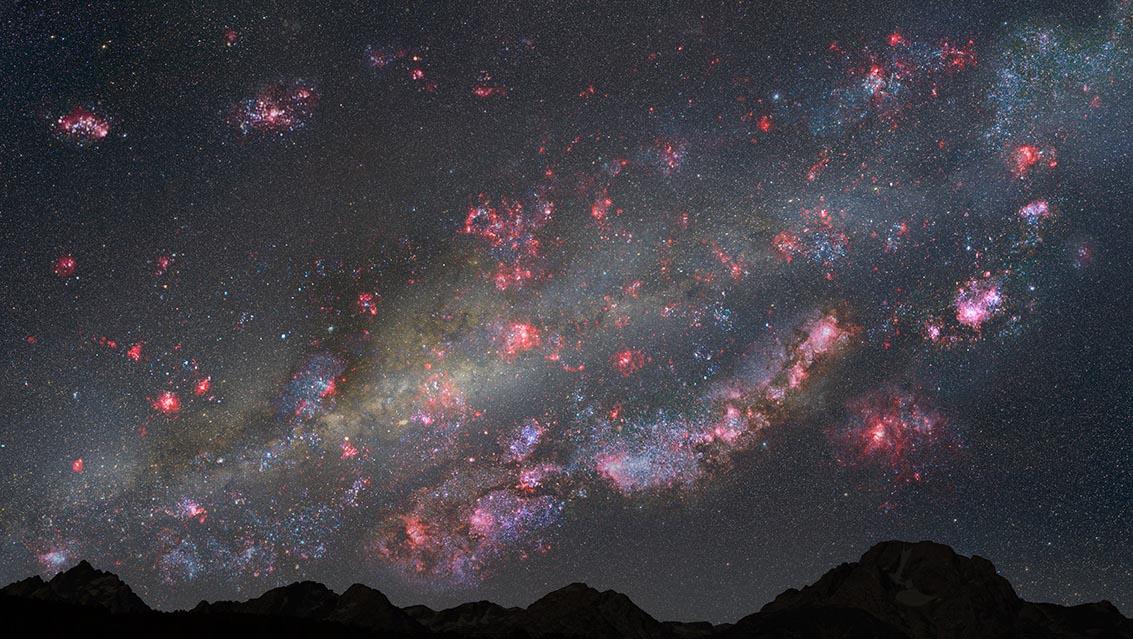
The Milky Way arching over a dark desert landscape — representing Texas's world-class dark sky locations in Big Bend and the Davis Mountains

Stargazing Destination Guide · Texas

Best Stargazing in Texas — Dark Sky Parks & Complete Viewing Guide (2026)

Texas is home to the largest dark sky reserve in the United States — the Greater Big Bend International Dark Sky Reserve — plus world-class research observatories open to the public and some of the darkest skies east of the Mississippi. From the rugged Chihuahuan Desert to the high plateau of the Davis Mountains, this guide covers the best stargazing locations across the Lone Star State, what equipment to bring, and when to plan your trip.

Dark Sky Parks3+ certified
Best Bortle Class1–2 (Big Bend)
Best SeasonSpring & Fall
Major ObservatoryMcDonald (public programs)
By Telescope Advisor Editorial Team Published: Updated: Reviewed & approved by Juhi Sahni, Senior Editor Editorial Standards

Texas's Top Stargazing Sites at a Glance

Texas spans over 800 miles from north to south, encompassing everything from the Piney Woods to the Chihuahuan Desert. The best stargazing is concentrated in the western half of the state, where low population density, high elevation, and arid climate produce consistently dark, transparent skies. The table below compares the top locations by accessibility, sky quality, and amenities.

Location Bortle Dark Sky Certified Drive from Houston Best For
Big Bend National Park1–2Gold Tier (Reserve)7 hrsDarkest skies in Texas, remote wilderness
McDonald Observatory2–3No (research site)8 hrsPublic star parties, 107-inch telescope
Davis Mountains SP2–3Silver Tier8 hrsHigh elevation, dark sky programs
Enchanted Rock SP3–4Silver Tier4 hrsClosest dark sky to Austin/San Antonio
South Llano River SP3–4Silver Tier4.5 hrsHill Country stargazing, wildlife viewing

Big Bend National Park — Texas's Darkest Skies

Big Bend National Park forms the core of the Greater Big Bend International Dark Sky Reserve — the largest dark sky reserve in the United States at over 15,000 square kilometres. The park's remote location in the Chihuahuan Desert, far from major cities, combined with its arid climate and high elevation (2,000–7,800 ft), produces Bortle 1–2 skies across most of its area. On moonless nights, the zodiacal light is visible as a pyramid of faint glow extending above the western horizon after twilight, and the Milky Way casts a visible shadow on the desert floor from the park's interior.

Top spots: The Chisos Basin (elevation 5,400 ft, surrounded by mountains that block distant light domes), Santa Elena Canyon (Bortle 1, dramatic canyon walls frame the night sky), and the remote River Road along the Rio Grande (Bortle 1, 4WD recommended). The park's dark sky programs run October through April during new moon weekends, with ranger-led telescope viewing and constellation talks.

Best season: October through April, when daytime temperatures are comfortable and nights are cool but not extreme. Summer months (May–September) bring intense daytime heat exceeding 100°F and afternoon thunderstorms that can cloud the sky, though clear nights are still common. Winter nights can drop below freezing — bring warm clothing and prepare for rapid temperature drops after sunset.

McDonald Observatory — World-Class Research Open to the Public

Perched atop Mount Locke (6,791 ft) in the Davis Mountains of West Texas, the McDonald Observatory is one of the premier astronomical research facilities in the world — and uniquely, it welcomes the public with regular star parties and viewing programs. The observatory houses multiple research telescopes, including the 107-inch (2.7 m) Harlan J. Smith Telescope and the 9.2 m Hobby-Eberly Telescope, one of the largest optical telescopes in the world.

The observatory's Star Parties are held Tuesday, Friday, and Saturday nights year-round (weather permitting). The program begins with a guided constellation tour using a green laser pointer, followed by viewing through the 16-inch and 22-inch research-grade telescopes. Visitors can see planets, globular clusters, planetary nebulae, and galaxies — objects that appear dramatically better through these large-aperture instruments than through any portable telescope. Daytime programs include solar viewing through a hydrogen-alpha telescope, which reveals solar prominences and surface granulation in real time. Tickets are affordable ($15 for adults, $8 for children) and can sell out weeks in advance during peak seasons.

For those planning a visit, the nearby town of Fort Davis provides accommodation options ranging from historic bed and breakfasts to modern motels. The McDonald Observatory's location at 6,791 feet elevation means that skies are significantly clearer and darker than at lower altitudes — the thin atmosphere reduces atmospheric turbulence, providing steadier seeing than most other observing sites in the southern United States. The combination of professional-grade equipment access and naturally excellent observing conditions makes the McDonald Observatory star parties an unforgettable experience for any astronomy enthusiast visiting Texas.

Davis Mountains State Park and the Sky Center

Adjacent to McDonald Observatory, Davis Mountains State Park is a Silver Tier Dark Sky Park offering excellent stargazing from its high-elevation (5,000+ ft) location. The park's Indian Lodge provides comfortable accommodation with direct access to dark sky viewing areas. The park frequently collaborates with the McDonald Observatory for joint astronomy programs, and the nearby University of Texas at Austin's Frank N. Bash Visitors Center offers additional telescope viewing opportunities.

Enchanted Rock State Natural Area — Hill Country Stargazing

Enchanted Rock is a massive pink granite dome rising 425 feet above the surrounding Texas Hill Country, and a Silver Tier Dark Sky Park. At just 4 hours from Houston and 2 hours from Austin, it offers the most accessible dark skies for central and eastern Texas. The park hosts quarterly star parties in partnership with the Austin Astronomical Society, featuring telescope viewing and guided night-sky interpretation. The exposed granite dome provides a 360-degree horizon — rare in the Hill Country — making it an excellent location for meteor shower observation.

Other Notable Texas Stargazing Locations

Beyond the major certified parks, Texas offers many excellent stargazing locations worth exploring. South Llano River State Park is a Silver Tier Dark Sky Park in the Hill Country with a dedicated wildlife viewing blind that doubles as a dark sky observation area. Copper Breaks State Park in north Texas is a Silver Tier park offering Bortle 3–4 skies with excellent accessibility from the Dallas–Fort Worth area (3.5 hours). Caprock Canyons State Park in the Texas Panhandle provides Bortle 2–3 skies with dramatic red rock canyon landscapes that frame night photography beautifully.

For observers near the major metropolitan areas, several astronomy clubs maintain their own dark sky sites. The Austin Astronomical Society operates a dark sky site near Canyon of the Eagles on Lake Buchanan, with permanent telescope pads and camping facilities. The Houston Astronomical Society maintains a dark sky observing site in Columbus, Texas, about 1.5 hours west of the city. The Fort Worth Astronomy Club holds regular observing sessions at the Copper Breaks dark sky park. These club sites are typically open to members and guests, and most clubs host free public star parties several times per year — an excellent way to try different telescopes before purchasing your own.

What Telescope to Bring to Texas Dark Sky Parks

Texas's dark sky parks — particularly Big Bend and the Davis Mountains — offer some of the best deep-sky observing conditions in the southern United States. The combination of high elevation, low humidity, and Bortle 1–2 skies means that a modest telescope outperforms what a much larger scope would show from suburban locations. Here are our top telescope recommendations for Texas dark sky travel:

The key consideration for Texas stargazing is portability. Big Bend and the Davis Mountains require significant driving, and many of the best viewing spots involve unpaved roads. A compact tabletop Dobsonian or a lightweight refractor on a simple mount is far more practical than a bulky equatorially-mounted telescope that requires counterweights and a heavy tripod. For fly-in visitors, the Sky-Watcher Heritage 130P fits in carry-on luggage when packed in a duffel bag, making it the ideal travel companion for Texas dark sky adventures.

Sky-Watcher Heritage 130P tabletop Dobsonian

Sky-Watcher Heritage 130P

Ultra-portable tabletop Dobsonian — perfect for road trips to Big Bend and the Davis Mountains. Fits in a duffel bag.

Sky-Watcher Classic 200P

Sky-Watcher Classic 200P (8")

From Big Bend's Bortle 1 skies, an 8-inch Dobsonian reveals spiral arms in galaxies and colour in nebulae. The ultimate Texas dark sky scope.


Frequently Asked Questions

Where is the best stargazing in Texas?

Big Bend National Park offers the darkest skies in Texas (Bortle 1–2) and is the core of the largest dark sky reserve in the United States. McDonald Observatory in the Davis Mountains offers world-class research telescopes with public star parties.

What is the best time of year for stargazing in Texas?

Spring (March–May) and fall (September–November) offer the best combination of comfortable temperatures and long nights. Winter is excellent for dark skies but cold in West Texas. Summer is hot and humid but the Milky Way core is at its best.

Can I visit McDonald Observatory as a tourist?

Yes — McDonald Observatory offers public star parties Tuesday, Friday, and Saturday nights year-round. Daytime programs include solar viewing and telescope tours. Tickets are $15 for adults and often sell out weeks in advance.

Do I need a telescope to enjoy Texas dark sky parks?

Not at all. From Big Bend's Bortle 1 skies, the Milky Way is visible in stunning detail to the naked eye. Binoculars (10×50) reveal dozens of Messier objects and countless star clusters. Many parks also have loaner telescopes available.

Is Big Bend safe for overnight stargazing?

Yes — Big Bend is a safe national park with designated campgrounds and backcountry sites. Standard precautions apply: carry plenty of water, watch for wildlife (mountain lions, javelinas, snakes), and inform someone of your plans. Cell service is extremely limited.

Are there astronomy clubs in Texas with public viewing nights?

Yes — the Austin Astronomical Society, Houston Astronomical Society, Fort Worth Astronomy Club, and Texas Astronomical Society of Dallas all host regular public star parties and maintain dark sky observing sites.