
Best Telescope for Viewing Galaxies 2026: Top Picks for Deep-Sky Observing
Telescope Advisor Logo Telescope Advisor
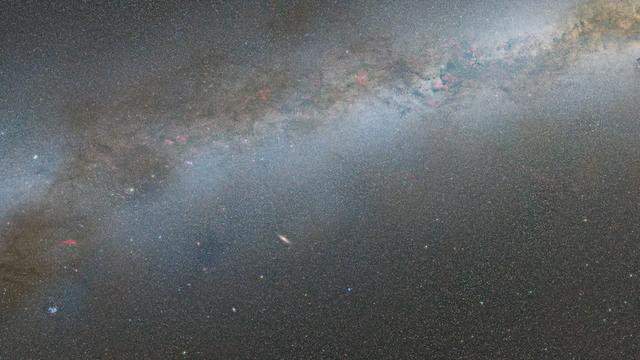
Andromeda Galaxy M31 — the closest major galaxy to our own and a top target for amateur telescopes

Buying Guide · Deep-Sky 2026

Best Telescope for Viewing Galaxies 2026

Galaxies are the most rewarding and challenging deep-sky targets. Unlike the Moon or planets, they are faint, diffuse, and require aperture — lots of it. This guide ranks the best telescopes for galaxy observing in 2026, from budget Dobsonians that reveal the Andromeda Galaxy's dust lanes to computerized SCTs that hunt down 100+ galaxies in a single session.

8"+

Recommended Aperture

$$-$

Budget to Premium

Dark Sky

Essential for Galaxies

Aperture

The #1 Priority

By Telescope Advisor Editorial Team Published: Updated: Editorial Standards

Quick Answer: What Is the Best Telescope for Galaxies?

The Sky-Watcher Classic 200P Dobsonian (8-inch) is the best telescope for galaxy observing under $600. It collects enough light to reveal spiral structure in M81, the mottled chaos of M82, and the dust lanes of the Andromeda Galaxy — detail that simply does not exist in smaller apertures. For a computerized option that automates galaxy hunting, the Celestron NexStar 8SE adds GoTo technology with the same 8-inch aperture. The rule for galaxy telescopes is simple: buy the largest aperture you can afford and transport. All else is secondary.


🔭

Not sure which telescope actually fits your goals?

Answer 5 quick questions about your budget, observing targets, and experience level — our Telescope Finder Tool recommends a specific model in under 2 minutes.

Find My Telescope →

Why Aperture Is Everything for Galaxy Observing

Galaxies are fundamentally different from other astronomical targets. Unlike the Moon (bright and high-contrast), planets (compact and reflective), or star clusters (composed of point sources), galaxies are extended, low-surface-brightness objects. Their light is spread over a large apparent area, which means aperture — the diameter of your telescope's primary mirror or lens — is the single most important specification for galaxy observing.

Here is the simple physics: a 6-inch (150mm) telescope collects about 2.25 times more light than a 4-inch (100mm). An 8-inch (203mm) collects almost twice as much light as a 6-inch — and four times as much as a 4-inch. More light means brighter images, which means you see fainter structural details: spiral arms, dust lanes, H II regions, and companion galaxies. The difference between a 4-inch and an 8-inch on M51 (the Whirlpool Galaxy) is not subtle — it is the difference between seeing a faint patch and seeing spiral arms wrapping around a bright core.

But aperture alone is not enough. You also need dark skies. Light pollution is the enemy of galaxy observing because it raises the sky background brightness, washing out the faint glow of galactic structure. A 12-inch telescope under suburban skies can be outperformed by a 6-inch under pristine dark skies. If you observe from a city or bright suburb, prioritize a telescope you can transport to dark sites.

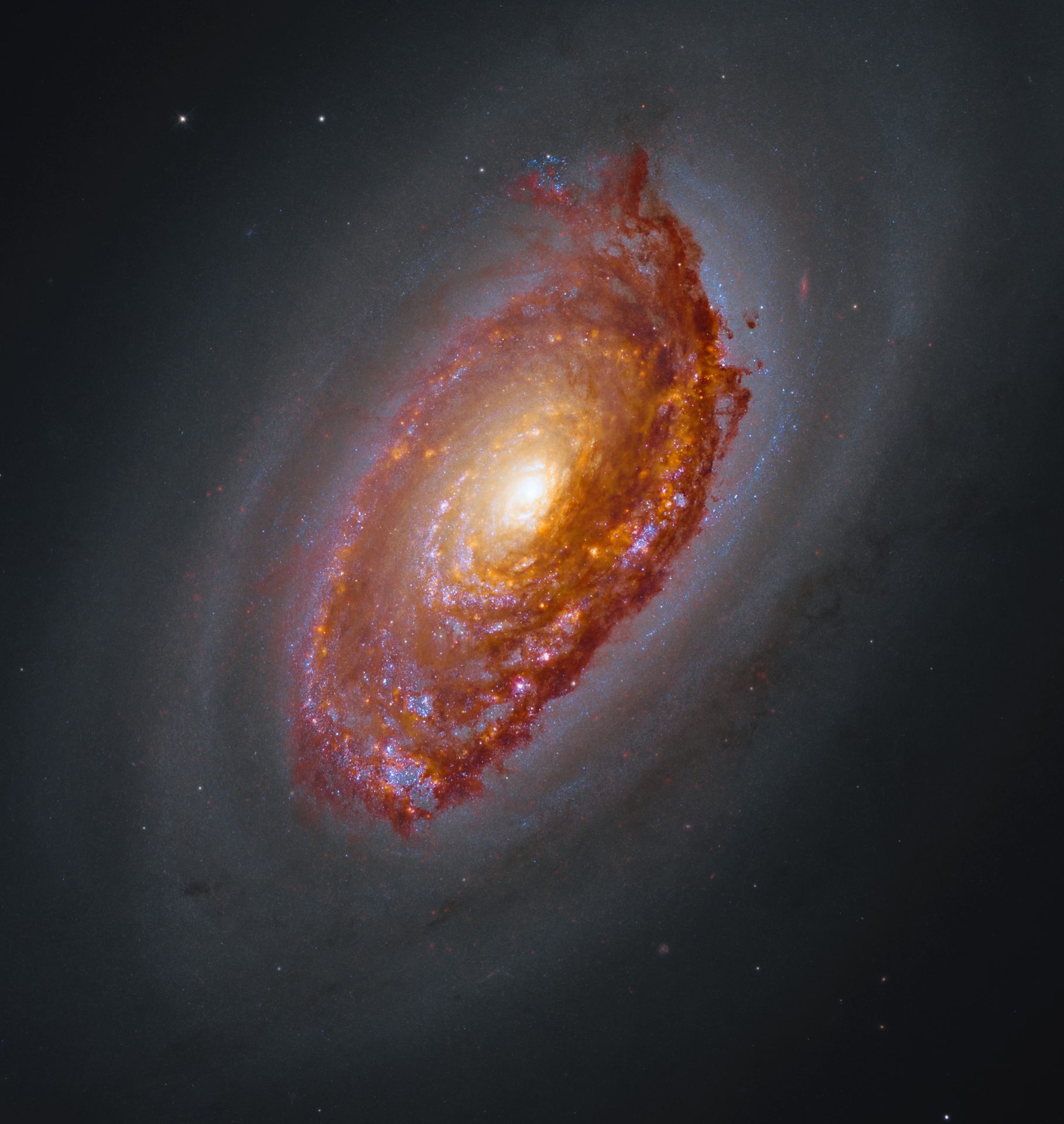
Black Eye Galaxy M64 — a striking galaxy with a dark dust lane, showing the kind of detail visible in larger amateur telescopes

M64 — Black Eye Galaxy

The prominent dark dust lane of M64 is visible in 8-inch and larger telescopes under dark skies. This is the kind of structural detail that aperture unlocks for galaxy observers. Credit: NASA / Hubble / Webb.

Aperture vs Galaxy Visibility — What Each Size Reveals

60–80mm (small refractor)Brightest galaxies visible as faint patches (M31, M81, M82). No structural detail.
100–130mm (entry reflector)Core/halo distinction in brightest galaxies. M31 shows elongated shape.
150–200mm (mid-range)Spiral arm hints in M81, M51, M33. M82 mottling visible. M31 dust lane detectable.
250–300mm+ (large Dobsonian)Spiral arms traced in multiple galaxies. Dust lanes, H II regions, and faint companions resolved.

Dark skies matter more than any telescope upgrade

If you currently observe from Bortle 6–8 (suburban to urban skies) and are considering upgrading from a 6-inch to an 8-inch telescope, consider this: driving 30 minutes to Bortle 4 skies will improve your galaxy views more than a 2-inch aperture increase. The best galaxy setup is a portable Dobsonian plus dark-sky access. We recommend prioritizing portability in your buying decision unless you have dark skies at home.

Quick Comparison: Top Galaxy Telescopes

Telescope Aperture Focal Length Mount Best For Price
Sky-Watcher Classic 200P 203mm (8") 1200mm Dobsonian Aperture per dollar — best value $$
Celestron NexStar 8SE 203mm (8") 2032mm Single-arm GoTo Computerized galaxy tours $$$
Sky-Watcher Heritage 150P 150mm (6") 750mm Tabletop Dobsonian Budget + portability $
Sky-Watcher Heritage 130P 130mm (5") 650mm Tabletop Dobsonian Ultra-portable entry $

Prices are approximate and subject to change. All product links are affiliate links.


1. Sky-Watcher Classic 200P Dobsonian — Editor's Pick

Editor's Pick — Best Overall Galaxy Telescope
Sky-Watcher Classic 200P 8-inch Dobsonian telescope — best telescope for viewing galaxies

Sky-Watcher Classic 200P Dobsonian

203mm aperture 1200mm focal length 2" focuser Push-to mount

The Sky-Watcher Classic 200P is the gold standard for galaxy observing on a budget. Its 203mm (8-inch) parabolic mirror delivers pinpoint stars and excellent contrast, and the 1200mm focal length (f/5.9) is a versatile compromise between wide-field and high-power capability.

What this means for galaxy observing: At 48× with a 25mm eyepiece, M81 and M82 fit in the same field with stunning clarity — M81's oval core and spiral arm hints, M82's mottled cigar shape. At 120× with a 10mm eyepiece, M51 reveals its spiral structure, M64 (Black Eye Galaxy) shows its dark dust lane, and M31 displays a bright core with the dark lane clearly defined against the halo.

The Dobsonian mount is simple, intuitive, and rock-solid — no tripod wobble, no power requirements, no setup fuss. You can be observing within 5 minutes of stepping outside. The supplied 2-inch Crayford focuser accepts both 2-inch and 1.25-inch eyepieces, giving you access to wide-field eyepieces for fitting large galaxies (M31, M33, M101) in a single view.

  • 8-inch aperture reveals spiral structure in bright galaxies
  • Excellent value — best aperture per dollar
  • 2-inch focuser for wide-field galaxy views
  • Intuitive, no-power Dobsonian mount
  • Bulky — requires a car for transport
  • No GoTo — requires star-hopping skills
View on Amazon →

Affiliate link — we may earn a small commission at no extra cost to you.

2. Celestron NexStar 8SE — Best Computerized for Galaxy Tours

Celestron NexStar 8SE computerized telescope — best GoTo telescope for galaxy observing

Celestron NexStar 8SE

203mm aperture 2032mm focal length GoTo hand controller 40,000+ object database

The NexStar 8SE combines the same 8-inch aperture as the Classic 200P with Celestron's proven GoTo system. Enter "M81" into the hand controller, press align, and the telescope slews automatically to Bode's Galaxy. For galaxy observers who value efficiency — or who observe from locations where star-hopping is difficult — this automation is transformative.

The Schmidt-Cassegrain optical design packages 2032mm of focal length into a compact tube that is shorter than the 200P Dobsonian. This means the 8SE is more portable than the 200P despite having the same aperture — an important advantage if you travel to dark sites. However, the long focal length (f/10) narrows the field of view: at 50× with a 40mm eyepiece, you get about 1° of sky — enough for M81/M82 to fit, but only just. A focal reducer (f/6.3) is a recommended investment for galaxy observers who want wider fields.

  • GoTo finds 100+ galaxies automatically in one session
  • Compact tube — easier to transport than an 8" Dob
  • Excellent for high-magnification galaxy detail
  • More expensive than equivalent Dobsonian
  • Narrow field without focal reducer
  • Power required for GoTo operation
View on Amazon →

Affiliate link.

For a deeper comparison between manual and computerized telescopes for deep-sky observing, see our GoTo vs manual telescope guide.

3. Sky-Watcher Heritage 150P — Best Budget Galaxy Telescope

Sky-Watcher Heritage 150P — budget telescope for galaxies

Sky-Watcher Heritage 150P (6-inch Dobsonian)

150mm aperture 750mm focal length Collapsible tube Tabletop mount

The Heritage 150P packs 6 inches of aperture into a collapsible, tabletop package that costs under $300. It is the best sub-$300 galaxy telescope on the market in 2026. The 150mm aperture gathers about 50% more light than a 130mm scope, which translates into visibly brighter galaxy images — M81 shows a clear core, M82's cigar shape is unmistakable, and M31's dust lane is detectable on good nights.

The short 750mm focal length (f/5) provides wide fields ideal for large galaxies. With the included 25mm eyepiece at 30×, the field spans about 1.7° — enough to frame M81 and M82 together or take in the entire core of the Andromeda Galaxy. The collapsible tube design means the scope packs down small enough for airline overhead bins or a backpack.

The trade-off: 6 inches of aperture is a meaningful step down from 8 inches for galaxies. Spiral structure in M51 and M81 will be hinted rather than obvious. Dark skies become more critical at this aperture level. But for the price, nothing comes close.

View on Amazon →

Affiliate link.

4. Sky-Watcher Heritage 130P — Best Portable Galaxy Scope

Sky-Watcher Heritage 130P — ultra-portable telescope for galaxies

Sky-Watcher Heritage 130P (5-inch Dobsonian) — The traveler's galaxy scope

130mm aperture 650mm focal length Collapsible tube 10 lb total weight

The Heritage 130P is the telescope we recommend when portability is the primary constraint. At just 10 pounds fully assembled, it is the most aperture you can easily carry in one hand. The 130mm (5-inch) aperture reveals the brightest galaxies as distinct objects with core-halo structure — M81, M82, M31, and M33 are all well within reach from dark skies.

What makes the 130P special for galaxy observers is its travel-friendliness. If you live in a light-polluted city (Bortle 6+), this scope is small and light enough to take on public transit, in an Uber, or as carry-on luggage to a dark-sky site. A 5-inch scope under Bortle 3 skies will outperform an 8-inch under Bortle 7 skies for galaxy observing. We recommend the Heritage 130P specifically for urban observers who can travel to darkness.

View on Amazon →

Affiliate link.

How to Choose Your Galaxy Telescope

Choosing a galaxy telescope involves trade-offs between aperture, portability, budget, and automation. Here is a simple decision framework based on your situation.

You have dark skies at home + a car

Get the Sky-Watcher Classic 200P. The 8-inch Dobsonian is the best galaxy telescope you can buy under $600, period. You have the skies and the transport to use it.

You want computerized convenience

The Celestron NexStar 8SE automates galaxy finding. Worth the premium if you value time at the eyepiece over star-hopping, or if limited mobility makes manual finding difficult.

You observe from the city + travel to dark sites

The Heritage 150P or 130P. Portability is more important than aperture for you. A 6-inch scope you take to dark skies beats an 8-inch you leave in the garage.

Essential accessories for galaxy observing

  • 2-inch wide-field eyepiece (32mm 70° AFOV) — essential for fitting large galaxies in a single field. Worth every dollar.
  • UHC or OIII filter — improves contrast on emission nebulae within galaxies (e.g., M33's H II regions). Not essential for galaxy cores but helpful for structure.
  • Red flashlight — preserves dark adaptation during star-hopping to faint galaxies.
  • Adjustable observing chair — galaxy observing means long sessions at the eyepiece. Comfort matters.

For more detailed accessory recommendations, see our beginner accessories guide and telescope eyepiece guide.

FAQ: Telescope for Viewing Galaxies

What is the best telescope for viewing galaxies on a budget?

The Sky-Watcher Heritage 150P (6-inch Dobsonian) at under $300 is the best budget galaxy telescope. It collects enough light to show M81's core and M82's cigar shape, and its compact design makes it easy to transport to dark skies. For the best value overall, the Sky-Watcher Classic 200P at ~$600 delivers 8-inch aperture — the sweet spot for serious galaxy observing.

Can I see galaxies with a small 70mm telescope?

Yes, but only the very brightest. A 70mm refractor under dark skies will show M31 (Andromeda Galaxy) as a large elongated glow, and M81 as a faint patch. No structural detail — no spiral arms, no dust lanes — will be visible. For satisfying galaxy observing, 130mm (5 inches) is the practical minimum aperture, and 200mm (8 inches) is the recommended target.

Is a Dobsonian or Schmidt-Cassegrain better for galaxies?

For aperture per dollar on galaxies, a Dobsonian wins every time. An 8-inch Dobsonian costs about the same as a 6-inch SCT and collects 78% more light. However, an SCT with GoTo can find more galaxies faster, which matters for observers who value efficiency. The best choice depends on whether you prioritize raw light-gathering (Dobsonian) or automated object location (SCT with GoTo).

What magnification is best for galaxy observing?

Low to moderate magnification (40–80×) is best for most galaxies. Galaxies are extended objects with low surface brightness — high magnification spreads their already-faint light over a larger area, making them harder to see. Use the lowest power that gives a comfortable exit pupil (4–6mm is ideal). For small, bright galaxies like M82, bumping to 100–120× can reveal detail.

What is the best galaxy for beginners to observe?

The Andromeda Galaxy (M31) is the best first galaxy target — it is bright, large, and visible to the naked eye from dark skies. The M81/M82 pair is the best second target because both galaxies fit in the same field and their contrasting appearances (spiral vs starburst) are instructive. For a first spiral structure challenge, try M51 (Whirlpool Galaxy) with an 8-inch telescope.

Do I need dark skies to see galaxies?

For structural detail in galaxies, yes — dark skies (Bortle 4 or better) make a dramatic difference. However, the brightest galaxies (M31, M81, M82, M33) are visible from suburban skies (Bortle 5–6) as faint patches. Galaxy observing from urban skies (Bortle 7+) is severely limited — you will see M31 and little else. If you live in a city, invest in a portable telescope you can take to darker locations.

Can I see galaxies with binoculars?

Yes, several galaxies are visible in binoculars under dark skies. M31 (Andromeda Galaxy) is a spectacular binocular target — it fills the field in 10×50 binoculars. M81 and M82 are visible as a pair in 15×70 binoculars. M33 (Triangulum Galaxy) is detectable in 10×50s from dark sites. No spiral structure is visible, but the glow of another galaxy through binoculars is a deeply satisfying experience.

What is the minimum aperture for seeing spiral arms in galaxies?

Spiral structure becomes detectable in the brightest galaxies around 150mm (6 inches) of aperture under dark skies. Reliable spiral arm tracing requires 200mm (8 inches) or more. M51 (Whirlpool Galaxy) is the best target for spiral detection because its arms are prominent and begin to show at 6 inches with careful observing and ideal conditions.


Related Guides