Best Telescope for Viewing the Moon (2026): 5 Lunar-Optimized Picks for Every Budget
Telescope Advisor Logo Telescope Advisor
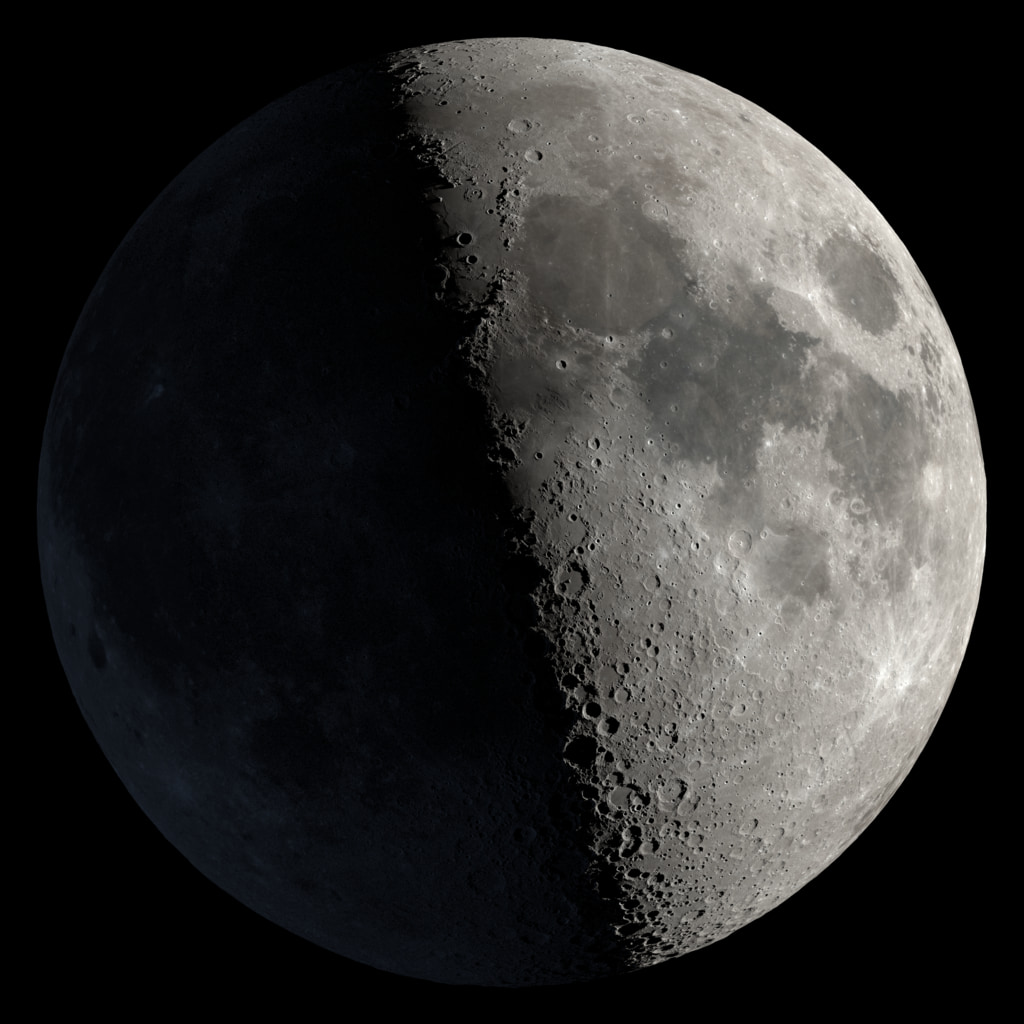
The Moon's surface photographed by NASA's Lunar Reconnaissance Orbiter — craters, mare, and highlands in sharp detail

Telescope Buying Guide · Lunar Observation

Best Telescope for Viewing the Moon (2026): 5 Lunar-Optimized Picks for Every Budget

The Moon is the most rewarding first target in astronomy — and the right telescope makes the difference between seeing a bright blob and tracing the terminator’s shadow across Clavius, Copernicus, and the Apennine Mountains at sunrise. Here are the five best telescopes for lunar observation in 2026, ranked by what actually matters for moon viewing.

Editor's PickNexStar 4SE — Mak-Cass excellence
Best budgetAstroMaster 70AZ — under $100
Best valueHeritage 130P — deep crater detail
Price range$70–$1,300
By Telescope Advisor Editorial Team Published: Updated: Editorial Standards

Quick Answer: What Is the Best Telescope for Moon Viewing in 2026?

The Celestron NexStar 4SE is the best telescope for viewing the Moon in 2026. Its 102mm Maksutov-Cassegrain optical design delivers high-contrast, diffraction-limited lunar images at focal lengths from 25× to 200×, the single-arm alt-az mount is stable enough for sharp focus at high power, and the GoTo system finds the Moon automatically — which matters more than most buyers realise when you are setting up in the dark. The 4SE’s 1325mm focal length (f/13) is long enough to produce crisp, well-resolved crater detail at native magnification without relying heavily on Barlow lenses or expensive high-power eyepieces.

If your budget is under $200, the Celestron AstroMaster 70AZ is the best entry-level refractor for lunar observation — its long f/13 focal ratio minimizes chromatic aberration (the purple fringing that ruins cheaper achromatic refractors) and its alt-az mount is intuitive for first-time users. If you want the deepest crater detail for your dollar, the Sky-Watcher Heritage 130P tabletop Dobsonian delivers 130mm of aperture at a price that undercuts every other Dob on the market — the terminator view through this scope at 120× on a steady night is genuinely impressive. And if lunar observation is a gateway to serious planetary and deep-sky observing, the Celestron NexStar 6SE is the most versatile lunar-plus-everything telescope you can buy.

What makes a good Moon telescope

Long focal length (1000mm+) for high native magnification at the eyepiece. A stable mount that does not shake at 150×. A quality eyepiece set that lets you switch between whole-disk and close-up views. Lunar filter compatibility for reducing glare at full Moon.

When to observe

The best lunar views come at quarter phases (first and last quarter), when the terminator line casts long shadows across craters and mountain ranges. Full Moon is actually the worst time — no shadows means no contrast, and the glare can be uncomfortable even with a filter.

Must-have accessory

A variable polarising Moon filter ($15–$30) reduces glare and increases contrast at the eyepiece. It is the single best $20 investment you can make for lunar observation, regardless of which telescope you buy. See our accessories guide →

🔭

Not sure which telescope actually fits your goals?

Answer 5 quick questions about your budget, observing targets, and experience level — our Telescope Finder Tool recommends a specific model in under 2 minutes.

Find My Telescope →

Why the Moon Needs a Specific Telescope

If you have ever heard someone say “any telescope can see the Moon,” they are technically correct — but the phrase hides an important truth. A department-store 60mm refractor on a wobbling tripod shows the Moon as a bright, shimmering disk with occasional crater hints. A purpose-built lunar telescope shows the Alpine Valley splitting the lunar surface, the central peak of Copernicus catching first light, and the three distinct terrace layers inside the walls of Theophilus. Both are “seeing the Moon.” One is memorable. The other gathers dust after the first night.

The Moon is a uniquely challenging target precisely because it is bright. Its surface brightness at quarter phase is higher than any planet or deep-sky object, which means telescope flaws that go unnoticed on faint targets — chromatic aberration, spherical aberration, poor baffling, mount vibration — become immediately obvious on the Moon. A telescope that “works fine for Andromeda” may produce soft, fringed lunar images that leave a beginner wondering what all the fuss is about.

Lunar observation demands three things from a telescope: optical quality (clean, well-corrected optics that produce sharp, high-contrast images at moderate to high power), mount stability (a tripod and head that do not vibrate for three seconds after you touch the focus knob), and focal length (enough native magnification to resolve fine crater detail without needing extreme eyepieces or Barlows that degrade image quality). The five telescopes below are chosen because they excel at all three — not because they happen to show the Moon passably well.

What to Look for in a Lunar Telescope

Focal Length — the Most Important Spec

A telescope’s focal length determines the magnification you get with any given eyepiece. For lunar observation, a longer focal length (1000mm+) is a genuine advantage because it delivers higher magnification without requiring expensive short-focal-length eyepieces that can have tight eye relief and small apparent fields. A 1300mm scope with a 25mm eyepiece gives 52×; with a 10mm eyepiece it gives 130× — both very usable lunar magnifications. A 500mm scope needs a 4mm eyepiece to reach 125×, and 4mm eyepieces are generally less comfortable and less forgiving of chromatic aberration.

This is why Maksutov-Cassegrains and Schmidt-Cassegrains (typically f/10 to f/15 with long focal lengths) are so well-suited to lunar observation, and why short-tube refractors (f/5 to f/7) need high-quality, expensive eyepieces to produce comparable lunar detail.

Mount Stability — the Hidden Variable

At lunar magnifications of 100×–200×, mount vibration is the most common cause of “blurry” Moon views. A lightweight tripod that takes three seconds to settle after focusing makes high-power lunar observation frustrating. The best lunar telescopes have either a sturdy alt-az mount (the AstroMaster 70AZ’s steel-leg tripod, the NexStar 4SE’s stainless-steel legs) or a solid tabletop base (the Heritage 130P on a steady table).

A simple test: tap the eyepiece and count how long the image takes to stop shaking. Under one second is good. Two to three seconds is acceptable. Anything longer means you will struggle to keep the image steady at lunar magnifications, and you will miss fine crater detail.

Chromatic Aberration and Lunar Fringing

The Moon’s high surface brightness makes chromatic aberration (false color fringing) more visible than on any other target. Cheap achromatic refractors show purple or blue fringing along the bright limb of the Moon, especially around craters near the terminator. This is not a cosmetic issue — it reduces contrast and obscures fine detail.

Reflectors (Dobsonians, Newtonians) have zero chromatic aberration by design, which gives them a sharpness advantage on the Moon at any given aperture. Maksutov-Cassegrains also have excellent color correction. If you buy a refractor specifically for lunar observation, choose one with a long focal ratio (f/11 or longer) or invest in an ED/apo doublet if budget allows.

Eyepiece Quality and Included Accessories

Many telescopes ship with low-quality eyepieces that spoil the lunar view. A Kellner or Huygens eyepiece with narrow eye relief and visible edge distortion is the norm in sub-$200 telescopes. The same telescope with a moderately better Plossl or wide-field eyepiece can show significantly more crater detail.

When evaluating a telescope for lunar use, check what eyepieces are included. A 25mm and 10mm Plossl pair is a solid starting point. A single 20mm Huygens is a warning sign. Budget an extra $40–$80 for a better eyepiece set if the included ones are weak — it transforms the lunar viewing experience more than any other single upgrade. See our best eyepiece guide →

The 5 Best Telescopes for Moon Viewing — Ranked & Reviewed

These five telescopes are ranked by their lunar-specific performance: optical quality at moderate to high power, mount stability at lunar magnifications, included eyepiece quality, and overall value for a buyer whose primary interest is the Moon. Every telescope here also performs well on planets and bright deep-sky objects, but the ranking prioritizes what matters most for the Moon.

Editor's Pick — Best Overall Lunar Telescope
Celestron NexStar 4SE Maksutov-Cassegrain telescope — the best telescope for viewing the Moon in 2026

Celestron NexStar 4SE — Best Overall Telescope for the Moon

Editor’s Pick~$630 (with GoTo mount)

The Celestron NexStar 4SE is the best telescope for lunar observation at its price point because every design decision serves high-contrast, high-magnification viewing. The 102mm Maksutov-Cassegrain optical tube has a 1325mm focal length (f/13), which means you get 53× with the included 25mm eyepiece and 132× with the included 10mm eyepiece — both very usable lunar magnifications without needing any additional Barlow lenses or expensive short-focal-length eyepieces. The Mak-Cass design is inherently free of chromatic aberration and delivers crisp, high-contrast images with excellent correction across the entire field.

The single-arm alt-az mount with stainless steel tripod legs is noticeably more stable than the entry-level tripods found on most telescopes under $500. At 132× on the Moon, the image steadies within about one second after focusing. The GoTo system, which typically divides opinion among astronomers, is genuinely useful for lunar observation: press “Moon” on the hand controller and the scope slews to it automatically. This matters more for the Moon than for any other target because the Moon is often the first object a new owner wants to show family members — and manual pointing at high magnification in the dark is harder than experienced observers remember.

The included 25mm and 10mm eyepieces are basic Kellner designs that deliver acceptable but not outstanding lunar views. Budgeting $60–$80 for a Celestron X-Cel LX 9mm eyepiece transforms the high-power lunar view, revealing craterlets inside Plato and the intricate rille system in the Mare Tranquillitatis that the stock eyepieces only hint at. The 4SE also accepts a standard 1.25″ moon filter, and the threaded objective cell makes attaching a Baader ND filter straightforward. For the observer who wants one telescope that excels at lunar, planetary, and even some double-star work without spending more than $700, the NexStar 4SE is the complete package.

Celestron AstroMaster 70AZ refractor telescope — best budget telescope for moon viewing

Celestron AstroMaster 70AZ — Best Budget Telescope for the Moon

Best budget~$80 (with alt-az mount)

The Celestron AstroMaster 70AZ is the best lunar telescope under $100 for one simple reason: at f/13, its 900mm focal length suppresses chromatic aberration better than any other inexpensive refractor on the market. The purple fringing that makes cheap 60mm and 70mm refractors frustrating on the Moon is minimal on the AstroMaster 70AZ — present at the bright limb but not severe enough to obscure the detail that makes lunar observation rewarding.

With the included 20mm eyepiece (45×) you get the whole Moon comfortably in the field of view. Switching to the 10mm eyepiece (90×) brings the terminator craters into sharp relief. The alt-az mount uses steel tube legs rather than the thin aluminum legs found on most sub-$100 tripods, which gives noticeably better vibration damping. At 90× on the Moon, the image steadies in about two seconds — acceptable for the price.

The included eyepieces are Kellner designs with adequate eye relief and acceptable sharpness across the centre 60% of the field. The main compromise at this price is the finderscope — a simple straight-through design that works but would benefit from an upgrade to a red-dot finder for easier nighttime alignment. The Moon is bright enough that you can usually point the telescope by sighting along the tube, then fine-tune with the slow-motion cables. For a budget-conscious first telescope where the Moon will be the primary target, the AstroMaster 70AZ delivers more usable lunar detail than anything else at its price.

Sky-Watcher Heritage 130P tabletop Dobsonian telescope — best value for moon crater detail

Sky-Watcher Heritage 130P — Best Value for Lunar Crater Detail

Best value~$180 (tabletop Dobsonian)

The Sky-Watcher Heritage 130P is the telescope that surprises experienced lunar observers. Its 130mm parabolic mirror collects 3.4 times more light than a 70mm refractor, and at 650mm focal length (f/5) it is a relatively fast Newtonian. For lunar observation, the aperture advantage is immediately obvious: at 130× (5mm eyepiece) the terminator reveals craters within craters — the central peaks of Theophilus, the terraced walls of Copernicus, and the subtle dome structures near the Aristarchus plateau that smaller apertures simply cannot resolve.

The tabletop Dobsonian base is more stable than any tripod at this price. Place it on a solid wooden table or stool, and the image steadies instantly — no vibration damping delay. The collapsible Flextube design makes it portable enough to take to a darker sky site, though for the Moon this is less critical since lunar observation works well from any location.

The trade-off is the short f/5 focal length: achieving high lunar magnifications requires short-focal-length eyepieces (6mm or 5mm) that have tighter eye relief and smaller exit pupils. A 2× Barlow lens effectively doubles the magnification range, turning the included 10mm eyepiece into a 5mm (130×) without buying a separate short-focal-length eyepiece. The Heritage 130P is the right choice if your primary goal is seeing the finest possible lunar detail on a budget and you are comfortable with the collapsible-tube setup process and occasional collimation checks.

Celestron NexStar 6SE Schmidt-Cassegrain telescope — premium lunar and planetary telescope

Celestron NexStar 6SE — Best Premium Telescope for Moon + Planets

Best premium~$1,300 (with GoTo mount)

The Celestron NexStar 6SE is the telescope you buy when the Moon is not the final destination — it is the gateway. Its 150mm Schmidt-Cassegrain optical tube delivers 216% more light-gathering area than the 4SE and resolves lunar details down to about 0.5 arcseconds under good seeing, enough to distinguish craters less than 1km across on the lunar surface under ideal conditions. At 1500mm focal length (f/10), the 6SE delivers 60× with a 25mm eyepiece and 150× with a 10mm — both excellent lunar magnifications with comfortable exit pupils.

The GoTo mount is the same single-arm alt-az design as the 4SE but with a heavier-duty gear train to handle the larger optical tube. Vibration damping at lunar magnifications is excellent — under one second. The 6SE also supports equatorial wedge mounting for basic astrophotography, making it a more versatile long-term investment than shorter-focal-length alternatives.

For lunar observation specifically, the 6SE’s 150mm aperture reveals details that smaller scopes miss: the tiny craterlet chains crossing the Mare Imbrium, the delicate rilles near the Hyginus crater, and the subtle color variations across the lunar surface (mare basalts versus highland anorthosites) that become visible as subtle grey-green and tan patches at high magnification. The included 25mm Plossl and 9mm Kellner eyepieces are functional but upgrading to a wide-field 14mm or 18mm eyepiece dramatically improves the high-power lunar experience. If your budget allows and you want one telescope that excels on the Moon, performs beautifully on planets, and offers a credible path into deep-sky and astrophotography, the NexStar 6SE is the most capable all-rounder on this list.

Celestron Travel Scope 70 portable refractor — best grab-and-go telescope for the Moon

Celestron Travel Scope 70 — Best Portable Grab-and-Go for Lunar

Best portable~$60 (with backpack)

The Celestron Travel Scope 70 is not the best lunar telescope on this list by optical performance — but it is the one you will actually have with you when the sky clears. At under 3 pounds with the included backpack, this 70mm f/10 refractor packs down small enough to keep in a car trunk or carry on a hike. The 400mm focal length with the included 20mm eyepiece gives 20× — enough to see the whole Moon and its major features (Tycho, Copernicus, the major mare) in a single, crisp field of view.

At 20×, the Moon fits beautifully with about a degree of sky around it — the view resembles what you see through a good pair of 10×50 binoculars but with better contrast and the ability to show subtle variations in mare albedo. The 10mm eyepiece (40×) brings the major terminator craters into view, though at this magnification the 70mm aperture starts to show its limits: fine rilles and tiny craterlets remain invisible. The included photo tripod is lightweight and prone to vibration at higher magnifications — for best results, use the Travel Scope 70 on a solid surface or a sturdier camera tripod.

This is the right telescope for the lunar observer who travels frequently, wants a scope that takes up minimal space, or needs an instrument they can grab on short notice for a quick Moon session between clouds. It is not a replacement for the NexStar 4SE or Heritage 130P for serious lunar study, but it is the one telescope you will use more often than any other because it is always ready.

Full Comparison Table

TelescopeApertureFocal LengthF/RatioPriceBest ForMount
NexStar 4SE102mm Mak1325mmf/13~$630Best all-around — superb lunar + planetary + doublesGoTo alt-az
AstroMaster 70AZ70mm refr.900mmf/13~$80Best budget — minimal CA, stable mount, intuitiveAlt-az
Heritage 130P130mm Newt.650mmf/5~$180Best crater detail per dollar — wide aperture, zero CATabletop Dob
NexStar 6SE150mm SCT1500mmf/10~$1,300Best premium — lunar + planets + DSOs + AP capabilityGoTo alt-az
Travel Scope 7070mm refr.400mmf/5.7~$60Best portable — always-with-you lunar viewsPhoto tripod

The Best Moon Phase for Telescope Viewing

If you buy a telescope and point it at the full Moon on your first night, you will likely be underwhelmed. The full Moon, for all its dramatic naked-eye beauty, is the worst lunar phase for telescopic observation. Here is why — and when you should observe instead.

First Quarter & Last Quarter — Best

The terminator line falls across the centre of the lunar disk. Shadows from craters, mountains, and rilles are at their maximum length, creating the high-contrast relief that makes lunar observation genuinely breathtaking. The Alpine Valley splits the lunar surface. Copernicus shows its central peak. Theophilus and Cyrillus reveal terraced walls. This is the phase that turns beginners into lunar enthusiasts.

Crescent & Gibbous — Good

The terminator reveals different features each night as the Sun rises over new terrain. This is the best time for methodical lunar exploration — observing the same region on consecutive nights shows how the appearance of craters changes with solar angle. The six nights around first quarter are the most rewarding stretch of any lunar month.

Full Moon — Worst for Detail

At full Moon, the Sun is directly overhead from the lunar perspective — zero shadows anywhere. Without shadows, craters and mountains blend into a flat, high-glare disk. The surface brightness is also intense enough to cause discomfort and temporary night-vision loss. A Moon filter helps but does not restore the lost contrast. Save full Moon for identifying mare boundaries and ray systems (Tycho, Copernicus rays) by albedo contrast.

Eyepieces and Magnification for the Moon

The right eyepiece strategy transforms a good lunar telescope into a great one. Here is the three-eyepiece approach that covers every lunar observation scenario:

Low Power (25–40×)

A 25mm–32mm eyepiece shows the entire Moon in a single field of view. Use at the start of every session to orient yourself, identify which region is at the terminator, and plan your high-power targets. Essential for any lunar observer.

Medium Power (80–130×)

A 9mm–12mm eyepiece is the lunar observing sweet spot for most telescopes. At this magnification, the terminator fills about half the field, and individual craters like Copernicus, Eratosthenes, and Plato are large enough to study their floor details, central peaks, and wall terraces.

High Power (150–250×)

A 5mm–7mm eyepiece or a Barlow + medium-power combination gives close-up views of specific features: the rilles in the Mare Tranquillitatis, the intricate floor of Alphonsus, the small craterlets inside Plato. Requires steady seeing and a stable mount. Use on the best nights.

Recommendation: Buy a quality 9mm or 10mm eyepiece first — it is the most-used lunar magnification for most observers. Add a 25mm for whole-disk orientation, then a high-power option. A 2× Barlow lens effectively doubles your eyepiece collection without doubling the cost. See our complete eyepiece guide →

Moon Filters: Do You Actually Need One?

A Moon filter is a neutral-density or polarising filter that screws into the base of your eyepiece barrel and reduces the amount of light reaching your eye. The Moon is bright — at full phase it is 400,000 times brighter than the brightest deep-sky object visible in a typical amateur telescope. This brightness can cause temporary night-vision loss, eye strain, and an overall washed-out image that masks detail.

There are two types of Moon filters:

  • Neutral-density (ND) filters — Reduce light transmission by a fixed percentage (typically 13% or 25% transmission). Simple, effective, and inexpensive ($10–$20). The Celestron Moon Filter is the standard choice — it threads into any 1.25″ eyepiece and reduces glare by about 85%.
  • Variable polarising filters — Two stacked polarisers that you rotate to adjust light transmission from about 1% to 50%. More versatile than ND filters because you can tune the brightness to the Moon phase and your telescope aperture. ~$25–$40.

Do you need one? At quarter phases, many observers find the Moon comfortable without any filter at 80–100×. At gibbous and full phases, a filter is genuinely helpful — especially with a 130mm+ aperture that collects a lot of light. A variable polarising filter is the best solution because it works across all phases and telescopes. At $25, it is the highest-value lunar accessory you can buy after the telescope itself.

A Note on Lunar Photography

Lunar photography is the easiest form of astrophotography and an excellent gateway into the hobby. The Moon is bright enough that you do not need a tracking mount, an expensive camera, or complex software to get your first satisfying images. Here is the short version of what works:

  • Smartphone & eyepiece adapter ($20) — Hold your phone camera up to the eyepiece or use a cheap phone adapter. The Moon is bright enough that phone cameras capture surprisingly good images through any telescope on this list. This is how most lunar photographers start.
  • DSLR or mirrorless camera — With a T-ring adapter ($15–$30), attach your DSLR body directly to the telescope in place of the eyepiece. This is called “prime focus” photography and delivers significantly better image quality than the smartphone approach. Both the NexStar 4SE and 6SE work well for prime focus lunar imaging. The Heritage 130P can also work, but the focuser may need a T-ring adapter compatible with its 1.25″ drawtube.
  • Planetary/lunar camera — A dedicated camera like the ZWO ASI120MC (or a used ASI120MC for under $200) captures high-frame-rate video of the terminator. Stacking the sharpest frames from a 60–90 second video produces lunar images that rival NASA’s ground-based work. This is the next step after smartphone photography.

For a full walkthrough, see our guide to photographing the Moon with a telescope. The same page covers stacking software (Autostakkert, Registax), recommended camera settings, and how to plan your session around the Moon phase.

Frequently Asked Questions

Can I see the Apollo landing sites with a telescope?

No. The Apollo descent stages are about 4 meters across. To resolve a 4-meter object on the Moon from Earth, you would need a telescope with an aperture of roughly 100 meters (300+ feet). No amateur telescope — and no Earth-based telescope of any size — can see Apollo equipment. The flags, rover tracks, and landers are far below the resolution limit of any instrument that exists. The Lunar Reconnaissance Orbiter (LRO) orbiting the Moon can image them from 50km altitude, but no Earth-based telescope can.

Is a bigger aperture always better for the Moon?

Not in the way you might expect. Larger apertures collect more light, which improves resolution and reveals finer detail — up to a point. On the Moon, which is already extremely bright, the advantage of a larger aperture is resolution (being able to distinguish finer details) rather than light-gathering. A 150mm scope resolves about 0.8 arcseconds; a 70mm resolves about 1.7 arcseconds. But larger telescopes are also more affected by atmospheric turbulence (seeing), and on a night of poor seeing, a steady 70mm scope may show more lunar detail than a shaky 200mm scope. The aperture sweet spot for lunar observation is 100mm–150mm — enough resolution for satisfying crater detail without being overly affected by poor seeing.

Do I need an equatorial mount for lunar observation?

No. An equatorial mount tracks the sky by rotating around one axis aligned with Earth’s pole, which is essential for long-exposure astrophotography. For visual lunar observation, a simple alt-az mount or Dobsonian base is perfectly adequate — you simply nudge the telescope every minute or so to keep the Moon centred. The Moon is bright enough and large enough that keeping it in the field at moderate magnifications is trivially easy. An equatorial mount is only needed if you plan to photograph the Moon at high magnification with long exposure sequences.

Can I use a Dobsonian telescope for lunar observation?

Yes — Dobsonians are excellent lunar telescopes. The Heritage 130P on this list is a Dobsonian. The key advantage of Dobsonians for the Moon is aperture per dollar: an 8-inch Dobsonian delivers spectacular lunar detail at a fraction of the cost of an equivalent SCT or Mak-Cass. The trade-offs for lunar use are: (1) Dobsonians need occasional collimation, which can frustrate beginners, (2) at high lunar magnifications, manual tracking requires more frequent nudging than a GoTo alt-az mount, and (3) the focal ratio is usually fast (f/4 to f/6), requiring shorter-focal-length eyepieces for high power. None of these are dealbreakers — but they are worth knowing before you buy a Dobsonian primarily for the Moon.

What is the minimum aperture needed to see Moon craters?

A 50mm telescope shows the largest craters (Tycho, Copernicus, Plato) as distinct features. A 60mm–70mm telescope shows dozens of named craters, major mare boundaries, and the terminator shadow effects that make lunar observation rewarding. At 100mm+, you enter the range where craterlets inside larger craters, rilles, and dome structures become visible. The Moon is the most forgiving target in astronomy — even a modest telescope reveals an extraordinary amount of detail compared to any other celestial object.

Should I buy a Moon filter with my first telescope?

Yes, budget $15–$25 for a variable polarising Moon filter when you buy your first telescope. You do not need it on every night — at quarter phase the Moon is comfortable without one — but you will want it at gibbous and full phases, and having it ready in your eyepiece case means you never have to choose between eye strain and skipping a night. It is the cheapest accessory that measurably improves the lunar observing experience.