Best Telescope for Viewing Deep-Sky From the City: Urban Galaxy & Nebula Picks 2026
Telescope Advisor Logo Telescope Advisor
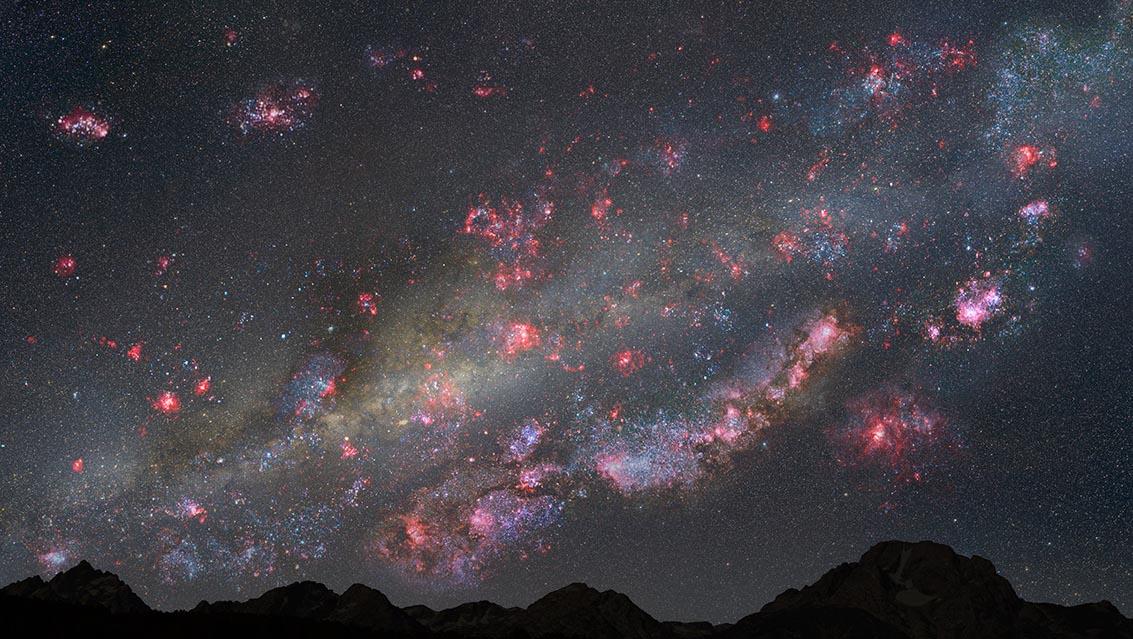
Milky Way structure visible through light-polluted city skies with the right equipment

Light Pollution Guides • 2026

Best Telescope for Deep-Sky Viewing From the City

City skies are not the end of deep-sky observing. With the right telescope, target strategy, and realistic expectations, you can see galaxies, nebulae, and globular clusters from Bortle 7 to 9 skies. Here is exactly what works and why.

By Telescope Advisor Editorial Team Published: Updated: Editorial Standards

Quick Answer

For visual deep-sky observing from a city, choose a 130mm or larger Dobsonian like the Sky-Watcher Heritage 130P for bright galaxies and globular clusters, or a smart telescope like the ZWO Seestar S50 that stacks exposures in real time to reveal nebula color and structure invisible to the eye under skyglow. From Bortle 7 to 9 skies, aperture matters less than target selection. You will see bright galaxy cores, globular clusters, and the Orion Nebula with any 100mm+ scope. Adding a UHC or OIII filter for emission nebulae further increases contrast on key targets.

The Seestar S50 has become the most effective urban deep-sky tool in 2026 because its electronic image stacking effectively bypasses skyglow for photography, producing color images of the Orion Nebula, Andromeda Galaxy, and Ring Nebula that the eye alone cannot perceive under any amount of city skyglow, regardless of aperture.

Why City Observing Is Different — and Not Hopeless

Light pollution brightens the sky background. This reduces the contrast between an astronomical object and the sky, making faint objects harder or impossible to detect. However, contrast loss affects different types of objects differently. Bright, compact objects like the core of M31 (Andromeda), M13 (Hercules globular), and M57 (Ring Nebula) lose far less contrast than large, diffuse objects like the Veil Nebula or M101 (Pinwheel Galaxy). The key to successful city observing is selecting targets that are inherently high-contrast from the start.

The Bortle scale quantifies sky brightness. Bortle 8 to 9 skies, typical of city centers and dense suburbs, have a naked-eye limiting magnitude of about 4.0 to 4.5 — meaning only the brightest stars are visible. At these light levels, surface brightness becomes the dominant predictor of whether you can detect a deep-sky object. The difference between a Bortle 7 suburban sky and a Bortle 4 rural sky is approximately four to five times darker — meaning a 100mm scope from Bortle 4 sees about as much faint detail as a 200mm scope from Bortle 7 for low-contrast targets. Understanding this aperture-for-sky trade-off is critical: under severe light pollution, spending more on aperture has diminishing returns, and spending effort on target selection, filters, and site choice produces larger gains.

But there is good news. The Moon, planets, double stars, and bright open clusters are essentially unaffected by light pollution. Globular clusters and bright galaxies lose contrast but remain detectable with sufficient aperture. Emission nebulae respond well to narrowband filters that selectively transmit light from ionized hydrogen and oxygen while blocking skyglow wavelengths. Modern smart telescopes offer an entirely different approach: electronic stacking of multiple short exposures builds signal-to-noise over time, revealing structures and colors that remain invisible to the eye under any amount of urban skyglow, regardless of aperture. This is a genuinely new capability that did not exist for amateur astronomers before 2022 and has transformed what is possible from city locations.

City Target Guide: What You Can Realistically See by Aperture

ApertureEasy Targets (Bortle 7-9)Moderate TargetsChallenging
70–90mmMoon, planets, M42, M45, M31 coreM13, M81 core, M57M51, M101, faint nebulae
114–130mmAll above + M13 resolved, M81/82 pairM57 ring shape, M27 dumbbell, M8 lagoon (UHC filter)M51 arms, M33 core, faint planetary nebulae
150–200mmAll above + M51 spiral hints, M101 coreM81 spiral arms (from Bortle 7), Veil (OIII filter)M33 spiral structure, M101 arms
Smart telescopeM42 color, M31 disk, M57 ring, Flame NebulaM51 spiral detail, Veil complex, HorseheadTidal streams, faint IFN

Visual vs Smart Telescopes: The City Divide

This is the most important decision for a city astronomer in 2026. Traditional visual telescopes (refractors, reflectors, Dobsonians, SCTs) deliver light to your eye in real time. Under light-polluted skies, your eye is the weakest link: it cannot accumulate light over time, and its sensitivity to faint contrast diminishes as the sky background brightens. A smart telescope like the ZWO Seestar S50 or DWARFLAB Dwarf II uses a sensor to accumulate photons over seconds or minutes, stacking multiple frames and subtracting the skyglow background computationally. The result is a processed image displayed on your phone or tablet that reveals color and structure your eye can never see from a city, regardless of aperture.

The trade-off is immediacy. A visual telescope gives you the direct experience of photons traveling millions of light-years striking your retina in real time. A smart telescope gives you a processed image on a screen. Many urban astronomers use both: a Dobsonian for quick visual sessions of bright targets, and a Seestar for imaging nights where they want to see nebula color and galaxy structure. Neither approach is superior — they serve different experiences.

A key advantage of smart telescopes for city use is their compact form factor. Because they do not require a large aperture to compensate for skyglow (the sensor and stacking handle that), they are smaller, lighter, and easier to set up on a balcony or rooftop than an 8-inch Dobsonian. This makes them the most practical option for apartment dwellers with limited storage and setup space.

Best City Targets and How to Observe Them

The single most important skill for a city astronomer is knowing which targets to attempt under which conditions. Here are the highest-return city deep-sky targets organized by season and observing technique.

M13 — Hercules Globular Cluster (Spring/Summer): The best city deep-sky target. M13's compact core and high surface brightness cut through skyglow better than any other deep-sky object. At 100x in a 130mm scope, the outer stars begin to resolve. At 150x in a 200mm scope, the cluster resolves into a ball of individual stellar points with a granular core. Use 120-180x and spend at least 10 minutes on it.

M42 — Orion Nebula (Winter): Visible from any city in any telescope. At 50x in a 70mm refractor, the trapezium stars and bright core are obvious. Adding a UHC filter from the city reveals surprisingly extensive structure. The four trapezium stars are a reliable test of optical quality regardless of skyglow.

M31 — Andromeda Galaxy (Autumn): The core is clearly visible from Bortle 8 skies in a 100mm scope at low power. Expect to see the bright core and companion M32 as a fuzzy star nearby. Do not expect spiral arms — those require dark skies at any aperture.

M57 — Ring Nebula (Summer): A city-friendly planetary nebula. At 75x in a 100mm scope, it appears as a small grey smoke-ring. At 150x in a 200mm scope, the ring shape is unmistakable and the central hole is clearly defined. The Ring responds well to high magnification even under poor skies because its surface brightness is extremely high for its size.

Best City Deep-Sky Telescopes

Editor's Pick — Best Visual Telescope for City Deep-Sky
Sky-Watcher Classic 200P Dobsonian

Sky-Watcher Classic 200P Dobsonian

The most aperture per dollar for city deep-sky visual observing. Its 8 inches gather enough light to punch through Bortle 7-8 skyglow on bright galaxies and globulars. The f/5.9 focal ratio provides wide fields that help you locate targets under light-polluted skies where star patterns are sparse.

Filters and Observing Strategy for City Skies

Filters are one of the few tools that specifically target the contrast problem caused by light pollution. A UHC (Ultra High Contrast) filter transmits light from ionized hydrogen and oxygen — the wavelengths emitted by emission nebulae — while blocking much of the broadband skyglow from LED and sodium streetlights. On the Orion Nebula or the Lagoon Nebula from Bortle 8 skies, a quality UHC filter can make the difference between a faint haze and a clearly structured nebula. An OIII (doubly ionized oxygen) filter is more aggressive, blocking more light overall but providing higher contrast on targets like the Veil Nebula and planetary nebulae. Neither filter helps meaningfully with galaxies, which are continuum objects emitting across the full spectrum.

Your observing sequence matters more from the city than from a dark site. Start each session with targets highest in the sky, where the light column is thinnest. The zenith is typically one to two Bortle classes darker than the horizon under urban conditions. Begin with bright, high-contrast targets (M13, M31 core, M42) to warm up your eye-brain system, then progress to moderate targets (M57, M27, M81/M82) before attempting challenging objects. End the session by revisiting your first target — you will often notice more detail after 30 to 45 minutes of dark adaptation and observational practice.

Dark adaptation is partially degraded by city surroundings. Shield your eye from direct glare from streetlights, neighbors' windows, and your own phone screen. A dark observing hood or towel draped over your head while at the eyepiece blocks peripheral light and measurably improves your eye's dark adaptation within a few minutes. This simple technique can add half a magnitude of detection limit, equivalent to increasing aperture by about 25 percent for contrast-limited targets.

Magnification strategy changes under light pollution. For galaxies, use moderate to high magnification (150x to 200x on a 200mm scope) to darken the sky background while keeping the galaxy core bright. Higher magnification spreads the skyglow over a larger area, reducing its surface brightness. The galaxy's core, being a point-like or compact source, does not dim as much with magnification, so the contrast actually improves. This counterintuitive approach — using higher power under worse skies — is one of the most effective techniques for urban galaxy observing.

A Practical City Observing Routine That Delivers Results

The most successful urban astronomers do not fight their skies — they adapt their routine to them. A practical city session plan addresses the realities of limited time, limited darkness, and competing light sources. Here is a routine that consistently produces satisfying deep-sky observations from Bortle 7 to 9 locations.

Set up before astronomical twilight ends. During the fading twilight, align your finder scope on a distant terrestrial target or a bright star. This saves time and avoids fumbling in full darkness. As the sky darkens, begin with the Moon or a bright planet if they are up — these targets lose nothing to light pollution and serve as excellent warm-ups for focusing and eyepiece handling.

Once the sky is fully dark, move to your brightest deep-sky target first. For most of the year from mid-northern latitudes, this is M13 (Hercules Cluster) in spring and summer, M31 (Andromeda) in autumn, or M42 (Orion Nebula) in winter. Spend 10 to 15 minutes on this target, using averted vision and varying magnification. You will typically see more detail after several minutes than in the first glance.

After warming up on a bright target, cycle through 3 to 4 moderate-difficulty targets, spending 5 to 10 minutes on each. Use the magnification technique described above for galaxies. For emission nebulae, try the target with and without a UHC filter to compare. Log your observations briefly — even one or two sentences per target builds a record of what conditions produced what results at your specific location.

Conclude each session by revisiting your first target. You will almost always notice more detail on the second pass. Your eye has adapted further, your mind has calibrated to the sky conditions, and you bring the benefit of the session's accumulated observation practice. This final look often reveals subtle features you missed at the start, providing a satisfying conclusion that reinforces the value of the session.

Frequently Asked Questions

Can you see galaxies from the city?
Yes. Bright galaxy cores like M31, M81, and M82 are visible from Bortle 8 skies with a 100mm or larger telescope. Spiral arms and faint outer structure remain invisible under heavy skyglow regardless of aperture for most galaxies.
Do light pollution filters help galaxies?
Usually only marginally. Galaxies emit a broad spectrum of light, and filters that block skyglow wavelengths also block galaxy light. UHC and OIII filters are effective for emission nebulae, not for galaxies.
Is a smart telescope better than a Dobsonian for city use?
For seeing nebula color and galaxy structure from a city, yes — smart telescopes like the Seestar S50 stack exposures to reveal detail the eye cannot see under skyglow. For the direct visual experience of photons striking your retina, a Dobsonian is the better choice.
How much aperture is enough for city deep-sky?
130mm (5 inches) is the practical minimum for meaningful deep-sky observation from Bortle 7-9. At this aperture, bright galaxies, globular clusters, and emission nebulae with a filter become detectable. 200mm (8 inches) provides a significant improvement, especially for galaxies and globular cluster resolution.
What targets are a waste of time from the city?
Large, face-on spiral galaxies like M101 (Pinwheel) and M33 (Triangulum) are essentially invisible from Bortle 7-9 skies regardless of aperture. The Veil Nebula without an OIII filter is also extremely difficult. Focus your city sessions on high-surface-brightness targets: globular clusters, planetary nebulae, bright galaxy cores, and emission nebulae with appropriate filters.

City Deep-Sky Checklist: Before You Go Outside

Urban observing rewards preparation. Use this checklist to maximize your chances of seeing deep-sky objects from light-polluted locations.

Check the transparency forecast. Clear Sky Chart and Astrospheric provide transparency predictions. Poor transparency (haze, thin clouds, high humidity) compounds light pollution by scattering artificial light. A night with "average" transparency under Bortle 7 skies is significantly worse than a night with "above average" transparency under the same sky class.

Target objects above 45 degrees altitude. The atmospheric column doubles in thickness at 30 degrees compared to the zenith. For every degree of altitude you lose below 45 degrees, the effective skyglow increases. Top priority should always go to targets near the meridian and as high in the sky as possible.

Block local light sources. The single streetlight visible from your observing position is often brighter to your dark-adapted eye than the combined light of the entire sky. Position yourself behind a wall, fence, or your own body to block direct glare. A dark cloth draped over your head and eyepiece creates a mini-observatory that can subjectively darken the sky by half a magnitude.

Plan a 3-target session, not a 10-target marathon. City observing is more demanding than dark-sky observing. Each target requires more time to see less detail. Three carefully chosen targets observed over 90 minutes will produce a more satisfying session than rushing through ten targets where you barely detect each one.

Upgrade Strategy: When to Move Up From Your First City Scope

Many city astronomers start with a 70mm refractor or 100mm tabletop reflector and wonder what comes next. The confusion comes from thinking about upgrades in terms of equipment when the real question is about time and observing goals.

If you observe from the city and have been at it for less than a year, your best upgrade is not a larger telescope — it is driving to darker skies with your current equipment. A 100mm scope from a Bortle 4 site will show you more galaxies, more nebula detail, and more globular cluster resolution than a 300mm scope from your Bortle 8 backyard. The math is clear: sky darkness multiplies aperture. Before spending $500 or $1,000 on a larger telescope, spend $20 on gas and spend a night at the darkest site within a 90-minute drive.

If you already travel to dark sites occasionally and want to see more from the city specifically, the smart telescope path makes more sense than a bigger Dobsonian. Adding a Seestar S50 alongside your visual scope gives you the ability to image from your backyard on nights when visual observing is unproductive. The total cost of a 130mm visual Dobsonian plus a Seestar is about $750 — less than a single 10-inch Dobsonian — and the two instruments complement each other perfectly. The Dobsonian handles planets, Moon, and bright deep-sky; the Seestar handles emission nebulae and galaxies that the visual scope cannot reveal under skyglow.

For the visual-only city observer who wants to stick with traditional equipment, the upgrade path from a 70-100mm scope is a 200mm (8-inch) Dobsonian. This represents the sweet spot where aperture, price, portability, and city performance intersect. Larger scopes (10-inch and above) gather more light but the gain under light-polluted skies is proportionally smaller than the increase in size, weight, and setup time. A 10-inch Dobsonian shows perhaps 15 percent more detail than an 8-inch from Bortle 7-8 skies, while weighing nearly twice as much and costing $200-400 more. For most urban observers, the 8-inch Dobsonian is the optimal stopping point for visual observing, with further improvements coming from darker sites, not larger scopes.