Best Telescope for Viewing Galaxies: Aperture, Mount, and Budget Guide 2026 | Telescope Advisor
Telescope Advisor Logo Telescope Advisor
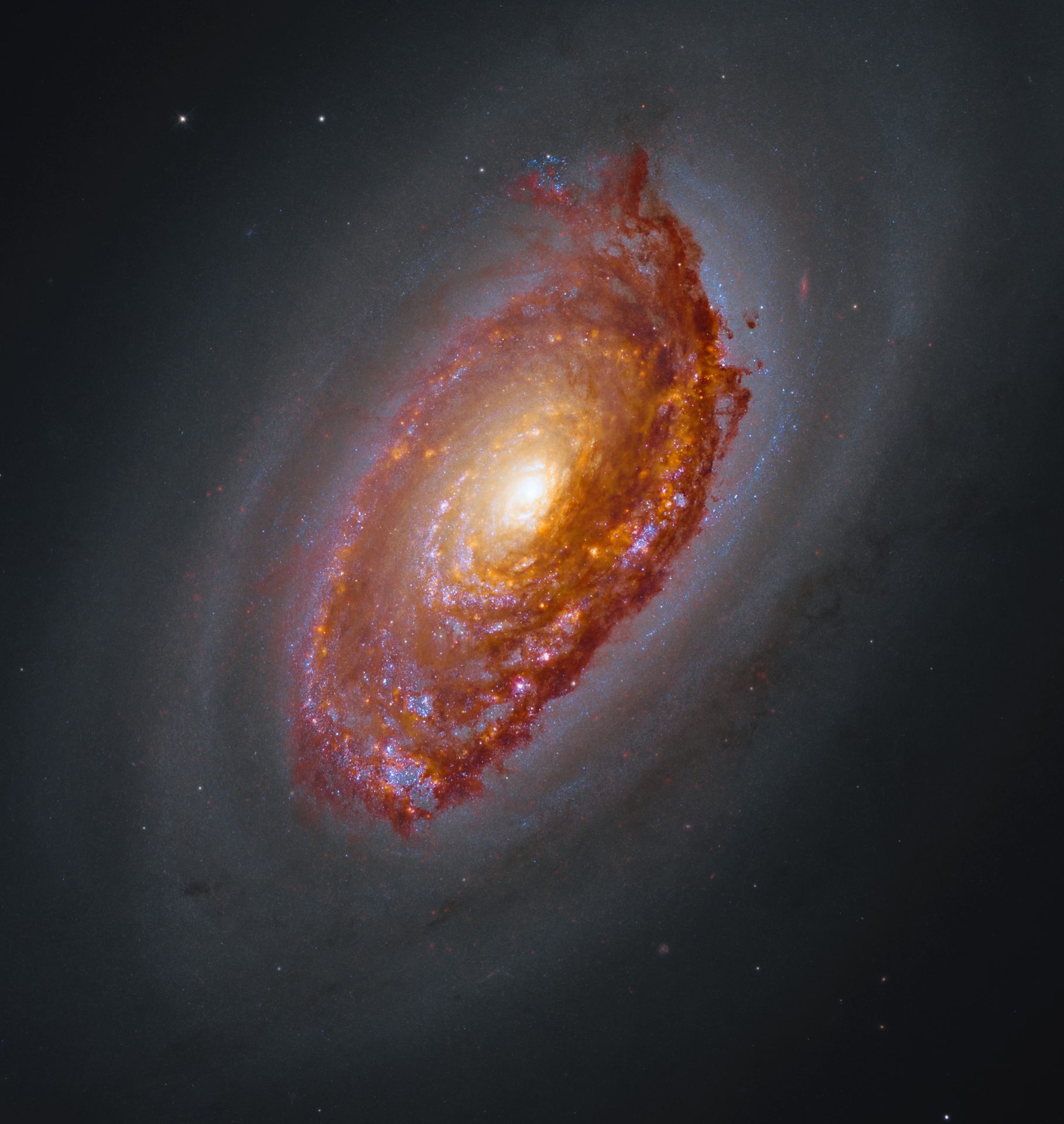
The Andromeda Galaxy as seen through a moderate telescope — a bright elongated core surrounded by spiral arms against a dark sky

Buying Guide · 2026

Best Telescope for Viewing Galaxies: Aperture Is Everything

Galaxies are the most rewarding deep-sky targets — and they are also the most demanding. Unlike the Moon or planets, galaxies are faint, diffuse, and require aperture, dark skies, and realistic expectations. This guide matches telescopes to galaxy observing so you see more than a faint smudge.

Minimum aperture6" (150mm) for good galaxy views
Best mountDobsonian (alt-az) for visual
Budget range$300 – $1,500
Dark skies requiredBortle class 4 or better
By Telescope Advisor Editorial Team Published: Updated: Editorial Standards

Quick Answer: Which Telescope Is Best for Seeing Galaxies?

An 8-inch or larger Dobsonian telescope offers the best galaxy views for your money. Aperture is the single most important factor for galaxy observation because galaxies are faint extended objects — they require light-gathering power to reveal any detail beyond a dim, shapeless glow. An 8-inch Dobsonian (like the Sky-Watcher Classic 200P) reveals the Andromeda Galaxy's bright core and dark dust lane, the Whirlpool Galaxy's spiral structure, and the Sombrero Galaxy's distinctive bulge from a reasonably dark sky. For portable galaxy observing, a 6-inch Dobsonian or a 5-inch Schmidt-Cassegrain on a GoTo mount are good alternatives. For serious galaxy hunters, a 10-inch or 12-inch Dobsonian at a dark-sky site transforms the experience entirely — dozens of galaxies become visible in a single night.

No telescope shows galaxies the way photographs do. What you see through the eyepiece is a faint, subtle structure — but that subtlety is part of the beauty. The goal is to pick a telescope that maximizes the light reaching your eye while fitting your budget and portability needs.

1. Why Aperture Matters More for Galaxies Than Anything Else

A telescope's aperture (the diameter of its main mirror or lens) determines how much light it collects. Every object in the night sky benefits from more aperture, but galaxies benefit most of all. Most galaxies have surface brightnesses far lower than any nebula or star cluster. A 4-inch telescope shows the Andromeda Galaxy as a faint oval smudge — recognizable but featureless. An 8-inch telescope reveals its dark dust lane and the two bright elliptical companion galaxies (M32 and M110) as distinct objects. A 12-inch telescope shows spiral structure in dozens of galaxies that are invisible in smaller instruments.

The relationship between aperture and galaxy visibility is not linear — it is closer to exponential. A 6-inch telescope shows approximately 100 galaxies under dark skies. An 8-inch shows 200. A 10-inch shows 400. A 12-inch shows 800. This is because each increment in aperture not only brightens known objects but also brings an entirely new population of fainter galaxies into view. This makes Dobsonian telescopes — which offer the most aperture per dollar — the default recommendation for galaxy observing.

Mount type matters less for visual galaxy observing than aperture does. A simple Dobsonian mount (alt-azimuth with manual pushing) is perfectly adequate because you will be spending extended time at each target, not tracking rapidly. For imaging galaxies, an equatorial mount with precise tracking is required, but that is a separate topic covered in our astrophotography telescope guide.

2. Realistic Expectations: What Galaxies Actually Look Like Through a Telescope

This is the most important section in this guide. If you expect galaxies to look like Hubble photographs through any amateur telescope, you will be disappointed. A realistic understanding of what you will see prevents frustration and helps you choose the right telescope.

Through an 8-inch telescope from a dark-sky site, the Andromeda Galaxy appears as a bright, elongated core surrounded by a fainter oval haze about 2° across (four full-Moon widths). The companion galaxies M32 and M110 are visible as small, bright patches. With averted vision (looking slightly to the side), you may detect the dark dust lane that splits the galaxy lengthwise — one of the most rewarding sights in amateur astronomy.

The Whirlpool Galaxy (M51) appears as two distinct patches — the larger main galaxy and its smaller companion NGC 5195 — connected by a faint bridge of light. Under excellent conditions with an 8-inch telescope, you can trace the spiral arms as subtle brightness variations. The Sombrero Galaxy (M104) shows a bright, elongated core with a prominent dark dust lane cutting across it at high magnification (150×+). For more on what to expect, see our what galaxies look like guide.

Galaxy Visibility by Aperture (from dark skies, Bortle 3)

4–5" (100–130mm)Andromeda core, brighter elliptical companions — ~50 galaxies
6" (150mm)Andromeda dust lane, M51 two cores, ~100 galaxies
8" (200mm)Spiral hints in M51/M101, Sombrero dark lane, ~200 galaxies
10–12" (250–300mm)Spiral structure visible, hundreds of faint galaxies, ~400–800 galaxies

3. Best Budget Galaxy Telescope: Under $500

At this price point, a 6-inch Dobsonian is the clear winner. It offers the most aperture per dollar and provides a genuine step up from what smaller telescopes can show. While 6-inch galaxy views are limited to the brightest objects, this is enough to see the Andromeda Galaxy in detail, the Whirlpool Galaxy as two patches, and several dozen fainter galaxies.

Editor's Pick — Best Budget Galaxy Scope
Sky-Watcher Heritage 130P tabletop Dobsonian

Sky-Watcher Heritage 130P Flextube (5.1")

A 130mm aperture in a compact tabletop package. The Heritage 130P is the most portable galaxy-capable telescope under $300. It shows the Andromeda Galaxy's core and the Whirlpool Galaxy's two nuclei from a dark suburban site. The collapsible tube makes it easy to transport to darker skies, and the tabletop Dobsonian mount is rock-stable for its size. This is the minimum aperture we recommend for dedicated galaxy observing — anything smaller will leave you wanting more light.

  • 130mm aperture — good starting point for galaxies
  • Ultra-portable, fits in a backpack
  • Excellent value at ~$280
  • Requires a sturdy table or platform
  • Limited to 60–80 brightest galaxies

4. Best Value Galaxy Telescope: $500–$1,000

This is the sweet spot for galaxy observing. An 8-inch Dobsonian at this price provides dramatically better views than any 5–6 inch telescope, revealing structure in dozens of galaxies that are merely faint smudges in smaller instruments. The 8-inch aperture is widely considered the minimum for serious galaxy observing.

Editor's Pick — Best Overall Galaxy Telescope
Sky-Watcher Classic 200P Dobsonian 8-inch telescope

Sky-Watcher Classic 200P Dobsonian (8")

The 8-inch Dobsonian is the most recommended telescope for deep-sky observing, and for good reason. At this aperture, the Andromeda Galaxy shows its dark dust lane clearly, the Whirlpool Galaxy reveals spiral structure with averted vision, and the Sombrero Galaxy's dark equatorial dust lane is unmistakable. Over 200 galaxies are within reach from a dark-sky site. The classic Dobsonian mount is intuitive and requires no power, making it ideal for remote dark-sky trips. The 8" aperture collects 2.5 times more light than the 5" Heritage, making a dramatic difference on every galaxy you observe.

  • 8" (203mm) aperture — serious galaxy observing
  • ~200 galaxies visible from dark skies
  • Best value: most aperture per dollar
  • 45 lbs — not truly portable
  • No GoTo — manual finding only

5. Best Serious Galaxy Telescope: $1,000–$1,500

At this level, you gain either more aperture (10–12" Dobsonian) or a computerized GoTo system that automates finding faint galaxies. Both approaches are valid — the choice depends on whether you prioritize light grasp or convenience.

Editor's Pick — Best Serious Galaxy Scope
Celestron NexStar 6SE computerized telescope

Celestron NexStar 6SE (6" Schmidt-Cassegrain)

The NexStar 6SE combines a 6-inch Schmidt-Cassegrain optical tube with a fully computerized GoTo mount. While its aperture is smaller than the 8-inch Dobsonian, its GoTo capability is a game-changer for galaxy observing. Instead of spending 20 minutes star-hopping to a faint galaxy, you type its name into the hand controller, and the telescope slews to it automatically. This means you can observe 30–40 galaxies in a single session versus 10–12 with a manual scope. The 6SE is also far more portable than a Dobsonian, making it practical to take to dark-sky sites where galaxy observing truly shines.

  • GoTo finds faint galaxies automatically
  • Portable — 30 lbs, fits in a car trunk
  • Higher magnification per inch (f/10)
  • 6" aperture limits faint galaxy views
  • Requires power (batteries or AC)

6. Best Portable Galaxy Telescope

If you need to carry your telescope to a dark-sky site, portability matters as much as aperture. Here is our recommendation for the best balance of light grasp and packability.

Celestron NexStar 6SE

Celestron NexStar 8SE (8" Schmidt-Cassegrain)

The NexStar 8SE is the portability champion for serious galaxy observing. It packs an 8-inch Schmidt-Cassegrain optical tube into a 33-pound package that fits in a standard car trunk. The GoTo mount provides the same automated galaxy-finding convenience as the 6SE but with 78% more light-gathering power. From a dark-sky site, this combination is formidable: you can observe 300+ galaxies in a single long session, with the GoTo system handling all the navigation. The 8SE is the most popular serious telescope for intermediate observers, and galaxy observing is where it truly excels.

7. Essential Accessories for Galaxy Viewing

The right accessories dramatically improve galaxy observing. These are the most impactful additions to your setup.

Wide-field eyepiece (32mm or 25mm)

A low-power, wide-field eyepiece is essential for finding galaxies and for viewing large targets like the Andromeda Galaxy. A 32mm Plössl gives the widest field in a 1.25" format. See our best telescope eyepieces guide for recommendations.

Star chart or astronomy app

Galaxies are faint and can be hard to find without a detailed chart. Stellarium (see our Stellarium guide) or a printed star atlas like the Pocket Sky Atlas is indispensable for galaxy hunting.

Red LED flashlight

Preserving dark adaptation is critical for seeing faint galaxies. A red LED flashlight (or your phone in red-screen mode) lets you read star charts without ruining your night vision.

Observing chair

Galaxy observing involves spending long periods at the eyepiece. A good observing chair that adjusts to different heights makes the difference between a comfortable 3-hour session and a painful 30-minute one.

8. Dark Skies: The Other Half of the Equation

No telescope can overcome severe light pollution for galaxy observing. A 12-inch Dobsonian in a Bortle 8 city sky shows fewer galaxies than a 6-inch Dobsonian at a Bortle 3 dark-sky site. This is because galaxies are extended objects with low surface brightness — light pollution raises the sky background brightness and washes them out.

If you cannot reach a dark-sky site, your best strategy is to focus on the brightest galaxies that can withstand some light pollution: the Andromeda Galaxy, the Whirlpool Galaxy, the Sombrero Galaxy, and the Bode Galaxy (M81) group. These remain visible from suburban skies through an 8-inch telescope. For a complete guide to what you can see under various conditions, see our best galaxies for light-polluted skies guide.

🔭

Not sure which telescope actually fits your goals?

Answer 5 quick questions about your budget, observing targets, and experience level — our Telescope Finder Tool recommends a specific model in under 2 minutes.

Find My Telescope →

Quick Comparison: All Picks at a Glance

Telescope Aperture Best For Galaxies Visible Price Range
Sky-Watcher Heritage 130P 130mm (5.1") Budget / Portable ~80 ~$280
Sky-Watcher Classic 200P 203mm (8") Best Value / Aperture ~200 ~$500
Celestron NexStar 6SE 150mm (6") GoTo / Portability ~120 ~$1,000
Celestron NexStar 8SE 203mm (8") Serious / GoTo + Aperture ~300 ~$1,500

Frequently Asked Questions About Galaxy Viewing

What is the minimum telescope size for seeing galaxies?

A 4-inch (100mm) telescope can show the brightest galaxies like Andromeda (M31) and the Whirlpool Galaxy (M51) as faint patches. For meaningful detail — dust lanes, spiral structure — you need at least 6 inches. An 8-inch telescope is the recommended minimum for serious galaxy observing.

Can you see galaxies from the city?

Only the brightest galaxies — M31, M81, M82, M51, M104 — are visible from suburban skies through an 8-inch telescope. Light pollution is the enemy of galaxy observing. For the best experience, you need to travel to a dark-sky site (Bortle class 4 or better).

Do galaxies look like the Hubble photos through a telescope?

No. Galaxies appear as faint, monochrome patches through amateur telescopes. The colours and fine detail in Hubble images come from long-exposure photography through large telescopes. However, seeing the subtle structure of a galaxy with your own eye is a profoundly different — and for many, more rewarding — experience than looking at a photograph.

Is a Dobsonian or GoTo better for galaxies?

For pure aperture per dollar, a Dobsonian wins. If you value productivity — finding and observing many galaxies in one session — a GoTo telescope like the NexStar 6SE or 8SE lets you observe 3–4 times as many objects per night because you eliminate star-hopping time.

What is the best eyepiece for viewing galaxies?

A medium-focal-length eyepiece (15–25mm) that gives 40–60× magnification is ideal for most galaxies. This provides enough magnification to darken the sky background (improving contrast) while keeping the galaxy bright and wide enough to show structure. A 32mm eyepiece is best for large targets like the Andromeda Galaxy.

How many galaxies can I see with an 8-inch telescope?

From a dark-sky site (Bortle 3), an experienced observer with an 8-inch telescope can see approximately 200 galaxies. This includes all Messier galaxies, most NGC galaxies brighter than magnitude 12, and a selection of fainter NGC and IC galaxies. The actual number depends on your sky quality, eyepiece selection, and observing experience.