Can You See Neptune With a 4-Inch Telescope? Real-World Results + Finder Workflow
Telescope Advisor Logo Telescope Advisor
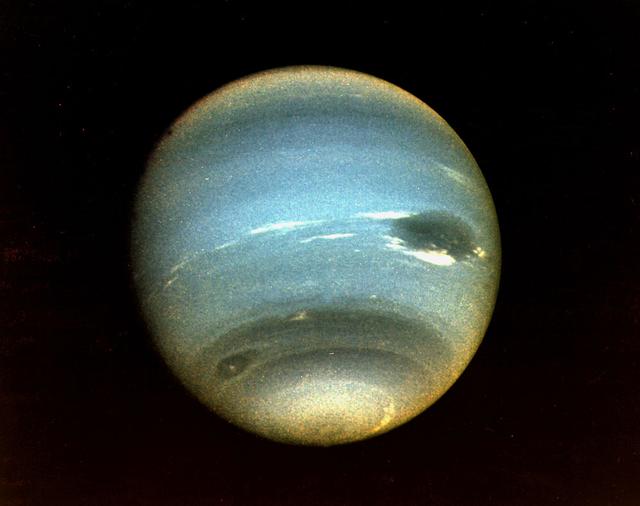
Neptune in deep blue tones

Neptune Observing Guide · 4-Inch Class

Can You See Neptune With a 4-Inch Telescope?

Yes, but not like social media images. A 4-inch telescope can show Neptune as a tiny, distinctly non-stellar blue disk when conditions and magnification are right. This guide explains exactly how to find and verify it.

7.8

Typical Magnitude

2.3"

Apparent Disk Size

120x+

Useful Verification Range

Dark Sky

Strongly Helpful

By Telescope Advisor Editorial Team Published: Updated: Editorial Standards

Quick Answer

A 4-inch telescope can show Neptune as a tiny blue disk under decent seeing, especially at 120x to 180x. It will not show cloud detail or rings, but you can confirm Neptune is a planet rather than a star by its non-twinkling steadiness and small resolved disk.

The hard part is usually locating the correct object field and confirming identity. A structured finder workflow matters more than chasing extreme magnification.

🔭

Not sure which telescope actually fits your goals?

Answer 5 quick questions about your budget, observing targets, and experience level — our Telescope Finder Tool recommends a specific model in under 2 minutes.

Find My Telescope →

What Neptune Looks Like in a 4-Inch Scope

Neptune in a 4-inch telescope does not look dramatic, but it is one of the most rewarding "precision wins" in beginner-intermediate astronomy. The object appears as a very small bluish-gray disk, often with a cool steel-blue tone compared to surrounding stars. At low power, it can still look star-like. At moderate to higher power with steady air, the disk nature becomes clearer.

Do not expect obvious atmospheric bands or giant blue planet appearance. Visual Neptune is about detection confidence and planetary verification, not detail-rich presentation. Once you accept this, sessions become far more satisfying and repeatable.

Magnification and Verification Plan

RangeUseResult
40x-80xField acquisitionNeptune may appear stellar
100x-140xPrimary verificationDisk starts to separate from star points
150x-200xSteady-air confirmationMore obvious tiny disk when seeing supports it

If image quality collapses above 140x, drop power. For Neptune, consistent disk recognition at moderate power is more valuable than occasional unstable high-power glimpses.

Finder Workflow That Actually Works

  1. Start with a current sky chart/app and identify the exact constellation field for tonight.
  2. Use low-power eyepiece and sweep to the target field using bright anchor stars.
  3. Match star pattern in eyepiece to chart before increasing magnification.
  4. Identify candidate object that remains steady and slightly non-stellar at medium power.
  5. Increase power to confirm tiny disk shape relative to nearby stars.
  6. Re-check after 20 to 30 minutes if needed; planetary drift relative to stars helps confirmation over time.

The most common error is jumping straight into high power without locking field identity. Neptune observing is a map-first process.

Helpful Gear for 4-Inch Neptune Sessions

Editor's Pick — Strong 4-Inch Planet Platform
Celestron NexStar 4SE telescope

Celestron NexStar 4SE

A practical 4-inch class scope with tracking that helps keep Neptune centered while verifying disk shape.

32mm eyepiece

Low-Power Acquisition Eyepiece

9mm eyepiece

Medium-High Verification Eyepiece

Deep Dive: The Real Skill in 4-Inch Neptune Observing

Neptune with a 4-inch telescope is not about spectacle. It is about precision, confidence, and repeatable technique. For many observers, Neptune is the first target that forces serious map discipline because visual cues are subtle. This is exactly why the target is valuable. It develops core observing habits that improve every future planetary and deep-sky session.

The first habit is verification over excitement. New observers often jump from "I found something bluish" to "that's Neptune" too quickly. In practice, confidence should come from pattern matching, magnification behavior, and relative steadiness. The object should remain where the chart predicts, respond to increased power as a tiny disk rather than a sharp star, and maintain color character with repeated checks.

The second habit is respecting seeing limits. Neptune is small enough that atmospheric conditions dominate visual quality. If stars are unstable, Neptune disk confirmation will be unreliable at high power. On such nights, lower power and focus on field verification. Save disk confirmation for steadier windows. This avoids false negatives where the observer blames equipment for atmospheric limitations.

The third habit is temporal comparison. Neptune moves slowly against background stars, but enough to confirm identity over days. If you log your candidate position and revisit after a few nights, slight positional change relative to the same star pattern can confirm planetary identity even when visual detail remains minimal. This method is underused by beginners and highly effective.

Another key concept is expectation design. People conditioned by processed astrophotography expect rich detail from visual Neptune that no small scope can provide. This mismatch can make successful observations feel disappointing. Reframing the objective solves this. In 4-inch class viewing, success means finding Neptune, confirming non-stellar disk behavior, and recognizing color and steadiness differences from nearby stars.

The discipline you build here transfers directly to Uranus, Pluto-field attempts, and challenging galaxies near threshold visibility. You learn to trust workflow, not impulse. You learn to separate "can't see detail" from "wrong target." You learn to measure progress by confidence and repeatability. These are advanced skills developed on an accessible aperture platform.

For observers considering upgrades, 4-inch Neptune performance also reveals your real bottleneck. If your target acquisition is weak, better charts and finder method may outperform aperture upgrades. If acquisition is strong but disk verification remains inconsistent, seeing and mount stability may be limiting. If both are strong and you want more confidence under mediocre skies, aperture expansion may then be justified. This data-driven approach prevents expensive but low-impact purchases.

In short, yes, a 4-inch telescope can show Neptune. The visual output is subtle, but the observational value is high. Treat Neptune as a precision target, and your overall astronomical skill grows quickly.

4-Inch Neptune Field Handbook: End-to-End Session Playbook

This handbook is for observers who want repeatable success, not one lucky detection. Neptune sessions fail when planning, locating, and confirming are treated as one step. They are three separate jobs with different tools and different failure modes. Your map work, optical settings, and verification rules should be prepared before darkness, not improvised at the eyepiece. A 4-inch telescope has enough capability to show Neptune's disk, but only if you remove avoidable uncertainty from the process.

Start with planning the right sky window. Neptune is high-value only when it is high enough above your horizon and far enough from bright moonlight contamination. If the Moon is bright and nearby, contrast loss can make initial location surprisingly slow. Use moonless windows when possible and prioritize nights with above-average transparency over nights with only average transparency and excellent seeing. Neptune verification begins with finding the right field quickly; transparency directly affects that step.

Pre-session star map preparation should include two anchor routes, not one. Route A is your primary star-hop from obvious stars to the Neptune field. Route B is a fallback path in case clouds remove one anchor region. Many observers lose time because they know only one route. If that route is blocked by haze or low cloud, the whole session stalls. With two prepared routes, you can pivot instantly and preserve your best dark-adapted interval.

Your eyepiece sequence also needs to be fixed in advance. Use low power for field acquisition, then medium power for candidate verification, then moderate-high power only if the image remains stable. Do not bounce between random eyepieces. Every unnecessary swap increases mechanical disturbance and decision fatigue. A fixed sequence keeps your focus process consistent and lets you compare results from session to session.

A practical confidence framework is helpful: identification confidence, disk confidence, and repeat confidence. Identification confidence means your candidate matches chart position in the expected star geometry. Disk confidence means the object behavior at medium power is less stellar than nearby points. Repeat confidence means you can relocate the same target after stepping away, changing eyepieces, or returning later in the session. If any one confidence layer is missing, do not log the observation as final yet.

Another underused method is controlled defocus comparison. Slightly defocus Neptune candidate and nearby stars at the same power. The way light spreads can differ subtly for planetary disk versus star point under stable seeing. This is not a standalone proof, but it can support disk confidence when combined with chart position and repeat detection. Use this carefully and return to proper focus for final verification.

If your mount has tracking, use it to stabilize visual interpretation, not to skip chart discipline. Tracking helps your eye integrate subtle differences across time, especially with tiny targets. But tracking cannot tell you whether you centered the correct object initially. Good Neptune sessions combine old-school pattern matching with modern mount convenience. Over-reliance on one without the other usually causes either false positives or unnecessary search time.

In suburban conditions, consider an observation timing wedge: begin with low-power acquisition before local lights reach full night glare adaptation threshold, then switch to verification once your eyes settle. Some locations improve later in the night as local thermal plumes drop; others worsen from humidity rise. Track your local pattern over multiple sessions. Site-specific knowledge gives bigger gains than one-time accessory purchases.

For observers struggling to confirm disk shape, use comparison targets as training. Uranus can appear slightly easier in some seasons and can train your eye for subtle planetary non-stellar signatures. Once your eye learns that signature, Neptune confirmation becomes faster. This is not cheating; it is targeted visual training, similar to using bright doubles before difficult splits.

Record objective session metrics: start time, transparency estimate, seeing estimate, first candidate time, first disk-confidence time, and final confidence level. Over five to ten sessions, patterns emerge quickly. You may discover that your best Neptune results happen at lower power than expected, or only after a certain local hour when roofs cool. These patterns are actionable and can transform inconsistent observing into routine success.

Do not chase detail that a 4-inch instrument cannot deliver visually. Neptune ring visibility, cloud bands, and dramatic color gradients are not realistic goals at this aperture for visual observing. If you set unrealistic goals, every successful identification feels like failure. If you set proper goals, each session produces measurable progress and meaningful achievement. In observational astronomy, calibrated expectations are part of technical skill.

A high-quality verification tactic is delayed recheck. After initial confidence, leave Neptune and observe something else for fifteen minutes. Return and re-acquire without using your first eyepiece orientation memory. If you can repeat identification quickly, confidence rises sharply. This simulates real-world repeatability and protects against one-off pattern misreads.

During opposition season windows, prioritize nights where Neptune culminates at convenient local times. Altitude matters. Even a modest increase in altitude can improve contrast and reduce atmospheric smearing. If your site has an obstructed horizon, plan around culmination rather than first visibility. Beginners often waste effort observing too early in the target rise when the atmosphere is thickest.

If you plan outreach or group sessions, assign roles. One person handles star map and verbal coordinates, one operates the mount, and one confirms visual behavior in eyepiece. Group Neptune sessions fail when everyone tries everything at once. Structured division of roles reduces confusion and preserves dark adaptation for the person doing final visual confirmation.

In windy conditions, reduce magnification and protect the optical path from gusts rather than forcing high power. Tiny targets magnify instability brutally. It is better to secure moderate-confidence disk confirmation than to spend an hour attempting unstable high-power detail that never settles. Pragmatic adaptation always outperforms rigid plan adherence under field variability.

For long-term improvement, build a Neptune checklist card and keep it with your eyepiece case. A short checklist outperforms memory under fatigue. Include route anchors, preferred eyepiece sequence, verification criteria, and session logging fields. This simple habit turns Neptune from a rare challenge into a repeatable precision target you can revisit every season with increasing speed and confidence.

When your process becomes stable, a 4-inch telescope is enough to make Neptune one of the most satisfying "small target" achievements in amateur astronomy. Not because the image is dramatic, but because your method is sound. That skill foundation carries directly into tougher planetary and deep-sky work and is often the difference between occasional success and consistent results.
Verification Lab: How to Confirm Neptune Without Second-Guessing Yourself

A major challenge in 4-inch Neptune observing is not locating the field. It is managing uncertainty after you find a plausible candidate. To reduce second-guessing, treat verification like a lab procedure. Define evidence categories before observing: positional evidence, behavioral evidence, and repeat evidence. Positional evidence comes from exact star-field agreement. Behavioral evidence comes from subtle non-stellar appearance at appropriate power. Repeat evidence comes from successful re-acquisition later in session or on a different night.

Positional evidence should be built from at least two independent references in the same field. Do not rely on one bright anchor star alone. Use triangles, short chains, or box-like star patterns that stay recognizable across eyepieces. This geometry-first method is robust when transparency changes and prevents locking onto the wrong point source.

Behavioral evidence should be collected at controlled magnification. If seeing is unstable, pushing power too high makes all points look similarly soft and destroys comparison value. Keep magnification where nearby stars remain coherent enough to compare with your Neptune candidate. Controlled comparisons are more valuable than peak magnification attempts.

Repeat evidence is the strongest confidence booster. After initial identification, move to a nearby target, then return to Neptune field using your route notes instead of visual memory alone. If you can recover the same candidate consistently, confidence rises sharply. Repeatability separates genuine identification from one-time visual suggestion.

If you use digital charts, freeze your zoom level once field matching begins. Frequent zoom changes make pattern recognition harder and increase cognitive load. Stable chart scale helps your brain lock onto geometry faster and reduces map-to-eyepiece translation errors.

Run a contradiction test before logging success: ask what would disprove your identification. If a second candidate fits geometry better, if power behavior is indistinguishable from stars, or if re-acquisition fails, confidence should be reduced. This disciplined skepticism prevents false certainty and improves long-term accuracy.

Use session timing to your advantage. If local seeing improves after midnight, schedule verification passes later rather than forcing confidence early. Conversely, if humidity climbs rapidly late at night at your site, front-load verification while transparency is strongest. Your local climate pattern is a practical instrument in itself.

Keep a Neptune verification worksheet with these fields: route used, eyepiece sequence, first candidate time, final confidence score, and re-acquisition result. Worksheets create consistency and let you evaluate progress objectively. Over several sessions, your median time-to-confidence should drop as method improves.

If multiple observers are present, have each observer independently identify Neptune from the same chart and compare results before discussing. Independent confirmations are powerful and reduce group bias effects. If all observers converge on the same candidate, confidence improves significantly.

With this lab-style workflow, Neptune becomes less mysterious and more procedural. A 4-inch telescope can deliver reliable results when verification is structured. Confidence then comes from method and repetition, not from one dramatic moment at the eyepiece.

As you gain experience, try benchmarking your Neptune workflow against one easier outer-planet session each month. This keeps your field-matching and confidence-grading skills calibrated. Consistent calibration prevents skill drift and keeps Neptune sessions efficient throughout the year.

If observing conditions are uncertain, run a two-pass plan: first pass for rapid field lock, second pass for confirmation and confidence scoring. This structure prevents time loss and helps you decide quickly whether to continue Neptune work or pivot to alternate targets.

Over time, your value from Neptune observing comes less from the visual size of the target and more from the discipline it teaches. That discipline improves every other challenging target you pursue with the same 4-inch telescope.

A practical seasonal benchmark is to record your first successful Neptune confirmation each month and compare acquisition time over the year. Even modest improvements in this metric indicate stronger field workflow and better sky reading skills.

As your confidence grows, keep expectations anchored to what visual 4-inch observing can realistically provide. Strong identification discipline and repeatability are the success criteria; dramatic detail is not required for a highly successful Neptune program.

FAQ

Can a 4-inch telescope really show Neptune as a disk?
Yes, in steady conditions and adequate magnification, Neptune appears as a tiny non-stellar disk.

Can I see Neptune from city skies?
Sometimes, but dark skies and good transparency improve acquisition and confidence significantly.

Can I see Neptune's moon Triton with 4 inches?
Usually difficult and condition-dependent; prioritize planet confirmation first.

Is 200x always better for Neptune?
No. If seeing is unstable, lower power may produce clearer and more reliable verification.

Do I need GoTo to find Neptune?
No, but GoTo or push-to assistance reduces search time and field confusion.