Can You See Saturn Rings With a 70mm Telescope? Honest Expectations + Setup Guide
Telescope Advisor Logo Telescope Advisor
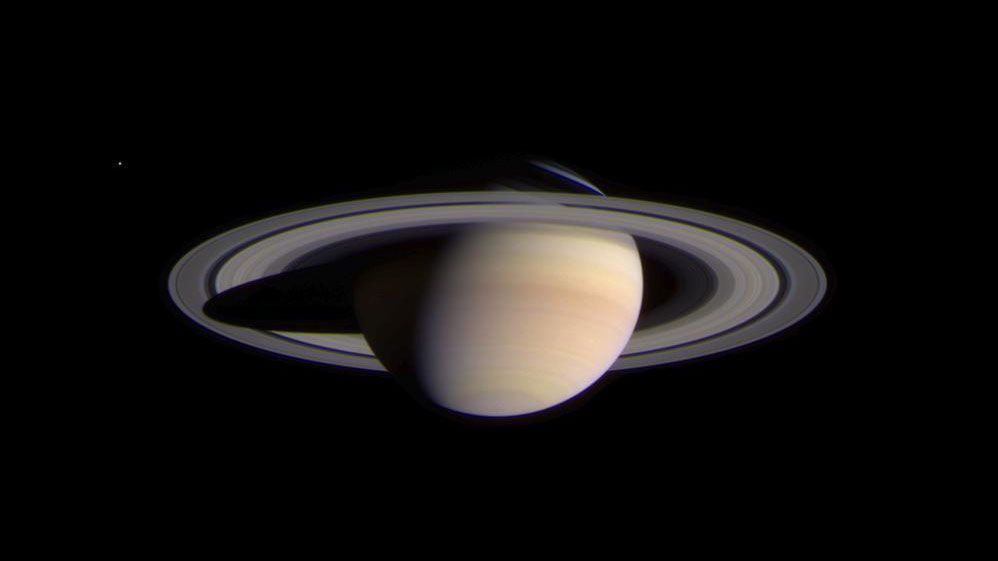
Saturn with ring system in space

Saturn Viewing Guide · Beginner Aperture

Can You See Saturn Rings With a 70mm Telescope?

Yes, you can. A good 70mm telescope can show Saturn's ring shape clearly when timing, focus, and magnification are right. This guide gives the practical setup that gets beginners from "tiny blur" to clean ring separation.

70mm

Entry Aperture

60x+

Ring Separation Starts

90x-140x

Usable Sweet Spot

High

Timing Sensitivity

By Telescope Advisor Editorial Team Published: Updated: Editorial Standards

Quick Answer

A 70mm telescope can show Saturn's rings as a clear extension around the planet at moderate magnification, usually around 60x to 120x. You will not get giant, magazine-level detail, but you can absolutely see that Saturn is a ringed planet rather than a plain dot.

Most beginner failures happen because of timing and focus, not because 70mm is "too small." If Saturn is low, the atmosphere is unstable, or magnification is misused, ring visibility collapses quickly. If Saturn is reasonably high and you use controlled focus at realistic power, ring separation is achievable with 70mm optics.

🔭

Not sure which telescope actually fits your goals?

Answer 5 quick questions about your budget, observing targets, and experience level — our Telescope Finder Tool recommends a specific model in under 2 minutes.

Find My Telescope →

What a 70mm Telescope Really Shows on Saturn

A 70mm refractor is often the first serious telescope many families buy. The good news is that it sits above the minimum practical threshold for Saturn ring detection. The less exciting truth is that detail is subtle and condition-dependent. Saturn will look small. The ring system will look thin. But the iconic shape is still there and recognizable to beginners after proper setup.

At low power, Saturn appears as a bright, tiny oval. As power increases into the useful range, the planet becomes a compact disk with an obvious extension that makes the ringed shape unmistakable. In good seeing, the globe and ring can be distinguished as separate structures. Titan may be visible as a faint nearby point depending on sky quality and observer experience.

What you should not expect at 70mm is frequent high-contrast view of fine ring structure. Cassini Division detection is rare and seeing-dependent at this aperture. This is not a failure of your telescope. It is normal optical scaling and atmospheric limitation. Once expectations are calibrated to this reality, 70mm Saturn sessions become consistently enjoyable instead of frustrating.

Magnification Strategy for 70mm Saturn Viewing

The common beginner instinct is to jump to maximum power immediately. For Saturn in a 70mm telescope, this usually produces blur, dimness, and disappointment. Start lower, stabilize focus, and step upward only if the image remains coherent. Magnification is not a badge of skill; it is a tool that must match seeing conditions.

Magnification Expected View Recommendation
30x-50xBright but tiny; ring hint onlyAcquisition stage
60x-90xRing separation becomes clearReliable baseline
100x-140xBest scale/detail balance on good nightsPrimary working zone
150x-180xOften soft in average airUse only when image stays stable

Recommended Gear to Max Out a 70mm Saturn Setup

Editor's Pick — Best Entry 70mm Workflow
Celestron AstroMaster 70AZ

Celestron AstroMaster 70AZ

A practical 70mm refractor that can show Saturn ring shape clearly when you control timing and magnification.

2x Barlow lens

2x Barlow for Controlled Power Steps

32mm Plossl eyepiece

32mm Eyepiece for Easy Acquisition

Step-by-Step Saturn Session With 70mm

  1. Set the telescope outside 20 to 30 minutes early to reduce thermal turbulence.
  2. Start at low power to acquire Saturn quickly and center precisely.
  3. Focus carefully with tiny adjustments until Saturn edge stops blooming.
  4. Increase power gradually into the 60x-120x range.
  5. Hold view for several seconds at a time; wait for steady-air moments.
  6. If image softens strongly, drop power and re-focus instead of pushing higher.
  7. Record best magnification and time for your location to improve future sessions.

Deep Dive: Why 70mm Works Better Than Many Beginners Expect

The phrase "entry-level telescope" often causes observers to undervalue what a 70mm aperture can do. In practice, 70mm is not a toy class. It sits in the part of the aperture ladder where bright planetary geometry becomes accessible when the observer is disciplined. Saturn is a great proof case because ring shape is a structural feature, not a tiny color patch. Even when detail is modest, ring geometry is still detectable with sufficient scale and contrast.

The real barrier is not aperture alone. It is systems thinking. A Saturn view is the product of optics, mechanics, atmosphere, timing, and observer behavior. Most first failures happen when one of these systems is ignored. For example, a sharp optical tube can still fail if mounted on a shaky tripod that never settles. A good tripod can still fail if the telescope is pointed at Saturn while it is low above hot rooftops. A well-timed target can still fail if focus is rushed. Recognizing this system is what transforms beginner outcomes.

Another key factor is psychological pacing. People often evaluate Saturn too quickly. They look for two seconds, decide the image is weak, then start changing accessories rapidly. This introduces noise and removes the chance for visual adaptation. Planetary viewing requires short periods of visual patience. Your eye-brain system improves interpretation when it gets repeated stable glimpses. In a 70mm scope, that adaptation effect is significant and often underestimated.

Seeing conditions are especially important. On poor nights, high magnification in a 70mm scope can make Saturn look larger but less informative. The smart move is to work in the magnification range where edge definition remains coherent. You are not trying to maximize apparent size; you are trying to maximize useful information. That distinction helps beginners avoid the magnification trap and leads to more repeatable success.

The same is true for timing strategy. Saturn near culmination generally produces the best amateur results because the line of sight crosses less atmosphere. If your schedule forces low-altitude viewing, treat the session as reconnaissance and expectation practice rather than a detail hunt. This mindset prevents frustration and keeps your observing routine sustainable.

There is also a calibration benefit in learning Saturn with 70mm. Because the aperture is modest, it teaches correct technique quickly. Sloppy focus, poor tracking, and bad timing are obvious immediately. Larger telescopes can partially mask some errors by brute light-gathering power, but 70mm forces cleaner habits. Those habits scale upward perfectly if you upgrade later. In that sense, 70mm is a strong training platform, not merely a budget compromise.

For families and beginners, the portability of 70mm systems is another hidden advantage. Fast deployment means more sessions. More sessions mean faster skill development and more nights where conditions align. A heavy instrument that stays indoors contributes zero learning. A lighter scope that goes outside often will usually outperform a theoretically superior setup that is deployed rarely.

If your long-term goal is better Saturn detail, 70mm can still be part of that path. Use it to establish baseline habits, track seeing quality, and learn your local sky windows. Then decide whether upgrades should prioritize aperture, mount stability, or accessory quality based on real observing bottlenecks rather than marketing claims. This process yields better value and avoids redundant purchases.

In summary, yes, 70mm can show Saturn rings. The statement is true in practical amateur conditions. The key is that this success is technique-driven. When you treat the session as a workflow instead of a quick test, 70mm becomes a reliable ring-viewing tool and an excellent gateway to serious planetary observing.

Advanced 70mm Saturn Session Blueprint: How to Get Consistent Ring Views

Seeing Saturn's rings in a 70mm scope is often treated as a yes-or-no question, but experienced observers know it is a repeatability question. One successful night is exciting. The real goal is seeing rings clearly on most usable nights with minimal frustration. To reach that point, build a session system that separates setup quality, sky timing, and eyepiece workflow into consistent steps.

Begin with temperature equilibrium. A 70mm telescope cools quickly, but quick is not instant. Give the optics enough time to settle so focus behavior becomes stable. Many ring-view complaints are really focus drift from thermal imbalance. If you observe right after moving from a warm room to cool night air, Saturn can look soft and shimmer-heavy even when the sky itself is decent.

Choose your first observation window intentionally. Saturn should be reasonably high above the horizon before you expect clean ring separation. Near-horizon views magnify atmospheric smear and color fringing, especially in entry-level achromats. If you can wait until Saturn climbs, your odds of clean ring geometry improve dramatically without changing any hardware.

Use a structured eyepiece ladder. Start at low-medium power to center and confirm tracking behavior. Move to medium power for first ring confidence. Only then test higher magnification if image stability supports it. Random magnification jumps cause confusion because every change resets both focus and image interpretation. A fixed ladder turns ring detection into a controlled process.

Practice focus discipline. Focus on Saturn itself, then refine using nearby stars only if needed. Tiny focus errors have oversized impact on ring edge crispness at this aperture. Use micro-adjustments and pause after each adjustment to let visual perception settle. Fast twisting can overshoot the focus sweet spot repeatedly and create the false impression that optics are weak.

Add drift-based verification if your mount is manual. Center Saturn, stop motion briefly, and observe how ring shape behaves as the planet drifts through the field. If your image is truly focused, ring orientation remains coherent through the drift; if not, it tends to blur into a soft oval with uncertain boundaries. This method helps confirm genuine clarity rather than momentary visual guesswork.

Track seeing conditions in simple categories: poor, fair, good, excellent. Pair this with magnification notes and ring clarity notes. Over multiple sessions, you will discover your practical sweet spot, often around moderate power where contrast and steadiness are balanced. This evidence-based approach beats internet magnification myths and yields faster improvement.

Manage accessories with purpose. A good diagonal and stable eyepiece fit improve observing comfort and reduce tiny mechanical shifts during focusing. Comfort matters because relaxed observing improves your ability to detect subtle structure in the ring system. If your viewing posture is strained, your eyes fatigue sooner and ring detail seems to disappear.

Use realistic detail targets based on ring tilt season. In favorable geometry, ring separation is obvious and highly rewarding even at modest power. In low-tilt periods, ring presentation is harder and can look thinner or less dramatic. Interpreting your view through ring-season context prevents unnecessary equipment blame.

Train your eye with short repeated looks rather than one long stare. Alternating between 20 to 30 second focused inspections and brief rest periods improves contrast perception. This is particularly effective when seeing fluctuates. Tiny windows of atmospheric steadiness often reveal the clearest ring edges, and you capture those moments better with paced viewing.

For beginners sharing the telescope, establish a quick alignment-and-refocus protocol between viewers. Every new observer can nudge focus and mount position. Without protocol, image quality degrades rapidly and later viewers assume the telescope cannot show rings. With protocol, group sessions remain sharp and everyone gets a fair look.

If you are comparing refractor and reflector options in this class, remember that collimation demands differ. A 70mm refractor's simplicity is a major advantage for Saturn consistency. You spend less time tuning and more time observing. For many families and casual users, that consistency produces better ring outcomes than theoretically higher-performing but more maintenance-heavy systems.

When conditions are mediocre, pivot to achievable goals instead of forcing extreme magnification. Focus on clean ring detection, stable planet shape, and occasional moon sightings. Adapting goals to conditions protects motivation and keeps skill development steady. Chasing unrealistic detail in bad seeing can make even good telescopes feel disappointing.

Build a one-page Saturn checklist and keep it with your case: cool-down start time, target altitude window, eyepiece ladder, focus routine, and note fields. A checklist removes mental load and prevents forgotten basics. Over time, this simple tool can convert sporadic ring success into predictable, repeatable performance.

Many observers eventually upgrade aperture, but a well-used 70mm remains valuable as a fast planetary trainer and travel scope. The methods you learn here scale upward. Better mount control, disciplined focusing, and condition-aware magnification choices will improve your results on every future instrument.

A 70mm telescope is not a toy when used properly. It is a capable planetary tool that can deliver beautiful, confidence-building Saturn ring views. If you combine realistic expectations with repeatable technique, this class of telescope can produce years of satisfying observations and a strong foundation for deeper astronomy.

Seasonal Ring Planner: Building Better Saturn Results Across the Year

Your 70mm Saturn results improve dramatically when sessions are organized seasonally instead of randomly. In early season, use Saturn as a reacclimation target: focus on rapid acquisition, stable framing, and clean ring separation at modest power. Mid-season, when Saturn altitude and observing windows improve, test higher magnification and track detail consistency. Late season, shift goals toward efficient setup and short high-quality looks before target altitude declines. This seasonal planning makes improvement measurable and avoids frustration from unrealistic expectations on low-probability nights.

Create a simple three-tier objective system for each month: minimum goal, standard goal, and stretch goal. A minimum goal could be clean ring detection with stable shape. A standard goal might be ring plane orientation confidence and one moon identification. A stretch goal could be sustained sharpness at your best practical magnification. By setting tiered goals, each session stays productive regardless of seeing quality.

Use weather and seeing forecasts as probability filters, not guarantees. If forecast is poor, choose a maintenance session: verify finder alignment, check mount smoothness, and refresh eyepiece organization. If forecast is fair, run standard goals. If forecast is excellent, prioritize detail attempts and careful logging. This risk-based scheduling keeps momentum even when ideal nights are rare.

For observers with limited weeknight windows, run a 20-minute rapid protocol: pre-cool optics, start with known eyepiece sequence, confirm ring visibility, log best view, and end before fatigue degrades decisions. Short disciplined sessions often produce better data than long unstructured sessions, especially with smaller apertures where precision matters.

Include a visual consistency test once per week. Observe Saturn, then switch to a bright reference star to check focus behavior and atmospheric stability. Return to Saturn and compare ring edge quality. If quality drops significantly without sky change, mechanical factors may be involved. This quick test helps separate sky limitations from equipment handling issues.

If you observe with children or friends, maintain a quick orientation script: "Planet center first, then ring shape, then moons." Guided viewing keeps expectations aligned and improves what people notice in the eyepiece. Unstructured first looks often lead to "I only see a dot" reactions, even when rings are visible.

Track your most effective magnification as a moving value, not a fixed rule. Some nights, your best result may be below previous sessions due to turbulence. Other nights, you can push higher successfully. Recording this range helps you adapt quickly and prevents forcing magnification that current conditions cannot support.

At least once per month, conduct an equipment hygiene pass: clean obvious dust from accessible surfaces, inspect diagonal seating, verify eyepiece undercuts are seated securely, and check tripod fasteners. Minor mechanical drift accumulates slowly and can mimic declining optical performance if ignored.

End each Saturn month by reviewing notes and setting one process improvement target for the next month. Examples include faster first-focus lock, better finder precision, or improved comfort setup. Incremental process goals are more sustainable than chasing dramatic detail leaps every session.

Over a full season, this planner turns Saturn from a "sometimes impressive" target into a consistent confidence anchor. That consistency is exactly what makes a 70mm telescope rewarding over the long term. The ring view remains special, and your method becomes increasingly reliable.

One final tip: keep your Saturn routine simple enough that you can execute it even on tired weeknights. Sustainable routines beat perfect routines. If a short, repeatable process gets you under the sky more often, your ring views will improve faster than any single equipment tweak.

FAQ

Is 70mm enough for Saturn rings?
Yes. 70mm is enough to separate Saturn's rings from the planet under reasonable conditions.

What magnification should I use first?
Start around 60x to 90x, then increase cautiously if the image remains stable.

Will I see Cassini Division with 70mm?
Usually not consistently. Ring separation is realistic; fine ring structure is much harder at this aperture.

Can city observers still see rings with 70mm?
Yes. Saturn ring shape is possible from cities if seeing is decent and focus is precise.

Is a Barlow required?
Not required, but a good 2x Barlow can help reach usable power ranges with limited eyepiece sets.