
Can You See the Eclipse From the UK? August 12, 2026 Partial Solar Eclipse Times & Viewing Guide
Telescope Advisor Logo Telescope Advisor
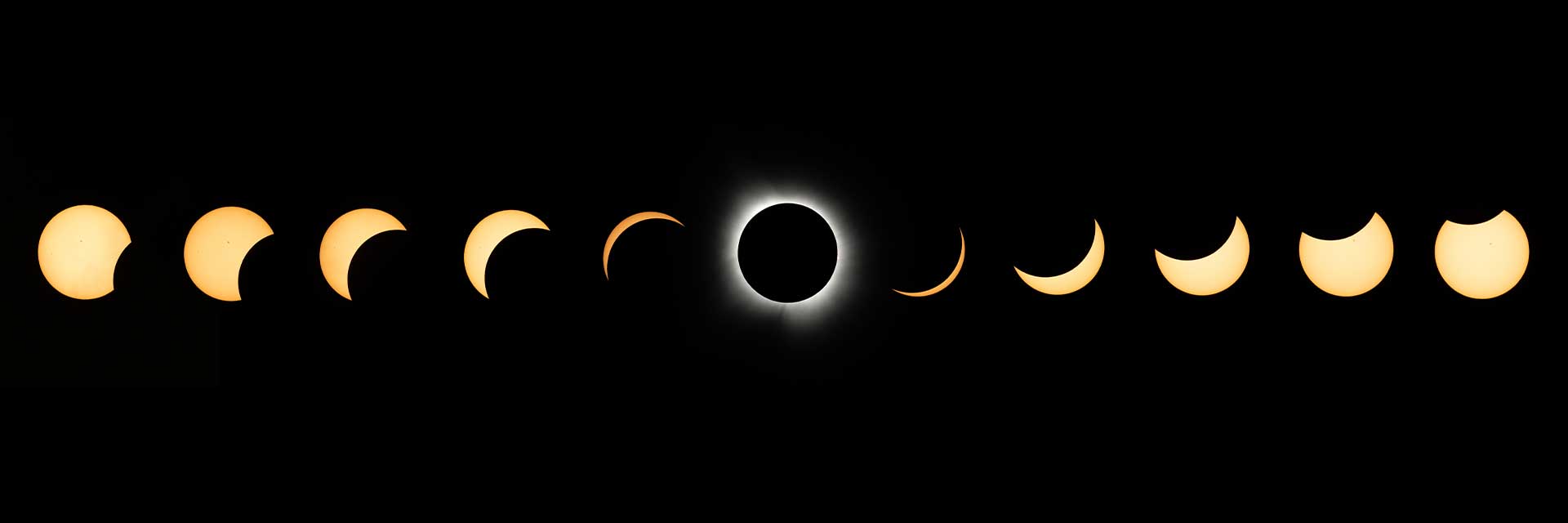
Multi-exposure composite image showing the progression of a partial solar eclipse — similar to what UK observers will see at sunset on August 12, 2026

Eclipse Guide · UK · August 12, 2026

Can You See the Eclipse From the UK? August 12, 2026 Partial Solar Eclipse Guide

Yes — the UK will see a deep partial solar eclipse on the evening of August 12, 2026, with 87% of the Sun covered in London and up to 92% in Edinburgh and Dublin. But there is a catch: the eclipse occurs very close to sunset, turning a standard celestial event into a spectacular low-horizon display — but also making it more challenging. This guide covers everything UK observers need: exact times by city, best viewing spots, British weather prospects, and the safety gear you will need for this unique sunset eclipse.

Coverage87% London · 92% Edinburgh
Max time (BST)~20:54 BST (sunset eclipse)
Key challengeLow western horizon needed
SafetyISO 12312-2 glasses essential
By Telescope Advisor Editorial Team Published: Updated: Editorial Standards

UK Eye Safety Warning

Never look directly at the Sun without ISO 12312-2 certified eclipse glasses, even during a deep partial eclipse. This applies at all times before and after maximum eclipse. Even at 87% coverage, the remaining 13% of the Sun's surface is intense enough to cause permanent retinal damage. The low Sun near sunset does not reduce the danger — infrared and ultraviolet radiation are still present. Only the brief seconds of totality (which the UK will not experience) are safe to view without protection. See our best eclipse glasses guide for UK-available products.

Quick Answer: Will the Eclipse Be Visible From the UK?

Yes, the UK will see a deep partial solar eclipse on August 12, 2026. The Moon will cover between 80% and 92% of the Sun's disk depending on your location, with the best coverage in Scotland and Ireland. The eclipse begins around 19:40–20:00 BST (depending on your longitude) and reaches maximum at approximately 20:54–21:03 BST — very close to sunset across the British Isles.

The sunset timing is the defining feature of the 2026 eclipse for UK observers. As the partially eclipsed Sun sinks toward the horizon, the light dims noticeably and the thin solar crescent may take on a deep orange or red hue due to atmospheric extinction. This creates a spectacular visual display — but it also means you need a completely unobstructed west-north-west horizon to see the final stages. Hills, buildings, trees, and even low cloud on the horizon can block the view entirely in the crucial final minutes.

The Short Version

The UK gets a deep partial eclipse at sunset. Best coverage: Edinburgh (92%) > Cardiff (90%) > Manchester (89%) > London (87%). You need ISO-certified eclipse glasses, a clear western horizon, and a plan to deal with British weather. Totality is not visible from the UK — you would need to travel to Spain or Iceland for that.

UK City-by-City Eclipse Times (BST)

All times are in British Summer Time (BST = UTC+1). The eclipse occurs in the late evening across the UK, with maximum coverage occurring just minutes before sunset in most locations. This means the partially eclipsed Sun will be very low in the west-north-west sky — only 2–8 degrees above the horizon depending on location.

City Eclipse Start Maximum Sunset Coverage Sun Alt. at Max
London19:48 BST20:54 BST20:28 BST87%2° (setting)
Edinburgh19:46 BST20:57 BST20:56 BST92%1° (near sunset)
Manchester19:47 BST20:55 BST20:40 BST89%2° (setting)
Birmingham19:48 BST20:55 BST20:35 BST88%2° (setting)
Cardiff19:50 BST20:56 BST20:30 BST90%1° (near sunset)
Belfast19:46 BST20:56 BST20:54 BST91%1° (near sunset)
Glasgow19:46 BST20:57 BST20:55 BST92%1° (near sunset)
Dublin19:49 BST20:57 BST20:53 BST92%1° (near sunset)

Times are approximate and rounded to the nearest minute. The Sun will have set before maximum eclipse in all southern UK locations (London, Cardiff, Birmingham, Manchester). In these cities, the maximum visible coverage will be slightly less than the theoretical maximum because the Sun will already be below the horizon. Sources: NASA Eclipse Web Site, timeanddate.com solar eclipse calculator, HM Nautical Almanac Office.

Critical Timing Note for Southern UK

In London and Cardiff, the Sun sets before maximum eclipse. This means you will see the partial eclipse in progress as the Sun sets — the crescent Sun will appear to sink below the horizon while still partially covered by the Moon. In Edinburgh, Glasgow, Belfast, and Dublin, maximum eclipse occurs at almost exactly the same time as sunset, giving you the best chance to see the deepest coverage. Plan your location based on this sunrise/sunset timing.

The Sunset Eclipse Challenge

The August 12, 2026 eclipse is a sunset eclipse for the entire British Isles. This is both a blessing and a curse. The blessing: a partially eclipsed Sun setting through haze and cloud can create some of the most dramatic and beautiful celestial photography you will ever capture. The deep orange or red tint of the low Sun, combined with the crescent shape, produces images that look surreal even to experienced astrophotographers.

The curse: the Sun will be extremely low — only 1–3 degrees above the horizon at maximum eclipse for most UK locations. This means that any obstruction on the western horizon — a hill, a building, a tree line, even thick atmospheric haze — can completely block the view. Your choice of viewing location is the single most important factor determining whether you see the eclipse at all.

What You Will See

The partial eclipse begins about 90 minutes before sunset. At first, the Sun appears as a small notch on its upper-left edge (from the UK perspective). Over the next hour, the Moon slowly moves across the Sun's disk, and the notch grows into a dramatic crescent. In London (87%), the Sun becomes a thin crescent. In Edinburgh (92%), it is an extremely fine sliver. During the final minutes before sunset, the crescent Sun may appear to break into fragments — an effect called Bailey's beads, caused by sunlight shining through valleys on the Moon's limb. This is one of the most beautiful sights in observational astronomy, and UK observers have a genuine chance to see it at sunset.

What You Need to Know Before the Day

  • Scout your location in advance. Visit your chosen viewing spot at the same time of day (around 8–9 PM BST) in late July to confirm the western horizon is unobstructed.
  • Check the weather obsessively. Use Clear Outside, the Met Office app, and satellite imagery. Have a backup location within 30–60 minutes drive.
  • Arrive at least 60 minutes before first contact. The eclipse begins around 19:45–19:50 BST. Aim to be set up by 18:45 BST at the latest.
  • Bring ISO-certified eclipse glasses. You need them at all times during the partial phases. The low Sun does not reduce the danger.
  • Consider binoculars or a telescope. Any magnification will show the crescent shape dramatically, but you must have front-mounted solar filters — never look through unfiltered binoculars or a telescope at the Sun.

British Weather & Eclipse Cloud Cover

Let us be honest: August in the UK is a mixed bag for astronomy. The August 12 eclipse occurs during the school summer holidays, which historically brings a mixture of warm, settled weather and Atlantic low-pressure systems. The good news is that August is statistically one of the better months for evening sunshine in the UK, particularly in the south and east.

Region Avg. Cloud Cover (8 PM BST, Aug 12) Best Bet
South-East England (London, Kent, Sussex)45–55% cloud coverHighest probability of clear western horizon
South-West England (Devon, Cornwall)55–65% cloud coverCoastal locations with clear western sea horizon
Midlands & East Anglia45–55% cloud coverFlat terrain, good horizon, reasonable odds
Northern England & Scotland55–70% cloud coverHigher coverage but later sunset = better eclipse angle
Wales & Northern Ireland55–65% cloud coverCoastal west-facing locations offer best chances
Eastern Scotland (Aberdeen, Dundee)50–60% cloud coverBest coverage % + later sunset = good potential

The key weather strategy: have a mobile plan. Watch the Met Office cloud-cover forecast 48 hours before the eclipse. If your primary location looks cloudy, identify a location within 2 hours drive that has better forecast conditions. The difference between 60% and 40% cloud cover is often just 50 miles. Apps like Clear Outside, Windy, and the Met Office app are essential tools in the days leading up to August 12.

Silver Lining: The Horizon Effect

Even if the sky is partly cloudy, the low Sun often appears in a clear band near the horizon. The layer of clearer air near the western horizon can mean you see the eclipse even when the rest of the sky is covered. Coastal locations with a sea horizon are particularly advantageous — the sea horizon is always unobstructed and often free of low cloud.

Best UK Viewing Locations by City

Finding a location with a clear view to the west-north-west is essential. Here are recommendations for major UK cities:

London

Primrose Hill — one of the best urban viewing locations. The summit offers a 360-degree panorama with a clear western view over Regent's Park. Hampstead Heath (Parliament Hill viewpoint) also offers excellent western views. Greenwich Park near the Royal Observatory has good western sightlines over the Thames. Avoid central London locations where tall buildings block the horizon — you need a hill or elevated park.

Edinburgh

Calton Hill — the classic Edinburgh viewpoint with a clear western outlook over the city and the Firth of Forth. Arthur's Seat offers higher elevation but the summit is crowded and the western view is partially blocked by the hill itself. Blackford Hill is a quieter option with good western views across the Pentland Hills. Edinburgh's northerly latitude gives you the latest sunset and highest eclipse coverage in the UK.

Manchester & Birmingham

Manchester: Heaton Park (west side) offers open fields with a reasonable western horizon. For a higher elevation, drive to the West Pennine Moors (Rivington Pike) — the extra height lifts you above valley haze. Birmingham: Clent Hills and Lickey Hills provide elevated viewing with western sightlines. The Birmingham Astronomical Society may organise a public viewing event — check their website closer to the date.

Cardiff & Belfast

Cardiff: Penarth Pier or the Wales Coast Path at Sully Island offer clear western views over the Bristol Channel. The flat sea horizon is ideal. Belfast: Cave Hill Country Park (McArt's Fort) offers elevation and a western view over Belfast Lough. Divis and the Black Mountain are higher but require a longer walk. The coastal path at Helen's Bay provides a direct sea horizon.

Dublin

Killiney Hill offers a spectacular south-western view over Killiney Bay — not perfectly west but close enough for the eclipse path. Howth Head (the summit car park area) provides a clear north-western outlook over the Irish Sea. Dublin Bay beaches (Dollymount, Sandymount) are flat and open to the west but check that buildings do not block the view. The Dublin Astronomical Society traditionally organises public eclipse events — their website will have details as August approaches.

Eclipse Glasses & Safety Gear on Amazon UK

Every UK observer needs ISO 12312-2 certified eclipse glasses. They are inexpensive and essential. Here are the best options available on Amazon UK:

Editor's Pick — Best Eclipse Glasses for UK Viewers
Helioclipse 12-pack ISO 12312-2 certified solar eclipse glasses available on Amazon UK

Helioclipse Solar Eclipse Glasses (12-Pack)

ISO 12312-2 & CE certified Available on Amazon UK £12–15 for 12 pairs

The Helioclipse 12-pack is the best value for UK families and eclipse parties. Each pair is independently tested to ISO 12312-2 and CE certified — the dual certification means they are verified for both UK and EU safety standards, giving you full confidence. The pack includes 12 pairs so everyone in the family can watch safely. They also include a bonus phone filter for smartphone photography of the sunset crescent. On Amazon UK, these are typically £12–15 with Prime delivery — order by July to ensure availability.

Check Price on Amazon UK

Affiliate link.

Lunt Solar Systems ISO 12312-2 eclipse glasses 5-pack on Amazon UK

Lunt Solar Eclipse Glasses (5-Pack)

Lunt Solar Systems is one of the most trusted names in solar optics. Their 5-pack is ideal for couples or small families. Each pair is individually sealed and certified to both ISO 12312-2 and CE standards. The wider frame design is comfortable for adults and fits over prescription glasses. Available on Amazon UK for approximately £20–25 with Prime delivery.

Check Price on Amazon UK

Affiliate link.

Solar Filters for UK Telescope Owners

If you own a telescope, the August 12 eclipse is a perfect opportunity to see the Sun's crescent in magnified detail. However, you must use a front-mounted solar filter that attaches to the telescope's objective — never use eyepiece filters, which can crack from concentrated heat.

The Celestron EclipSmart range is the most widely available option on Amazon UK. The universal filter fits telescopes with objective diameters from 5 to 8 inches — covering most Schmidt-Cassegrains (NexStar 6SE, 8SE), Maksutovs, and large refractors. For smaller telescopes (70mm–90mm), the Celestron EclipSmart 70mm filter is a cost-effective option. Both are ISO 12312-2 certified and use Solar Safe filter material. See our full solar filter buying guide for detailed sizing information.

Important for UK observers: Because the Sun will be very low near the horizon, atmospheric turbulence (seeing) will blur the image significantly. Do not expect sharp, high-magnification views. The eclipse is best observed at 20× to 40× magnification — enough to see the crescent shape and any sunspots clearly, but not so much that atmospheric dispersion ruins the view. A good pair of binoculars with solar filters is actually the better choice for UK observers because they offer a wider field of view and are easier to set up quickly — critical when the Sun is sinking fast toward the horizon.

Photographing the Sunset Eclipse

The August 12 eclipse offers UK photographers a unique opportunity: a crescent Sun setting through whatever atmospheric conditions the British summer provides. Here is how to capture it:

Smartphone Photography

The simplest approach. Hold ISO-certified eclipse glasses in front of your phone's camera lens, or use the phone filter included with the Helioclipse 12-pack. The low Sun near the horizon means you can include foreground elements — trees, hills, landmarks — to create a composition that conveys the scene. Focus manually by tapping the Sun on the screen and dragging the exposure slider down to avoid overexposure.

DSLR / Mirrorless

A 200mm to 400mm lens on a DSLR with a solar filter over the front (not the eyepiece) will capture the crescent Sun at a respectable size. Because the Sun is low, atmospheric refraction will distort its shape — embrace this as part of the aesthetic. Shoot in raw, underexpose by 1–2 stops to retain the deep orange colour, and include a foreground silhouette for scale. For the partial phases, a telephoto lens at f/8 to f/11 with a shutter speed around 1/500–1/2000s (with solar filter) will freeze the atmospheric turbulence.

Sequence Photography

The classic eclipse composite — multiple exposures showing the Moon's progression across the Sun — is achievable from the UK if you have a clear western horizon. Set your camera on a tripod with a wide-angle lens (24–50mm) and a solar-filtered view. Take a photo every 5 minutes from first contact to sunset. Later, stack the images in Photoshop or Affinity Photo to create a single composite showing the entire sequence. The setting Sun adds a dramatic element that Spain and Iceland observers will not get.

Can I Travel to See Totality?

If you want to experience the full total solar eclipse — the corona, the 360-degree sunset, the stars appearing in daytime — you need to be in the path of totality. From the UK, you have two viable options:

Spain (Flights from London, Manchester, Edinburgh)

Northern Spain is the most accessible totality destination from the UK. Budget airlines (Ryanair, EasyJet, Vueling) fly to Bilbao, Santander, and Madrid from most UK airports. From Bilbao or Santander, the path of totality is a 1–2 hour drive south to Burgos or Palencia. Flights in early August are typically £80–£150 return if booked by mid-July. Accommodation in Burgos and Palencia should be booked now — rooms are filling fast. The eclipse occurs around 21:40 local time (CEST), with the Sun at 5–7 degrees altitude. You will need ISO-certified glasses for the partial phases and a clear north-western horizon for totality. See our eclipse travel guide for detailed logistics.

🇮🇸 Iceland (Flights from London, Manchester, Edinburgh, Glasgow)

Iceland offers longer totality (up to 2 minutes 2 seconds) at a much higher altitude (28 degrees), making for more comfortable viewing and better photography. Flights from the UK to Reykjavik take approximately 2.5–3 hours and cost £100–£200 return in August. The path crosses the Reykjanes Peninsula and Reykjavik itself — you can see totality from the capital. However, Icelandic weather is very unpredictable in August, with 50–70% cloud cover typical. Renting a 4×4 vehicle and being prepared to drive to clear skies is essential.

Don't Have a Telescope? Consider the Heritage 130P

If you are travelling to Spain or Iceland for the eclipse and do not have a telescope, the Sky-Watcher Heritage 130P is the best travel-friendly option. Its collapsible tube packs down to 48 cm — easily fitting in carry-on luggage — and the 130mm aperture shows the Sun's crescent in spectacular detail with a solar filter attached.

🔭

Not sure which telescope actually fits your goals?

Answer 5 quick questions about your budget, observing targets, and experience level — our Telescope Finder Tool recommends a specific model in under 2 minutes.

Find My Telescope →

Frequently Asked Questions — UK Eclipse August 2026

Can you see the solar eclipse from the UK on August 12, 2026?

Yes. The UK will see a deep partial solar eclipse with 87% coverage in London and up to 92% in Edinburgh and Dublin. The eclipse occurs in the evening, very close to sunset, so an unobstructed west-north-west horizon is essential. ISO 12312-2 certified eclipse glasses are required at all times.

What time is the eclipse on August 12, 2026 in the UK?

The partial eclipse begins around 19:48 BST in London (slightly earlier in Scotland) and reaches maximum at approximately 20:54–20:57 BST depending on your location. The Sun sets between 20:28 and 20:56 BST, so in southern England the Sun will set before maximum eclipse is reached.

Where is the best place in the UK to see the eclipse?

For the highest coverage, head to Scotland (Edinburgh, Glasgow — 92% coverage) or Northern Ireland (Belfast — 91%). For the best weather odds, southern and eastern England (London, Kent, East Anglia) typically have less cloud cover. Regardless of location, the most important factor is an unobstructed west-north-west horizon — a hilltop or coastal cliff with a clear sea horizon is ideal.

Do I need eclipse glasses in the UK if the eclipse is at sunset?

Yes, absolutely. The low Sun near the horizon is just as dangerous to look at directly as a midday Sun. The infrared and ultraviolet radiation that cause retinal damage are still present. ISO 12312-2 certified eclipse glasses are mandatory at all times during the partial phases. See our eclipse glasses guide for UK-available products.

Will the UK experience totality in 2026?

No. The path of totality crosses Greenland, Iceland, and Spain. The UK will see a deep partial eclipse (80–92% coverage) but not totality. The next total solar eclipse visible from the UK will be on September 23, 2090 — though a partial eclipse of over 90% will be visible from parts of the UK on August 2, 2027.

Can I use binoculars to see the eclipse in the UK?

Yes, but only with front-mounted solar filters. Never look through unfiltered binoculars at the Sun — the concentrated sunlight will instantly damage your eyes. You need either dedicated solar binoculars (like the Celestron EclipSmart 10x25 which have built-in filters) or full-aperture solar filters attached to both objective lenses of regular binoculars.

What happens if it is cloudy on August 12 in the UK?

Have a mobile plan. Watch the Met Office forecast 48 hours in advance and identify a backup location with better predicted conditions within 1–2 hours drive. Coastal areas often have local clear patches. Even with 50% cloud cover, you may still see the crescent Sun through breaks in the cloud near the horizon — the thin sliver of sunlight can penetrate thin cloud layers. Live eclipse coverage will also be available online from timeanddate.com and the Royal Observatory Greenwich.