What is a supernova remnant?
A supernova remnant is the expanding cloud of gas and dust that remains after a massive star explodes at the end of its life. The explosion blasts the star's outer layers into space at speeds of thousands of kilometers per second, creating a shell of hot gas enriched with heavy elements (iron, oxygen, silicon, calcium) that were forged in the star's core. Supernova remnants are among the most important objects in astrophysics because they are the primary source of heavy elements in the universe and are thought to be the main accelerators of galactic cosmic rays.
How far is the new supernova remnant from Earth?
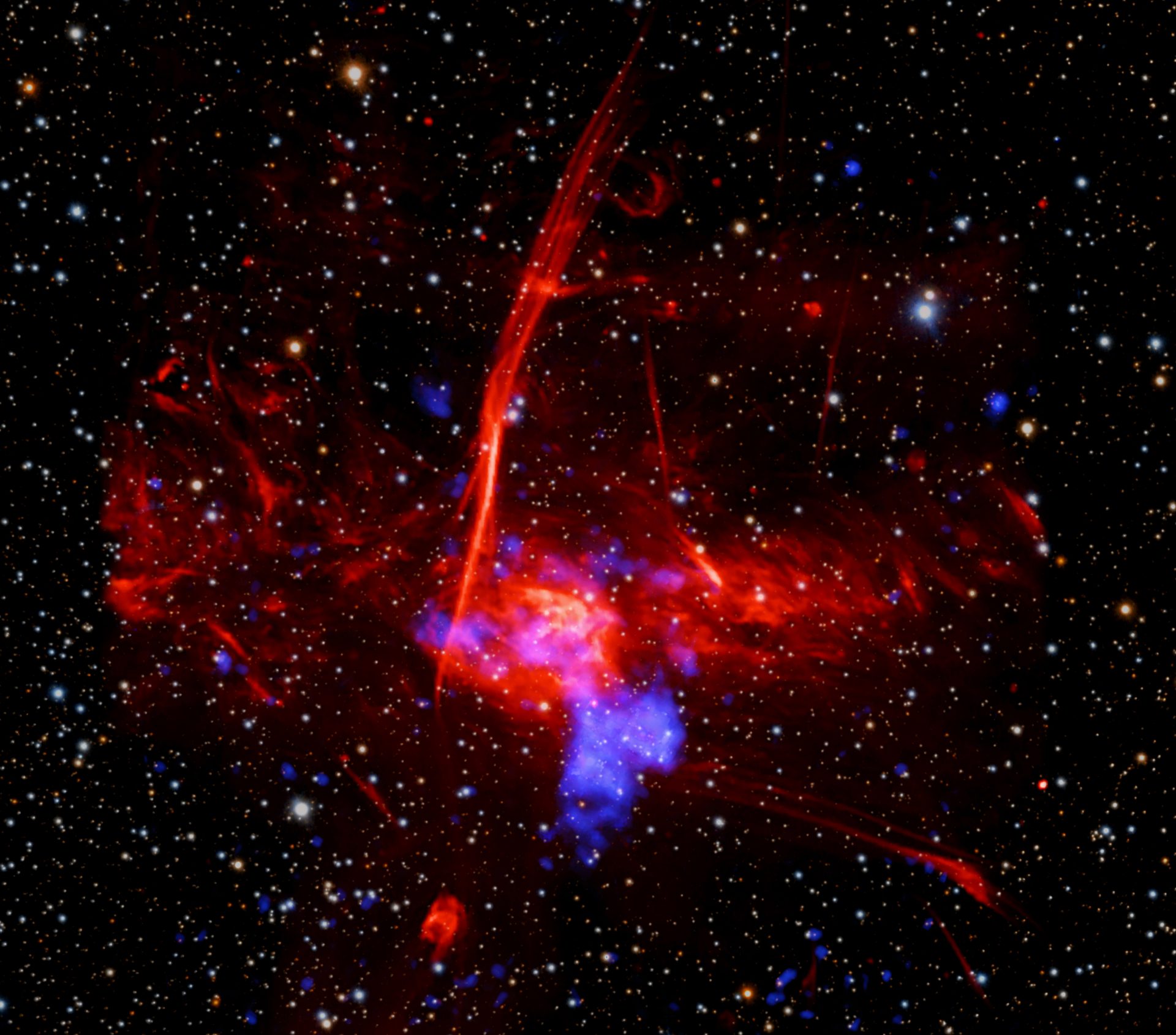
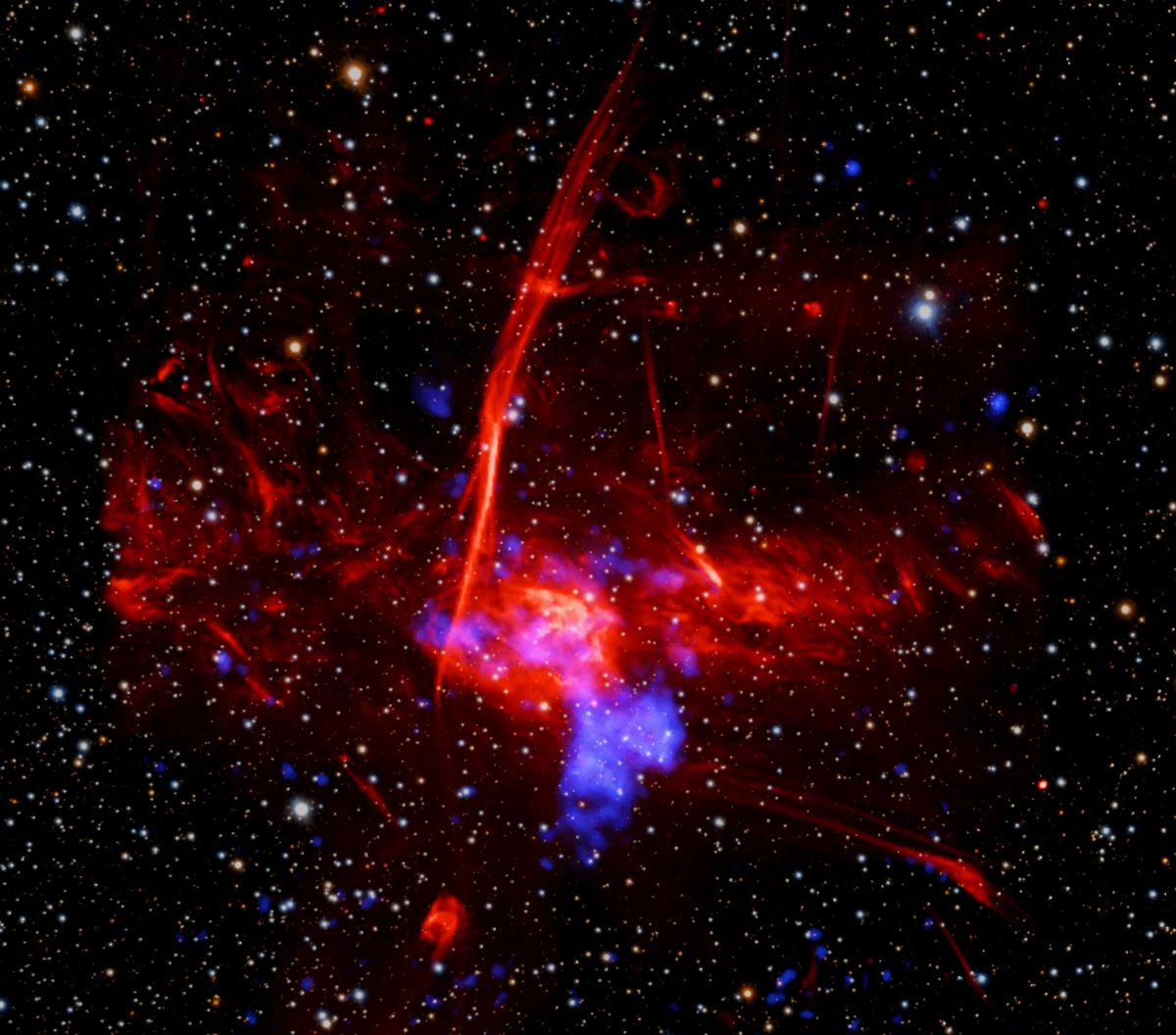
The candidate supernova remnant is located approximately 26,000 light-years from Earth, near the center of the Milky Way galaxy. It lies in the direction of the constellation Sagittarius, within the Sagittarius C star-forming region. To put that distance in perspective: light from this object has been traveling toward Earth since roughly 24,000 BC — long before the last Ice Age ended and human civilization began.
Is this supernova remnant dangerous to Earth?
No, not at all. At 26,000 light-years away, the remnant poses absolutely no danger to Earth. For a supernova to be harmful to life on Earth, it would need to be within roughly 100 light-years — and even then, the effects would be primarily increased radiation levels rather than any catastrophic destruction. The supernova that created this remnant occurred thousands of years ago, and its expanding debris is now so diffuse that it presents no hazard whatsoever.
Why is being near the black hole significant?
The supermassive black hole at the Galactic Center, Sagittarius A* (Sgr A*), has a mass of 4.3 million Suns. A supernova remnant so close to such a massive object is rare because the extreme gravitational tides and intense radiation near the black hole make it difficult for stars to form and survive there. Finding a supernova remnant in this environment tells astronomers that massive stars can form and explode very close to a supermassive black hole — which has important implications for understanding how galaxies evolve and how black holes interact with their surroundings.
What telescopes were used for this discovery?
The discovery combined data from five major observatories: NASA's Chandra X-ray Observatory (which detected the X-ray "blob"), ESA's XMM-Newton (which provided X-ray spectra showing iron emission lines), the MeerKAT radio telescope array in South Africa (which mapped the surrounding radio structure), the Pan-STARRS optical survey telescope in Hawaii (which provided optical context), and NASA's James Webb Space Telescope (which helped rule out alternative explanations with infrared imaging). This multi-wavelength approach is essential for studying objects in the complex Galactic Center region.
Can I see the supernova remnant with my telescope?
No. The supernova remnant is only visible in X-rays and radio waves, which cannot be observed with backyard telescopes. Earth's atmosphere blocks X-rays from space, so X-ray astronomy must be done from orbit. Additionally, the Galactic Center is obscured by thick dust clouds that block visible light. However, the region of the sky where the discovery was made — the constellation Sagittarius — contains many spectacular objects that are visible with amateur equipment, including the Lagoon Nebula (M8), Trifid Nebula (M20), and numerous globular clusters.
What is Sagittarius C?
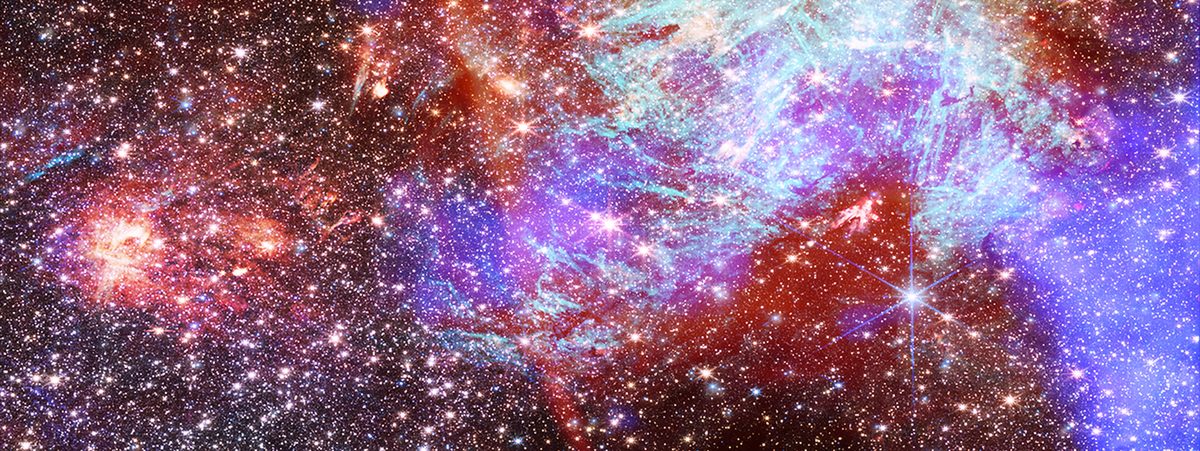
Sagittarius C is a bright H II region — a cloud of ionized hydrogen gas where new stars are actively forming — located about 26,000 light-years from Earth near the center of the Milky Way. It is one of several massive star-forming complexes in the Galactic Center region, along with the famous Sagittarius B2 molecular cloud. Sagittarius C is located approximately 0.5 light-years (projected separation) from the supermassive black hole Sgr A*, placing it in the extreme environment of the Galactic nucleus. The newly discovered supernova remnant candidate lies within or adjacent to this region.
How old is the supernova remnant?
The team estimates that the supernova remnant is at least 1,700 years old, based on its observed size and expansion speed of roughly 2 million miles per hour. The actual age could be considerably older — up to several thousand years — depending on how much the remnant has been slowed by interaction with the surrounding interstellar medium. By comparison, the Crab Nebula (the remnant of a supernova observed by Chinese astronomers in 1054 AD) is about 970 years old, while the Veil Nebula in Cygnus is estimated to be 10,000 to 20,000 years old.
How fast is the remnant expanding?
The expanding shell of the candidate supernova remnant is moving at approximately 2 million miles per hour (roughly 900 kilometers per second). This is a typical expansion speed for a supernova remnant in its early-to-mid stages of evolution. For comparison, the Crab Nebula's outer layers are expanding at about 1,500 km/s (3.4 million mph), while older remnants like the Veil Nebula have slowed to a few hundred km/s as they have swept up interstellar material over tens of thousands of years.
What elements does a supernova create?
Supernovae are the universe's element factories. A massive star's core fuses elements up to iron (atomic number 26) during its life. When the star explodes, the extreme temperatures and pressures forge even heavier elements through rapid neutron capture (the r-process), including gold, platinum, uranium, and other elements heavier than iron. The expanding remnant contains a rich mix of elements forged in the star's core and during the explosion itself: oxygen, silicon, sulfur, calcium, iron, nickel, and magnesium. These elements are then dispersed into interstellar space, where they become part of future generations of stars and planets — including the atoms that make up our own bodies.