
How Far Can a Telescope See? (2026): Real Limits by Aperture, Sky Quality, and Object Type
Telescope Advisor Logo Telescope Advisor
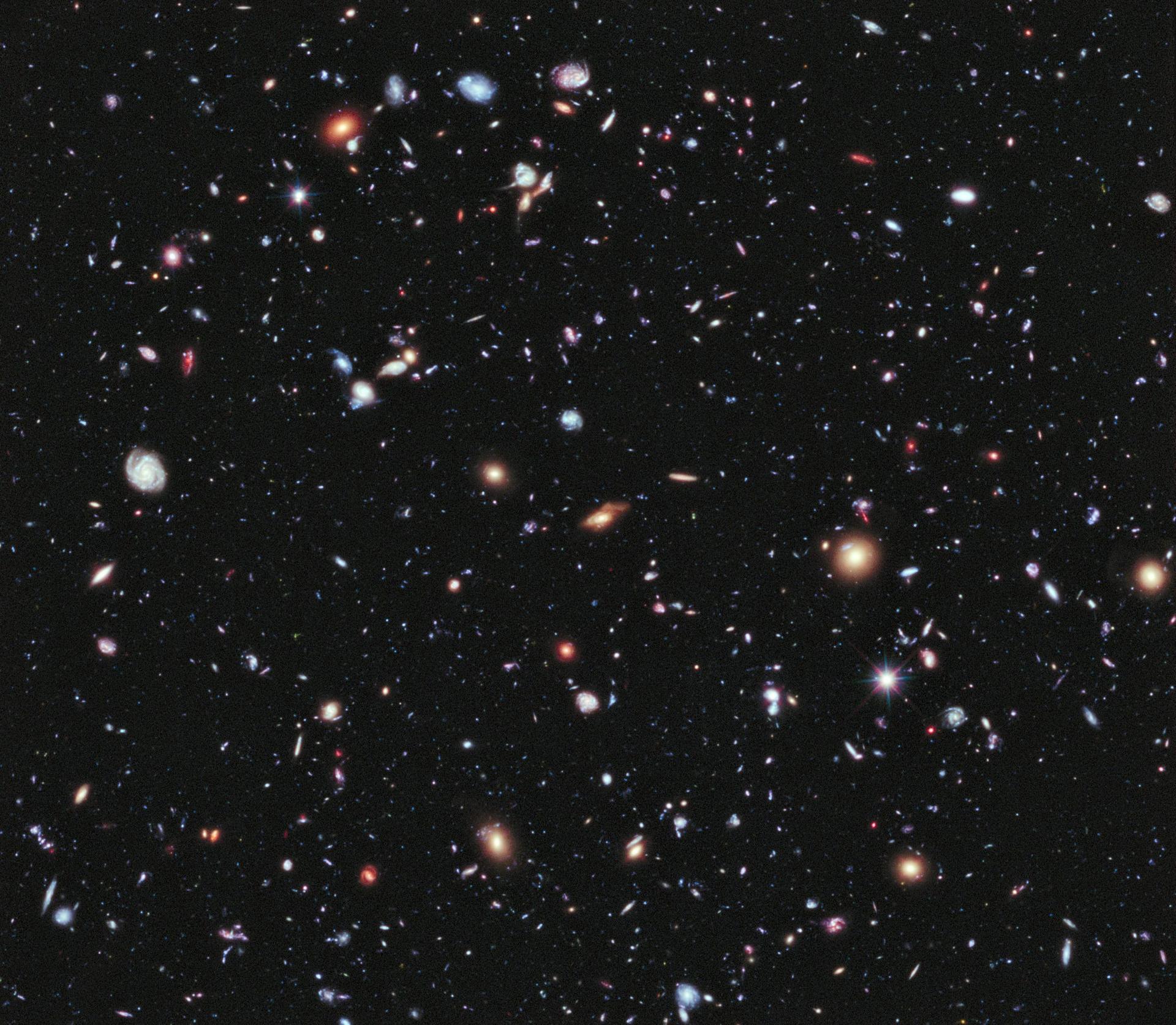
Hubble deep field image with thousands of distant galaxies

Telescope Basics · Observer Physics

How Far Can a Telescope See?

A telescope can detect light from objects millions and even billions of light-years away. But practical visual results depend less on raw distance and more on target brightness, contrast, and your aperture-to-sky combination.

2.5M ly

Andromeda (easy in small scopes)

~55M ly

M51 in good 200mm conditions

Billions

Imaging and long exposure domain

By Telescope Advisor Editorial Team Published: Updated: Editorial Standards

Quick Answer

If by far you mean physical distance, even beginner telescopes can show objects millions of light-years away. The Andromeda Galaxy sits about 2.5 million light-years from Earth and is visible in binoculars and small telescopes. If by far you mean faintness threshold, then aperture and sky darkness define your usable limit. A 70mm telescope reaches bright showcase objects; a 130mm telescope reaches deeper galaxies and globulars; a 200mm telescope expands your deep-sky menu dramatically on dark nights.

A Distance Ladder That Makes Sense for Observers

When people ask how far a telescope can see, they usually mean one of four different questions: how far for detail, how far for a clear disk, how far for a star-like detection, or how far for a photographic record. Those are very different thresholds. A practical distance ladder helps you map expectations to the real observing experience.

Tier 1: Earth targets with visible detail

At terrestrial ranges, detail depends heavily on daytime turbulence and contrast. You may resolve structure on distant buildings or ridges, but shimmering air can erase detail quickly.

Tier 2: Solar system objects with recognizable structure

The Moon, Jupiter, Saturn, and Mars can show real features. These are where a telescope feels "powerful" because distance and visual feedback are both strong.

Tier 3: Deep-sky objects as shape and texture

Nebulae, clusters, and bright galaxies are far away but visible because they are bright enough and contrast enough with the sky. Detail is subtle and benefits from dark sites.

Tier 4: Extreme distance as point detection

Stars and quasars can be unbelievably distant, but you see them as points, not structured objects. This is "seeing far" in distance terms, not in detail terms.

Limiting Magnitude in Plain Language

Magnitude is the practical bridge between telescope specs and real observing distance. Every time you move to a darker site, improve transparency, or increase aperture, your limiting magnitude changes. That change is often more important than a small magnification tweak.

You can think of limiting magnitude as your "faintness budget." Brighter sky spends the budget fast. Better optics, larger aperture, careful dark adaptation, and stable atmospheric conditions give some of that budget back.

  • Aperture increases light collection, helping faint target detection.
  • Darker sky improves contrast, which can outperform small aperture upgrades.
  • Observer skill matters: averted vision and patience reveal threshold points.
  • Transparency can change limiting magnitude notably from one night to the next.

This is why two observers with similar telescopes can report very different results. Telescope distance capability is always a system outcome, not a single-number promise.

Urban Backyard vs Dark Site: Real Difference

In urban and suburban skies, you can still enjoy planets, the Moon, double stars, and many bright clusters. But distance claims based on faint deep-sky points quickly become less practical. In a dark site, the exact same telescope suddenly appears "stronger" because the sky itself stops competing with faint targets.

Condition Backyard Result Dark Site Result
Bright planetsStrongStrong
Faint galaxiesWeak/uncertainMuch improved
Nebula structureLow contrastClearly better contrast
Threshold star detectionLimitedNoticeably deeper reach

If your priority is maximum distance by faint detection, investing in dark-site trips often beats spending the same amount on marginal accessory upgrades.

Distance Expectations by Object Class

Distance alone is not the deciding factor. Object class changes detectability because brightness, surface brightness, angular size, and contrast all vary. Use this object-class model when choosing targets.

Stars: Extremely far yet often easy to detect as points if bright enough.

Planets: Relatively close but require seeing quality for fine detail.

Open clusters: Great high-distance beginner targets due to concentrated stars.

Globular clusters: Reward aperture and darker skies for resolution at the edges.

Galaxies: Distance is high and contrast is low; dark skies become critical.

Nebulae: Bright emission nebulae are possible under moderate skies; faint nebulosity needs dark conditions.

Magnification Myths That Distort Distance Claims

A common myth says that higher magnification means you can "see farther." Magnification enlarges an image; it does not create new photons from faint objects. In fact, very high power can dim extended targets and make them harder to detect. For deep sky, matching exit pupil and sky brightness often matters more than pushing eyepiece power.

Another myth is that a telescope with bigger advertised magnification is automatically a better distance instrument. Real performance depends on aperture quality, collimation, thermal stability, transparency, and observer technique. A well-tuned medium telescope under dark transparent sky can outperform a larger poorly managed setup in bright haze.

Observer Skill Factor: The Hidden Variable

Two observers can use the same telescope, same night, and report different reach. That is normal. Visual astronomy has a skill component. Averted vision, patient scanning, knowing when to pause, and accurate field matching all add measurable depth to what you can detect.

If your goal is to improve distance reach without immediate hardware spending, train process before gear. Keep a log of detected threshold stars in a familiar region, then compare improvement over multiple sessions. This gives you a practical performance benchmark and makes future gear upgrades easier to evaluate objectively.

Practical Planning Framework for Maximum Reach

  1. Choose one object class for the night instead of jumping across many target types.
  2. Set realistic brightness limits based on sky quality forecast.
  3. Plan low-medium-high magnification checkpoints before observing.
  4. Record which magnification delivered the most confident detection.
  5. Repeat the same target list from a darker site when possible.
  6. Only then decide whether equipment upgrades are justified.

This workflow separates hype from measurable improvement. Distance capability becomes something you can test and improve, not just something you read on a specification sheet.

A Better Way to Answer "How Far?" in Real Sessions

If you want a useful answer in the field, ask a layered question instead of a single distance question. Start with: "How far can I detect a target as a point?" Then ask: "How far can I see recognizable structure?" Finally ask: "How far can I observe repeatable detail with confidence?" Each layer gives a different number, and all three are valid for different goals.

For example, a tiny distant galaxy can be detectable while still lacking visible shape. A planet can be much closer yet difficult for detail due to seeing. A bright star can be extraordinarily distant but visually simple. Once you adopt this layered model, telescope performance becomes easier to judge and easier to improve without unrealistic expectations.

Use this quick template in your observing log:

  • Detection level: detected confidently / uncertain / not seen
  • Structure level: no structure / subtle shape / clear structure
  • Detail level: none / intermittent / repeatable
  • Conditions: sky quality, transparency, seeing, target altitude

After a few nights, this method gives you practical distance intelligence tailored to your own sky and equipment. It also helps you avoid buying accessories that do not solve your real bottleneck.

12-Month Reach Improvement Roadmap

Most observers improve distance reach gradually, not instantly. A simple yearly roadmap creates measurable progress and keeps spending aligned with real gains. Instead of chasing maximum specifications, improve in sequence: sky, process, then hardware.

  1. Quarter 1: Build a stable target list and log baseline detections from your home site.
  2. Quarter 2: Add two dark-site sessions and compare limiting detections to baseline.
  3. Quarter 3: Optimize eyepiece workflow and magnification transitions by object class.
  4. Quarter 4: Decide on upgrades only after reviewing objective detection improvements.

By the end of a year, you will know exactly where distance limits come from in your setup. That is far more valuable than generic claims because it translates directly into better night-to-night target selection and better use of clear weather windows.

Distance Is Not the Real Limiter

Observers often ask distance because it is intuitive, but telescope performance is controlled by photons per unit area, not simply kilometers or light-years. A very distant but luminous galaxy can be easier than a closer but low-surface-brightness target. That is why M31 is straightforward in small instruments, while some smaller nearby galaxies remain difficult in urban skies. Your practical question should be: what limiting magnitude and surface brightness can my setup handle tonight?

Practical rule

Aperture improves light grasp, dark skies improve contrast, and good transparency preserves faint signals. Distance becomes secondary once those three are optimized.

How Far by Aperture: Realistic Ranges

Aperture Comfortable Deep-Sky Targets Representative Distances
70mmM31 core, bright clusters, Orion Nebula1,300 ly to 2.5 million ly
130mmMore globulars, brighter galaxies, better structure hintsThousands to tens of millions ly
200mmBroader galaxy catalog, improved threshold detectionFrequently 20 to 60 million ly class objects

These ranges are intentionally conservative for repeatable visual sessions. Exceptional nights and experienced observers can push farther, while bright urban skies can pull results downward even with larger apertures. That is why two observers with identical telescopes can report very different outcomes.

Best Telescope Paths If Your Goal Is Deeper Reach

Editor's Pick — Most Reach Per Dollar
Sky-Watcher Classic 200P Dobsonian

Sky-Watcher Classic 200P

For visual deep-sky reach, an 8-inch Dobsonian is one of the best value jumps you can make.

Sky-Watcher Heritage 130P

Sky-Watcher Heritage 130P

Best budget path into meaningful deep-sky observing.

Celestron AstroMaster 70AZ

Celestron AstroMaster 70AZ

Great first scope for Moon, planets, bright nebulae, and fundamental observing skills.

Frequently Asked Questions

Can a telescope see billions of light-years away?

Professional observatories and imaging systems can. Visual amateur observing usually focuses on much brighter and nearer objects.

How far can a 70mm telescope see?

It can show objects millions of light-years away if they are bright enough, like the Andromeda Galaxy.

Does magnification increase how far you can see?

Not directly. Aperture and sky quality matter more for faint distant-object detection.

What is the best upgrade for deeper reach?

Aperture jump, typically to a 130mm or 200mm instrument, plus darker observing locations.

Related Guides