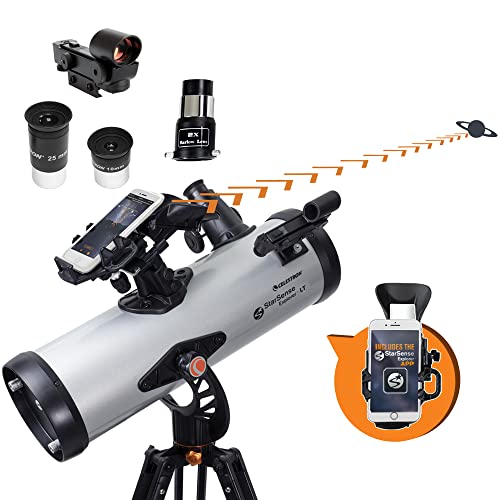
Quick Answer: How Do You Use a Gskyer Telescope Correctly?
Set up a Gskyer telescope in this order: stabilize tripod legs, mount the optical tube, install the lowest-power eyepiece first, align the finder in daylight, then focus on a distant fixed target before your night session. Most first-night failures happen when beginners skip finder alignment, begin with high magnification, or observe from behind a window. If you follow the sequence in this guide, the Moon should snap into focus in under 30 minutes. For a detailed assessment of this telescope's optical performance, mount stability, and build quality, see our Gskyer 70mm AZ Refractor review.
A Gskyer 70mm refractor is best treated as a low-to-medium magnification beginner scope. Its strongest first-night targets are the Moon, Jupiter's moons, Venus phases, and bright star clusters. It is not designed for detailed galaxy structure or high-power planetary imaging. Success with this scope comes from realistic target selection and repeatable setup habits, not chasing maximum magnification printed on the box.
Night-one target order that works
1) Distant daylight target for focus test, 2) crescent or quarter Moon, 3) Jupiter with low power, 4) bright star cluster like the Pleiades. Keep this order and you avoid nearly every beginner frustration.