
How to See Uranus With a Telescope (2026): Finder Charts, Best Magnification, and Realistic Expectations
Telescope Advisor Logo Telescope Advisor
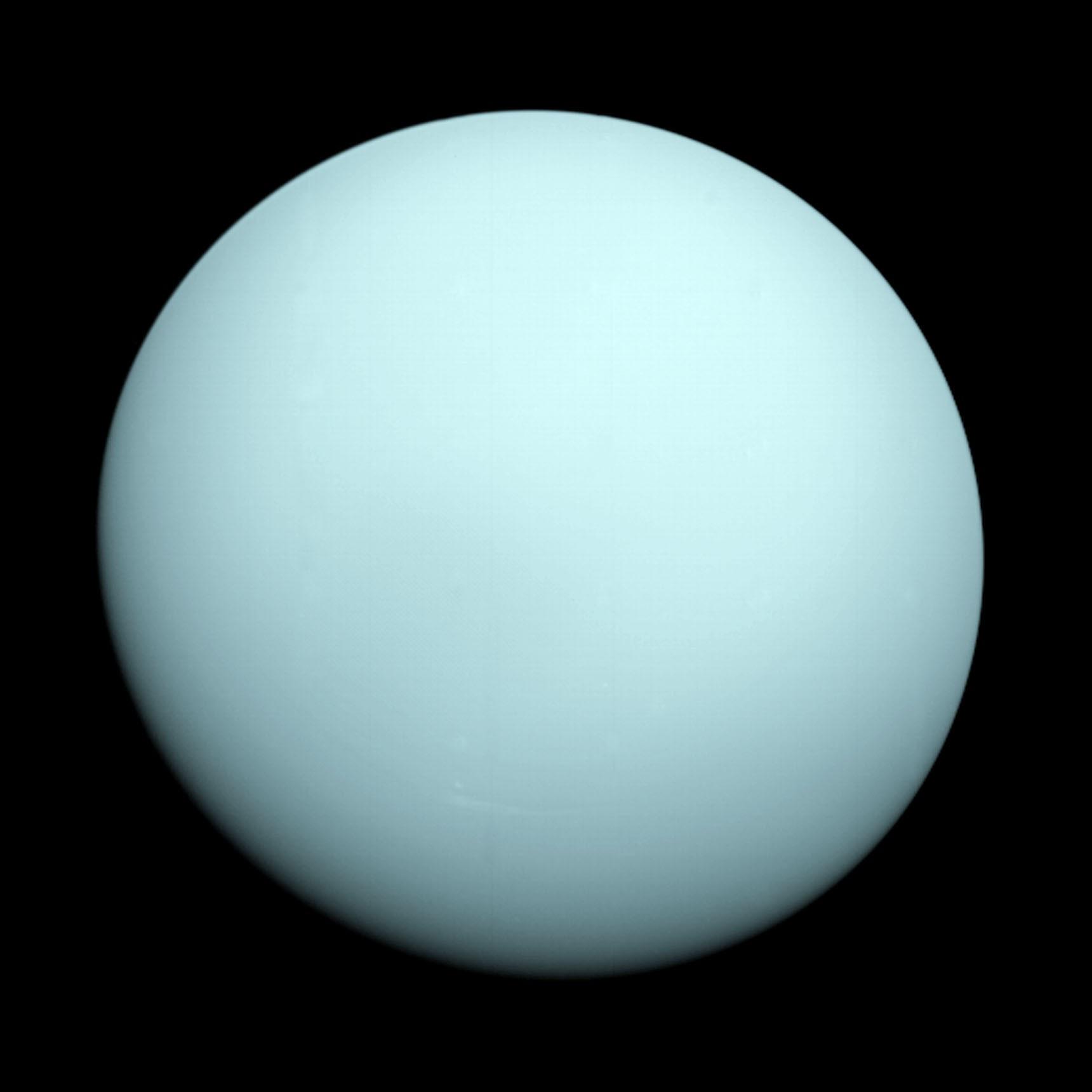
Uranus reference image showing pale blue-green disk of the ice giant

Planet Observation Guide · Uranus 2026

How to See Uranus With a Telescope (2026): Finder Charts, Best Magnification, and Real Expectations

Uranus is one of the most satisfying challenge planets for backyard observers. You will not get dramatic cloud texture, but you can absolutely confirm a true planetary disk and distinct blue-green color. This guide is a practical field manual for finding Uranus quickly and confirming it with confidence.

Late Nov

Opposition peak

~3.7"

Angular diameter

100x-220x

Best range

Blue-green

Main visual signature

By Telescope Advisor Editorial Team Published: Updated: Editorial Standards

Quick Answer: Is Uranus Worth Observing in a Backyard Telescope?

Yes, Uranus is absolutely worth observing if you treat it as a precision target. Through a modest telescope, Uranus appears as a small blue-green disk, not just a star-like point. The visual reward is subtle but real, and it is one of the best projects for building finder accuracy and high-power confirmation skills.

The most common failure mode is not optics. It is identification confidence. People often land on the wrong star, raise magnification, and still feel uncertain. This guide solves that with a structured method: field matching, magnification ladder, and multi-night motion confirmation.

If you follow the workflow here during the late-2026 opposition season, Uranus shifts from "I think I found it" to "I can verify it repeatedly." That skill transfers to Neptune, faint double stars, and deep-sky navigation overall.
Why Uranus Is a Challenge Target (and Why That Is Good)

Uranus sits in a sweet spot between easy planets and extreme challenge targets. It is bright enough to detect with planning, but subtle enough to punish sloppy finder habits. That balance makes it one of the best skill-building planets for advancing from casual observing to disciplined observing.

Unlike Jupiter and Saturn, Uranus does not shout its identity. You identify Uranus by pattern and behavior: it sits where your chart predicts, shows a tiny non-stellar disk at proper magnification, carries a distinct blue-green tone, and shifts slowly against background stars over time. This is scientific observing in miniature.

If you can repeatedly locate and confirm Uranus, you have the foundation for more advanced projects: Neptune campaigns, difficult planetary nebula checks, and methodical star-hopping in dense fields. Uranus is less about spectacle and more about observational competence.

Challenge Factor Why It Happens Practical Response
Looks star-like at low powerSmall angular sizeUse 100x+ for disk confirmation
Easy to misidentify field starCrowded background fieldsPattern match 3+ stars before confirmation
Inconsistent quality night to nightSeeing and transparency variabilityRun multi-night campaign instead of one attempt
False confidence after one sightingNo motion trackingRe-check after several days for positional shift

When to Look in 2026: Build Around Late-November Opposition

Uranus is best observed around opposition in late November 2026, when it is visible for most of the night and reaches its strongest annual observing geometry. Treat this as a season, not a single date. The high-success period runs from roughly October through February.

For each session, prioritize altitude and stability. Uranus can be present in your chart but still difficult if viewed too low in turbulent air. Waiting for higher altitude often improves disk confidence more than changing eyepieces repeatedly.

2026 Uranus Planning Snapshot

Core seasonOctober 2026 to February 2027
Opposition periodLate November 2026
Constellation regionTaurus neighborhood
Best nightly timingNear highest altitude (local midnight window)
Moonlight strategyPrefer darker nights for easier field identification
Session cadence1-2 sessions per week for confirmation tracking
🔭

Not sure which telescope actually fits your goals?

Answer 5 quick questions about your budget, observing targets, and experience level — our Telescope Finder Tool recommends a specific model in under 2 minutes.

Find My Telescope →

Finder Chart Workflow: From First Lock to Repeatable Reacquisition

This process is designed for reliability. Follow it in sequence and do not rush to high power before pattern confirmation.

  1. Load a live chart first. Use SkySafari or Stellarium at your exact date, time, and location.
  2. Screenshot local field. Capture Uranus plus surrounding stars down to at least magnitude 9.
  3. Land with low power. Use wide field to identify major anchor pattern.
  4. Pattern match three anchors. Confirm orientation and spacing before selecting Uranus candidate.
  5. Center and increase power. Move from low power to ~100x, then upward as needed.
  6. Log position and conditions. Record date, time, magnification, seeing, and confidence score.

If your first attempt fails, do not abandon the target. Most Uranus failures are procedural, not optical. Repeat the same sequence on the next clear night and confidence rises quickly.

How to Confirm It Is Uranus (Not Just a Nearby Star)

Confirmation is where Uranus observing becomes powerful. Instead of guessing, use objective checks. One single sign can mislead you. Several signs together make identification robust.

  • Shape check: at adequate power, Uranus appears less point-like than nearby stars.
  • Color check: Uranus has a subtle blue-green tone compared with typical field stars.
  • Behavior check: over days, Uranus shifts position against star background.
  • Chart check: location agrees with app coordinates for exact observing time.

This multi-check method prevents false positives. It also trains your eye to work analytically, which is one of the biggest upgrades a serious beginner can make.

What You See by Aperture: Real Uranus Expectations

Uranus rewards aperture, but not in the same way as Jupiter or Saturn. The gain is mostly in certainty and color richness, not dramatic atmospheric detail. Think of larger aperture as confidence amplification.

Aperture Level Typical Uranus View Primary Goal
70mm to 90mmBlue-green star-like pointCorrect identification and first color confirmation
100mm to 130mmSmall resolved disk at 100x+Reliable disk confirmation
150mm to 200mmStronger disk impression, richer toneConsistent high-confidence sessions
200mm+Best amateur visual Uranus viewAdvanced moon-hunting attempts

For ring questions, use our dedicated page: can you see Uranus's rings with a telescope?. This guide stays focused on practical visual acquisition and confirmation workflow.

Best Gear for Seeing Uranus (Ranked for Practical Results)

Editor's Pick — Best Beginner Uranus Workflow
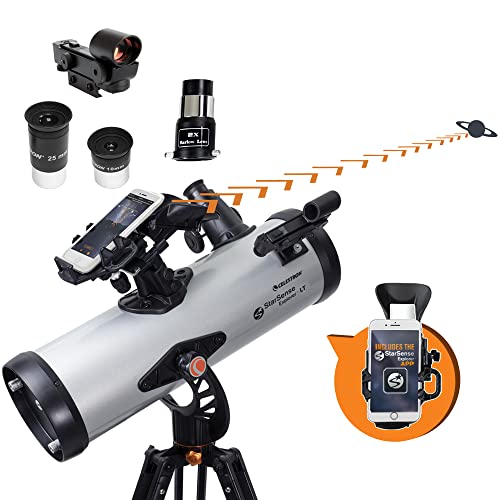
Celestron StarSense Explorer LT 114AZ telescope

1) Celestron StarSense Explorer LT 114AZ

Best entry point for Uranus because finding accuracy matters more than raw aperture for beginners. The app-guided workflow dramatically reduces failed attempts and helps users build repeatable field confidence.

A very strong practical choice for observers who are still developing star-hopping fluency.

View on Amazon →
Celestron NexStar 5SE telescope

2) Celestron NexStar 5SE

GoTo convenience plus enough aperture for reliable Uranus disk confirmation. Great upgrade when you want fast reacquisition across multiple sessions.

View on Amazon →
Sky-Watcher Heritage 130P telescope

3) Sky-Watcher Heritage 130P

Aperture value leader for manual observers. Strong for users willing to apply strict finder-chart discipline and manual tracking at medium-high power.

View on Amazon →
Celestron NexStar 8SE telescope

4) Celestron NexStar 8SE

Premium visual option for users who want strongest Uranus disk confidence and occasional advanced moon attempts in good conditions.

View on Amazon →
Celestron SkyMaster 15x70 binoculars

5) Celestron SkyMaster 15x70 (Finder Companion)

Useful companion for quickly locking broad field context before telescope confirmation. Strong addition for manual chart-driven observers.

View on Amazon →

Eight-Week Uranus Plan: From First Detection to Confident Reconfirmation

This plan is designed to prevent one-night frustration. Uranus becomes much easier when you approach it as a structured campaign.

Weeks 1-2: Field Familiarization

Practice finding correct star region at low power. Goal is orientation confidence, not perfect disk view.

Weeks 3-4: Disk Confirmation

Raise magnification and compare candidate with nearby stars. Confirm non-stellar shape repeatedly.

Weeks 5-6: Motion Verification

Compare notes across nights to confirm Uranus movement against fixed star pattern.

Weeks 7-8: Stability and Efficiency

Aim for fast reacquisition in under 10 minutes and consistent confidence in each session log.

By the end of this cycle, you will have a repeatable Uranus workflow and stronger confidence for Neptune and other subtle planetary targets.

Most Common Uranus Mistakes (and Fast Fixes)

  • Skipping star-pattern matching: always verify anchor geometry first.
  • Judging on one sign only: combine shape, color, chart, and motion checks.
  • Using extreme magnification immediately: build from low to medium to high.
  • No session logging: you lose the strongest confirmation tool over time.
  • Treating one failed night as final: seeing variability is normal; repeat attempts matter.

FAQ: Seeing Uranus Through a Telescope

Can a small telescope see Uranus?

Yes. Small scopes can detect Uranus and often show a subtle blue-green appearance, while 100mm+ makes disk confirmation easier.

What magnification works best for Uranus?

For most setups, 100x to 220x is the practical range, depending on seeing and aperture.

Can binoculars show Uranus?

Binoculars can help locate Uranus as a faint point, but telescope magnification is needed for reliable disk confirmation.

Can I see Uranus rings visually?

No. Uranus rings are not a realistic visual target for backyard telescopes. See our dedicated Uranus rings guide.

Is Uranus worth chasing for beginners?

Yes, especially for observers who want to build finder and confirmation skills beyond easy showpiece planets.

Related Guides