
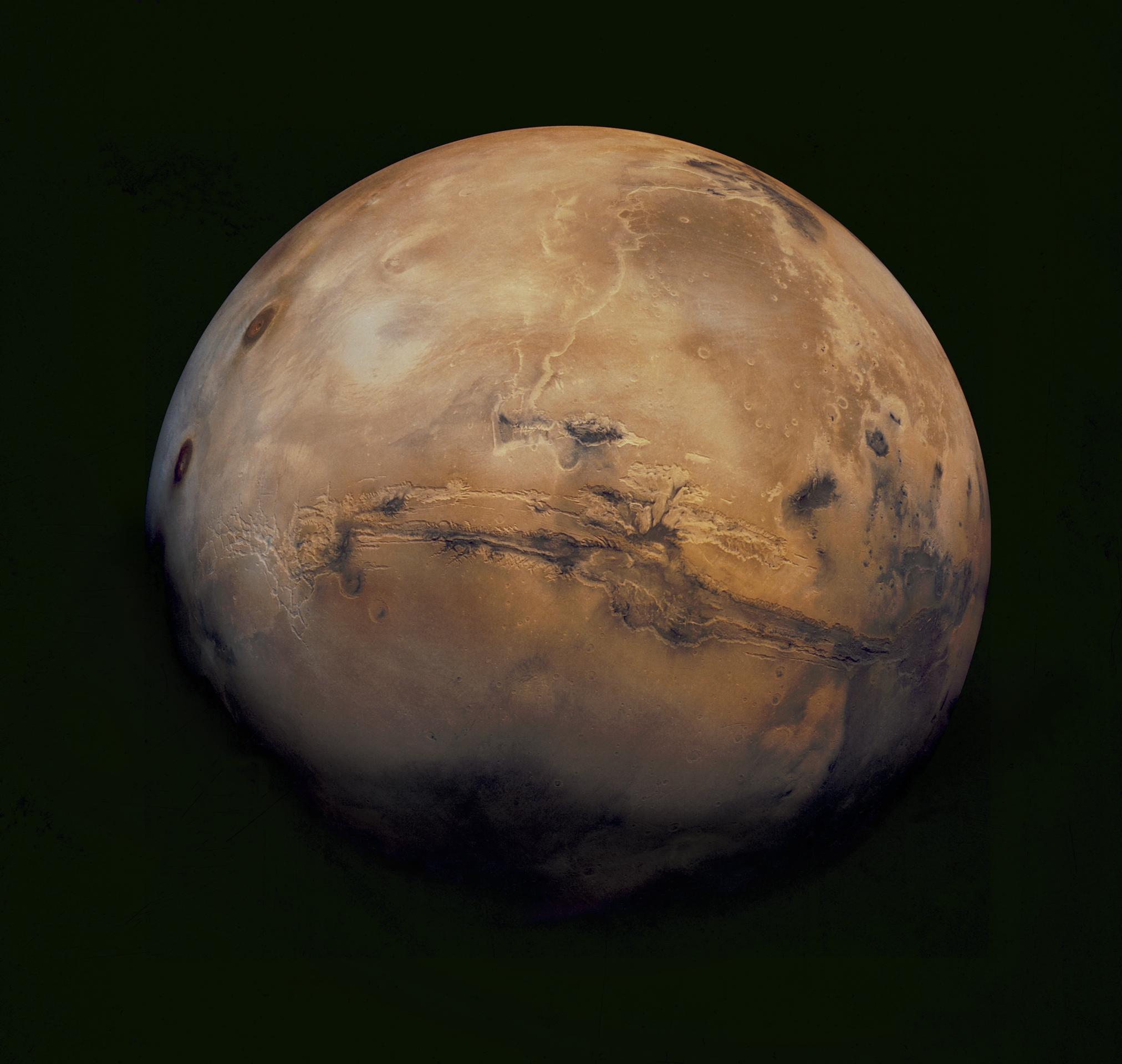
Mars Opposition 2027 — Why This Matters
Mars is the most frustrating planet in the solar system for telescope observers during non-opposition years. Its small apparent size — sometimes as little as 3.5 arcseconds when farthest from Earth — shows almost no detail in any amateur telescope. But at opposition, Mars swells to 15+ arcseconds and transforms into a world where polar ice caps, dark maria (ancient volcanic plains), dust storm evidence, and albedo features become visible.
Mars oppositions occur approximately every 26 months — roughly 2 years and 2 months between each one — because Mars orbits the Sun more slowly than Earth. The 2025 opposition (January 2025) was moderately favourable; the 2027 opposition is the next opportunity, and current orbital calculations place it as a somewhat better apparition than 2025 for Northern Hemisphere observers due to Mars's declination during February/March 2027.
Mars 2027 key data (approximate)
- Opposition date: February 2027 (exact date TBC by JPL)
- Disk diameter at opposition: ~15–16 arcseconds
- Magnitude: ~−1.2 (distinctly orange, bright)
- Closest approach distance: ~0.64–0.68 AU
- Constellation at opposition: Cancer/Gemini region
- Best viewing window: December 2026 – April 2027
Mars opposition types
Mars oppositions vary enormously in quality because Mars's orbit is notably elliptical. Perihelic oppositions (when Mars is also near its closest point to the Sun) occur when Mars is in Scorpius/Sagittarius — these produce disk sizes of 24–25 arcseconds but at low altitude for Northern observers. Aphelic oppositions occur when Mars is farthest from the Sun — smaller disk (13–16") but higher altitude. The 2027 opposition is closer to aphelic, meaning a moderate disk size but reasonable altitude for Northern Hemisphere observers.


