
Jupiter Opposition 2027: Best Telescope Guide for January 10
Telescope Advisor Logo Telescope Advisor
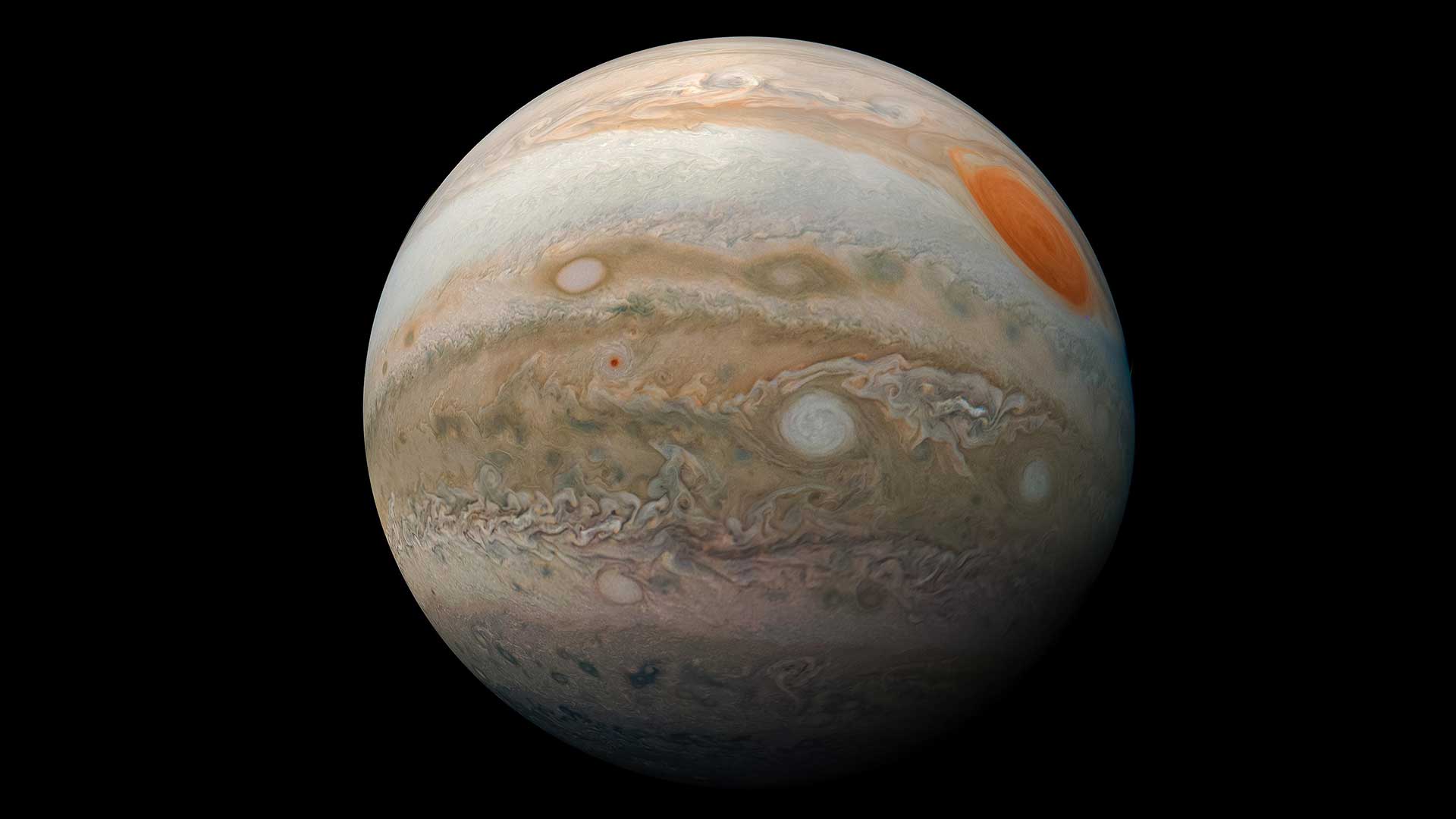
Jupiter and the Great Red Spot — at opposition January 10, 2027, Jupiter reaches its closest approach to Earth, showing maximum disk size and brightness for the year

Sky Event Guide · Jupiter Opposition 2027

Jupiter Opposition 2027: Complete Telescope Viewing Guide

On January 10, 2027, Jupiter reaches opposition — the point where Earth passes directly between Jupiter and the Sun. Jupiter rises at sunset, transits high at midnight, and sets at dawn: visible all night at its largest and brightest. This is the definitive Jupiter viewing event of the year, and right now is the time to prepare your telescope and eyepiece kit.

DateJanuary 10, 2027
Magnitude−2.9 (brighter than any star)
Disk diameter~47 arcseconds — largest of 2027
ConstellationGemini
By Telescope Advisor Editorial Team Published: Updated: Editorial Standards

Jupiter Opposition 2027 — Key Data

Opposition dateJanuary 10, 2027
Magnitude at opposition−2.9 (outshines everything but Moon and Venus)
Angular disk diameter~47 arcseconds
Distance from Earth~4.16 AU (~623 million km)
ConstellationGemini
Transit time (mid-latitudes)Approximately midnight local time on Jan 10
Altitude at transit (40°N)~70° — near-overhead, excellent transparency
Galilean moons visibleAll four (Io, Europa, Ganymede, Callisto)

Why now is the time to prepare

Jupiter opposition is January 10, 2027 — but the best viewing window extends 6–8 weeks either side. From October 2026 through March 2027, Jupiter is an excellent evening and night-sky target. The planet is already the dominant evening planet from late 2026 onward, rising progressively earlier each month. Observers who prepare their telescope and eyepiece kit now will be ready for months of exceptional Jupiter viewing, not just a single night.

Jupiter is currently visible in the November/December 2026 night sky in Gemini — high in the south by 10–11 PM. Every night you observe it from now builds the experience for the January 10 peak. See our December 2026 sky guide for current Jupiter positioning.


🔭

Not sure which telescope actually fits your goals?

Answer 5 quick questions about your budget, observing targets, and experience level — our Telescope Finder Tool recommends a specific model in under 2 minutes.

Find My Telescope →

What You'll See Through a Telescope at Jupiter Opposition 2027

Jupiter is the most rewarding planet for telescope observers precisely because it delivers so much detail. At opposition, the planet is at its largest angular size — approximately 47 arcseconds across. For context, the full Moon is about 1,800 arcseconds in diameter, meaning Jupiter appears roughly 1/38th the Moon's angular width. That sounds small, but through a telescope at 150× it fills a comfortable portion of the field with rich, changing detail.

Jupiter showing the Great Red Spot and multiple equatorial cloud belts — visible through any telescope of 80mm or larger at opposition

Jupiter at opposition — the Great Red Spot and equatorial cloud belt system

At Jupiter opposition, the planet's disk spans ~47 arcseconds — its largest size of 2027. The GRS (visible in the southern equatorial belt) rotates across the face in ~10 hours. Credit: NASA/JPL-Caltech.

Cloud belts and zones

Jupiter's atmosphere is divided into alternating dark belts (where atmospheric material descends) and light zones (where it rises). The two dominant equatorial belts — the North Equatorial Belt (NEB) and South Equatorial Belt (SEB) — are visible in any 60mm telescope at 50×. With 100mm+ aperture, more temperate belts become distinct. Individual cloud belt detail — festoons, ovals, rifts — becomes visible in 150mm+ instruments at 150–200×.

The Great Red Spot

The Great Red Spot (GRS) is a persistent anticyclonic storm system larger than Earth, visible as an oval feature in the South Equatorial Belt. It is detectable in 100mm telescopes at 100× when it transits the central meridian. Jupiter's rapid 10-hour rotation means the GRS crosses the visible face twice per day — timing your observation using a GRS transit prediction tool (such as Sky & Telescope's online calculator) dramatically increases your chances of catching it in the right position. The GRS has been gradually shrinking over decades; its current angular size is approximately 10,000 km × 14,000 km — still distinctly larger than Earth.

The Galilean Moons

Io, Europa, Ganymede, and Callisto — the four Galilean moons discovered by Galileo in 1610 — are visible as star-like points in any binocular or small telescope. Their orbital periods range from Io's 1.77 days to Callisto's 16.7 days, producing continuously changing configurations that are different every night. At opposition, all four are typically visible as they orbit Jupiter. The moons also produce shadow transits (a moon's shadow crossing Jupiter's disk), occultations (a moon disappearing behind Jupiter), and transits (a moon crossing Jupiter's face) — all visible in small to medium telescopes. See our complete Jupiter observing guide.

Aperture Guide: What Each Telescope Shows on Jupiter 2027

Aperture Magnification Features Visible
Binoculars 10×5010×Jupiter disk as non-circular shape; all 4 Galilean moons
60–70mm50–70×NEB and SEB cloud belts clearly visible; 4 moons as dots
100–130mm100–150×3–4 cloud belts; GRS detectable; polar zones visible; moon sizes differentiate
150mm (6")150–200×5+ cloud belts; GRS clearly oval; festoons in NEB; belt colour variations
200–250mm (8–10")200–300×Full belt system; ovals and storms; shadow transits dramatic; Io orange tint

At Jupiter opposition, atmospheric seeing (turbulence) is often the primary limiting factor — a 100mm telescope on a steady night can show more detail than a 300mm telescope on a turbulent one. The planet transits near 70° altitude from mid-northern latitudes on January 10, minimising atmospheric path length and giving the best seeing conditions available for a winter night.

Best Eyepiece Setup for Jupiter Opposition 2027

Jupiter rewards a stepped magnification approach — start lower, confirm seeing stability, then push higher. The planet's 10-hour rotation means cloud features and moon positions change noticeably during a 2-hour session; plan to observe across multiple magnification steps and revisit higher power as atmospheric seeing permits.

Step 1 — Acquisition (30–50×)

Use a 25–32mm eyepiece to centre Jupiter and confirm the Galilean moons are visible as star-like points. Identify the current moon configuration — which side of Jupiter each moon is on — and note any shadow transits in progress. This is also the time to check atmospheric seeing quality: if the planet's limb shimmers significantly, high magnification will be counterproductive.

Step 2 — Primary viewing (100–150×)

Switch to a 9–13mm eyepiece depending on your telescope focal length. This range resolves the equatorial belts clearly, shows the GRS when visible, and keeps the image bright. For most 100–150mm telescopes this is the "sweet spot" for Jupiter — enough detail to be rewarding without pushing against the limits of typical atmospheric seeing.

Step 3 — Detail push (200–250×)

If seeing is stable (test by watching whether the limb holds steady at 150×), push to 7–9mm or use a 2× Barlow on your 15mm eyepiece. At this magnification, belt structure and the GRS show their most detail. Only push this far when Jupiter's limb appears stable and steady — on mediocre nights this step will only show a blurry smear.

January cold and optics: January nights are cold — bring your telescope outside 45–60 minutes before observing to allow the mirrors or lenses to reach ambient temperature. Thermal currents above a warm mirror degrade planetary detail far more than modest seeing. Using a fan on the primary mirror (for reflectors/SCTs) accelerates cool-down by 50%. This single habit makes more difference to Jupiter image quality than any eyepiece upgrade.

Our complete eyepiece recommendation: best telescope eyepiece sets 2026 · magnification guide

Galilean Moons: Shadow Transits and Nightly Events

The four Galilean moons produce a continuous programme of events visible in amateur telescopes around Jupiter opposition. Understanding these events turns a single night of Jupiter observing into a months-long observing programme:

Types of moon events

  • Shadow transit: A moon's shadow falls on Jupiter's cloud tops — appears as a small, jet-black dot crossing the disk. Visible in 80mm+ telescopes. The most dramatic event type.
  • Transit: The moon itself crosses Jupiter's face — typically appears as a bright white point against the cloud belts. Harder to see than the shadow.
  • Occultation: Jupiter hides a moon behind its disk. The moon disappears at one limb and reappears at the other — visible even in binoculars as the point of light vanishes.
  • Eclipse: Jupiter's shadow falls on a moon — the moon disappears not at the planet's limb but several moon-diameters away from it, as if winking out in empty space.

The four moons at a glance

  • Io: Orbital period 1.77 days. Most active — events occur frequently. Observable as orange-tinted in large apertures.
  • Europa: 3.55 days. Smallest visible moon. Often close to Jupiter and may be hidden near the limb.
  • Ganymede: 7.15 days. Largest moon in the solar system — larger than Mercury. Visible as the largest of the four in big apertures.
  • Callisto: 16.7 days. Farthest out — often strays several Jupiter-diameters from the planet. Most commonly seen as an isolated point.

For predicted transit and shadow transit times specific to your location and date, use the Sky & Telescope Jovian Moon Prediction Tool — the definitive resource for timing Galilean moon events.

Observing Window and Timing by City

Jupiter opposition is January 10, 2027, but the entire window from December 2026 through February 2027 delivers excellent Jupiter viewing. Jupiter is highest in the sky — closest to the zenith, with the least atmospheric distortion — when it transits (crosses the meridian), which occurs at approximately midnight local time on opposition night.

Location Jupiter rises (Jan 10) Transits (highest) Max altitude Jupiter sets
New York (40°N)~5:30 PM EST~11:30 PM EST~68°~5:30 AM EST
Chicago (42°N)~5:20 PM CST~11:20 PM CST~66°~5:20 AM CST
Denver (40°N)~5:25 PM MST~11:25 PM MST~68°~5:25 AM MST
Los Angeles (34°N)~5:10 PM PST~11:10 PM PST~74°~5:10 AM PST
London (51°N)~4:45 PM GMT~11:00 PM GMT~56°~5:15 AM GMT
Best observing window: The 2-hour period centred on Jupiter's transit time (listed above as "Transits") gives the highest altitude and least atmospheric path length. For planetary detail, observe within 1 hour of transit whenever possible. Jupiter is well-placed all night from December 2026 through February 2027 — you don't need to stay up until midnight on exactly January 10.

How Jupiter 2027 Compares to Recent Opposition Years

Jupiter's distance from Earth at opposition varies because both Jupiter's orbit and Earth's orbit are slightly elliptical. Jupiter oppositions range from about 3.95 AU (closest approach — perihelic opposition) to 5.46 AU (aphelion opposition). The 2027 opposition at approximately 4.16 AU is a relatively favourable one — disk diameter (~47 arcseconds) is near the larger end of the typical range.

Year Date Distance (AU) Disk Size Magnitude
2025December 73.98 AU49"−2.9
2027January 10~4.16 AU~47"−2.9
2028February 2028~4.35 AU~45"−2.7

The 2025 opposition (December 7) was notably favourable at only 3.98 AU — the closest Jupiter comes to Earth in this era. The 2027 opposition is slightly more distant but still excellent, and crucially occurs in January when Jupiter reaches a higher altitude for Northern Hemisphere observers than the December opposition does. Higher altitude means less atmospheric distortion despite the slightly larger distance.

Recommended Gear for Jupiter Opposition 2027

These are the instruments that deliver the most rewarding Jupiter 2027 experience at each investment level:

Editor's Pick — Best All-Round Jupiter 2027 Telescope
Celestron NexStar 6SE GoTo telescope — ideal for Jupiter opposition 2027 viewing

Celestron NexStar 6SE

The NexStar 6SE is the telescope for Jupiter opposition. At 150mm aperture and 1,500mm focal length, it shows 5+ cloud belts, the GRS as a clearly oval feature, shadow transits as crisp black dots, and resolves the colour differences between Galilean moons. The GoTo mount tracks Jupiter automatically through the entire January night, letting you concentrate on the view rather than constantly nudging the telescope. Cold January nights also mean the 150mm SCT's compact, sealed design stays in collimation throughout — no temperature-related drift. Full review: NexStar 6SE review.

Sky-Watcher Heritage 130P tabletop Dobsonian for Jupiter viewing

Sky-Watcher Heritage 130P — Best budget Jupiter telescope

For observers who want exceptional Jupiter views without the GoTo investment, the Heritage 130P's 130mm parabolic mirror delivers striking results. At 130× the equatorial belts are vivid, the GRS is detectable, and all four Galilean moons show their differing brightnesses. The tabletop Dobsonian mount is easy to set up in cold January conditions. The trade-off vs GoTo: you need to manually track Jupiter across the field. On a steady January night this is manageable. Full review: Heritage 130P review.

Celestron SkyMaster 15x70 binoculars for Jupiter Galilean moons

Celestron SkyMaster 15×70 — See the Galilean moons without a telescope

Binoculars are an underrated Jupiter tool — the SkyMaster 15×70 shows all four Galilean moons as distinct points flanking Jupiter, with configurations changing nightly. It's also ideal for tracking the opposition approach: Jupiter in November/December through binoculars helps you appreciate just how dramatically it's brightening. At 15× the planet itself appears as a tiny disk with just a hint of the equatorial bulge. Guide: best astronomy binoculars.

Affiliate links. Editorial standards.

Jupiter Opposition 2027 FAQ

When is Jupiter at opposition in 2027?

Jupiter reaches opposition on January 10, 2027. On this date, Jupiter rises at sunset, transits (reaches its highest point) at approximately midnight local time, and sets at dawn. It is visible all night long and at its closest, largest, and brightest for the year. The best observing window extends from approximately December 2026 through February 2027.

What telescope do I need to see Jupiter's cloud belts?

The two main equatorial cloud belts (NEB and SEB) are visible in a 60mm refractor at 50× under steady seeing. A 100mm (4-inch) telescope at 100× shows 3–4 belts with good contrast. At 150mm (6-inch) and 150×, you see 5+ belts, belt colour variations, the GRS as an oval, and festoons hanging from the NEB. See our aperture guide in this article for what each aperture tier delivers specifically at opposition magnification.

Can I see the Great Red Spot through my telescope?

Yes, with 100mm+ aperture and 100× magnification, the GRS is detectable as a slightly darker, oval-shaped feature in the South Equatorial Belt. The key is timing — Jupiter rotates in ~10 hours, so the GRS crosses the visible face twice per day and is only well-placed for observation for about 2 hours each time. Use the Sky & Telescope Great Red Spot transit tool to know when it will be facing Earth before your session. At 150mm and 150×, the GRS is clearly distinguishable as an oval when well-placed.

Is January a good month to observe Jupiter?

Yes — January 2027 is excellent for Jupiter observing, despite the cold temperatures. At opposition, Jupiter reaches approximately 68° altitude for observers at 40° North latitude — near the zenith, providing the least atmospheric turbulence and clearest views possible. Cold winter nights in January often produce exceptionally steady seeing once the air has settled after sunset. The main practical consideration is cold preparation — bringing the telescope outside early to cool down, and dressing for extended outdoor observing in winter temperatures.

How does Jupiter opposition 2027 compare to 2025?

The December 2025 opposition was slightly more favourable in terms of raw distance (3.98 AU vs 4.16 AU), giving a marginally larger disk (49" vs 47"). However, the January 2027 opposition has an altitude advantage for Northern Hemisphere observers — Jupiter transits at ~68° altitude vs. lower altitude in December, reducing atmospheric distortion. In practice, both oppositions offer excellent Jupiter viewing and the difference is subtle for most observers.


Related Guides