Best Telescope Color Filters for Planets 2026: Which Work and Why
Telescope Advisor Logo Telescope Advisor
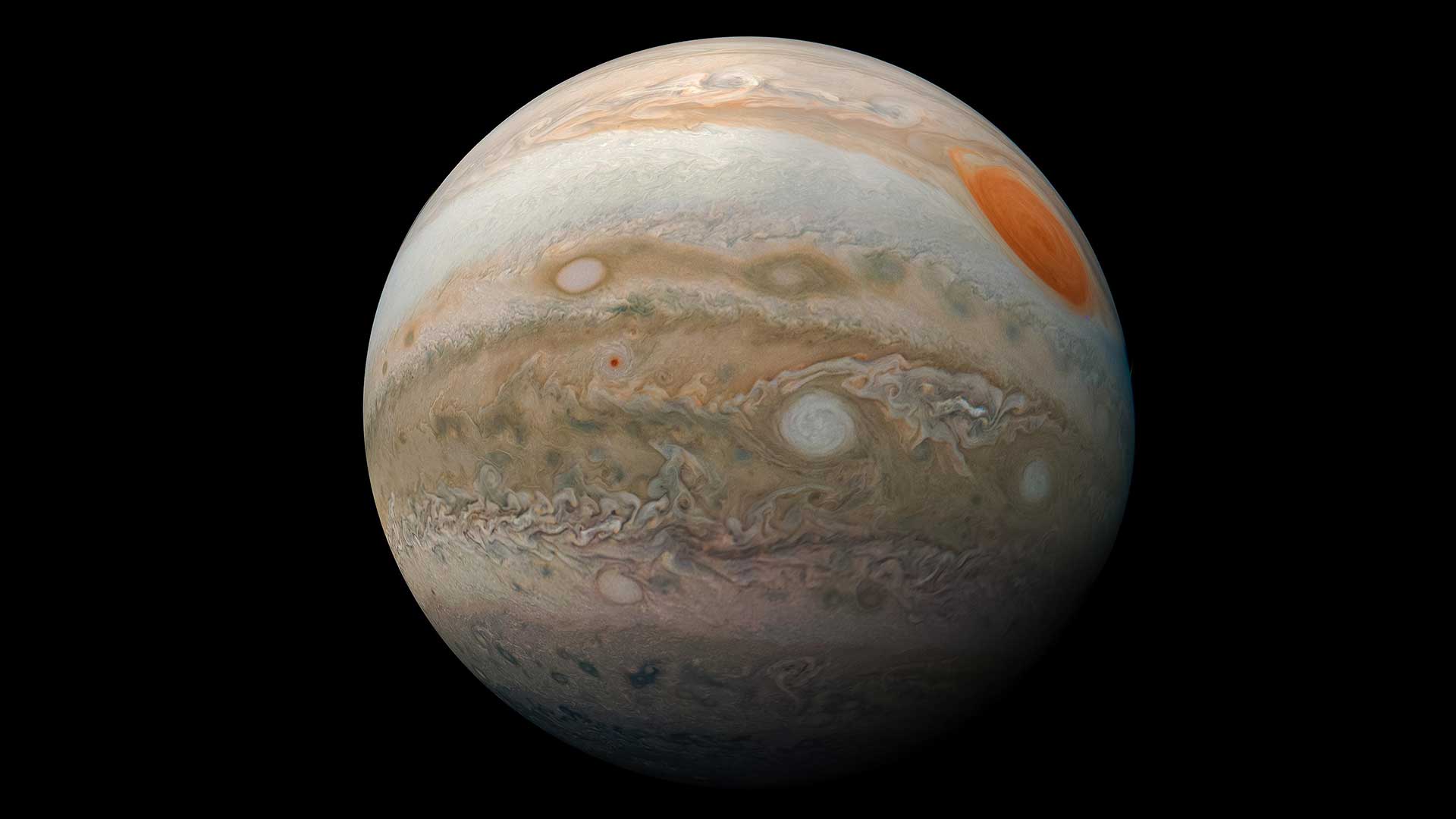
Jupiter and the Great Red Spot — colour filters increase contrast of cloud belt features and the GRS that otherwise blend into the surrounding atmosphere

Accessories Guide · Planetary Filters

Best Telescope Color Filters for Planets 2026

Colour filters for planetary observing are the most underrated telescope accessory. A four-piece colour filter set can reveal Jupiter cloud belt detail and Saturn ring structure that no eyepiece upgrade or larger aperture will add — they selectively suppress certain wavelengths to make atmospheric features stand out against each other. Here is exactly which colour does what, and which to buy first.

Primary usePlanet contrast enhancement
Format1.25" screw-thread (standard)
Min. aperture80mm+ for noticeable benefit
Best first buy4-piece colour set
By Telescope Advisor Editorial Team Published: Updated: Editorial Standards

Quick Answer: What to Buy First

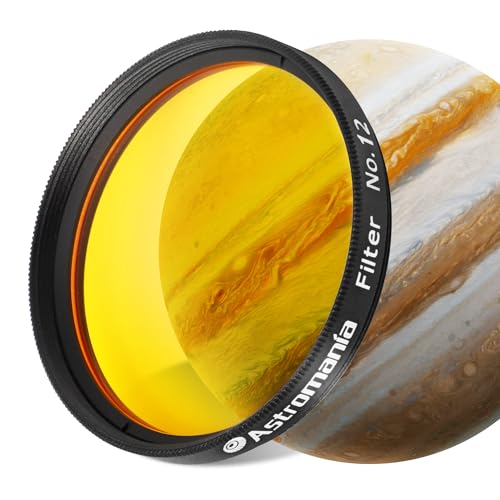
Start with the Astromania 4-piece colour filter set (Red, Yellow, Green, Blue in 1.25" format). At this price tier, four filters in one purchase give you the flexibility to discover which colours work best through your specific telescope on your most-observed planets. Once you know which filters you use most, you can upgrade individual colours to the premium 2" versions. For dedicated Saturn and Jupiter observers who already know their priorities, a #8 light yellow (belt contrast) and #82A light blue (ring/belt definition) cover the most versatile two-filter combination.

View 4-Piece Set on Amazon →


🔭

Not sure which telescope actually fits your goals?

Answer 5 quick questions about your budget, observing targets, and experience level — our Telescope Finder Tool recommends a specific model in under 2 minutes.

Find My Telescope →

How Colour Filters Work on Planets

A colour filter placed in the light path of a telescope transmits certain wavelengths while blocking others. A yellow filter transmits red and yellow light while absorbing blue and violet — which increases the apparent contrast of features that differ in colour between yellow/orange and blue/grey tones.

Planetary atmospheres contain features of different chemical composition and altitude that reflect and absorb sunlight differently across wavelengths. Jupiter's equatorial cloud belts are composed of different chemicals than its polar regions. Saturn's ring system reflects light differently at different wavelengths. Mars's polar ice caps absorb red light differently than its dusty surface. By selectively transmitting only the wavelengths where these features differ most, a colour filter makes the difference visible to the human eye at the eyepiece.

The critical requirement: 80mm aperture minimum

Colour filters reduce the total amount of light reaching your eye — a blue filter might transmit only 10–20% of total light. Smaller telescopes (50–70mm) produce dim planetary images to begin with, and adding a filter makes them too dim for useful observation. Colour filters deliver their best results in 100mm+ instruments on bright planets. In a 130mm–200mm telescope on Jupiter, the improvement is noticeable and often dramatic. For more on aperture and what it unlocks, see our 6-inch telescope guide.

Colour Filter Reference Table by Planet

Colour filters use a standardised Wratten numbering system. The numbers below refer to that system — the same filter number across different brands produces the same colour (though optical quality varies). Filters in the Astromania sets correspond to these numbers.

Filter Colour Jupiter Saturn Mars Venus Trans.
#8 Yellow Light Yellow ★★★★ Belt/zone contrast, GRS ★★★★ Cloud belt definition ★★★ Dust storm enhancement ★★ Mild help ~85%
#12 Yellow Deep Yellow ★★★ Belt contrast, lunar detail ★★★ Belt contrast ★★★★ Maria, dust contrast ★★ Phase ~74%
#21 Orange Orange ★★★★ NEB detail, festoons ★★★ Belt definition ★★★★★ Best for Mars dust/maria ★★ Phase ~46%
#25 Red Red ★★★ Blue festoons, polar haze ★★★ Polar cap contrast ★★★★ Albedo features, surface contrast ★ Phase only ~14%
#47 Dark Blue Violet-Blue ★★★★ NEB/NTB structure ★★★★ Polar hexagon hint, ring/disk ★★★ Polar caps, haze ★★★★★ Best for Venus atmosphere ~3%
#58 Green Green ★★★ Red spot, STZ contrast ★★★ Ring/belt contrast ★★★ Polar cloud features ★★ Cloud detail ~24%
#80A Blue Medium Blue ★★★★ Belt boundaries, polar detail ★★★ Polar regions ★★★★ Blue clouds, polar caps ★★★ Atmospheric clouds ~30%
#82A Light Blue Pale Blue ★★★★ NEB/SEB contrast ★★★★★ Best all-round Saturn ★★★ Feature contrast ★★★ Phase detail ~73%

Trans. = approximate visible light transmission. NEB = North Equatorial Belt, SEB = South Equatorial Belt, NTB = North Temperate Belt, GRS = Great Red Spot, STZ = South Tropical Zone.

Best Filters for Jupiter

Jupiter showing the Great Red Spot and equatorial cloud belts — colour filters enhance the contrast of these features significantly
Jupiter's cloud belts and Great Red Spot — colour filters increase the contrast difference between features that appear similar in white light. Credit: NASA.

Jupiter is the best planet for demonstrating colour filter effects because it has the most atmospheric detail — and that detail exists at subtly different wavelengths. The cloud belts (North and South Equatorial Belts, temperate belts) are visible in white light but their boundaries sharpen and their internal structure becomes more complex under colour filters.

#8 Yellow — Start Here for Jupiter

The #8 light yellow filter is the best first purchase for Jupiter observers. It increases the contrast between the warm-coloured equatorial belts and the white/cream zones between them. The Great Red Spot appears slightly more distinct. At ~85% transmission it's bright enough for comfortable observing in 80mm+ telescopes.

#82A Light Blue — Second Filter for Jupiter

The #82A pale blue filter transmits about 73% of light and increases the contrast between the dark blue/grey North and South Equatorial Belt edges and the lighter zones. In 130mm+ instruments this makes individual festoons (dark wisps hanging from the NEB) more distinct — the kind of detail most observers see intermittently in white light but consistently with the #82A.

#21 Orange — For Belt Internal Detail

The #21 orange filter suppresses the blue tones of Jupiter's belts and emphasises the reddish-brown colours. This increases the visibility of festoons and internal belt structure in 150mm+ instruments. Only ~46% transmission — use in larger apertures (130mm+) for comfortable observing.

#47 Dark Blue — For Advanced Observers

Very low transmission (~3%) — needs 200mm+ to use comfortably on Jupiter. Reveals the North and South Temperate Belt structure and polar region detail that other filters cannot enhance. Not a beginner filter, but a valuable addition for large Dobsonian owners who want to push planetary detail systematically.

Best Filters for Saturn

Saturn's ring system and subdued cloud belts respond well to colour filters — the rings are composed of ice particles that reflect light differently at different wavelengths, and the contrast between the rings and the planet's disk sharpens noticeably under specific colours. With Saturn at opposition on October 4, 2026, this is the time to add filters to your observing kit.

#82A Light Blue — Best Single Saturn Filter

The #82A is the most versatile Saturn filter — at ~73% transmission it's bright enough for comfortable 80mm+ use and enhances the contrast between Saturn's disk and the ring system, making the Cassini Division more distinct and the planet/ring shadow contrast more dramatic. For the October 4 opposition, this is the single filter to add to your kit. See our Saturn eyepiece guide.

#8 Yellow — Cloud Belt Enhancement

The #8 yellow filter increases the visibility of Saturn's equatorial belts — the planet has subtler atmospheric banding than Jupiter, and the #8 brings out the contrast between the brownish belt and the lighter atmospheric zones on either side. Used effectively in 130mm+ instruments. At 85% transmission, image remains bright enough for comfortable observing.

#47 Dark Blue — Polar Hexagon and Ring Definition

Saturn's famous north polar hexagonal storm (a hexagonal cloud pattern at 78°N) is subtle at visible wavelengths but slightly more discernible under blue filtration. At very low transmission (~3%), the #47 requires 200mm+ aperture on Saturn to maintain usable image brightness. For advanced observers targeting ring division contrast and polar detail.

Filter stacking note

Some advanced observers use two filters simultaneously ("stacking") — such as #8 + #82A. This is generally not recommended for Saturn observing: the combined light loss makes the image too dim in all but the largest instruments. Use one filter at a time and switch between them to compare views.

Best Filters for Mars

Mars responds dramatically to colour filters — more so than any other planet — because its surface and atmosphere have strong colour contrasts. The rusty orange surface reflects red wavelengths; the polar ice caps absorb red and reflect blue; dust storms appear as lighter regions that different filters reveal or suppress differently.

#21 Orange — Best Overall Mars Filter

Dramatically increases contrast between the reddish Martian surface and the dark maria (albedo features like Syrtis Major). At near opposition, the #21 can make the difference between seeing a uniform orange ball and seeing defined surface features. Best used in 100mm+ instruments near Mars opposition. Mars's 2027 opposition is approaching — build your filter kit now.

#80A Medium Blue — Polar Caps and Haze

The #80A blue filter enhances the visibility of Mars's polar ice caps (which absorb red light and thus appear brighter against a blue-filtered surface) and reveals morning limb haze, orographic clouds over volcanoes, and surface frost. Best used in 150mm+ instruments where Mars's small angular diameter and the filter's ~30% transmission still leave a workable image.

#12 Deep Yellow — Surface Detail and Dust

The #12 deep yellow enhances the contrast between dark maria and the lighter reddish surface of Mars better than the lighter #8. During dust storm season, the #12 can make dust clouds more visible as bright patches against the surface. Also used to improve contrast of the Valles Marineris region when it's facing Earth.

The Best Planetary Colour Filters Reviewed

Editor's Pick — Best First Purchase for Planetary Filters

Astromania 4-Piece Colour Filter Set — Red, Yellow, Green, Blue

4.5★ · 43+ reviews 1.25" standard thread 4 filters for one price

Astromania's 4-piece set includes a Red (#25), Yellow (#8 or similar), Green (#58), and Blue (#80A) filter — all in 1.25" screw-thread format compatible with any 1.25" telescope eyepiece. The set earns its 4.5★ rating because it delivers the complete planetary filter experience in one purchase: you can experiment with all four colours on the same planet on the same night, learning empirically which filters work best through your specific telescope.

The practical value of a set over individual filters: planetary filter use is genuinely experimental. What a colour does to Jupiter's NEB in your specific telescope under your local atmospheric conditions is something you discover by trying it — the reference table above is a starting guide, not a guarantee. Starting with four colours lets you make that discovery without committing to individual premium filters before you know what works for your observing situation.

Best for: First-time filter buyers with 100mm+ telescopes. Works on all 1.25" eyepieces. Best results on Jupiter and Saturn; excellent for Mars near opposition.

#8 Light Yellow Filter — 2" (for 2" eyepiece owners)

The premium 2" version of the most versatile planetary filter. At 85% transmission and light yellow colour, the #8 is the most comfortable colour filter for sustained planetary observing — subtle enough to use on any phase, useful on Jupiter, Saturn, and Mars. If you own 2" wide-field eyepieces and large Dobsonians, this is the best filter to upgrade to from the entry 4-piece set. 4.7★ rated.

#82A Light Blue Filter — 1.25"

The best Saturn filter — at 73% transmission and very pale blue, the #82A is subtle enough to use in 80mm+ telescopes while meaningfully enhancing the Saturn ring/disk boundary contrast and equatorial belt definition. For the October 2026 Saturn opposition, this is the single most impactful filter addition for Saturn observers. Also excellent on Jupiter's NEB/SEB contrast. 4.5★ rated, 41 reviews.

#47 Dark Blue Filter — 2" (advanced, Venus and Mars)

Very low transmission (~3%) — requires 200mm+ for comfortable Jupiter and Saturn observing, but is the best filter for Venus (revealing atmospheric cloud structure) and for Mars polar cap enhancement. The #47 transmits violet-blue wavelengths where Venus's upper atmospheric features show the most contrast. 4.2★ rated. Not recommended as a first filter — start with the 4-piece set first.

#12 Deep Yellow Filter — 2" (Mars specialist)

Deeper yellow than the #8, with stronger suppression of blue wavelengths. The #12 is particularly useful for Mars observing — it suppresses the blue atmospheric haze that obscures surface detail and enhances the contrast between dark maria and light desert regions. Also works on Saturn belt contrast. At 74% transmission, still comfortable in 80mm+ telescopes. 4.4★ rated, 19 reviews.

Affiliate links. Editorial standards.

Which Filter to Buy First

The answer depends on which planet you observe most and your telescope aperture:

Your SituationBest First FilterSecond Filter to Add
New to planetary filters, any planetAstromania 4-piece colour set — try all four, discover what worksIndividual premium version of whichever you use most
Saturn observer (Oct 2026 opposition)#82A Light Blue 1.25" — best ring/disk contrast#8 Yellow — cloud belt definition
Jupiter observer#8 Yellow — immediate belt contrast improvement#82A Light Blue — NEB/SEB detail
Mars observer (near opposition)#21 Orange — surface contrast and maria detail#80A Blue — polar caps and atmospheric haze
100mm aperture or smaller#8 Yellow or #82A Light Blue only — high-transmission filtersAvoid #47 and #25 Red — too dark at this aperture

Planetary Colour Filter FAQ

Do telescope colour filters really make a difference to planet views?

Yes — on the right planet, in a telescope of adequate aperture (100mm+), on a night of good atmospheric seeing, the difference is genuinely striking. A #8 yellow filter on Jupiter makes the NEB and SEB boundaries sharper and the zones between them more distinctly cream-white; the Great Red Spot appears slightly more defined. A #82A on Saturn sharpens the ring/disk boundary contrast noticeably. The effect is NOT visible on every night — poor seeing will negate it — and is NOT visible in small telescopes where planetary images are too dim and too small to resolve the features the filter enhances. In the right conditions with adequate aperture, colour filters reveal detail that is simply not visible unfiltered.

Can colour filters be used for deep-sky observing?

Standard colour (Wratten-type) filters are optimised for reflection objects like planets and the Moon — they work by changing the colour balance of reflected sunlight. They are not appropriate for emission nebulae or galaxies, where narrowband filters (UHC, O-III, H-beta) are used instead. A red filter on a galaxy will simply reduce the light reaching your eye without enhancing any specific feature. For deep-sky filter recommendations, see our complete telescope filter guide which covers both planetary and nebula filters.

What is the Wratten number system for colour filters?

The Wratten number system was developed by Kodak in 1909 and became the international standard for colour filter specification. Each number corresponds to a specific spectral bandpass — #8 transmits yellow through red wavelengths, #25 transmits only deep red, #47 transmits only deep blue/violet. The system is now universally used in astronomy; any filter labelled #8, #25, or #82A from any manufacturer (Astromania, Celestron, Baader, Meade) has the same colour characteristics. Quality varies between manufacturers but the colour specification is standardised.

How do I use a colour filter with a telescope?

All standard 1.25" and 2" colour filters thread directly onto the base of eyepieces using the standard filter thread (1.25" diameter for 1.25" eyepieces, 2" for 2" eyepieces). Thread the filter onto the eyepiece barrel, then insert the eyepiece+filter into the focuser as normal. Remove and replace filters while the eyepiece is in the focuser — but be careful not to touch the filter glass with fingers. For comparison, have one eyepiece with a filter and one without, or one with a different filter, and alternate between them.

Do colour filters work in any telescope?

Yes, as long as the eyepiece has a standard 1.25" or 2" filter thread (virtually all modern eyepieces do). However, the minimum useful aperture is approximately 80–100mm for mild-transmission filters (#8 yellow, #82A blue) and 130–200mm for low-transmission filters (#47 dark blue, #25 red). In smaller telescopes, the combined light loss from the filter and the telescope's limited aperture makes planetary images too dim to see the subtle contrast differences the filter is designed to reveal. See the aperture requirements in each product description above.


Related Guides