Night Sky in December 2026: Geminid Meteor Shower Peak Guide
Telescope Advisor Logo Telescope Advisor
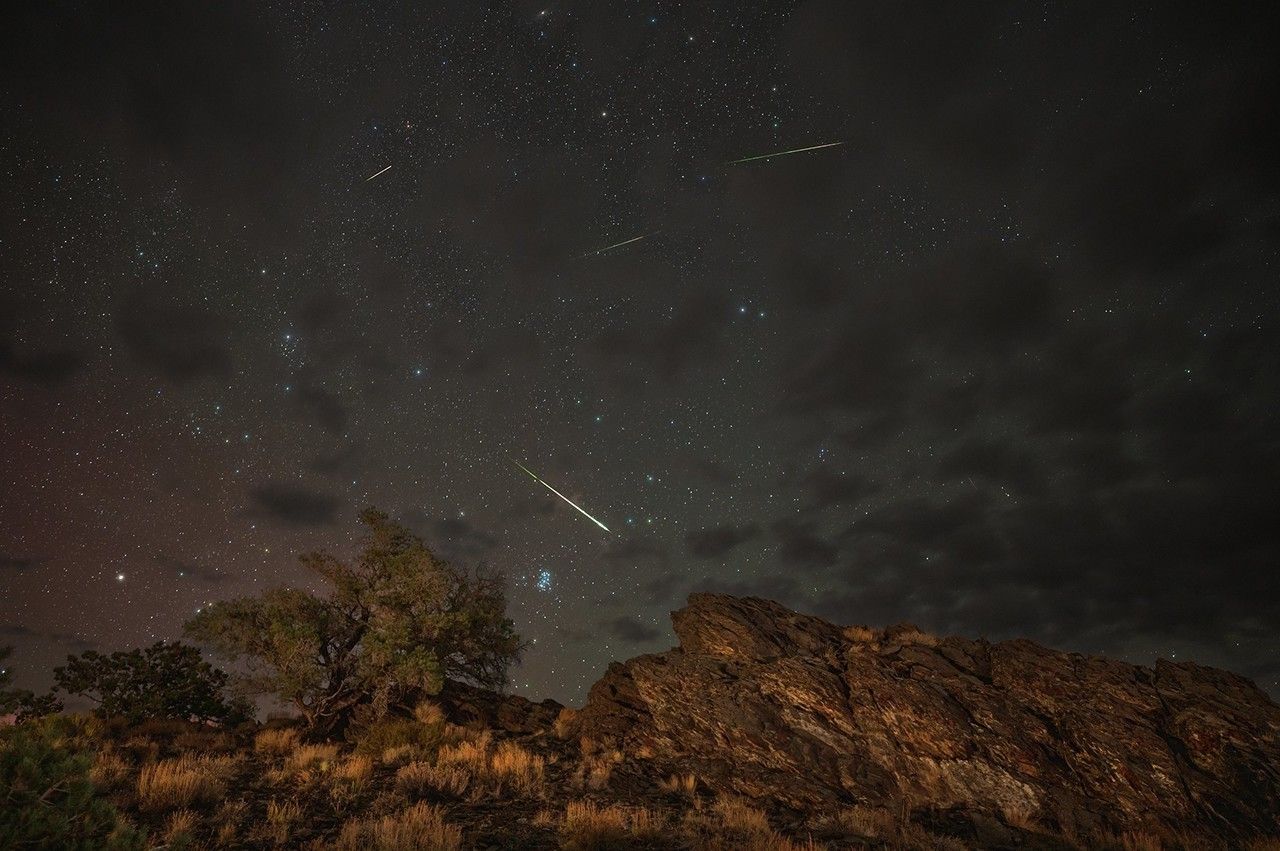
Meteor streaking across the night sky over California — December's Geminid shower exceeds 120 meteors per hour at peak, making it the year's most reliable and prolific meteor shower

Night Sky Guide · December 2026

Night Sky in December 2026: Geminid Meteor Shower Peak Guide

December delivers the year's best meteor shower, the return of Orion to prime position, and Jupiter dominating the midnight sky. The Geminid shower peaks December 13–14 with up to 120 meteors per hour under dark skies — the most prolific and reliable shower on the calendar, unique in astronomy as the only major shower that comes from an asteroid rather than a comet.

Dec 13–14Geminid peak — up to 120/hr
Dec 21Winter Solstice — longest night
Dec 22Ursid meteor shower peak
All monthOrion, Jupiter, winter deep-sky
By Telescope Advisor Editorial Team Published: Updated: Editorial Standards

December 2026 at a Glance

December 2026 is a month dominated by the Geminid meteor shower and the return of the classic winter constellation landscape. The long December nights — the Winter Solstice on the 21st gives Northern Hemisphere observers 15+ hours of darkness at mid-latitudes — make it the most astronomically productive month of the year for observers who don't mind the cold. Jupiter rides high in Gemini, exactly the constellation where the Geminid radiant sits, giving observers a planetary anchor point for the shower's peak nights.

Date Event Equipment
Dec 1New Moon — best start to deep-sky observing seasonAny telescope
Dec 4–20Geminid shower active — pre-peak buildingNaked eye, binoculars
Dec 13–14Geminid peak — best night of the year for meteorsNaked eye — no equipment needed
Dec 21Winter Solstice — longest night of 2026All targets well-placed, long session opportunity
Dec 22Ursid meteor shower peak (minor, ~10/hr)Naked eye toward Ursa Minor
Dec 27Full Moon (Cold Moon) — avoid deep-sky this weekMoon observing, planets
All monthJupiter in Gemini, Saturn in Aquarius, Orion prime60mm+ telescope


🔭

Not sure which telescope actually fits your goals?

Answer 5 quick questions about your budget, observing targets, and experience level — our Telescope Finder Tool recommends a specific model in under 2 minutes.

Find My Telescope →

Geminid Meteor Shower 2026: The Year's Best Night for Meteors

The Geminid meteor shower is the strongest and most consistent annual meteor shower — surpassing even the famous Perseids in peak hourly rate and meteor quality. At peak activity on the night of December 13–14, 2026, observers under dark skies can expect up to 120 meteors per hour. Unlike most shower meteors which are fast and faint, Geminids tend to be slower, brighter, and more likely to produce fireballs — making the shower rewarding even from suburban locations where the peak rate drops to 30–50 per hour.

Meteor shower over a dark landscape — the Geminids produce up to 120 meteors per hour at peak, making them the most productive annual shower

Meteor shower under dark skies — what the Geminids look like at peak

The Geminids produce up to 120 meteors per hour — the most of any annual shower. They are characteristically slow, bright, and frequent. Credit: NASA.

2026 Geminid Data

  • Peak: Night of December 13–14, 2026
  • Best viewing window: 10 PM – 2 AM local time (radiant highest)
  • Peak ZHR (dark sky): 100–120 meteors/hour
  • Suburban rate (Bortle 6–7): 30–50/hour estimated
  • Moon phase at peak: Waxing crescent (~20% illuminated) — sets ~9 PM, leaving the peak window completely moonlight-free
  • Radiant constellation: Gemini, near the star Castor
  • Active period: December 4–20
  • Parent body: Asteroid 3200 Phaethon (not a comet — see next section)
  • Meteor speed: 35 km/s (relatively slow — more visible)

Why 2026 is an especially good year

The Moon is a waxing crescent at only ~20% illumination and sets around 9 PM local time on December 13–14. This leaves the critical 10 PM–2 AM peak viewing window entirely moonlight-free — the best possible conditions for Geminid observing. A dark-sky Bortle 3–4 site will be fully productive for the entire peak session. Even suburban Bortle 6–7 observers should see 30–50 per hour during the moonless window.

How to Watch the Geminids

  1. No telescope or binoculars needed — the Geminids are best observed with your naked eyes, which give you the widest field of view. A telescope will show you one very small patch of sky and miss most meteors.
  2. Dress for extended cold exposure — December observing requires serious cold-weather preparation: thermal layers, insulated boots, a hat, gloves, and a blanket or sleeping bag to lie in. A hot drink in a thermos makes a significant difference in sustained observing.
  3. Allow 20 minutes for dark adaptation — come away from any artificial lights and let your eyes adjust. Dark-adapted eyes see 3–5× more meteors than light-polluted eyes.
  4. Face roughly south, recline to see a large sky area — the radiant is in Gemini, which rises in the northeast and transits roughly south. Face south and recline so you're looking up at a large area of sky rather than a specific direction.
  5. Observe from 10 PM onward — the radiant climbs higher as the night progresses, and higher radiant = more meteors per hour. Rates peak around midnight–2 AM when Gemini is highest in the sky.

Geminid Timing by US City

CityMoon sets (Dec 13)Peak window (local)Radiant altitude at peak
New York~9:15 PM EST10 PM – 2 AM EST~72° (near overhead)
Chicago~9:10 PM CST10 PM – 2 AM CST~74°
Denver~9:05 PM MST10 PM – 2 AM MST~72°
Los Angeles~9:20 PM PST10 PM – 2 AM PST~68°
Dallas~9:15 PM CST10 PM – 2 AM CST~70°

Why Geminids Come From an Asteroid — A Unique Shower

Every other major meteor shower — Perseids, Leonids, Eta Aquariids, Orionids — originates from a comet's debris trail left in Earth's orbital path. The Geminids are unique: their parent body is 3200 Phaethon, an asteroid. This is extraordinary in meteor shower science and was not understood until 1983 when NASA's IRAS infrared satellite identified Phaethon's orbital connection to the Geminid stream.

3200 Phaethon: The Rock Comet

Phaethon is a ~5km asteroid that passes extraordinarily close to the Sun at perihelion — only 0.14 AU, inside Mercury's orbit. At this distance, solar heating causes rocks and dust to fracture off the surface, gradually producing the Geminid debris stream over thousands of years. Phaethon is sometimes called a "rock comet" — an asteroid behaving like a comet due to solar thermal stress rather than volatile outgassing. The DESTINY+ mission, launched by JAXA, is en route to image Phaethon in detail in 2028.

Why Geminids Are Unusually Bright

Because Geminid meteoroids are rocky particles from an asteroid rather than loosely aggregated comet dust, they are denser and more robust. Rocky particles survive deeper into the atmosphere before ablating completely, producing longer-lasting, brighter meteors at a relatively slower speed (35 km/s vs 66 km/s for Orionids). The combination produces more fireballs and bolides — bright enough to cast shadows — than any other annual shower. The Geminids are also the only major shower observable at both Northern and Southern Hemisphere latitudes with similar rates.

The Geminid shower is growing in intensity year over year as Jupiter's gravity gradually perturbs more material from the Phaethon debris stream into Earth's orbital path. Rates have increased noticeably from the 60–80/hour peak observed in the 1990s to the 100–120/hour expected in 2026. Future decades may see even higher rates.

Planets in December 2026

Jupiter (Gemini) — Dominant evening planet

Jupiter is approaching its January 2027 opposition and is the dominant evening planet of December. Rising before sunset by mid-December, it transits high in the south around 11 PM–midnight local time. At magnitude −2.7 and with a disk approaching 47 arcseconds, Jupiter is at its largest and brightest in years. Through any 60mm+ telescope, the four Galilean moons create ever-changing patterns each night, and the equatorial cloud belts are unmistakable. Crucially, Jupiter sits in Gemini — the same constellation as the Geminid radiant, making it a natural bright anchor point when scanning for meteors on December 13–14. Our Jupiter telescope guide covers setup and what to expect.

Saturn (Aquarius) — Evening to late evening

Saturn passed opposition October 4 and is now declining in altitude and brightness through December, setting around 10–11 PM local time. Still worthwhile through a telescope — the rings tilted at 8° remain beautiful — but Saturn is no longer the showpiece it was in October. By late December it's low in the southwest after sunset and challenging. December is the last good month for Saturn until its 2027 apparition season. Ring detail guide: best eyepiece for Saturn's rings.

Mars (Leo) — Pre-dawn morning sky

Mars is building toward its January 2027 opposition and rises around 2–3 AM local time by mid-December. At magnitude 0.5–0.7, it shows an orange tint clearly distinguishable from surrounding stars. The disk is 10–12 arcseconds — approaching opposition size — and a 150mm+ telescope under steady seeing begins to show the polar cap and major albedo features on favorable rotation nights.

Venus — Not well placed this month

Venus is in the pre-dawn sky but poorly placed for northern hemisphere observers in December — low on the horizon before sunrise and difficult to observe well. Its best apparition for 2026 observers was the spring/summer evening sky.

Winter Deep-Sky: December's Prime Targets

December brings the winter Milky Way to prominence — Orion, Gemini, Taurus, Auriga, and Canis Major all fully risen and well-placed for the entire evening. The New Moon window (December 1–8) and the period after the Geminid peak (December 15–20) are the best deep-sky windows of the month.

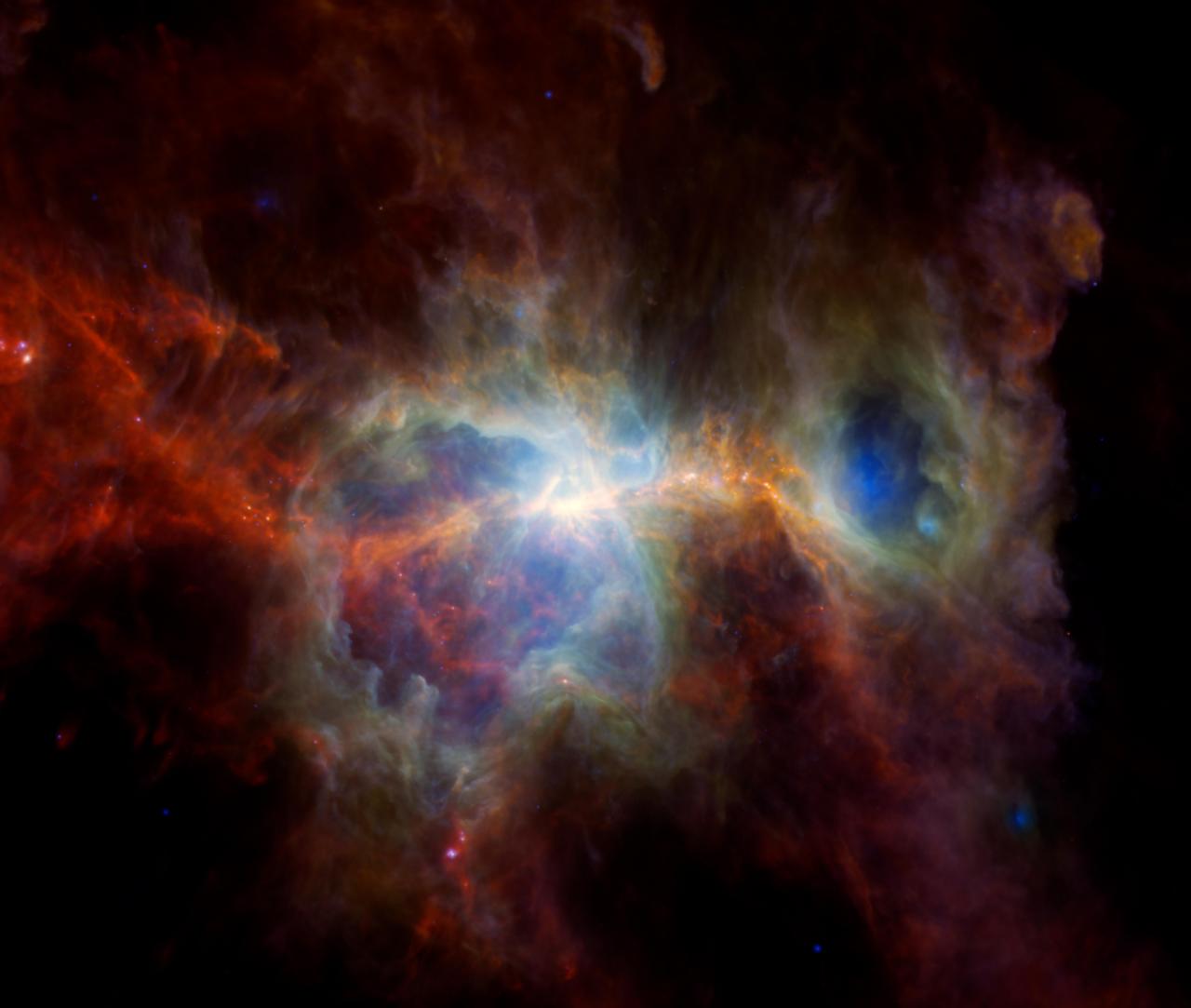
Orion Nebula (M42) — in December it is at its highest and best-placed for Northern Hemisphere observers, a magnificent showpiece through any telescope

Orion Nebula (M42) — December's showpiece deep-sky object

M42 reaches prime position in December — highest in the sky, best contrast, cleanest views. Visible in any telescope, stunning in apertures of 100mm+. Credit: NASA/ESA/Hubble Heritage Team.

Object Type Magnitude Why December is Special Minimum Gear
Orion Nebula (M42)Emission nebula4.0Near-zenith transit — highest all year, best viewsNaked eye / binoculars
Pleiades (M45)Open cluster1.6Overhead at 9 PM — prime viewing positionNaked eye / binoculars best
Hyades clusterOpen cluster0.5V-shaped Taurus cluster — naked-eye objectNaked eye / binoculars
M35 (Gemini)Open cluster5.1Near Geminid radiant — convenient Geminid session targetBinoculars / 60mm+
M36, M37, M38 (Auriga)Open clusters ×36.0–6.5Three showpiece clusters in one binocular sweep overheadBinoculars / 60mm+
Crab Nebula (M1)Supernova remnant8.4Near Zeta Tauri — well-placed in Taurus all December80mm+ telescope
Beehive Cluster (M44)Open cluster3.7In Cancer, rising mid-evening — gorgeous binocular sweepBinoculars
Rosette Nebula (NGC 2237)Emission nebula9.0In Monoceros — needs O-III or UHC filter to see well100mm+ + nebula filter

The Orion Nebula in December — best of the year

M42 is the showpiece deep-sky object of any telescope. In December, it transits (reaches highest point) around midnight local time at nearly 60° altitude from mid-northern latitudes — the maximum elevation it ever reaches. The combination of high altitude (less atmospheric distortion), cold stable air, and the long December nights makes December the definitive month for Orion Nebula observing. In a 130mm+ telescope at 50–80×, the Orion Nebula's green-grey nebulosity, the four Trapezium stars, and the complex gas structure extending across the field makes it genuinely spectacular. Start every December session with M42.

Ursid Meteor Shower: December 22 Peak

The Ursid meteor shower peaks on December 22–23, coinciding with the Winter Solstice. It is a minor shower (typical ZHR of 8–12 per hour) from the debris trail of comet 8P/Tuttle. The radiant is near Kochab in Ursa Minor — circumpolar from northern latitudes, meaning it never sets and is visible all night. In outburst years (which occur when Earth passes through a dense filament of Tuttle's debris), Ursid rates have briefly reached 100+/hour, though this is not predicted for 2026.

2026 Ursid Conditions

  • Peak: December 22–23
  • ZHR: 8–12 (no outburst predicted)
  • Moon: Waxing gibbous (~90%) — significantly impacts observing
  • Radiant: Near Kochab, Ursa Minor (circumpolar)
  • Viewing: Best late evening when radiant is high in north
  • Parent comet: 8P/Tuttle

Practical notes

The Ursids are primarily of interest to dedicated meteor observers. The near-full Moon in 2026 will suppress most fainter meteors, leaving only the brightest visible. For casual observers, the Ursids are best skipped in 2026 — focus on the Geminids (Dec 13–14) when conditions are far superior. If you are curious, face north after midnight on Dec 22 and look toward the North Star — any streak moving away from that region is an Ursid.

December Constellations

Dominant (high in south, 8 PM–midnight)

  • Orion (The Hunter): The iconic winter constellation. Betelgeuse (red supergiant, upper left) and Rigel (blue-white giant, lower right) bracket the three-star Belt. M42 Orion Nebula glows below the belt. Jupiter and Geminid radiant visible nearby in Gemini.
  • Gemini (The Twins): Castor and Pollux — the brightest star pair in Gemini. The Geminid radiant is here near Castor. M35 open cluster sits at Gemini's northern foot.
  • Taurus (The Bull): The V-shaped Hyades cluster forms the bull's face; the Pleiades ride above. The Crab Nebula (M1) sits near Zeta Tauri.
  • Auriga (The Charioteer): Bright Capella overhead at midnight. Contains M36, M37, M38 — three splendid open clusters in one binocular sweep.

Rising in east / morning sky

  • Canis Major: Contains Sirius — the brightest star in the sky. Rises around 8–9 PM in December and is brilliant in the southeast by midnight. A pointer star for the Orion region.
  • Canis Minor: Contains Procyon — rises with Sirius. Procyon, Betelgeuse (Orion), and Sirius form the Winter Triangle asterism.
  • Leo: The spring lion begins rising in the east around midnight in December — its return signals winter's end approaching. Mars is nearby.
  • Cancer: The Beehive Cluster (M44) in Cancer rises in the east — a superb binocular target.


Best Gear for December 2026: Cold-Weather Astronomy

December observing requires gear that works in freezing temperatures and a strategy for keeping yourself warm enough to sustain sessions. The Geminids don't require any equipment at all — they're best with naked eyes — but for planetary observing and deep-sky work before the peak, here are the essential instruments.

Best December Telescope — Orion Nebula + Jupiter Nights
Sky-Watcher Heritage 130P tabletop Dobsonian reflector

Sky-Watcher Heritage 130P

For the Orion Nebula at its December prime and Jupiter dominating the midnight sky, the Heritage 130P is the ideal instrument. Its 130mm parabolic mirror gives a genuinely beautiful view of M42's structure, the Trapezium, and the surrounding gas at 65–130×. Jupiter shows 4 cloud belts and Galilean moon interactions. The tabletop Dobsonian design is particularly good for cold-weather December sessions — no tripod to assemble in frozen fingers, and the compact tube retains collimation through temperature changes better than long tube designs. Full review: Heritage 130P review.

Celestron SkyMaster 15x70 binoculars for star clusters and meteors

Celestron SkyMaster 15×70 — Pleiades, Auriga clusters, post-Geminid session

For the Geminid shower itself you need naked eyes, but before and after the peak, binoculars are the perfect December instrument. The 15×70 shows the Pleiades in stunning detail, sweeps through the three Auriga clusters in minutes, and reveals the Hyades cluster in its full V-shape extent. On Geminid nights, lie back and use them to trace the Orion/Gemini star fields while watching for meteors with peripheral vision. Guide: best astronomy binoculars.

Affiliate links. Editorial standards.

December 2026 Night Sky FAQ

When is the Geminid meteor shower peak in 2026?

The Geminid meteor shower peaks on the night of December 13–14, 2026. The best viewing window is 10 PM to 2 AM local time when the radiant (in Gemini near Castor) is highest. The Moon is a waxing crescent at ~20% illumination and sets around 9 PM, leaving the peak hours completely moonlight-free — ideal conditions. Expect 80–120 meteors per hour from a dark site, 30–50 per hour from suburban locations.

Is the Geminid shower better than the Perseids?

By raw numbers, yes — the Geminids consistently produce higher peak rates (100–120/hr) than the Perseids (90–100/hr in good years). Geminid meteors are also often brighter and slower (35 km/s vs 59 km/s), making them easier to see and producing more fireballs. The main disadvantage is December weather and cold — observing in December requires significantly more preparation than the warm August Perseid nights. In 2026, the Geminids also benefit from excellent Moon-free conditions at peak, which is not guaranteed every year.

What telescope is best for December stargazing?

The Sky-Watcher Heritage 130P is the ideal December telescope — its compact tabletop design assembles quickly in cold weather (no tripod fussing in frozen fingers), and its 130mm parabolic mirror delivers beautiful views of the Orion Nebula, Jupiter's cloud belts, and the Pleiades. For the Geminid meteor shower itself, no telescope is needed or recommended — naked eyes with as wide a field of view as possible give you the best experience. See our complete guide: best telescopes for beginners.

Why do the Geminids come from an asteroid?

The Geminids are unique — their parent body is asteroid 3200 Phaethon rather than a comet. Phaethon passes extraordinarily close to the Sun at perihelion (only 0.14 AU — inside Mercury's orbit), where solar heating fractures rock and dust off its surface, gradually building the debris stream over millennia. This makes it a "rock comet." The rocky origin explains why Geminid meteors are denser, slower, and brighter than most shower meteors, and why the shower produces more fireballs than any other annual shower.

Is there a telescope sale or deal worth waiting for in December?

December is actually NOT the time to buy a telescope. Prices are typically at their highest in mid-to-late November through December due to Christmas gift demand. The best buying windows are Black Friday (late November — 15–30% discounts common), Amazon Prime Day (July), and the post-Christmas clearance in January. If you need a telescope for December observing, buy in mid-November at the latest to get the best combination of price and availability. See: telescope Black Friday deals 2026 and best time to buy a telescope.

What planets are visible in December 2026?

Jupiter is the dominant evening planet in December 2026 — rising before sunset by mid-month, transiting high in the south around midnight, at magnitude −2.7 in Gemini. Saturn is visible in the southwest in Aquarius during evening hours, setting around 10–11 PM, past its October 4 opposition but still well worth observing. Mars rises around 2–3 AM in Leo, building toward its January 2027 opposition. Venus is poorly placed for northern hemisphere observers this month.


Related Guides