
Quick Answer: What's the Best Way to Observe Mars in 2026?
The best telescope for Mars is a 6-inch or larger Schmidt-Cassegrain or Dobsonian with a high-quality 9mm eyepiece for 200×+ magnification. Mars is small, bright, and stubbornly resistant to high magnification. At its best (near opposition in February 2027), it measures only 13.8 arcseconds across — compare that to Jupiter at opposition (44 arcseconds in February 2027) or Saturn (19 arcseconds with rings). To see meaningful surface detail, you need 150× to 250× magnification and steady atmospheric seeing.
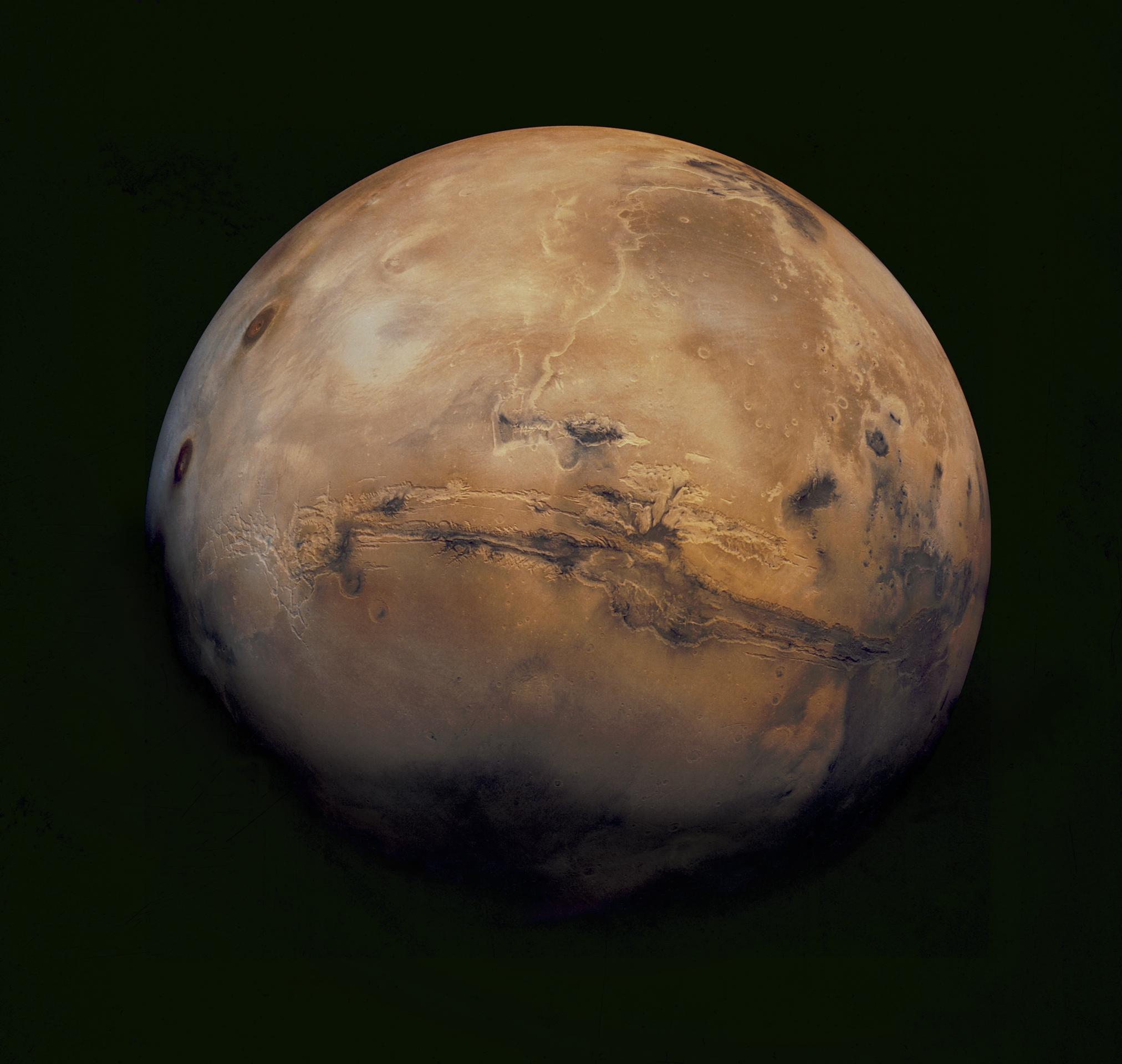
For 2026 specifically: Mars is still recovering from its 2025 opposition and is moving toward its next favorable opposition on February 19, 2027. Throughout late 2026, Mars is a morning object, rising in the pre-dawn hours and growing larger and brighter each week. By late December 2026, it reaches about 10 arcseconds in apparent diameter — large enough to show the polar cap and the largest dark albedo features in a 6-inch telescope at 180× magnification. The best observing window for Mars in 2026–2027 runs from November 2026 through March 2027.
Essential accessories for Mars observing: A red #25 filter enhances contrast of the polar cap and dark surface features. A blue #80A filter reveals atmospheric clouds and dust storms. A stable mount, good collimation, and patience for moments of steady atmospheric seeing are just as important as aperture.
Mars is not Jupiter
Unlike Jupiter, which shows detail at modest magnification, Mars requires high power and steady seeing. Do not expect cloud bands or a giant disk. Mars is a subtle world of subtle shades of rust, cream, and gray.
Opposition matters
Mars is best observed within 6 weeks of opposition (Feb 19, 2027). At other times it is too small to show useful detail. Plan your observing campaign around this window.
Filters are your friend
Colored filters are dramatically more effective on Mars than on any other planet. A red #25 filter is the single best accessory for Mars observing. More telescope accessories →


