Quick Answer: How to See Mars and the Pleiades Together on June 29, 2026
Set your alarm for 3:30–4:00 AM local time on June 29 and look east. Mars, glowing a distinctive pale orange at magnitude +1.1, will appear approximately 4.4° below and to the right of the Pleiades star cluster (M45). The pair will be well placed in the eastern sky about two hours before sunrise, climbing higher as dawn approaches.
Binoculars are the ideal tool for this event. The 4.4° separation is too wide for most telescope eyepieces but fits beautifully inside a typical 7–10° binocular field. Any 7×50, 10×50, or 15×70 binocular will frame both Mars and the Pleiades together, creating a stunning visual contrast between the Red Planet's warm glow and the cluster's cool blue-white stars. The Celestron SkyMaster 15×70 is our top recommendation for the richest view.
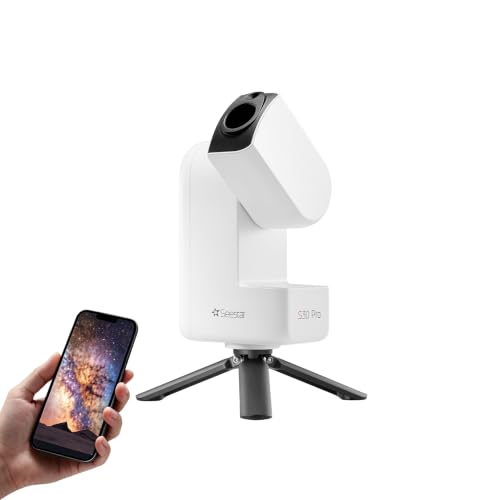
This is also an excellent wide-field astrophotography target. A DSLR with a 50–135mm lens on a tripod can capture both Mars and the Pleiades in a single frame, along with the fainter nebulosity that surrounds the cluster's brightest stars. For a more advanced setup, a smart telescope like the ZWO Seestar S30 Pro can capture the entire scene in a single wide-field image.
Naked eye
Mars and the Pleiades are both visible to the naked eye. Mars appears as a steady orange "star" near the tiny misty patch of the Pleiades.
Binoculars (best tool)
Both fit in a single field. 7×50 shows the Pleiades at their best with Mars near the edge; 10×50 and 15×70 give more detail on both.
Smart telescope
A wide-field smart scope like the Seestar S30 Pro captures Mars, the Pleiades, and the surrounding nebulosity in a single session.