
How to Safely Observe the Sun: Sunspots, Solar Flares & the Right Filters for Your Telescope
Telescope Advisor Logo Telescope Advisor
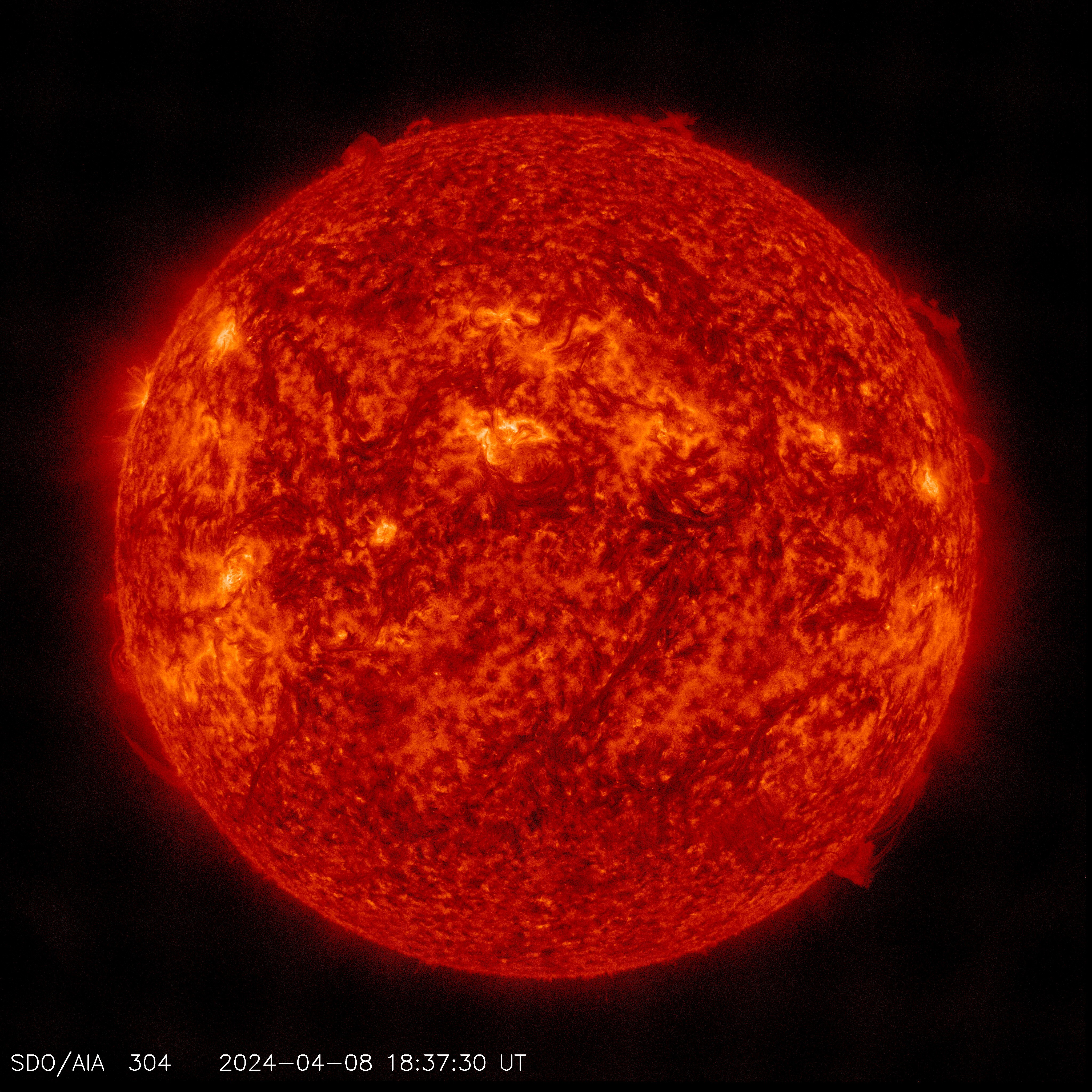
The Sun photographed by NASA's Solar Dynamics Observatory showing active sunspot regions and solar flares

Solar Observing Guide · Safety First

How to Safely Observe the Sun: Sunspots, Solar Flares & the Right Filters for Your Telescope

The Sun is the only star you can observe in detail — and it is more active right now than at any point in the last decade. Solar Cycle 25 is at its peak, producing dramatic sunspot groups and flares visible through modest equipment with the right safety precautions. Here is exactly how to do it without damaging your eyes or your telescope.

Solar Cycle 25Peaking 2025-2026
Sunspot sizeOften larger than Earth
Safe methodsWhite-light filter, H-alpha, projection
⚠️ Critical ruleNEVER look directly without a certified filter
By Telescope Advisor Editorial Team Published: Updated: Editorial Standards

⚠️ Read This First — Permanent Blindness Is a Real Risk

Pointing a telescope or binoculars at the Sun without a certified solar filter will cause instant, permanent, irreversible eye damage. The concentrated sunlight will burn a hole through your retina before you can blink. You will not feel pain — the retina has no pain receptors — but the damage is done in a fraction of a second. This is not an exaggeration. This is not a "be careful" suggestion. Astronomical equipment without proper solar filtration aimed at the Sun destroys eyesight permanently.

Do not use: smoked glass, exposed film, stacked sunglasses, CDs, Mylar balloons, or any improvised filter. These do NOT block the invisible infrared and ultraviolet radiation that does the most damage. A filter can look dark while transmitting enough IR to cook your retina.

The only safe methods are: (1) a certified full-aperture solar filter mounted securely over the FRONT of the telescope (never at the eyepiece end), (2) a dedicated hydrogen-alpha solar telescope, or (3) solar projection onto a white screen. All three methods are covered in detail below.

Why 2026 Is the Best Year for Solar Observing in Over a Decade

The Sun operates on an approximately 11-year activity cycle. Solar Cycle 25 began in December 2019 and has exceeded all predictions — sunspot counts and flare activity have been consistently higher than NASA and NOAA forecast. The cycle is peaking in 2025-2026, meaning right now is the most active the Sun has been since approximately 2014.

During solar maximum, the Sun's surface is dotted with sunspot groups — some large enough to swallow Earth several times over. These magnetically active regions produce solar flares, coronal mass ejections (CMEs), and the auroras that reached as far south as Florida and Mexico during the May 2024 geomagnetic storm. Observing sunspots now means seeing the Sun at its most dynamic and visually interesting.

For the amateur astronomer, solar maximum transforms the Sun from a featureless disk into a constantly changing landscape. Sunspot groups evolve visibly from day to day. A large spot that was a single dark core on Monday may have developed a complex penumbral structure by Wednesday. This dynamism makes solar observing genuinely rewarding as a regular practice — not a one-time curiosity.

The Sun in extreme ultraviolet showing active regions, solar flares, and magnetic loop structures — NASA SDO

Solar Dynamics Observatory — Active Sun During Solar Maximum

NASA's SDO captures the Sun in multiple wavelengths every 12 seconds. The bright active regions are sunspot groups and flare sites. Through a white-light filter, sunspots appear as dark spots. Through H-alpha, you also see the surrounding chromospheric structure. Credit: NASA/SDO.

Method 1: White-Light Solar Filters — The Standard Approach

A white-light solar filter is a thin film or coated glass disk that mounts securely over the front aperture of your telescope or binoculars. It blocks 99.999% of incoming sunlight across all wavelengths — visible, infrared, and ultraviolet — reducing the Sun's intensity to a safe level before it ever enters the optical system.

Baader AstroSolar Film

The gold standard for amateur solar filters. This is an incredibly thin (0.012mm) metallized polymer film that produces a neutral white or pale blue solar image with excellent sharpness. It resolves granulation — the Sun's convective cell pattern — on steady days. Available as sheets for DIY mounting or pre-assembled in cells for common telescope apertures. Cost: $20-80 depending on size and mounting.

Glass solar filters

Coated glass filters produce a yellow-orange solar image that some observers prefer. They are more durable than film but generally produce a slightly softer image. Orion and Celestron sell glass filters for common telescope models. Cost: $50-150. Ensure the filter is specified for visual use — some glass filters are photography-only and do not provide sufficient attenuation for visual observing.

Critical safety checks before every session:

  • Inspect the filter for pinholes, scratches, or creases. Hold it up to a bright light bulb — any light leaks are dangerous.
  • Secure the filter firmly to the telescope. Tape it in place if necessary. Wind or a bumped tripod can dislodge a loose filter.
  • Remove or cover your finder scope. An unfiltered finder scope pointed at the Sun can burn your skin or melt internal components.
  • If using binoculars, filter BOTH front objectives. A single filtered objective with one unfiltered is not safe — the brain will not register the danger because one eye sees a dark image.

Method 2: Hydrogen-Alpha Solar Telescopes — The Deep View

White-light filters show the Sun's photosphere — the visible "surface" where sunspots live. A hydrogen-alpha (Hα) telescope reveals the chromosphere — the layer above the photosphere — where solar flares, prominences, filaments, and the intricate magnetic structure around sunspots become visible. The difference is dramatic: white light shows dark spots on a disk; H-alpha shows a boiling, dynamic atmosphere of plasma structures.

H-alpha telescopes are purpose-built instruments — you cannot convert a standard telescope to H-alpha with a simple front filter. The etalon (a precision optical cavity that isolates the 656.28 nm hydrogen-alpha line) must be temperature-stabilized and precisely tuned. These telescopes are more expensive than white-light setups ($700-3,000+) but deliver views that rival spacecraft imagery in detail.

What H-alpha reveals

  • Solar prominences — huge arcs of plasma suspended above the solar limb, visible in real time
  • Filaments — prominences seen against the disk, appearing as dark snaking lines
  • Plage — bright regions around sunspot groups indicating magnetic activity
  • Solar flares — sudden brightenings visible within minutes of eruption
  • Spicules — tiny jet-like features at the solar limb, like a "burning prairie"

Popular H-alpha telescopes

  • Coronado PST (Personal Solar Telescope) — entry-level 40mm, ~$700
  • Lunt LS50THa — 50mm, better detail, ~$1,000
  • Coronado SolarMax III 60mm — excellent prominence detail, ~$1,500
  • Lunt LS80MT — 80mm, observatory-class views, ~$3,000+

These are specialized instruments. They cannot be used for nighttime astronomy — the etalon blocks all light except H-alpha. Consider them a dedicated second scope specifically for solar observing.

Method 3: Solar Projection — Safest for Beginners, Groups, and Classrooms

Solar projection is the only completely safe method for multiple people to observe the Sun simultaneously — and it costs nothing if you already own a small refractor. The principle is simple: aim the telescope at the Sun (without looking through it) and project the eyepiece image onto a white card or screen held behind the telescope. The Sun appears as a bright disk on the card, and sunspots are clearly visible as dark spots.

Projection setup in 3 steps:

  1. Use a small refractor or binocular (one side only). Do NOT use a reflector or Schmidt-Cassegrain — the internal heat buildup can damage the secondary mirror mount and the glue holding optical elements.
  2. Aim by shadow, not by looking. Move the telescope until its shadow on the ground is smallest — this means it is pointed roughly at the Sun. Fine-tune until a bright circle appears on your projection card.
  3. Hold a white card 6-12 inches behind the eyepiece. Focus until the Sun's edge is sharp. Sunspots will appear as dark specks. A cardboard shield around the telescope tube (cut a hole for the tube) creates shade on the projection card for better contrast.

Important limitation: Projection only works well for sunspots. It does not show solar flares, prominences, or granulation — those require H-alpha or high-quality white-light filters. Projection also introduces some heat into the telescope, so limit sessions to 5-10 minutes with a cool-down period between. Never leave a projecting telescope unattended.

What Sunspots and Solar Flares Actually Look Like

Expectations matter. You are not going to see the swirling, colorized ultraviolet images NASA publishes. Here is what each method actually delivers through an amateur telescope:

FeatureWhite-Light Filter (70mm+)H-Alpha Telescope (40mm+)Projection
SunspotsDark umbra with gray penumbra clearly visible. Complex spot groups show structure. Limb darkening (center brighter than edge) is obvious.Visible but less contrasty than white light. The surrounding plage (bright magnetic region) is more prominent.Large spots visible as dark dots on projected disk. Smaller spots lost due to lower contrast.
GranulationVisible at 60×+ in 90mm+ scopes during steady seeing. Appears as fine "rice grain" texture across disk.Not the primary target — chromosphere structure dominates.Not visible.
ProminencesNot visible — hidden by photosphere brightness.Spectacular. Red flame-like arcs at the solar limb. Change visibly over minutes to hours.Not visible.
Solar flaresWhite-light flares are rare — only the most powerful (X-class) are visible as brief brightenings near spots.Visible as sudden brightening in active regions. Can appear and fade within 20-30 minutes.Not visible.
FaculaeBright wispy patches near the limb, best seen near the solar edge where contrast is highest.The chromospheric equivalent (plage) surrounds sunspot groups as bright regions.Not visible.

Best Solar Observing Equipment for Every Budget

Solar observing is a specialized discipline within amateur astronomy. The equipment is different from nighttime gear — but a quality solar setup will give you decades of daily observing opportunities that nighttime astronomy cannot match. You can observe the Sun during lunch breaks, on weekends, and through thin clouds that would ruin a deep-sky session.

Editor's Pick — Best White-Light Starter Kit
Celestron Travel Scope 70mm refractor — ideal for solar projection and white-light filter use

Celestron Travel Scope 70 + Baader Solar Film

The 70mm aperture resolves sunspot umbra/penumbra structure clearly at 40-75×. Pair with a sheet of Baader AstroSolar film (DIY mount) for ~$30. This is the most cost-effective entry into safe solar observing — total cost under $120. Also works for solar projection without any filter.

Best Premium Solar Telescope

☀️

Coronado PST

H-Alpha 40mm

Coronado PST H-Alpha Solar Telescope

The most affordable dedicated H-alpha telescope. Shows prominences, filaments, flares, and active regions in real time. The view is genuinely spectacular — glowing red plasma structures at the solar limb that change visibly during a session. This is a dedicated solar instrument, not convertible to nighttime use.

~$699 — Available at specialized astronomy retailers

For the August 12, 2026 total solar eclipse, you will also need certified eclipse glasses for the partial phases. See our total solar eclipse 2026 guide for complete eclipse safety recommendations.

Frequently Asked Questions

Can I use eclipse glasses to look through a telescope at the Sun?

No. Never. Eclipse glasses are designed for naked-eye use only — they cannot handle the concentrated sunlight produced by a telescope or binoculars. The intense focused light will burn through the glasses instantly and then through your retina. Telescope solar observing requires a full-aperture filter mounted on the front of the instrument.

What happens if I look at the Sun through a telescope without a filter?

Instant, permanent, irreversible retinal damage. The telescope concentrates sunlight to an intensity that literally burns a hole in retinal tissue. There is no pain — the retina has no pain receptors — so you will not feel it happening. The damage becomes apparent hours later as a permanent blind spot in your central vision. There is no treatment.

Can I use a normal telescope for solar observing?

Yes — any telescope can be used for white-light solar observing with a certified full-aperture solar filter mounted securely over the front. Refractors are ideal. Reflectors and Schmidt-Cassegrains also work but require careful filter mounting. Never use a rear-mounted ("eyepiece") solar filter — these can crack from heat buildup and are extremely dangerous.

How often do solar flares occur during solar maximum?

During solar maximum (2025-2026), multiple C-class and M-class flares occur daily. X-class flares — the most powerful category — happen roughly once or twice per month. M-class and stronger flares are visible in H-alpha telescopes as sudden brightenings in active regions. You can check current solar activity at SpaceWeatherLive.com before an observing session.

Why do sunspots appear dark?

Sunspots are not dark in absolute terms — a sunspot is still hotter than an arc welder. They appear dark by contrast because they are about 2,000°C cooler than the surrounding photosphere (3,500°C vs 5,500°C). The intense magnetic field in a sunspot inhibits the convection that brings hot plasma to the surface, causing localized cooling.

Can I photograph sunspots with my phone through a telescope?

Yes — but ONLY with a full-aperture solar filter in place. Hold your phone camera to the eyepiece (afocal method) with the solar filter on the telescope front. The phone's camera sensor can be damaged by unfiltered concentrated sunlight just like your eye. A dedicated phone adapter bracket helps keep the phone aligned and reduces shake.

Related Guides