
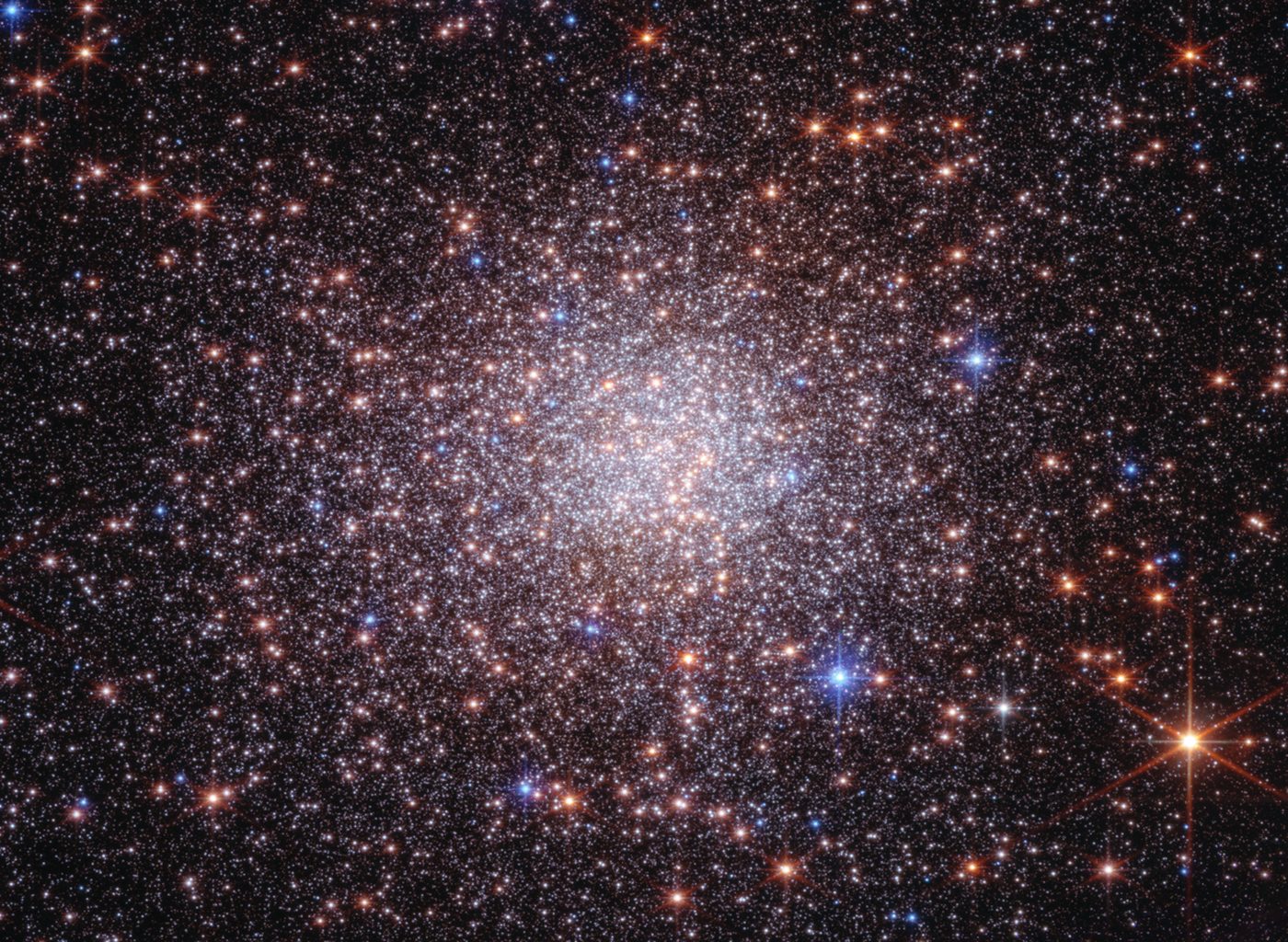

A Fossil from the Dawn of the Milky Way
On June 16, 2026, researchers using two of humanity's most powerful observatories — NASA's James Webb Space Telescope and the Hubble Space Telescope — announced a landmark discovery that rewrites our understanding of how the Milky Way galaxy assembled. The team, led by PhD student Giorgia Zullo at the University of Bologna, Italy, presented definitive evidence that the star system Terzan 5 is not a globular cluster as it was long classified, but rather a "bulge fossil fragment" — a surviving relic from the earliest stages of our galaxy's formation.
The findings, presented at the 248th meeting of the American Astronomical Society in Pasadena, California, and published in the journal Astronomy & Astrophysics, show that Terzan 5 contains up to four distinct generations of stars, spanning an extraordinary 12.5 billion years. This multi-generational stellar population is unprecedented for a globular cluster — which typically contains only one ancient population — and proves that Terzan 5 is a self-contained, self-enriching stellar system that preserved its separate identity while the rest of the Milky Way's bulge formed around it.
"Webb's new near-infrared observations, cross-referenced with Hubble's archival observations, have given us a much clearer picture of the history of Terzan 5," said Zullo, the lead researcher. The study combined Webb's infrared gaze — which pierced through the dust-heavy galactic bulge — with Hubble's unique ability to measure stellar motions over a 12-year baseline, enabling the team to separate Terzan 5's stars from those of the surrounding Milky Way bulge with exquisite precision.