What Is Gravitational Microlensing? How Euclid and Roman Find Planets You Can't See Any Other Way
Telescope Advisor Logo Telescope Advisor
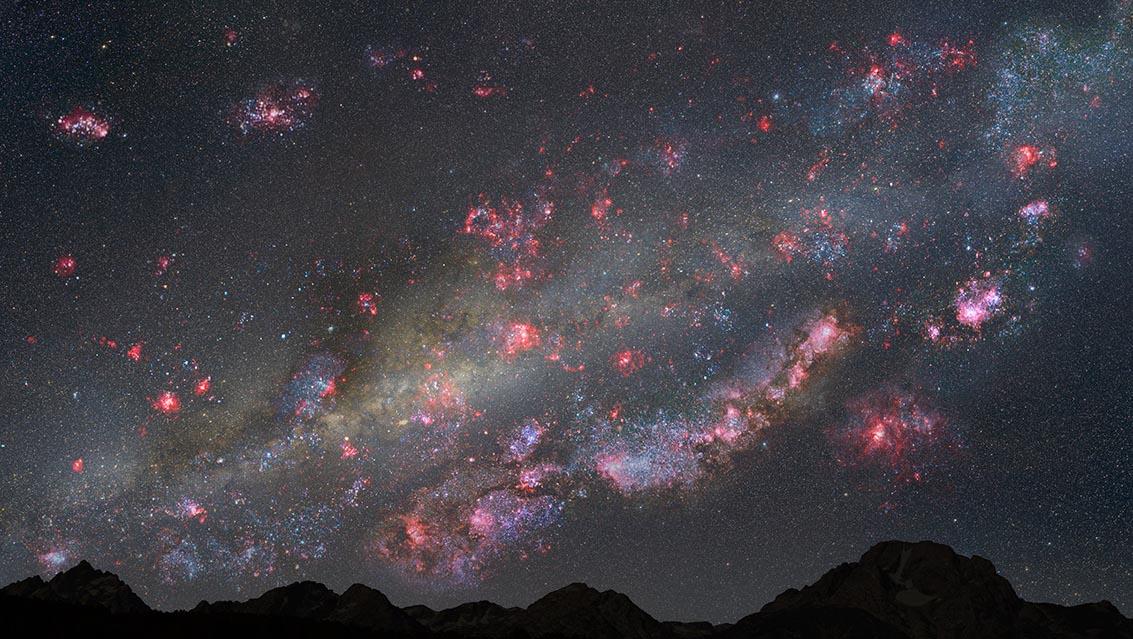
Illustration of the Milky Way galaxy structure showing the galactic centre, bulge, disk and spiral arms — the galactic bulge is the densest star-field region and the primary target for gravitational microlensing exoplanet surveys by ESA Euclid and NASA Roman Space Telescope

Science Explained · Euclid & Roman Mission

What Is Gravitational Microlensing? How Euclid and Roman Find Planets You Can't See Any Other Way

Gravitational microlensing is the only planet-finding method sensitive to cold, Earth-mass worlds in wide orbits — and to free-floating planets with no host star at all. ESA's Euclid telescope released its Galactic Bulge Survey Q2 data on June 24, 2026. Here is how the technique works, what the data contains, and what NASA's Roman Space Telescope will do next.

MethodGravitational lensing
Target zoneGalactic Bulge
FindsCold & free-floating planets
MissionsEuclid + Roman
By Elena Reyes Published: Updated: Editorial Standards
Elena Reyes — Senior Science Editor

Elena Reyes

Senior Science Editor

Covers NASA missions, space science discoveries, and astronomical events for Telescope Advisor. Translates complex astrophysical research into practical insights for backyard observers. Based in the San Francisco Bay Area.

Quick Answer: What Is Gravitational Microlensing?

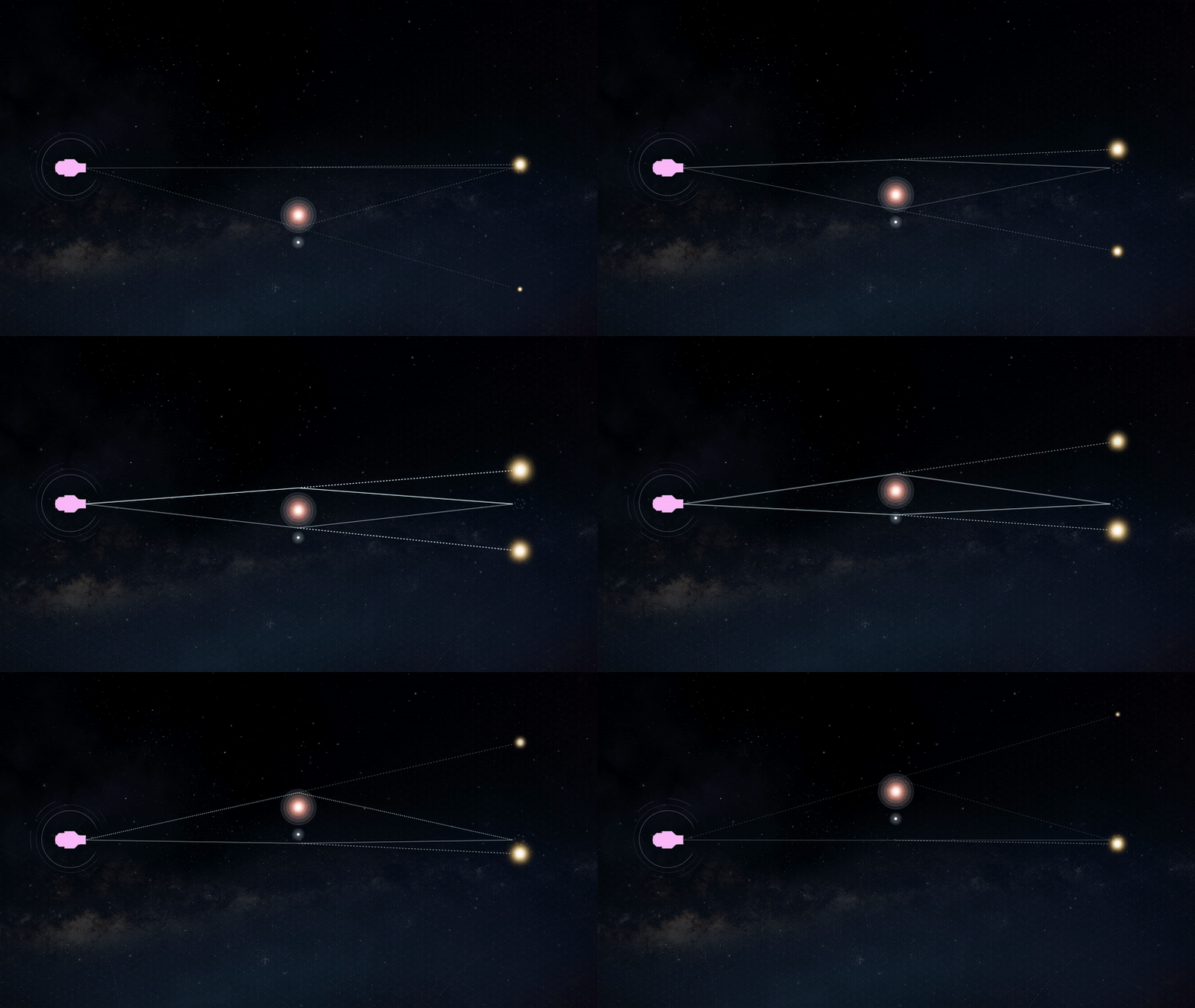
Gravitational microlensing is a planet-finding technique that does not need the planet to pass in front of its star (transit method) or tug on it measurably (radial velocity method). Instead, it exploits a chance cosmic alignment: when a foreground star drifts in front of a much more distant background star, the foreground star's gravity warps spacetime and bends the background star's light like a lens — temporarily making it appear brighter. If the foreground (lens) star has a planet, the planet's gravity adds a second, shorter brightness spike superimposed on the main brightening event. This spike reveals the planet's mass and its distance from the host star, even though neither the lens star nor its planet can be directly imaged.

This is how astronomers detect cold planets in wide orbits — planets that sit beyond the "snow line" where temperatures drop below the freezing point of water — and even planets floating freely in space with no star at all. On June 24, 2026, ESA's Euclid space telescope released its Galactic Bulge Survey Q2 data, revisiting 8,081 known microlensing events from ground-based surveys to measure planet and lens-star masses with unprecedented precision from space.

Animated NASA diagram of gravitational microlensing — showing how a foreground star with a planet passes in front of a distant background star, bending and amplifying the background star's light in a characteristic bell-shaped brightness curve. The planet adds a secondary short-duration spike, revealing its mass and orbital distance even though neither the lens star nor the planet can be directly imaged
How Gravitational Microlensing Works — NASA Roman Space Telescope — This NASA animation shows the microlensing technique: a foreground star (the "lens") passes in front of a background star, magnifying its light in a Paczyński light curve. A planet around the lens star adds a secondary spike lasting hours to days. This is how ESA Euclid's Galactic Bulge Survey and NASA Roman's microlensing programme find cold planets, Earth-mass worlds, and free-floating planets that no other technique can detect. Credit: NASA's Goddard Space Flight Center / Roman Space Telescope mission.


How Does Gravitational Microlensing Work?

The physics behind microlensing traces directly back to Einstein's General Theory of Relativity, published in 1915. One of Einstein's central insights was that mass warps the fabric of spacetime — and light, which travels through spacetime, must follow those curves. A massive object placed between an observer and a distant light source acts as a gravitational lens, bending and focusing the light from behind it. Einstein himself calculated in 1936 that if a foreground star passed almost exactly in front of a background star, the background star's light would be magnified. He thought the effect would never be observationally useful. He was wrong.

Step 1: The Alignment

A microlensing event begins when a foreground star (the "lens") drifts almost directly in front of a more distant background star (the "source") as seen from Earth. This is a random chance occurrence driven by the proper motion of stars in the galaxy. Because stars are moving relative to one another and relative to us, these alignments happen continuously — but for any given pair of stars, the probability is very low. You need to monitor millions of stars simultaneously to catch events as they occur.

Step 2: The Light Curve

As the lens star approaches the line of sight to the background source star, the source's apparent brightness increases smoothly and symmetrically, then decreases symmetrically as the lens passes. The shape of this brightening — called a Paczynski curve after Bohdan Paczynski who popularised the technique in 1986 — is precisely predicted by General Relativity. The brightening typically lasts days to weeks and can reach magnifications of 10 to 1,000 times the baseline brightness. Because the effect is purely gravitational, it works at any wavelength of light — infrared, visible, or even X-ray.

Step 3: The Planetary Spike

If the foreground lens star hosts a planet, that planet's own gravitational field creates a secondary perturbation in the light curve — a brief additional brightening or dimming that lasts hours to a few days, superimposed on the main bell-shaped event. The duration and shape of this "planetary anomaly" encodes the planet's mass ratio relative to its host star and its projected separation. Because the planetary spike is brief and unpredictable in timing, catching it requires continuous high-cadence monitoring — a major reason why dedicated survey telescopes and robotic alert systems are essential for modern microlensing science.

Step 4: Mass Measurement (The Space Advantage)

From the ground, you can measure the mass ratio of planet to star, but not the absolute masses. To get absolute masses, you need either a parallax measurement (observing the event from two different locations — e.g., Earth and a space telescope simultaneously) or to wait years until the lens and source stars have separated enough on the sky to be resolved individually with a high-resolution space telescope. Euclid is performing exactly this: revisiting past microlensing events discovered by ground surveys, and using its 0.1 arcsecond resolution to begin separating the lens and source stars — giving the first accurate mass census of microlensing host stars and their planets.

Key numbers to remember

  • Main brightening event: days to weeks in duration
  • Planetary spike: hours to days in duration
  • Typical magnification: 10× to 1,000×
  • Typical lens distance: 1–8 kiloparsecs (3,000–26,000 light-years)
  • Detection probability per star: roughly 1 in a million per year — requiring surveys of 100+ million stars
What Makes Microlensing Unique vs Other Planet-Finding Methods

Every planet-detection technique has a detection sweet spot — the types of planets it is most sensitive to. Understanding these biases is essential for building a complete census of planetary systems across the galaxy.

Transit Method (Kepler, TESS)

The transit method detects planets that pass directly in front of their host star as seen from Earth, causing a tiny dip in the star's brightness. For this to work, the orbital plane must be almost perfectly aligned with our line of sight — a geometric coincidence that only occurs for a small fraction of all planetary systems. As a result, the transit method is strongly biased toward planets in close, short-period orbits (hot Jupiters, warm super-Earths) around nearby, bright stars. It is essentially blind to planets beyond a few astronomical units (AU) from their host star.

Radial Velocity (Doppler Method)

The radial velocity method detects the gravitational tug of a planet on its host star, causing the star to wobble back and forth in a measurable Doppler shift of its spectrum. This works best for massive planets orbiting close to bright, relatively quiet stars. Detecting an Earth-mass planet in a wide orbit requires measuring velocity shifts of centimetres per second — an extraordinary instrumental challenge. The method also requires years of monitoring to confirm long-period planets. Like the transit method, it works only for nearby stars that are bright enough to take high-resolution spectra of.

Gravitational Microlensing: The Complementary Window

Microlensing operates in a completely different regime. Because it relies only on gravity and a chance alignment — not on the star's brightness, the planet's orbital inclination, or long-baseline monitoring — it is sensitive to planets that all other methods miss:

  • Cold planets in wide orbits: Planets at 1–10 AU from their host star — the region beyond the snow line where gas giants and icy super-Earths form — produce microlensing signatures. This is inaccessible to transits and very difficult for radial velocity.
  • Earth-mass planets: The mass sensitivity of microlensing extends all the way down to Earth mass and below. An Earth-mass planet at 2 AU produces a detectable spike. No other method can find Earth-mass planets at these orbital separations.
  • Free-floating planets (FFPs): Planets ejected from their host systems and now drifting alone through the galaxy cause very short microlensing spikes (hours) with no accompanying main event from a host star. This is the only known technique capable of detecting these objects in a statistical survey.
  • Planets around faint and distant stars: Microlensing works on any star — including M dwarfs, giant stars, and stars on the far side of the galaxy — because it only requires the star to gravitationally lens a background source.
Method Best for Blind to
Transit Hot, close-in planets; short periods Cold, wide-orbit planets; inclined orbits
Radial Velocity Massive planets; nearby bright stars Earth-mass planets; faint/distant stars
Microlensing Cold planets; Earth-mass planets; FFPs; any star Hot, close-in planets; cannot revisit the same system

The critical drawback: microlensing events are one-time occurrences. The lens and source stars drift apart after the event and the precise alignment never recurs. You cannot schedule follow-up observations of a specific planetary system the way you can with a transit or radial velocity target. This is why statistical surveys — monitoring millions of stars simultaneously — are the backbone of microlensing science, and why space-based follow-up (Euclid, Roman) that can image the field years later to resolve the lens star is so valuable.

The Galactic Bulge: Why It's the Best Place to Look

Gravitational microlensing requires a dense field of background stars to serve as sources. The more background stars you can monitor simultaneously, the more microlensing events you catch per unit time. For this reason, the centre of the Milky Way — the Galactic Bulge, in the direction of the constellation Sagittarius — is by far the best place in the sky to conduct a microlensing survey. Billions of background stars crowd into a relatively small area of sky, providing the high surface density of source stars that makes microlensing surveys practical.

Ground-Based Surveys: 30+ Years of Data

Three major ground-based survey networks have been monitoring the Galactic Bulge continuously since the 1990s:

  • OGLE (Optical Gravitational Lensing Experiment): Operating from Las Campanas Observatory, Chile, since 1992. Has published tens of thousands of microlensing events and discovered hundreds of planetary companions via the planetary anomaly method. Its Early Warning System (EWS) provides real-time public alerts when new events begin.
  • MOA (Microlensing Observations in Astrophysics): A Japan/New Zealand collaboration operating from Mount John Observatory, New Zealand. Provides independent coverage and high-cadence follow-up of events flagged by OGLE.
  • KMTNet (Korea Microlensing Telescope Network): Three 1.6-metre telescopes in Chile, South Africa, and Australia providing near-continuous 24-hour coverage of the Galactic Bulge season. KMTNet's uniform, high-cadence coverage makes it especially effective at catching short planetary anomalies.

The Ground-Based Limitation: Blended Stars

Despite their success, ground-based surveys face a fundamental limitation: in the dense Galactic Bulge, the lens star and source star are separated by only a few thousandths of an arcsecond during the event — completely unresolvable from the ground even in excellent seeing. This means the light of the lens star blends into the photometric measurement of the source star, making it impossible to separately measure the lens star's brightness and thus its mass. Without the lens mass, you can only measure the planet-to-star mass ratio, not the absolute planetary mass. This is the problem that Euclid is solving.

Euclid's Space Resolution Advantage

After a microlensing event ends, the lens and source stars continue drifting apart in the plane of the sky at typical rates of 4–8 milliarcseconds per year. After 5–10 years, they are separated enough that a space-based telescope with sub-arcsecond resolution can begin to resolve them as separate point sources. Euclid's VIS (visible imager) camera achieves approximately 0.1 arcsecond resolution in space — roughly five times sharper than ground-based seeing in good conditions — which is sufficient to detect this separation and measure the lens star's individual brightness. Combined with the known event geometry from the ground survey, this gives an accurate lens mass, unlocking the true masses of all the planetary companions found by OGLE, MOA, and KMTNet.

Euclid's Q2 Data Release: What It Contains

On June 24, 2026, ESA released the second data package from Euclid's Galactic Bulge Survey (EGBS), observed during a dedicated campaign on March 23, 2025. This is a significant milestone in the transition from ground-based to space-based microlensing science.

What the Survey Covers

  • Sky area: 4.8 square degrees in nine fields centred near the Galactic Centre — a small but strategically selected region covering the highest-density zone of known microlensing events
  • Revisited events: 8,081 microlensing events previously identified by OGLE, MOA, and KMTNet catalogues are covered within the survey footprint
  • Resolution: Euclid's VIS camera achieves ~0.1 arcsecond FWHM in space — sufficient to begin resolving lens-source pairs from events that occurred 5+ years ago
  • Depth: VIS reaches approximately magnitude 24.5 in I-band, going far deeper than ground-based imaging of the same fields

Key Scientific Outputs

The Q2 data enable several analyses that were simply impossible from the ground:

  • Lens mass measurements: For events where sufficient time has passed since the peak, Euclid can detect the lens star separately from the source, providing a direct brightness measurement and thus a mass constraint via a mass-luminosity relation
  • Free-floating planet census: Euclid's photometric cadence during the March 2025 campaign was specifically optimised to detect ultra-short microlensing events (hours in duration) caused by free-floating planets — producing the first statistically significant space-based FFP sample
  • Source star characterisation: With Euclid's photometry in both VIS and NISP (near-infrared), source stars can be precisely characterised for colour and angular radius — parameters needed to convert observed event timescales into physical Einstein ring radius measurements

Why This Matters for the Planet Census

The ground-based microlensing surveys have found planets for 30 years, but without knowing the lens star masses, the planetary mass measurements have large uncertainties. Euclid's mass measurements transform these from "mass ratio" detections into "true mass" detections — the first step toward building a statistically robust census of cold and wide-orbit planets across stellar populations in the Galactic Bulge.

Free-Floating Planets: The Strangest Microlensing Discovery

Among the most extraordinary things microlensing can detect are planets that orbit no star at all — free-floating planets (FFPs), sometimes called rogue planets or nomad planets. These worlds have been ejected from the planetary systems where they formed through gravitational interactions: a close encounter with another planet, or a gravitational slingshot during the chaotic early dynamical evolution of a young system. Once ejected, they drift alone through the galaxy, warmed only by their residual formation heat and perhaps by background cosmic radiation.

How They Create Microlensing Events

A free-floating planet drifting in front of a background star creates a microlensing event exactly as a star would — but because it is far less massive, the event is much shorter. The Einstein ring crossing time for a Jupiter-mass FFP is typically a few hours, while an Earth-mass FFP can cross in under an hour. These ultra-short events are extremely difficult to detect from the ground: survey cadence is often 15–60 minutes per pointing, and weather gaps can easily cause an event to be missed entirely. Space-based surveys with high cadence and continuous sky access are the only reliable way to find them in large numbers.

How Many Are There?

Early estimates from ground-based surveys and from the Kepler space telescope's K2 campaign in the Galactic Bulge suggest there may be more free-floating planets than stars in the Milky Way. Some analyses have proposed ratios of several FFPs per star on average, though this remains a subject of active debate. The uncertainty is driven largely by the small sample sizes and the difficulty of measuring individual FFP masses without space-based follow-up. Euclid's dedicated campaign and Roman's future survey are expected to dramatically increase the sample and constrain the FFP mass function.

Why Euclid and Roman Are Ideal

Detecting sub-Jupiter-mass FFPs requires high photometric precision (to detect the small source magnification caused by a low-mass lens), high angular resolution (to minimise blending with neighbouring stars, which dilutes the signal), and rapid cadence (to sample events lasting only hours). Euclid's March 2025 campaign was specifically designed with a cadence optimised for FFP detection. NASA's Roman Space Telescope, with its 2.4-metre primary mirror and 0.28 square degree field of view, will push the FFP detection limit down to Earth mass and below — potentially detecting objects smaller than any confirmed planet in our own Solar System.

What Roman Will Do Next — and Why Euclid's Data Is the Preview

NASA's Nancy Grace Roman Space Telescope is slated to begin its Galactic Bulge Time Domain Survey (GBTDS) in 2027, following launch. The GBTDS is Roman's core planet-census programme and represents the most ambitious microlensing survey ever designed.

Roman's Galactic Bulge Survey: The Numbers

  • Survey scale: Approximately 2.8 square degrees per pointing, with seven overlapping fields covering the Galactic Bulge — monitoring roughly 100 million individual stars
  • Duration: 6 seasons of 72 days each, spread over Roman's 5-year primary mission — a total of approximately 432 days of Galactic Bulge observing time
  • Cadence: 15-minute cadence in the W146 wide filter, providing roughly 96 data points per day per star — essential for catching short planetary anomalies and FFP events
  • Expected yield: Thousands of new planetary microlensing events, hundreds of FFP detections, and mass measurements that span from sub-Earth mass to super-Jupiter

The Joint Euclid-Roman Strategy

The two missions are designed to work in concert. Roman will discover thousands of microlensing events during its survey seasons. Euclid — which remains operational in parallel — will revisit the same fields at high resolution to resolve lens-source pairs from Roman events after sufficient proper-motion separation has accumulated. This joint strategy means that a large fraction of Roman's planetary detections will have direct mass measurements from Euclid's follow-up, producing the first complete, mass-calibrated census of planets across the full range of orbital separations — from the hot inner zones probed by Kepler and TESS, through the habitable zone, to the cold outer reaches that only microlensing can access.

The Bigger Picture: A Complete Planetary Census

Current planet statistics are heavily skewed toward what is easy to detect: short-period, large planets around nearby bright stars. The Roman-Euclid microlensing programme will fill in the cold, outer, and starless portions of the planetary mass-distance diagram for the first time. Comparing the Roman census with Kepler and TESS statistics will reveal how common cold planets are, whether our Solar System's outer architecture (snow-line giants followed by icy bodies) is typical or rare, and how many planets get ejected during system formation. See our full guide to Roman Space Telescope first-year predictions for more on what the mission is expected to find.


Can Amateur Astronomers Participate in Microlensing Science?

Yes — and in meaningful ways. Amateur contributions to microlensing science are not merely symbolic. Coordinated follow-up photometry from geographically distributed amateurs has filled critical gaps in professional survey coverage and helped catch planetary anomalies that would otherwise have been missed.

Alert Systems: How to Know When an Event Is Happening

The OGLE Early Warning System (EWS) publishes real-time alerts when new microlensing events are identified. These alerts include the current brightness, rate of brightening, and estimated peak time. The MOA alert system and KMTNet survey similarly post event notifications. You can monitor these at the OGLE EWS website (ogle.astrouw.edu.pl/ogle4/ews/ews.html) and set up notifications for high-magnification events that have a better chance of revealing planetary companions.

What You Need: Equipment and Timing

High-magnification microlensing events — where the source and lens pass very close together — can brighten to magnitude 12–14, well within the range of a 6–8 inch amateur telescope with a CCD or CMOS camera. The challenge is cadence: useful photometry requires monitoring the same target every 5–30 minutes throughout the night during the peak. This means:

  • A telescope with a driven equatorial or GoTo alt-azimuth mount capable of tracking
  • A camera capable of timed exposures and differential photometry (CMOS or CCD, not a DSLR for this work)
  • Software for aperture photometry (AstroImageJ, Munipack, or similar)
  • A clear, dark site with good transparency for the Sagittarius direction

Citizen Science Programmes

The AAVSO Exoplanet Section coordinates amateur follow-up of time-domain targets including microlensing events flagged for high magnification. Las Cumbres Observatory (LCO) operates a global network of robotic telescopes that citizen science programmes can access for follow-up — no personal equipment required. The Microlensing Source page (microlensing-source.org) aggregates real-time data from multiple surveys and provides tools for planning observations.

Best Time to Observe: The Galactic Bulge Season

The Galactic Bulge (in Sagittarius) reaches its highest elevation and best visibility from June through August for observers in the northern hemisphere. From mid-latitudes (30–50 degrees north), the bulge culminates at altitude 20–35 degrees around midnight in July — low but workable. Southern hemisphere observers (20–40 degrees south) have a significantly better view, with the bulge reaching 50–70 degrees altitude. Planning your observing session for late June through mid-August maximises the window. See our 2026 astronomy events calendar for monthly observing highlights.


🔭

Not sure which telescope actually fits your goals?

Answer 5 quick questions about your budget, observing targets, and experience level — our Telescope Finder Tool recommends a specific model in under 2 minutes.

Find My Telescope →

Best Gear for Galactic Bulge Observing

Whether you want to sweep the Sagittarius star clouds visually or pursue serious photometric follow-up of microlensing events, here are the tools that deliver the most value at each level.

Visual Observing: The Star-Rich Sagittarius Field

The Galactic Bulge region is one of the most rewarding areas of the sky for any telescope. The Sagittarius star clouds, M8 (Lagoon Nebula), M20 (Trifid Nebula), M22 (globular cluster), and M24 (Sagittarius Star Cloud) all lie in this field and are spectacular targets from a dark site.

Editor's Pick — Best for Sagittarius Star Fields
Sky-Watcher Heritage 130P tabletop Dobsonian telescope

Sky-Watcher Heritage 130P — Aperture + portability sweet spot

130mm aperture f/5 Newtonian Tabletop Dobsonian Collapsible tube

The Heritage 130P is the ideal first telescope for sweeping the Sagittarius Milky Way. At 25× with the included eyepiece, the 1.8° true field frames the star-rich M24 Sagittarius Star Cloud beautifully — thousands of individual stars resolved against the soft glow of the unresolved background. Globular clusters M22 and M28 appear as tight, partially resolved spheres. The Lagoon Nebula (M8) shows its bright core and surrounding haze even from moderately suburban skies. The collapsible tube fits in a backpack for dark-site trips.

Why we picked it: No other 130mm scope matches the Heritage 130P's combination of wide field, light grasp, and portability at this price. It is the telescope we recommend most often for visual deep-sky observers who want to explore the galactic centre region.

Wide-Field Survey: Sweep the Star Clouds

For taking in the full sweep of the Sagittarius star clouds — the dense river of Milky Way that contains the Galactic Bulge — a large pair of binoculars is unmatched. The panoramic 4-degree field captures the Teapot asterism, the Lagoon and Trifid nebulae, and multiple globular clusters in a single view that no telescope can replicate.

Celestron SkyMaster 15x70 binoculars for astronomy

Celestron SkyMaster 15×70 Binoculars — Wide field for star cloud sweeping

15× magnification 70mm objectives ~4.4° true field Tripod-adaptable

The 15×70 configuration is ideal for sweeping the galactic centre star clouds. The 70mm objectives gather substantially more light than standard 50mm binoculars, resolving individual bright stars against the dense Milky Way background and showing the Lagoon Nebula's gas as a soft green glow. At 15×, the star fields are immersive without being as sensitive to hand shake as 20×+ instruments. A tripod adapter is strongly recommended for sustained sessions.

View on Amazon

Affiliate link.

Serious Follow-Up: GoTo for Microlensing Photometry

Amateur follow-up photometry of high-magnification microlensing events requires a GoTo mount capable of tracking a specific target continuously for hours while you collect timed exposures. An 8-inch Schmidt-Cassegrain with a computerised alt-azimuth mount is the entry point for this level of work.

Celestron NexStar 8SE Schmidt-Cassegrain GoTo telescope

Celestron NexStar 8SE — GoTo for serious photometry follow-up

203mm aperture 2032mm focal length Schmidt-Cassegrain GoTo hand controller

The NexStar 8SE combines 203mm of aperture with a fully computerised single-arm GoTo mount. For microlensing follow-up, the key features are the computerised pointing (the OGLE alert will give you coordinates and your hand controller takes you there automatically), the stable tracking that allows repeated exposures of the same field, and the 2032mm focal length that spreads the light over enough pixels to do aperture photometry on faint sources. Pair it with a cooled astronomy camera (ZWO ASI533MM or similar) and AstroImageJ for photometric reduction.

What you can achieve: At magnitude 14–15, 30-second exposures on a 8SE with a sensitive CMOS camera give photometric precision of 5–10 mmag per data point — sufficient to detect the brightening signature of a high-magnification microlensing event in real time.

View on Amazon

Affiliate link.

Prices and availability subject to change. All product links are affiliate links — see our editorial standards for our review process.

Frequently Asked Questions About Gravitational Microlensing

What is gravitational microlensing?

Gravitational microlensing is a technique for detecting planets and other objects using the gravitational lensing effect predicted by Einstein's General Theory of Relativity. When a foreground star (the "lens") drifts almost directly in front of a more distant background star (the "source"), the foreground star's gravity bends and focuses the background starlight, causing a temporary brightening that can last days to weeks. If the lens star has a planet, that planet's gravity adds a secondary, shorter brightness spike. By measuring these light curves, astronomers can detect planets that would be invisible to any other technique.

How does microlensing find exoplanets?

A planet orbiting the foreground lens star creates a secondary perturbation in the microlensing light curve — a brief additional brightening or dimming (lasting hours to a few days) superimposed on the main bell-shaped Paczynski curve. The duration and shape of this "planetary anomaly" encodes the planet's mass ratio relative to its host star and its projected separation in units of the Einstein ring radius. Space-based follow-up with telescopes like Euclid can later resolve the lens star from the source star to measure absolute masses. Ground-based surveys monitor millions of stars simultaneously to catch events as they occur, while robotic alert systems notify follow-up observers when a high-magnification event begins.

What planets can microlensing detect that transit surveys cannot?

Microlensing is uniquely sensitive to cold planets in wide orbits (beyond about 1 AU from their host star), Earth-mass planets at the snow line and beyond, and free-floating planets (rogue planets) with no host star at all. Transit surveys like Kepler and TESS are strongly biased toward hot, close-in planets in tight orbits because the planet must cross in front of the star as seen from Earth — a geometric coincidence that becomes increasingly rare for planets in larger orbits. Microlensing has no such orbital plane requirement, and its planet detection sensitivity peaks precisely in the cold, outer-orbit regime that transits miss.

What is the Euclid Galactic Bulge Survey?

The Euclid Galactic Bulge Survey (EGBS) is a dedicated observing programme in which ESA's Euclid space telescope images a 4.8 square degree area near the Galactic Centre with its high-resolution VIS camera (~0.1 arcsecond resolution). The Q2 data release on June 24, 2026 covered nine fields observed in March 2025, revisiting 8,081 microlensing events previously identified by ground-based surveys (OGLE, MOA, KMTNet). By resolving lens and source stars that have since drifted apart, Euclid can measure the lens star masses and unlock the true (absolute) masses of their planetary companions — converting mass-ratio detections into physically meaningful planet masses. The survey also produces the first statistically significant sample of free-floating planet candidates from a space-based platform.

Can amateur astronomers observe microlensing events?

Yes. High-magnification microlensing events can brighten to magnitude 12–14, within the reach of a 6–8 inch telescope equipped with a camera capable of precision photometry. The OGLE Early Warning System (EWS) publishes real-time alerts when events are identified, including coordinates and predicted peak time. Useful follow-up requires a driven mount, timed exposures, and differential photometry software (AstroImageJ is free and widely used). The AAVSO Exoplanet Section and Las Cumbres Observatory citizen science network coordinate amateur follow-up of flagged events. The best observing window is June through August, when the Galactic Bulge (in Sagittarius) is highest in the sky at night.