
Telescope Advisor Logo Telescope Advisor
The Milky Way over a Cascade mountain landscape — Washington State offers some of the best stargazing in the Pacific Northwest

Stargazing Destination Guide · Washington

Best Stargazing in Washington State: Dark Sky Parks, Mountain Sites & Complete Guide

Washington's Cascade Range creates a dramatic rain shadow — west of the mountains, Seattle averages 226 cloudy days per year, but east of the Cascades, the dry interior offers some of the darkest, clearest skies in the Pacific Northwest. From Olympic National Park to the Palouse, this guide covers every top stargazing site in Washington State.

Best dark siteGoldendale Observatory
Best Bortle1–2 (eastern WA)
Peak seasonJuly–September
From Seattle2–4 hrs to dark skies
By Elena Reyes Published: Updated: Reviewed & approved by Juhi Sahni, Senior Editor Editorial Standards

Quick Answer: Where Is the Best Stargazing in Washington State?

Goldendale Observatory State Park — home to one of the largest publicly accessible telescopes in the United States (a 24.5-inch Cassegrain reflector) — offers the best organized stargazing experience in Washington. Located in the dry, dark interior of south-central Washington (4 hours from Seattle, 2 hours from Portland), Goldendale sees more than 200 clear nights per year and offers free public viewing programs on weekends.

For the absolute darkest skies, head to the central Washington high desert near the town of Nespelem or the Palouse region near Pullman. These areas have Bortle Class 1–2 skies and are among the least light-polluted regions in the contiguous US. The drive from Seattle is 4–5 hours, but the skies rival those of Utah and New Mexico.


Why Washington for Stargazing

Washington is often overlooked as a stargazing destination because of Seattle's reputation for clouds. But the Cascade Range creates one of the most dramatic rain shadows in North America. Western Washington (west of the Cascades) averages 200+ cloudy days, but eastern Washington averages just 80–100 cloudy days — drier than many parts of Texas or Missouri.

The Columbia River Basin, Palouse, and Okanogan Highlands all offer Bortle Class 1–3 skies with excellent atmospheric stability. The region's high elevation (1,000–4,000 feet) and arid climate create exceptionally steady air for high-magnification observing. For amateur astronomers living in Seattle or Portland, the drive across the Cascades to the dark skies of eastern Washington is the Pacific Northwest's great astronomy secret.

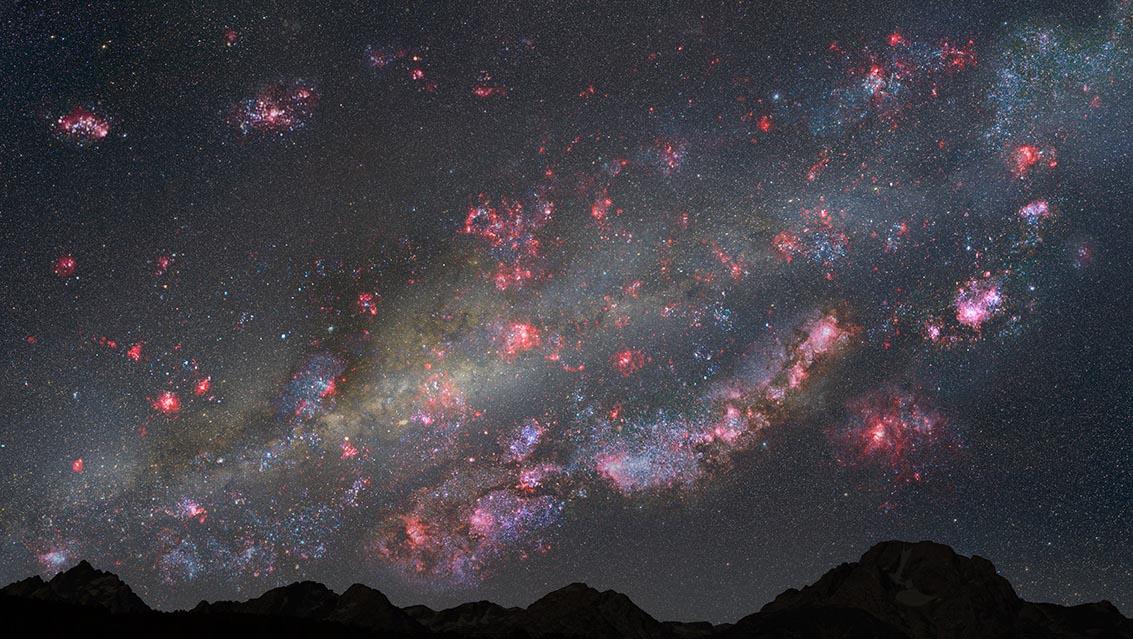
The Milky Way arching over a dark landscape — Washington State's eastern high desert offers some of the darkest skies in the Pacific Northwest

Eastern Washington's Dark Skies

The Cascade rain shadow creates Bortle Class 1–2 conditions in eastern Washington's Columbia River Basin and Palouse region — among the darkest, driest skies in the contiguous United States. Credit: NASA / ESA.

Top Stargazing Sites in Washington State

🏆

Goldendale Observatory State Park

Bortle 2–3. Home to a 24.5-inch Cassegrain telescope — one of the largest publicly accessible scopes in the US. Free public viewing programs Friday–Sunday. The observatory sits at 2,100 ft elevation with clear eastern and southern horizons. Goldendale (pop. 3,400) has minimal light pollution. Plan around the lunar cycle for the best experience.

🏔️

Palouse Region (Pullman / Steptoe Butte)

Bortle 1–2. Steptoe Butte State Park rises 1,000 feet above the rolling Palouse hills, offering 360-degree views. The butte is accessible by paved road to the summit. The Palouse has some of the darkest skies in the Pacific Northwest, with virtually zero light pollution. Best visited in summer and early autumn.

Frequently Asked Questions

Where can I stargaze near Seattle?

Within 2 hours of Seattle, your best options are Snoqualmie Pass (Bortle 3–4, I-90 pull-offs), Rattlesnake Mountain, or Sunrise Visitor Center at Mount Rainier (summer only, Bortle 3). For truly dark skies (Bortle 1–2), you need to cross the Cascades to eastern Washington — Goldendale Observatory is a 4-hour drive but worth it.

Is Olympic National Park good for stargazing?

Olympic is an International Dark Sky Park, but the coastal location means frequent cloud cover. The best stargazing is in late summer (August–September) when the marine layer is less persistent. The Ozette Lake area and Hurricane Ridge offer the park's darkest, most accessible skies. Check the NOAA cloud forecast before driving out.

What telescope should I bring to Washington's dark sites?

A portable Dobsonian (8-inch or smaller) is ideal for the drive across the Cascades. The Sky-Watcher Classic 200P is a popular choice — fits in most cars, sets up in minutes, and under Bortle 1–2 skies reveals thousands of deep-sky objects. For more portable options, see our Best Dobsonian Telescopes guide.