Best Moon Filter for Telescopes 2026: Variable vs Fixed
Telescope Advisor Logo Telescope Advisor
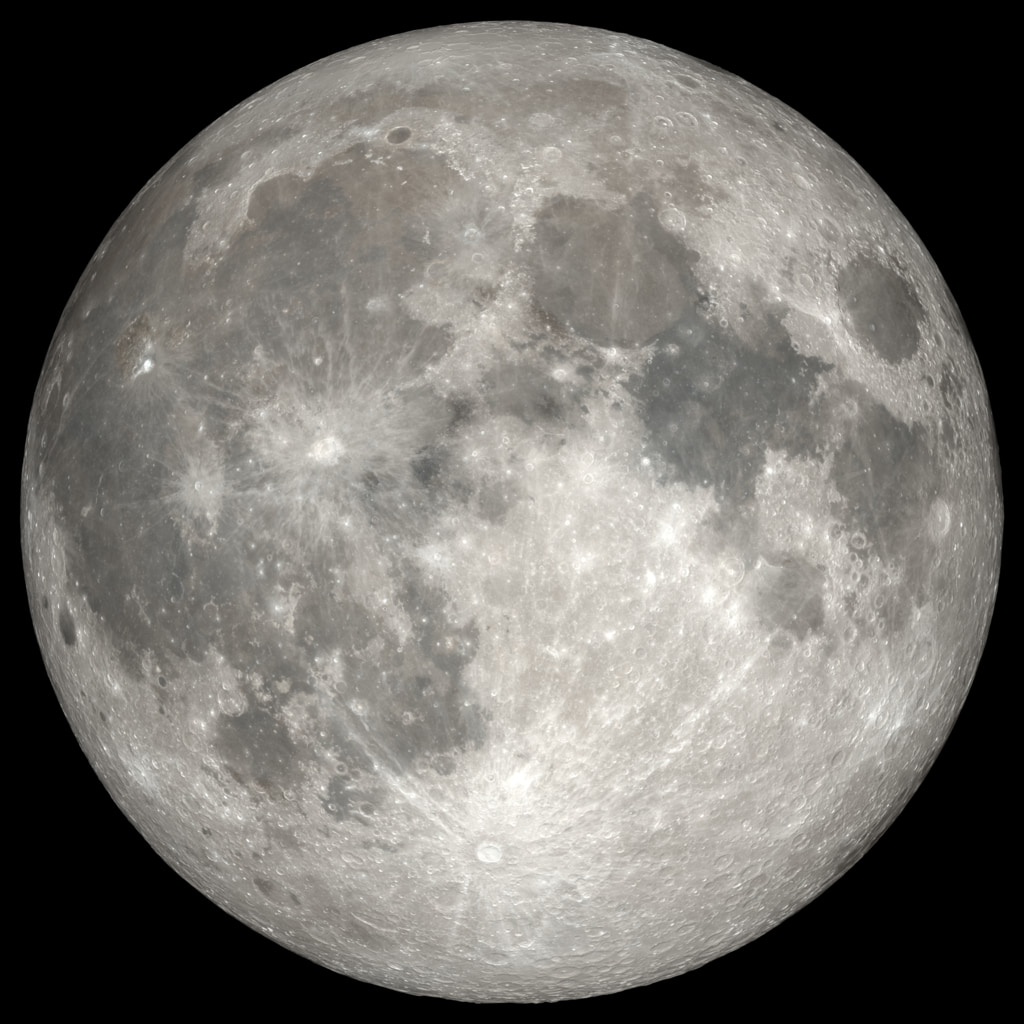
Full Moon photographed by NASA — the Moon at full phase is one of the brightest objects in the night sky, often too bright for comfortable telescope observing without a filter

Accessories Guide · Moon Observing

Best Moon Filter for Telescopes 2026: Variable vs Fixed Compared

A full Moon through a telescope can be genuinely uncomfortable — bright enough to cause eye strain and wash out the subtle grey detail that makes crater landscapes so beautiful. A variable polarizing filter solves this by letting you dial light transmission between 1% and 40% in seconds. Here is exactly which one to buy and how to use it.

Best typeVariable polarizing (not fixed ND)
Transmission range1–40% (variable)
Format1.25" (most scopes) or 2"
When to useQuarter Moon to Full Moon
By Telescope Advisor Editorial Team Published: Updated: Editorial Standards

Quick Answer

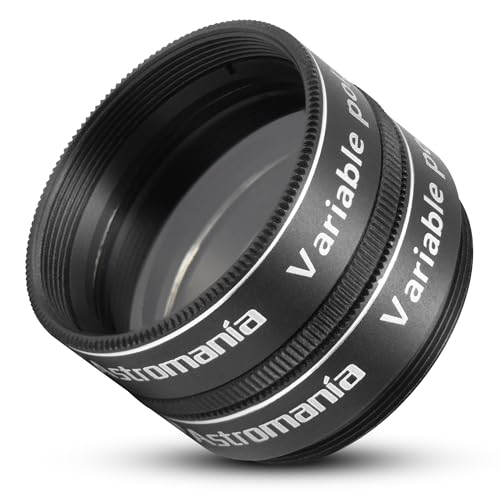
For most observers, the Astromania Variable Grey Polarizing Filter (1.25" for standard focusers, 2" for wide-field eyepieces) is the best moon filter to buy. A variable polarizing filter outperforms fixed neutral density filters because you can adjust light transmission in real time — dialing to 40% transmission for a quarter Moon, dropping to 5–10% for a full Moon, and fine-tuning continuously as your eyes adapt. A fixed filter gives you one setting that is right for only one phase; variable gives you the full range in a single accessory.


Why the Moon Is Too Bright Without a Filter

The Moon is the brightest object most people observe through a telescope — and at or near full phase, it is genuinely too bright for comfortable prolonged viewing in instruments above 60mm aperture. The effect is similar to staring at a light bulb: you can observe for a few seconds before contrast is washed out by the extreme brightness.

This happens because telescopes are designed to gather as much light as possible — which is exactly what you want for faint stars and galaxies, but works against you for the Moon. An 80mm telescope aperture has 160 times more collecting area than your dark-adapted pupil. The Moon's surface reflectance (albedo) of 12% still means an 8" telescope delivers enough lunar light to make contrast-rich observing uncomfortable without attenuation.

When you need a moon filter (and when you don't)

Moon Phase60mm scope80–100mm130mm+
Crescent (1–25%)No filter neededNo filter neededNo filter needed
Quarter (50%)Usually fineOptional (25–30% setting)Recommended (30% setting)
Gibbous (65–99%)HelpfulStrongly recommendedStrongly recommended
Full MoonNoticeableEssentialEssential

The best lunar observing actually occurs at the quarter phases and crescent — when the terminator (the boundary between light and dark) sweeps across the surface at a shallow angle, casting long shadows that reveal three-dimensional crater relief. At full Moon, the Sun shines directly down on the surface and all shadows disappear, making craters look flat. A filter helps with glare at full Moon but does not restore the shadow detail. See our complete Moon observing guide.

Variable Polarizing vs Fixed Neutral Density: The Key Difference

Two fundamentally different filter designs are sold as "moon filters." Understanding the difference before buying prevents a common mistake:

Variable Polarizing Filter ← What We Recommend

Two stacked polarizing glass elements. Rotating the outer element changes the angle between the polarizers, controlling how much light passes through. You can adjust transmission continuously from approximately 1% (nearly opaque) to 40% (lightly tinted) by rotating a ring.

  • ✓ One filter for all Moon phases — adjust in real time
  • ✓ Fine-tune as eyes dark-adapt during a session
  • ✓ Also usable as a double-star contrast aid
  • ✓ Works well on very bright planets (Venus)

Fixed Neutral Density Filter (ND filter)

A single piece of grey glass that reduces all wavelengths equally by a fixed amount — typically 13%, 25%, or rarely 50%. The transmission percentage is fixed; you cannot adjust it.

  • → Correct only for one Moon phase / aperture combination
  • → 13% fixed filter will be too dark at quarter, too bright at full
  • → Less useful — most buyers end up wanting variable eventually
  • → Cheaper, but the savings rarely justify the limitation
The practical case: A 25% fixed ND filter is right for approximately a 70% gibbous Moon through a 100mm telescope. The same filter is far too dark at crescent phase and not dark enough at full Moon in a 150mm telescope. The variable filter adapts to both situations by rotating the outer ring — the only filter you'll ever need for lunar work.

Which Transmission Setting to Use

Variable polarizing filters don't have numerical dials — you judge by the visual comfort of the image. Here are practical guidelines for common observing situations:

SituationApprox. TransmissionHow to Judge
Quarter Moon, 80mm scope30–40%Barely perceptible tint — just takes the edge off
Gibbous Moon, 100mm scope15–25%Comfortable sustained viewing; shadow contrast preserved
Full Moon, 130–150mm scope5–10%Significantly darker; crater detail emerges from glare
Full Moon, 200mm+ scope3–8%Near maximum darkness — the Moon should look comfortable
Dark-adapted eyes mid-sessionReduce by 5–10%As your eyes adapt, you'll want slightly less transmission

The adjustment method: Start with maximum transmission (fully open — 40%). Find the Moon, focus, then slowly rotate the outer ring clockwise until the image becomes comfortably bright — not dark, not glaring, just comfortable for sustained high-magnification work. This takes about 10 seconds and becomes intuitive after a session or two.

1.25" vs 2": Which Size Do You Need?

Telescope eyepieces come in two standard barrel sizes — 1.25" (31.75mm) and 2" (50.8mm) — and moon filters must match the barrel size of the eyepiece you're attaching them to. Most beginner and intermediate telescopes use 1.25" eyepieces exclusively. Only telescopes with 2" focusers (typically 8-inch Dobsonians and above, or quality refractors with 2" diagonal) can use 2" filters.

Buy the 1.25" version if:

  • ✓ Your telescope came with 1.25" eyepieces (most beginners)
  • ✓ You own an AstroMaster, Heritage 130P, NexStar 4SE/5SE/6SE, or similar
  • ✓ You're buying your first moon filter and aren't sure
  • ✓ The filter screws into the barrel of a 1.25" eyepiece

Buy the 2" version if:

  • ✓ You own 2" wide-field eyepieces (35mm, 30mm, 26mm in 2" barrel)
  • ✓ You have an 8"+ Dobsonian with 2" focuser
  • ✓ Your telescope has a 2" diagonal with 2" eyepieces
  • ✓ You want the filter to screw into a 2" eyepiece barrel

Note: Both sizes produce identical optical performance — the only difference is which eyepiece barrel diameter they thread onto. If you own both 1.25" and 2" eyepieces (common with 8" Dobsonians), own one of each or start with the format you use most for lunar observing. The Astromania variable polarizing filter is available in both sizes and uses the same high-quality optical glass in each.

The Best Moon Filters Reviewed

Editor's Pick — Best 1.25" Moon Filter

Astromania Variable Grey Polarizing Filter — 1.25"

4.3★ · 38+ reviews Adjustable 1–40% transmission Standard 1.25" thread

The Astromania 1.25" variable polarizing filter is the practical choice for the vast majority of telescope owners. It threads directly onto the barrel of any standard 1.25" eyepiece — no adapters, no special mounts — and adjusts by rotating the outer ring. The continuously variable transmission from approximately 1% to 40% covers every lunar phase and telescope aperture from 60mm to 200mm+. The all-metal housing with optical glass elements is noticeably more substantial than budget moon filter alternatives. At 4.3★ across 38+ reviews, the consistent feedback is that it delivers clean, comfortable lunar views without the greenish tint that cheaper glass filters produce.

The Astromania variable polarizing filter also works effectively on Venus — the planet's brilliance at inferior conjunction (magnitude −4.5 or brighter) can bleach out phase detail much as the full Moon does. Dialling the transmission down to 15–20% on a bright Venus crescent reveals the phase shape cleanly at 80–100× in a 100mm telescope.

Best for: All 1.25" eyepiece users — AstroMaster 70/114/130, NexStar 4SE/5SE/6SE, Heritage 130P, StarSense LT, PowerSeeker series, and any telescope with 1.25" focuser.

Astromania Variable Grey Polarizing Filter — 2" — Best for 2" focuser owners

4.3★ · 38+ reviews Same optics as 1.25" version 2" standard thread

Identical optical performance to the 1.25" version in a larger 2" barrel for observers with Dobsonians, larger refractors, and SCTs with 2" focusers. The 2" format is particularly valuable with wide-field 2" eyepieces (35mm, 30mm Nagler-class) that give panoramic views of the full lunar disc — at these low magnifications the extra aperture creates intense brightness that the variable filter tames effectively. The larger barrel also makes grip and rotation easier during a cold night session wearing gloves.

Celestron Variable Polarizing Moon Filter — Well-known brand alternative

Celestron's variable polarizing moon filter (1.25") functions on the same optical principle as the Astromania filter — two polarizing elements whose relative angle controls transmission from 1% to 40%. The Celestron branding and reputation for quality optical accessories make it a natural choice for observers who already own Celestron telescopes and accessories and prefer a consistent brand ecosystem. Optical performance between the Celestron and Astromania variable filters is comparable at this price tier. The choice often comes down to which is currently in stock and at the better value — both deliver the essential variable-transmission benefit that makes moon filters genuinely useful.

How to Use a Variable Polarizing Moon Filter

1

Thread onto the eyepiece before inserting in the focuser

The filter screws into the standard filter thread at the base of any 1.25" or 2" eyepiece barrel. Thread it on first, then insert the eyepiece+filter combination into the focuser as normal. The filter rotates independently of the eyepiece once attached.

2

Start at maximum transmission (fully open)

Turn the outer ring until it is at maximum transmission — the Moon will be at full brightness. Focus and centre the Moon first, then adjust the filter.

3

Rotate the outer ring to reduce brightness

Slowly rotate the outer polarizing element while watching the image. Brightness will reduce noticeably as you turn. Stop when the image is comfortably bright — not painfully bright, not too dark to see crater detail. This usually takes 5–10 seconds.

4

Readjust as your eyes dark-adapt

After 10–15 minutes, your eyes will have adapted somewhat and the Moon may seem brighter again. Rotate the ring slightly further to compensate. The variable filter's ability to do this in real time is its key advantage over fixed filters.

5

Switching eyepieces: remove filter, swap eyepiece, reattach

The filter stays at its last setting — no need to re-adjust from scratch when changing eyepieces. Thread it onto the new eyepiece and it's ready.

Secondary use — double star contrast: Variable polarizing filters also work on very bright double stars (Sirius AB, Alpha Centauri AB, Castor) where the primary star's glare can overwhelm the faint secondary. Dialling down to 5–10% transmission lets you confirm the fainter companion without the primary's diffraction spikes flooding the field. This is a niche but genuinely useful secondary application.

🔭

Not sure which telescope actually fits your goals?

Answer 5 quick questions about your budget, observing targets, and experience level — our Telescope Finder Tool recommends a specific model in under 2 minutes.

Find My Telescope →

Moon Filter FAQ

Is a moon filter necessary for telescope observing?

Necessary — no. But for observers with 100mm+ aperture telescopes doing sustained lunar work near gibbous or full Moon phases, a variable polarizing filter makes the difference between uncomfortable, contrast-washed observing and relaxed, detail-rich sessions. At crescent and quarter phases, or with smaller telescopes (60–70mm), a moon filter is optional. It becomes most valuable as aperture increases and as the Moon approaches full phase. Most serious lunar observers consider it an essential part of their eyepiece kit.

Can I use a moon filter to look at the Sun?

Absolutely not. A moon filter transmits between 1% and 40% of visible light — the Sun would still deliver over 1,000 times more light than the Moon at full phase, causing permanent eye injury and likely damaging the filter itself. Solar observation requires a dedicated full-aperture solar filter (Baader film or Thousand Oaks Optical) that reduces transmission to 1/100,000 of solar light. Never use a moon filter, eyepiece ND filter, or any improvised filter for solar observing. See our solar filter guide.

Does a moon filter improve crater detail or just reduce brightness?

Both, to a degree. The primary function is brightness reduction, which improves contrast — much like removing glare from a scene improves how much detail you can distinguish. After your eye stops being overwhelmed by excess light, the grey-tone gradations between different crater materials, lava flows, and ray systems become more discernible. The filter doesn't add resolution (that's set by aperture and atmospheric seeing), but it helps your visual system extract the contrast information that was always optically present but perceptually overwhelmed by glare.

Can a moon filter be used on planets?

Yes, primarily on Venus. Venus can reach magnitude −4.5 to −4.9 at inferior conjunction — bright enough to cause glare in moderate-to-large aperture telescopes at high magnification. A variable polarizing filter at 15–25% transmission makes the gibbous or crescent phase of Venus much more comfortable and reveals the phase shape clearly. Jupiter and Saturn are generally not bright enough to require a moon filter, though observers using large Dobsonians (12"+) sometimes use one on Jupiter to reduce diffraction spikes around the planet at very high magnification. For dedicated planetary contrast improvement on all planets (including dimmer ones), see our planetary color filter guide.

Does the moon filter add any colour to the image?

A quality variable polarizing filter with optical glass elements adds minimal colour — the lunar image appears grey or very slightly neutral. Cheap plastic-element filters sometimes add a greenish or yellowish tint that can be distracting. The Astromania and Celestron variable polarizing filters both use optical glass and maintain colour neutrality across their transmission range. If you see a strong colour cast through a moon filter, it is a sign of lower-quality optical material in the filter.

What is the difference between a polarizing moon filter and a neutral density filter?

A neutral density (ND) filter uses a single piece of grey glass or coated optical element that reduces all wavelengths by a fixed percentage — commonly 13%, 25%, or 50%. It cannot be adjusted. A variable polarizing filter uses two stacked polarizing elements; rotating one relative to the other changes how much light passes through, giving continuously adjustable transmission from ~1% to ~40%. Variable polarizing filters are significantly more versatile and useful than fixed ND filters for lunar work because the optimal brightness varies with Moon phase, telescope aperture, and eye adaptation state.


Related Guides