
Night Sky in October 2026: Saturn at Opposition and More
Telescope Advisor Logo Telescope Advisor
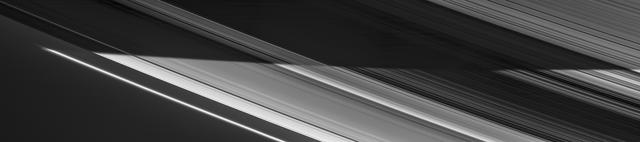
Saturn photographed by NASA Cassini — October 4 2026 is Saturn opposition, the ringed planet at its closest and brightest for the year

Night Sky Guide · October 2026

Night Sky in October 2026: Saturn at Its Annual Best

October 4 is Saturn opposition — the night the ringed planet rises at sunset, transits at midnight, and sets at dawn. Combined with the Orionid meteor shower on October 21-22 and Uranus at opposition on October 26, this is the most event-rich month for telescope observers since August. All month, the autumn deep-sky season reaches its peak.

Oct 4Saturn at opposition — year's best
Oct 11New Moon — darkest skies of October
Oct 21-22Orionid meteor shower peak
Oct 26Uranus at opposition + Hunter's Moon
By Telescope Advisor Editorial Team Published: Updated: Editorial Standards

October 2026 at a Glance

October 2026 is the Saturn month. The planet reaches opposition on the 4th — the precise moment when Earth passes between Saturn and the Sun, placing Saturn at its closest approach, maximum brightness (magnitude 0.2), and largest apparent size (19.5 arcseconds disk diameter) for the entire year. This is the night you have been preparing your telescope for since spring. The rings tilt at 8° — fully open, dramatically improved from the near-edge-on position of 2025, and the Cassini Division is cleanly visible in any telescope above 60mm aperture.

Date Event Equipment Needed
Oct 4Saturn at opposition — closest, brightest, largest of 2026Any telescope 60mm+; 130mm+ for Cassini Division
Oct 5–11Dark sky window builds toward New MoonBest week for deep-sky observing
Oct 8Draconid meteor shower (minor, brief peak near dusk)Naked eye only; rates 5–10/hr typical
Oct 11New Moon — darkest skies of OctoberTelescope or binoculars for faint nebulae and galaxies
Oct 21–22Orionid meteor shower peak (Halley's Comet debris)Naked eye; 30-min dark adaptation required
Oct 26Uranus at opposition (mag 5.6, binocular target)15×70 binoculars or telescope for disk
Oct 26Hunter's Full Moon (same night as Uranus opposition)Naked eye / binoculars for orange moonrise
All monthAutumn deep-sky at peak: Andromeda, Perseus, PleiadesBinoculars or any telescope


🔭

Not sure which telescope actually fits your goals?

Answer 5 quick questions about your budget, observing targets, and experience level — our Telescope Finder Tool recommends a specific model in under 2 minutes.

Find My Telescope →

Saturn at Opposition — October 4, 2026: Everything You Need to Know

Saturn reaches opposition on October 4, 2026 at approximately 17:30 UTC. At this moment, the Earth, Saturn, and the Sun are aligned — with Earth in the middle. The practical result: Saturn rises in the east at sunset, reaches its highest point in the south around midnight local time, and sets in the west at dawn. It is visible essentially the entire night, and it is brighter, larger, and more detailed than on any other night of the year.

This opposition is particularly rewarding because of the ring tilt. Saturn's rings are inclined at approximately 8° to our line of sight — a marked improvement from 2025's near-edge-on view when the rings were at less than 4°. At 8° tilt, the rings are clearly separated from the planet's disk, the Cassini Division (the dark gap between rings A and B) is visible in 80mm+ telescopes at 100× or more, and the three-dimensional structure of the ring system is unmistakably beautiful.

Opposition data — October 4, 2026

Magnitude: 0.2 (brilliant — brighter than all stars)
Distance: 8.7 AU from Earth
Disk diameter: 19.5 arcseconds
Ring tilt: 8° (clearly separated)
Constellation: Aquarius
Transit time: ~midnight local time
Best magnification: 100–200× for ring detail
Min. telescope: 60mm shows rings; 130mm+ for Cassini Division
Saturn at opposition — NASA Cassini photograph showing ring system, Cassini Division, and cloud bands

Saturn at opposition — the year's defining view

October 4 opposition: magnitude 0.2, ring tilt 8°, Cassini Division visible in 80mm+. Credit: NASA/JPL-Caltech/Space Science Institute.

What you can see through different apertures

Telescope Aperture Magnification Saturn Features Visible
60–70mm refractor50–80×Rings clearly separated as oval; disk of planet; Titan (brightest moon)
80–100mm refractor80–120×Cassini Division visible as dark line; 2 cloud belts; Titan + Rhea
130–150mm (5–6 inch)120–180×Cassini Division cleanly split; 3+ cloud belts; 4–5 moons; ring shadow on planet
200–254mm (8–10 inch)150–250×Encke Gap hint; 5+ cloud belts; polar hexagon hint; 6+ moons; ring divisions crisp
Binoculars 10×50+10–15×Rings give Saturn distinctly non-circular, elongated shape; Titan faintly visible in 15×70

The week around opposition is the best, not just the single night

Saturn's apparent size changes by only about 0.5% over the week surrounding opposition. September 27 through October 11 all offer essentially opposition-quality views. The most important variable is atmospheric seeing (turbulence), not the exact date. A calm, transparent night on October 9 will produce better views than a turbulent October 4. Use a seeing forecast app (Cleardarksky, 7Timer Astronomy) to pick the calmest night within the opposition window. See our full Saturn Opposition 2026 telescope guide for the complete observation plan.

How to Get the Best Saturn Views This October

Saturn at opposition is the telescope moment of the year — and most observers underperform because they skip the fundamentals. Here is exactly what to do:

  1. Let your telescope cool down for 30–60 minutes outdoors before observing. A warm mirror in cold night air produces convection currents that blur the image. This is the single most overlooked factor that degrades planetary views. Reflectors need 45–60 minutes; refractors 20–30 minutes.
  2. Wait for Saturn to clear 25° above the horizon. Saturn in Aquarius is at a moderate declination for Northern Hemisphere observers — it reaches about 30–35° altitude at transit from mid-latitudes (40°N). Below 25°, atmospheric dispersion smears planetary detail. Observe within 2 hours of Saturn's midnight transit for the highest altitude views.
  3. Start at lower magnification, build up slowly. Begin at 80–100×, confirm focus is sharp, then increase to 150–200×. Atmospheric stability (seeing) limits the useful maximum — on an average night, 200× is the practical ceiling on most telescopes. On excellent nights, 300× in a 6-inch gives stunning results.
  4. Use a light yellow or orange filter for planetary contrast. A #12 deep yellow or #21 orange filter suppresses blue atmospheric haze and increases contrast between Saturn's cloud belts. Not essential, but notably effective under average seeing conditions.
  5. Track Saturn's rotation. Saturn rotates in 10.7 hours — cloud features shift measurably during a single evening session. The shadow of the rings on the planet changes position noticeably over 30–60 minutes. Watch for it — it's one of the most beautiful observable effects in amateur astronomy.

For a complete monthly observation guide to Saturn including which moons are visible each night and moon transit/occultation predictions, see how to see Saturn with a telescope. For the complete Saturn opposition guide covering gear, eyepieces, and location tips, see the Saturn Opposition October 2026 complete guide.

Orionid Meteor Shower: Peak October 21–22

The Orionids are the annual meteor shower produced by dust left in Earth's orbital path by Halley's Comet. When Earth passes through this debris stream every October, the particles — some deposited thousands of years ago — burn up in the upper atmosphere at 66 km/s, producing fast, often bright meteors with characteristic yellow-orange colors and frequent persistent trains.

2026 Orionid Conditions

  • Peak night: October 21–22, 2026
  • Best viewing window: 1:00–4:00 AM local time
  • Expected rate (dark sky): 20–25 meteors/hour
  • Moon phase at peak: Waxing crescent (~45% illuminated) — sets around 11 PM, leaving the peak window moonlight-free
  • Radiant: Orion's upper left border (near Betelgeuse), rises well after midnight
  • Parent body: 1P/Halley's Comet
  • Meteor speed: 66 km/s — among the fastest shower meteors

Orionid vs Perseid Comparison

The Orionids produce fewer meteors per hour than the August Perseids (20–25 vs 90–120), but the individual meteors are often more striking: faster, frequently brighter, and more likely to leave visible glowing trains that persist for several seconds. In outburst years (which occur roughly every 11–12 years when Halley's Comet is nearer perihelion), Orionid rates can reach 60–80/hour — though 2026 is not predicted to be an outburst year.

Practical tip: The Orionid radiant is low in the east at 10 PM and rises toward overhead by 3 AM. More meteors will appear after 1 AM, when the radiant is high and the Earth's leading face turns more directly into the debris stream.

US City Radiant rises (Oct 21) Peak window Moon sets
New York9:45 PM EDT1:00–4:30 AM EDT~11:15 PM
Chicago9:30 PM CDT1:00–4:30 AM CDT~11:00 PM
Denver9:40 PM MDT1:00–4:30 AM MDT~11:10 PM
Los Angeles9:50 PM PDT1:00–4:30 AM PDT~11:20 PM

Uranus at Opposition: October 26, 2026

Uranus reaches opposition on October 26, 2026, coinciding with the Hunter's Full Moon on the same night. At magnitude 5.6, Uranus is theoretically visible to the naked eye under perfect dark-sky conditions, but is a straightforward binocular target from suburban skies — appearing as a blue-green star-like point that doesn't twinkle (unlike actual stars).

How to find Uranus

At opposition, Uranus is in Taurus, roughly 8° north of the Pleiades star cluster. Use the Pleiades as a starting point — visible to the naked eye as a tight group of blue-white stars. From the Pleiades, look northward by about two fist-widths at arm's length. Uranus will appear as a steady blue-green point that doesn't twinkle. Binoculars confirm it immediately. A finder chart from Stellarium or SkySafari is strongly recommended.

What a telescope shows

At 150mm aperture and 150×, Uranus shows a small but unmistakable disk (3.8 arcseconds) with a distinctive blue-green color caused by methane absorption in its atmosphere. No surface detail is visible in amateur telescopes. In a 200mm+ scope, Uranus's two brightest moons — Titania (magnitude 13.9) and Oberon (magnitude 14.1) — are just detectable under very good conditions with high magnification and an averted vision technique.

The Hunter's Moon complication: The full Moon on October 26 rises shortly after sunset and illuminates the sky throughout the night, significantly reducing contrast for faint targets. For deep-sky observing, the nights of October 11–18 (around New Moon) are far superior. But for bright targets like Saturn, Jupiter, and Uranus itself, the full Moon doesn't interfere — all four planets are easily visible alongside the brilliant moonlit sky. Our complete guide: How to See Uranus With a Telescope.

All Planets Visible in October 2026

Saturn (Aquarius) — Evening all night

Rises at sunset, transits midnight, magnitude 0.2 at opposition. The dominant planet of October. See the full opposition section above for details. What Saturn looks like through a telescope.

Venus (Virgo/Libra) — Evening western sky

Venus has returned to the evening sky and is climbing higher each week after September's inferior conjunction. By mid-October it is visible as a brilliant object (magnitude −3.9 to −4.1) low in the western sky for 1–2 hours after sunset. Through a telescope it shows a gibbous phase (~65–70% illuminated), appearing smaller than its crescent phase but significantly larger than when it was near superior conjunction. Venus sets progressively later through October — by month-end it is visible for 2+ hours after dark.

Jupiter (Gemini) — Pre-dawn and late night

Jupiter is building toward its January 2027 opposition and is now rising by 11 PM local time from mid-northern latitudes, climbing to a reasonable altitude of 30–40° by 3–4 AM. At magnitude −2.4, it is easily the brightest object in the pre-dawn sky (after Venus). Its disk shows 4+ equatorial cloud belts, the Great Red Spot (which transits approximately every 10 hours), and all four Galilean moons in any binoculars or telescope. As October progresses, Jupiter rises earlier each evening — by month-end it is well-placed before midnight. Jupiter telescope guide.

Mars (Cancer/Leo) — Pre-dawn

Mars is visible in the pre-dawn eastern sky, rising around 2–3 AM local time by mid-October. At magnitude 1.0–1.2, it shows an orange tint that distinguishes it from background stars. The disk is small (approximately 7 arcseconds) — approaching its 2027 opposition — but a 150mm+ telescope at steady seeing will show the polar cap and major albedo features like Syrtis Major during favorable rotation positions.

Uranus (Taurus) and Neptune (Pisces) — All night

Both ice giants are favorably placed for the entire night in October. Uranus (magnitude 5.6) reaches opposition October 26 and is a binocular target near the Pleiades in Taurus. Neptune (magnitude 7.8) is in Pisces and requires a telescope and finder chart — see our Neptune viewing guide.

Top Deep-Sky Targets for October 2026

The New Moon window (October 5–17) is the month's prime deep-sky observing period. Plan sessions for these nights — especially October 11 ±4 days for the darkest conditions. October marks the apex of autumn galaxy season for Northern Hemisphere observers.

Object Type Mag. Why October is Perfect Min. Equipment
Andromeda Galaxy (M31)Galaxy3.4Near zenith at midnight — highest altitude of the yearNaked eye / binoculars
Perseus Double Cluster (NGC 884/869)Open clusters4.3High overhead, stunning in binoculars — two rich clusters side by sideNaked eye, binoculars best
Pleiades (M45)Open cluster1.6Rising high in the east by 9 PM — best season for PleiadesNaked eye / binoculars
M15 Globular Cluster (Pegasus)Globular6.2Near zenith in Pegasus — most compact core of any globular60mm telescope
Ring Nebula (M57)Planetary nebula8.8Still high in the west — last good views before winter60mm telescope
Stephan's Quintet (NGC 7317-7320)Galaxy group12–14In Pegasus, high overhead — 5 interacting galaxies (4 physically associated)8-inch+ telescope
M2 Globular (Aquarius)Globular6.5Near Saturn in Aquarius — convenient combo target on Saturn nights60mm telescope
Sculptor Galaxy (NGC 253)Galaxy7.1Edge-on spiral — at southern horizon, best in mid-October from 35–45°N80mm telescope, clear S horizon

Autumn Galaxy Season: Why October Is Special

In October, the Milky Way's galactic plane sweeps low along the western horizon — which means the overhead sky is pointing away from our own galaxy's obscuring dust lane, toward the intergalactic void. This makes October and November the prime months for extragalactic observing: galaxies in Pegasus, Andromeda, Perseus, and the Sculptor constellation are all high overhead and viewed against the least interference from our own Milky Way's star fields. The Andromeda Galaxy (M31) is physically the same all year — but it's viewed through the least atmospheric interference, at the least unfavourable angle, and at the maximum altitude in October. This is why professional astronomers schedule extragalactic campaigns in autumn.

Related guides: How to find Andromeda with a telescope · Best galaxies from light-polluted skies

October Constellations

Dominant overhead (8 PM – 1 AM)

  • Pegasus (The Winged Horse): The Great Square of Pegasus dominates the overhead sky. M15 globular cluster sits just northwest of Aquarius border. Stephan's Quintet is 0.5° from the galaxy NGC 7331.
  • Andromeda: The galaxy M31 sits just north of the Great Square — trace the chain of stars northeast from the star Alpheratz to the faint smudge of the nearest large galaxy.
  • Perseus: High in the northeast, home to the famous Double Cluster (NGC 884/869) — one of the finest binocular objects in the entire sky.
  • Cassiopeia: The W-shaped queen dominates the north — surrounded by rich Milky Way star fields and multiple open clusters.

Rising in the east (after 8 PM)

  • Taurus (The Bull): The V-shaped Hyades cluster and the brilliant Pleiades (M45) rising in the northeast from 7–8 PM onward. Uranus is near the Pleiades at opposition.
  • Orion (The Hunter): Rising after 9–10 PM from the east-southeast. The Orionid meteor radiant is near Betelgeuse. Orion's return signals autumn's end and winter's approach.
  • Gemini: Where Jupiter is now located — rising from the east by 11 PM and climbing to a good altitude by 2–3 AM.
  • Auriga: Rich in star clusters (M36, M37, M38) — all visible in a single binocular sweep with Perseus and Taurus nearby.


Best Gear for October 2026: Saturn Month Essentials

October centres on Saturn opposition — you want a telescope with at least 130mm aperture to cleanly split the Cassini Division. The NexStar 6SE is the ideal combination of aperture and GoTo convenience for Saturn season. For new observers, the Heritage 130P is the fastest path to Saturn's rings at the lowest cost.

Editor's Pick — Best Saturn Telescope for October Opposition
Celestron NexStar 6SE telescope — ideal for Saturn opposition October 2026

Celestron NexStar 6SE

150mm (6") SCT GoTo computerized Tracks Saturn automatically

At 150mm and 1,500mm focal length, the NexStar 6SE is built for exactly this moment. At 180×, Saturn's Cassini Division is split cleanly, the ring shadow is clearly visible on the globe, the rings cast their own shadow on the planet, and Titan glows amber-orange nearby. The GoTo mount finds Saturn in seconds after a two-star alignment and tracks it automatically — no need to nudge the telescope every 30 seconds as the Earth rotates. For the first night of Saturn opposition observing, this telescope delivers a view that genuinely takes your breath away. Full review: Celestron NexStar 6SE review.

Sky-Watcher Heritage 130P tabletop Dobsonian for Saturn viewing

Sky-Watcher Heritage 130P — Best entry-level Saturn scope

If you're buying your first telescope to see Saturn's rings at opposition, the Heritage 130P is the fastest, most affordable path to a genuinely striking view. Its 130mm mirror at 650mm focal length gives a clean ring view at 65×, hints the Cassini Division at 130×, and on a steady night with a quality 9mm eyepiece shows the ring tilt dramatically. Setup takes under 3 minutes — there is no better ratio of "time from box to Saturn" in any telescope at its price point. Full review: Heritage 130P review.

Celestron SkyMaster 15x70 binoculars for October meteor showers and Jupiter

Celestron SkyMaster 15×70 Binoculars — Orionids, Jupiter, Deep Sky

For the Orionid meteor shower (Oct 21-22), binoculars are the tool of choice after a naked-eye session — they trace meteor trains and scan the rich October deep-sky targets with ease. The 15×70 also shows Jupiter's four Galilean moons, Saturn's oval shape, the Uranus disk (faintly blue-green), and the Perseus Double Cluster in stunning glory. Tripod-compatible — essential at 15×. See our best astronomy binoculars guide.

Affiliate links. See our editorial standards.

October 2026 Night Sky — FAQ

When is the best time to see Saturn in October 2026?

Saturn is at opposition on October 4, 2026 — its closest, largest, and brightest night of the year. However, the entire opposition window from September 27 through October 12 offers essentially the same quality of view. The most important variable is atmospheric seeing (turbulence), not the exact date. Saturn transits (reaches highest point due south) around midnight local time throughout October, making the window from 10 PM to 2 AM the prime observing period. Use a seeing forecast for your location — a calm October 8 night beats a turbulent October 4.

Can I see Saturn's rings clearly in October 2026?

Yes — October 2026 is one of the best years for Saturn's rings since 2022. The rings are tilted at 8° toward Earth, meaning they are clearly separated from the planet's disk and appear as a distinctive oval band in even a 60mm telescope at 50×. With 80mm+ aperture at 100×, the Cassini Division (the gap between rings A and B) becomes visible as a dark line within the ring system. At 130mm+ at 150×, the rings are a spectacular three-dimensional structure. The 8° tilt is a substantial improvement from 2025's near-edge-on view when the rings appeared almost as a thin line.

When is the Orionid meteor shower peak in 2026?

The Orionid meteor shower peaks on the night of October 21–22, 2026. The best viewing window is after midnight local time on October 22, when the radiant (in Orion near Betelgeuse) is high in the sky. The Moon is a waxing crescent (~45% illuminated) and sets around 11 PM, leaving the peak hours from midnight onward completely moonlight-free. Expect 20–25 meteors per hour from a dark site — the individual meteors are fast and often bright, with persistent glowing trains lasting several seconds. No equipment needed — just your eyes and a reclining chair or blanket.

What telescope do I need to see Saturn at opposition?

Any telescope shows Saturn's rings at opposition. A 60mm refractor at 50× shows the rings as clearly separated from the disk. An 80–100mm telescope at 100× starts to hint at the Cassini Division. A 130mm (5-inch) telescope at 130–150× cleanly splits the Cassini Division and shows 2–3 cloud belts on the planet. For the most impressive views from suburban skies, a 150mm (6-inch) Schmidt-Cassegrain like the Celestron NexStar 6SE at 180× is exceptional. See our best telescopes for planets guide and the detailed Saturn opposition guide.

What is the Hunter's Moon in October 2026?

The Hunter's Moon is the full Moon closest to the autumnal equinox (which was September 22). In 2026, the October full Moon falls on October 26 — the same night as Uranus at opposition, making for an interesting combination of bright Moon and bright ice giant. The Hunter's Moon rises around sunset and sets around sunrise, illuminating the sky all night. For deep-sky observing, the nights of October 11 ±4 days (around New Moon) are far preferable. But for planetary observing — Saturn, Jupiter, Venus, Uranus — the moonlit sky is irrelevant.

Can I see Uranus with binoculars in October 2026?

Yes — Uranus at magnitude 5.6 is a binocular target from suburban skies. In 10×50 binoculars, it appears as a steady, slightly blue-green "star" that doesn't twinkle — the blue-green color from methane in its atmosphere is faintly distinguishable vs. surrounding stars. A finder chart from Stellarium or SkySafari is essential: Uranus is located about 8° north of the Pleiades in Taurus at opposition. In a telescope at 150×+, the disk (3.8 arcseconds) is just resolvable as a tiny blue-green dot rather than a point, confirming its planetary nature. For a full guide, see how to see Uranus with a telescope.

Is October a good month to buy a telescope?

October is one of the best months to buy a telescope — Saturn at opposition gives you an immediate, unmissable target that will leave you speechless on your first night out. The long autumn nights provide plenty of observing time, and the combination of Saturn + Orionids + deep-sky autumn targets means you'll use the telescope constantly from day one. The next major telescope sale event is Black Friday (late November) — if budget is a hard constraint, waiting 6 weeks for Black Friday deals on Celestron and Sky-Watcher models is worth considering. But the opposition window is NOW — and those views are worth the full price. See our best time to buy a telescope guide.

What deep-sky objects can I see in October without a telescope?

Several showpieces are naked-eye visible in October: the Pleiades star cluster (M45) is obvious to even casual observers, rising in the northeast by 8 PM. The Andromeda Galaxy (M31) is visible as a faint elongated smudge in Andromeda, highest in the sky around 10 PM from mid-northern latitudes. The Perseus Double Cluster (NGC 884/869) is a naked-eye object from dark-sky sites — two side-by-side fuzzy patches between Perseus and Cassiopeia. Binoculars transform all three from interesting to breathtaking. For a full guide to naked-eye astronomy, see what you can see without a telescope.


Related Guides