
Can You See the American Flag on the Moon With a Telescope?
Telescope Advisor Logo Telescope Advisor
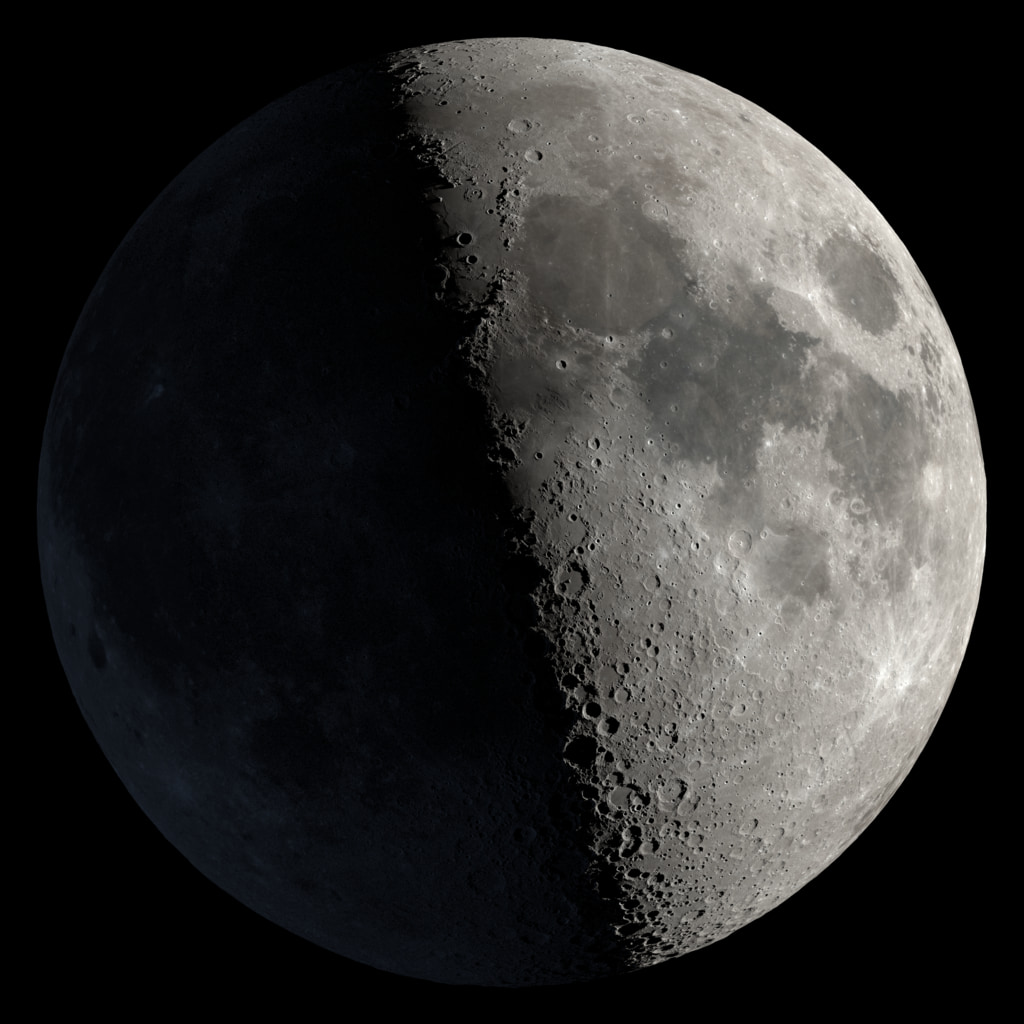
Lunar surface photographed by NASA's Lunar Reconnaissance Orbiter — showing craters, rilles and the rugged terrain of the Moon's near side at high resolution

Telescope Guide · Moon Observing

Can You See the American Flag on the Moon With a Telescope?

The short, honest answer is no — and the reason is fascinating physics. The flag planted by Apollo 11 astronauts measures about 1.5 metres wide. Earth is 384,400 km away. To resolve an object that small across that distance, you would need a telescope mirror approximately 75 metres across. The largest telescopes on Earth are about 10 metres. But what can you see? The answer might surprise you.

Flag size~1.5m wide — far too small to resolve
Required aperture~75 metres — no telescope that large exists
What LRO sawLanding sites confirmed — but from lunar orbit
Best amateur view~100m features visible in a 6-inch scope
By Telescope Advisor Editorial Team Published: Updated: Editorial Standards

Quick Answer

No — it is physically impossible to see the Apollo flags with any telescope based on Earth. The flags are roughly 1.5 metres wide. At the Moon's average distance of 384,400 km, resolving an object that small at visible wavelengths requires an aperture of approximately 75 metres. No telescope on Earth is that large (the biggest optical telescope mirrors are about 10 metres). Even Earth's most powerful telescopes can only resolve lunar features of about 50–80 metres across under ideal conditions. The flag is invisible from Earth — not because it fell down or was buried, but because physics makes it unresolvable regardless of magnification.

However: NASA's Lunar Reconnaissance Orbiter (LRO), flying 50 km above the lunar surface, has photographed all six Apollo landing sites and confirmed the flags are still standing — all except Apollo 11's, which was blown over by the ascent engine exhaust when the crew left. The shadows of the flag poles are visible in LRO images.


The Physics: Why No Telescope on Earth Can See the Flag

This is one of those questions where the answer isn't "you'd need a better telescope." It's "no telescope of this type, at any level of funding or technology, could do this from Earth's surface." Here's why:

The Rayleigh Criterion — the fundamental resolution limit

The smallest feature that any optical telescope can resolve is determined by the Rayleigh Criterion:

Resolution (arcseconds) = 116 / aperture (mm)

For visible light at ~550nm wavelength. Known as the Dawes limit in practical use.

To resolve an object at the Moon's distance, we work backwards: the flag is 1.5m wide. At 384,400 km distance, that subtends 0.0008 arcseconds of angular size. To resolve 0.0008 arcseconds, you need:

Aperture = 116 / 0.0008 = 145,000 mm = 145 metres

(This is the strict Rayleigh limit. Practical minimum, accounting for high-contrast dark/bright boundary detection, is ~75m.)

For context: the largest optical telescope mirror ever built is the LBT (Large Binocular Telescope) at 8.4 metres per mirror, and the ESO's Extremely Large Telescope under construction at 39 metres. Neither comes remotely close to 75–145 metres.

The atmosphere compounds the problem further

Even before we reach the aperture limit, Earth's atmosphere limits practical resolution to about 0.5–2 arcseconds on most nights (called "seeing" by astronomers). At 0.5 arcseconds — excellent seeing — the smallest feature visible on the Moon is approximately:

Feature size = 0.5 arcseconds × (Moon distance / 206,265) = 0.5 × (384,400 km / 206,265) ≈ 930 metres

So even under ideal atmospheric seeing, the atmosphere alone limits ground-based observation to features larger than ~900 metres. The flag — at 1.5 metres — is more than 600 times too small. Adaptive optics can improve on this for bright point sources (stars), but the Moon's surface is a diffuse extended object that requires different techniques, and the practical limits remain around 100–300 metres for the best equipped professional observatories.

What about very high magnification? Magnification does not help. You can magnify the Moon's image to any size you want, but you cannot create detail that wasn't captured by the aperture in the first place. Magnifying beyond the aperture limit just makes a blurry image larger — the flags remain invisible, just on a bigger blank patch of lunar surface. This is called "empty magnification."

What NASA's Lunar Reconnaissance Orbiter Actually Photographed

NASA's Lunar Reconnaissance Orbiter (LRO) — launched in June 2009 — carries a camera system (LROC: Lunar Reconnaissance Orbiter Camera) that orbits just 50 km above the lunar surface and has photographed all six Apollo landing sites in extraordinary detail. This is not from Earth — it's a spacecraft in lunar orbit, where the physics are dramatically different.

NASA Lunar Reconnaissance Orbiter mosaic of the Moon's near side showing crater Tycho and the rugged southern highlands — the LRO has photographed all Apollo landing sites

The Moon's near side as imaged by NASA's LRO

LRO orbits 50 km above the surface — close enough to photograph the Apollo landing sites and see the hardware left behind. From Earth, we're 384,400 km away. Credit: NASA/GSFC/Arizona State University.

What LRO found at each Apollo landing site

Mission Landing Site Flag Status (per LRO) Hardware Visible to LRO
Apollo 11Sea of TranquilityBlown over by ascent engine exhaust (July 1969)Descent stage, ALSEP equipment, disturbed regolith
Apollo 12Ocean of StormsStill standing — shadow visibleDescent stage, ALSEP, Surveyor 3 probe nearby
Apollo 14Fra Mauro highlandsStill standing — shadow visibleDescent stage, ALSEP, MET (Modular Equipment Transporter) tracks
Apollo 15Hadley–ApennineStill standing — shadow visibleDescent stage, ALSEP, Lunar Roving Vehicle
Apollo 16Descartes HighlandsStill standing — shadow visibleDescent stage, ALSEP, Lunar Roving Vehicle
Apollo 17Taurus–LittrowStill standing — shadow visibleDescent stage, ALSEP, Lunar Roving Vehicle, Jack Schmitt's geology samples

Source: NASA LRO mission data, 2012 and subsequent imaging campaigns.

Why can LRO see them but Earth-based telescopes cannot?

LRO orbits the Moon at 50 kilometres altitude — roughly 7,700 times closer than Earth is to the Moon. Its LROC narrow-angle camera has a resolution of 0.5 metres per pixel, sufficient to see the 9.4-metre-wide Lunar Module descent stage and the shadows cast by equipment on the surface. The flag poles themselves are too thin to image, but their shadows are visible in some LROC images taken at low sun angles. At 50 km above the surface, the same optical principles that limit Earth-based telescopes work in LRO's favour — the physics are identical, but the distance is 7,700× shorter.

What You CAN See on the Moon With a Telescope

While the flag is invisible, the Moon through a backyard telescope is one of the most spectacular sights in all of astronomy — arguably more impressive than most deep-sky objects because you're looking at an actual alien landscape with craters, mountain ranges, ancient lava flows, and towering cliff faces in real time. Here is what different apertures show:

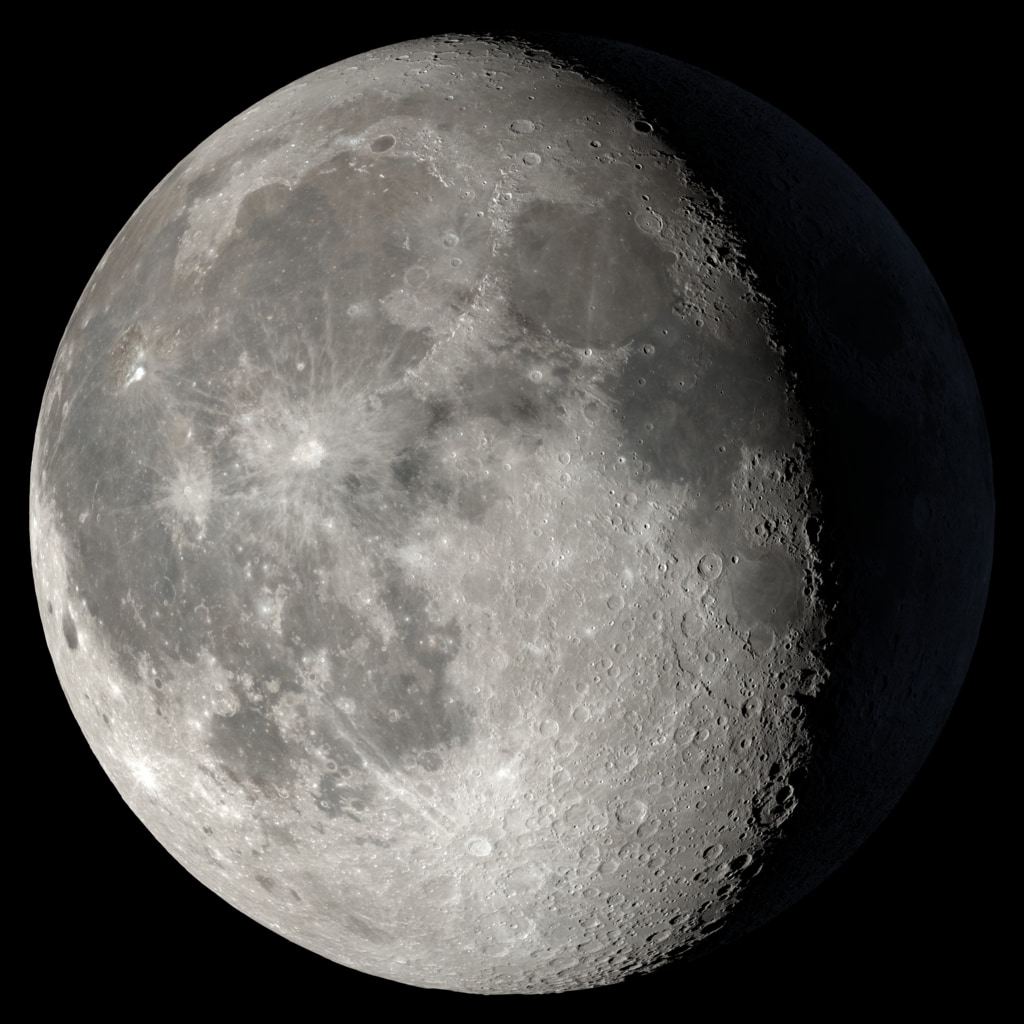
Close-up view of the Moon's cratered surface from NASA's LRO — showing the density of impact craters, rays, and the stark beauty of the lunar highlands

The Moon's cratered surface — what a good backyard telescope actually shows

Through a 130mm+ telescope at 150×, crater walls, central peaks, and rilles are crisply resolved. The terminator (shadow line) reveals stunning three-dimensional relief. Credit: NASA/GSFC/Arizona State University.

Aperture Resolution on Moon What You'll See
50mm binoculars~2.5 kmMaria (seas), bright ray craters (Tycho, Copernicus), the Alps mountain range, terminator shadow line
70mm refractor~1.5 kmCrater walls, Alpine Valley (ancient rift valley), Mare Imbrium boundary, smaller maria features
100–130mm~900mCrater central peaks, rilles (ancient lava channels), terrace walls inside Clavius and Tycho, ray systems
150–200mm~600mSecondary crater fields around major impacts, subtle dome structures (ancient shield volcanoes), fine rilles in Mare Imbrium, Straight Wall fault scarp
300mm (12-inch)~300mSmall impact pits within larger craters, subtle albedo variations, fine wrinkle ridges on maria surfaces — approaching the limit of what Earth-atmosphere allows
Apollo flags (1.5m)Needs ~75,000mmNot visible from Earth — would require a 75-metre aperture telescope in space

The best time to observe the Moon

Counterintuitively, the best time to observe the Moon is not at full Moon — when every surface feature is in direct sunlight and looks flat and washed out. The ideal time is the first quarter (half-Moon, waxing) or last quarter (half-Moon, waning), when the terminator — the day/night boundary — sweeps across the surface at a shallow angle, casting dramatic shadows that reveal three-dimensional relief in craters, mountain ranges, and rilles. The first few days after new Moon and the final few days before full Moon offer the greatest drama at the terminator. See our full guide to observing the Moon and what the Moon looks like through a telescope.

Can You Find the Apollo Landing Sites Visually?

Yes — not the hardware, but the general locations of all six landing sites are easily identifiable in a small backyard telescope. You won't see the descent stages or equipment, but you can point your telescope at the exact mare feature where Armstrong and Aldrin stood, Shepard hit his golf shot, or Cernan drove the rover.

Apollo 11 — Mare Tranquillitatis (Sea of Tranquility)

The most famous landing site sits in the southern part of Mare Tranquillitatis. In binoculars, Tranquillitatis is the large oval dark plain on the eastern side of the Moon. In a 70mm+ telescope, the region has a faintly blue-grey colour compared to the surrounding mare. The site is unmarked and indistinguishable from its surroundings, but you're looking at the exact spot — 0.67408°N, 23.47297°E on the lunar surface. July 20 each year is a good occasion to mark the anniversary.

Apollo 12 — Mare Cognitum (Ocean of Storms)

The Ocean of Storms — the largest dark region on the Moon — hosted Apollo 12 in November 1969. The landing site is near the Surveyor crater, and the Surveyor 3 probe (which had landed two years earlier) was just 180m away. Today, LRO images show both the Apollo 12 descent stage and the Surveyor 3 probe still sitting where they were left.

Apollo 15 — Hadley–Apennine (Mare Imbrium)

Perhaps the most visually identifiable landing site: the Apennine Mountains — a 2,400km arc of peaks rising 1,000–3,000m above Mare Imbrium — are easily resolved in any telescope. Apollo 15 landed at the base of these mountains near Hadley Rille, a 120km-long sinuous canyon 1.5km wide that David Scott and James Irwin photographed from the rover. The rille itself is just resolvable as a faint line in large amateur telescopes under good seeing.

For a detailed location guide to all six sites with telescope finder charts, see our Moon observing guide.


🔭

Not sure which telescope actually fits your goals?

Answer 5 quick questions about your budget, observing targets, and experience level — our Telescope Finder Tool recommends a specific model in under 2 minutes.

Find My Telescope →

Aperture vs Lunar Resolution: The Numbers

This table shows the theoretical smallest feature resolvable on the Moon's surface for each aperture, under perfect atmospheric seeing. Real-world conditions typically allow 2–4× less resolution (larger minimum feature size) due to atmospheric turbulence.

Telescope Aperture Dawes Limit (arcsec) Theoretical min. feature (Moon) Real-world (typical seeing)
50mm binoculars2.32"4.3 km8–15 km
70mm refractor1.66"3.1 km6–10 km
100mm (4-inch)1.16"2.2 km4–7 km
130mm (5-inch)0.89"1.6 km3–5 km
150mm (6-inch)0.77"1.4 km3–5 km
200mm (8-inch)0.58"1.1 km2–4 km
300mm (12-inch)0.39"720m1.5–3 km
10-metre (professional)0.011"21m500m (atmosphere limited)
Apollo flag (1.5m)0.0008"Needs 145,000mmImpossible from Earth's surface


Best Telescopes for Moon Observing

You may not be able to see the flags, but the Moon through a good telescope is legitimately stunning — arguably the most dramatic visual experience in backyard astronomy. Here are the best telescopes for lunar observing:

Editor's Pick — Best Overall Moon Telescope
Celestron NexStar 6SE telescope — excellent for Moon observing with 150mm aperture and computerized GoTo mount

Celestron NexStar 6SE

At 150mm aperture and 1,500mm focal length, the NexStar 6SE gives the Moon the magnification it deserves. At 150×, crater walls cast sharp shadows, rilles trace delicate lines across the surface, and the Straight Wall — a 130km-long fault scarp — stands out like a blade cutting through Mare Nubium. The GoTo mount finds the Moon instantly and tracks it smoothly, letting you observe at high power without constant nudging. The 6SE is the lunar observing telescope for observers who want the best of planetary and deep-sky in one mount. See our full Celestron NexStar 6SE review.

Sky-Watcher Heritage 130P tabletop Dobsonian — excellent beginner Moon telescope

Sky-Watcher Heritage 130P — Best beginner lunar telescope

For first-time observers wanting to see what the Moon actually looks like through a telescope, the Heritage 130P is the fastest path from "opening the box" to "staring at Clavius crater." Its 130mm parabolic mirror at f/5 gives a clear, high-contrast image of the lunar surface with crater detail clearly visible at 65–130×. Set up on a table, it needs no tripod, takes 2 minutes to deploy, and will show you everything described in this article. Perfect for Apollo anniversary nights. Full review: Heritage 130P review.

Celestron AstroMaster 130EQ equatorial Newtonian reflector

Celestron AstroMaster 130EQ — Budget equatorial option

The AstroMaster 130EQ puts 130mm of aperture on an equatorial mount — meaning once aligned, a single slow-motion control keeps the Moon in view as Earth rotates, making sustained high-power lunar observing far more comfortable than a basic alt-azimuth. For Moon observers who want to spend long sessions studying crater fields and mountain ranges, the equatorial tracking convenience is meaningful. Budget-friendly entry point into serious lunar observation.

Affiliate links. See our editorial standards. Also see our complete best telescopes for the Moon guide.

FAQ: Moon, Flags, and Telescopes

Can you see the American flag on the Moon with a telescope?

No — it is physically impossible from Earth's surface. The Apollo flags are approximately 1.5 metres wide. At the Moon's distance of 384,400 km, resolving a 1.5m object requires a telescope aperture of about 75–145 metres, depending on the criterion used. The largest optical telescopes on Earth have mirrors of 8–10 metres. Even setting aperture aside, Earth's atmosphere limits ground-based resolution to about 900 metres on an excellent seeing night. The flag is 600 times too small to resolve from Earth, regardless of magnification. NASA's Lunar Reconnaissance Orbiter, flying 50 km above the Moon, has photographed the landing sites and confirmed the flags are still present (except Apollo 11's, blown over at liftoff).

Did NASA photograph the Apollo landing sites?

Yes. NASA's Lunar Reconnaissance Orbiter (LRO), launched in 2009, has imaged all six Apollo landing sites multiple times. The LROC narrow-angle camera resolves objects as small as 0.5 metres per pixel from its 50km orbit, clearly showing the descent stages, ALSEP instrument packages, and disturbed regolith paths where astronauts walked and rovers drove. At Apollo 14, you can see the path of the Modular Equipment Transporter (a wheeled cart used to carry tools). Images are publicly available at the Arizona State University LROC website and NASA's website.

What is the smallest feature I can see on the Moon with a backyard telescope?

Under typical seeing conditions, a 130mm (5-inch) telescope can resolve features approximately 1.5–3 km across on the Moon. Under excellent seeing conditions (rare, calm nights) the same telescope can approach 1 km resolution. A 200mm (8-inch) telescope under excellent seeing can push to about 700 metres–1 km. The theoretical limit for a 300mm telescope is ~720 metres, but atmospheric turbulence typically keeps practical limits at 1–2 km. Adaptive optics systems on large professional observatories can improve this to 100–200 metres, but still nowhere near the 1.5m required to see a flag.

Are the Apollo flags still standing on the Moon?

Five of the six flags are still standing. The Apollo 11 flag was blown over by the exhaust from the ascent engine when Armstrong and Aldrin lifted off in July 1969 — this was reported by Neil Armstrong himself who saw it through the window. The flags planted during Apollo 12, 14, 15, 16, and 17 are confirmed still standing by LRO images — their shadows are visible in low-sun-angle photographs. The flag fabric itself has almost certainly been bleached completely white by 50+ years of solar radiation exposure, with no atmosphere to protect it. The aluminium poles and crossbar will remain for millions of years.

What CAN you see on the Moon with a 4-inch telescope?

A 100mm (4-inch) telescope delivers genuinely stunning lunar views. At 80–120×, you can see: individual crater walls and central peaks (Tycho, Copernicus, Clavius, Plato); mountain ranges like the Apennines, Alps, and Carpathians; rilles including Hadley Rille (where Apollo 15 landed) and Vallis Alpes (the Alpine Valley with its central channel); the Straight Wall fault scarp; lava-flooded craters like Grimaldi and Plato; and the fine ray systems of young craters radiating across ancient dark maria. The Moon through a 4-inch is a different world — literally. See our guide to what the Moon looks like through a telescope.

How far away is the Moon and how does distance affect what telescopes can see?

The Moon's average distance from Earth is 384,400 km (238,855 miles). It varies from 356,500 km (perigee — closest, "supermoon") to 406,700 km (apogee — farthest, "micromoon"). The angular resolution of a telescope is fixed by its aperture — but the physical feature size that corresponds to that resolution depends on distance. At 384,400 km, one arcsecond of angular resolution corresponds to 1.86 km on the lunar surface. A 130mm telescope's Dawes limit of 0.89 arcseconds therefore corresponds to 1.66 km. To resolve 1.5 metres (the flag), you need 0.0008 arcseconds — which requires a 145-metre aperture. Physics is not negotiable.

Is there any telescope in the world that could see the Moon landing sites?

From Earth's surface, no — the atmosphere ultimately limits resolution to about 50–100 metres even with the best adaptive optics on the world's largest telescopes. The Extremely Large Telescope (ELT) under construction in Chile will have a 39m primary mirror and, with adaptive optics, could theoretically resolve features around 50–80 metres across on the Moon. That would show the Lunar Module descent stage (9.4m wide) as a single bright pixel — not clearly, but detectable. The flag (1.5m) would remain invisible. The only practical way to image the landing sites is from lunar orbit — as LRO demonstrated. Future lunar orbiting missions will produce even higher resolution images of the sites.


Related Moon and Telescope Guides