
What Does the Moon Look Like Through a Telescope? Best Views Guide (2026)
Telescope Advisor Logo Telescope Advisor
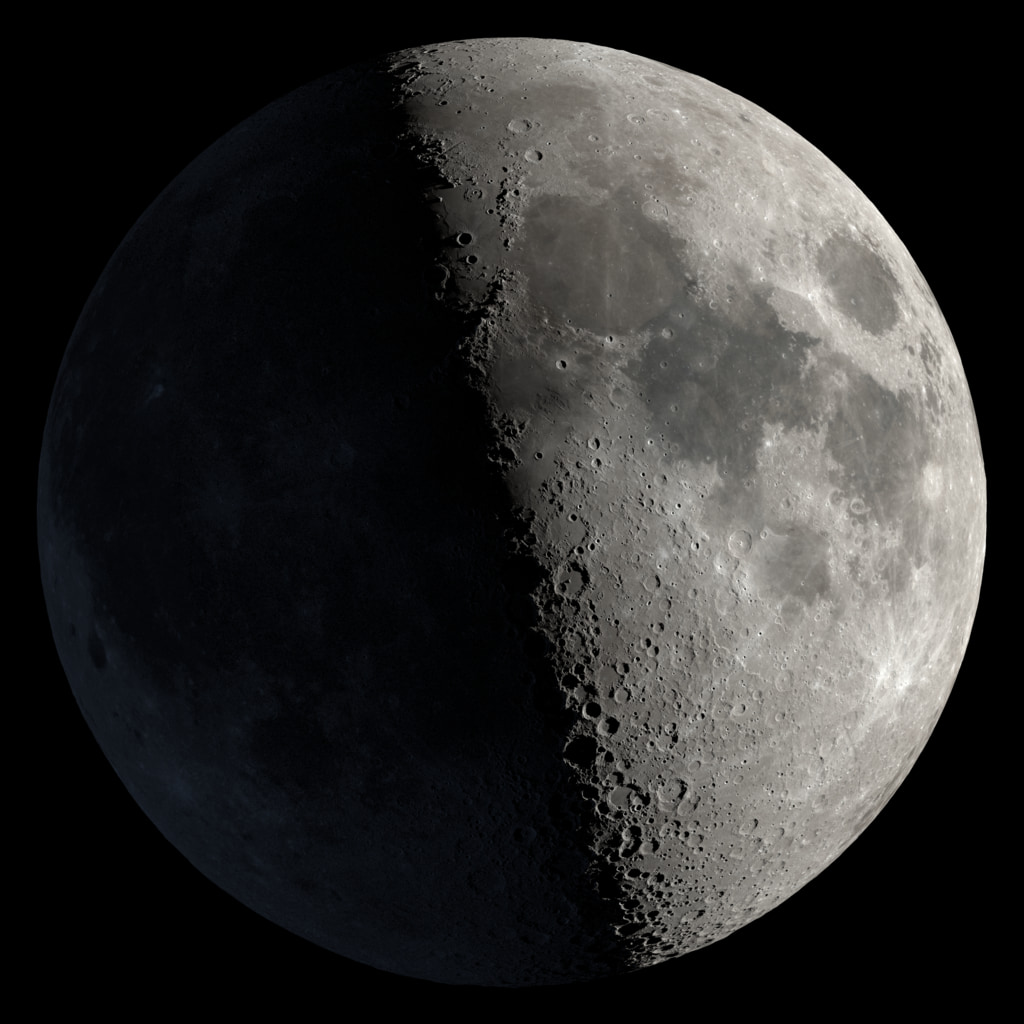
The Moon through a telescope — craters and mare visible in detail

Visual Guide · Moon 2026

What Does the Moon Look Like Through a Telescope?

The Moon through a telescope is unlike any other astronomical target. It is close enough to show craters, mountain ranges, lava plains, and deep fissures in sharp detail — like a geological map of another world. This guide covers exactly what you can see at different magnifications, the best lunar phases for observing, and the telescopes that deliver the most breathtaking views.

Craters

Hundreds Visible

Terminator

Best Detail Zone

1st Qtr

Optimal Phase

Any Scope

Works Great

By Telescope Advisor Editorial Team Published: Updated: Editorial Standards

Quick Answer: What Does the Moon Look Like in a Telescope?

The Moon through even a small telescope reveals a breathtaking landscape of craters, mountains, and dark plains — like looking at a 3D map of another world. At 50×, you see dozens of craters, the dark lunar maria (seas), and the bright highlands. At 150×, the view transforms: crater rims cast sharp shadows, central peaks emerge inside large craters like Copernicus and Tycho, and the terminator — the boundary between day and night — becomes a dramatic landscape of peaks catching sunlight against deep shadow. The Moon is the only celestial object that looks recognizably three-dimensional through a telescope. Every telescope, from a $100 refractor to a $2,000 Dobsonian, delivers spectacular lunar views.


🔭

Not sure which telescope actually fits your goals?

Answer 5 quick questions about your budget, observing targets, and experience level — our Telescope Finder Tool recommends a specific model in under 2 minutes.

Find My Telescope →

What the Moon Shows at Different Magnifications

The Moon is unique in astronomy because it responds beautifully to both very low and very high power. Here is what each range delivers.

Magnification Field of View What You See
25–50×Whole MoonThe entire Moon fits in the eyepiece. Major maria (Imbrium, Serenitatis, Tranquillitatis) visible. Large craters like Tycho and Copernicus noticeable. Good for orientation.
75–120×Half the MoonThe sweet spot. Dozens of named craters visible. Crater rims and central peaks sharp. Rilles (narrow channels) visible on the mare. Mountain ranges along the terminator dramatic.
150–200×Quarter of the MoonIndividual crater detail dominates. Copernicus shows its complex central peak and terraced walls. The Apennine mountain range fills the field. Requires good seeing but the Moon is bright enough.
250×+Small crater regionFor exploring specific features. The Alpine Valley (Vallis Alpes) shows its central rille. Tiny craters and boulders become visible near the terminator. Requires aperture and steady air.

Unlike other celestial objects, the Moon is bright enough at any magnification. You can push power as high as your telescope and the atmosphere allow. The limiting factor is not light — it is the "seeing" (atmospheric steadiness). On a steady night, an 8-inch scope at 300× shows the Moon with breathtaking clarity.

The Terminator — Where the Moon Comes Alive

The terminator is the line separating lunar day from lunar night. This is where shadows are longest and contrast is highest, making every bump and crater rim stand out in 3D relief. The terminator is the single most important concept in lunar observing.

Why the terminator matters: At full Moon, the Sun is directly overhead on the visible face. There are no shadows — everything looks flat and washed out. At the terminator, the Sun is at a low angle. Craters cast long shadows. Mountain peaks catch sunlight while the surrounding terrain is dark. A feature that is invisible at full Moon becomes a dramatic landscape at the terminator.

What to look for along the terminator:

  • Crater shadow play: Watch the shadow of a crater rim shrink as the Sun rises higher over a few hours. Copernicus and Tycho are spectacular at sunrise on the Moon (which corresponds to their position near the terminator during the first quarter and last quarter phases).
  • Central peaks: Many large craters have central mountains that catch sunlight before the crater floor is illuminated. Seeing these peaks "turn on" as the terminator advances is one of lunar observing's great pleasures.
  • Rilles and faults: The Straight Wall (Rupes Recta) is a fault scarp visible as a thin dark line near the terminator around day 8 of the lunar cycle. The Alpine Valley rille is another terminator-dependent feature.

Best Lunar Features to Observe

The Moon has a lifetime of features to explore. Here are the highlights visible in small-to-medium telescopes.

🌋 Copernicus

The most beautiful large crater. 93 km wide with terraced walls and a complex central peak. Best at day 9–10 of the lunar cycle. Visible in any scope at 100×+.

🌟 Tycho

The famous crater with the bright ray system. 85 km across. Its ray pattern stretches across the entire visible face. Best at full Moon (when rays are visible) and near the terminator (for crater depth).

⛰️ Apennine Mountains

The Moon's most dramatic mountain range. Peaks up to 5 km high. Mount Huygens is the tallest. Best around day 7. Visible in any telescope at 75×+.

🏛️ Plato

A dark-floored crater on the northern edge of Mare Imbrium. 101 km wide. Its smooth floor occasionally shows small craterlets that challenge observers with 150mm+ aperture.

📏 Straight Wall (Rupes Recta)

A fault scarp 110 km long and 240 meters high. Looks like a thin dark line at day 8. Requires 100×+ and good seeing. A favorite lunar challenge object.

🏔️ Alpine Valley (Vallis Alpes)

A 166 km long valley cutting through the lunar Alps. A thin rille runs down its center — visible in 114mm+ scopes on good nights. Best at day 8–9.

Best Moon Phase for Observing

The best time to observe the Moon is not at full Moon. The full Moon is bright, flat, and overwhelming. The optimal lunar observing phase is the first quarter (day 5–8 of the lunar cycle) and the area around the third quarter (day 21–24).

  • Day 5–8 (First Quarter): The terminator runs through the most dramatic terrain: the Apennines, Copernicus, and the Mare Imbrium region. This is the prime lunar observing window. The Moon is visible in the evening and sets around midnight.
  • Day 9–13 (Waxing Gibbous): More of the Moon is illuminated. Features near the eastern limb become visible. The Moon is bright but the terminator still provides good contrast. Visible most of the night.
  • Day 14 (Full Moon): Best for ray systems (Tycho, Copernicus). Everything else looks washed out. Use a Moon filter (neutral density or polarizing) to reduce glare. The full Moon is also best for observing through a telescope because its brightness can reveal subtle color variations in the mare.
  • Day 21–24 (Third Quarter): The terminator runs through the western features: Clavius, Schickard, and the Oceanus Procellarum region. Visible in the early morning. Excellent for lunar observers who want to see the "other side" of the Moon's visible face.
  • Day 1–3 (New Crescent): Earthshine — sunlight reflected from Earth illuminates the dark portion of the Moon. A beautiful sight at low power. The thin crescent shows limb features at high contrast.

For daily lunar observing tips, see our astronomy events calendar.

Best Gear for Moon Observing

Editor's Pick — Best Lunar Telescope Under $600
Sky-Watcher Classic 200P — best telescope for Moon viewing

Sky-Watcher Classic 200P Dobsonian

The 200P at 150× with a 10mm eyepiece shows the Moon in breathtaking detail: Copernicus with its terraced walls, the Apennine mountain range with individual peaks resolved, and dozens of small craters along the terminator. The 8-inch aperture allows high magnification while keeping the image bright and contrasty. The Dobsonian mount is stable enough for the high-power lunar work that reveals the most detail.

Celestron Travel Scope 70 — portable lunar telescope

Celestron Travel Scope 70 — Best portable Moon scope

The Travel Scope 70 is lightweight and packs into a backpack, making it the ideal lunar scope for travelers. At 75×, it shows a detailed view of the Moon's major craters, maria, and mountain ranges. The included backpack and tripod make it genuinely portable. The 70mm aperture gathers enough light for sharp lunar views at any reasonable magnification.

Celestron NexStar 8SE — GoTo lunar telescope

Celestron NexStar 8SE — Best GoTo for the Moon

The NexStar 8SE's long focal length and precise tracking make it a superb lunar telescope. At 200×, you can explore specific craters and rilles in exquisite detail. The GoTo system lets you quickly locate named features from the database — just select "Copernicus" and the telescope points there automatically. The tracking keeps the Moon centered in the eyepiece for hours of hands-free observation.

All product links are affiliate links — see our editorial standards.

Why the Moon Looks Different in Your Telescope vs. Photos

The Moon is the one object where the visual view can actually exceed photographs. Here is how the experience compares.

  • Better than photos in some ways: Your eye can adapt to the bright lunar surface and see subtle contrast variations that cameras often blow out. The 3D effect of the terminator is more vivid visually than in any still image.
  • No false color: Photographs of the Moon often have saturation boosted. The real Moon is subtle — the maria are slightly browner than the highlands, and there are hints of blue around some crater rims (titanium-rich deposits). But the colors are very gentle.
  • Size perception: The Moon through a telescope is genuinely large. At 100×, it more than fills the field of view of a typical eyepiece. You do not need to imagine or adapt — the detail is immediately, unmistakably there.
  • Motion is visible: The Moon drifts across the field of view noticeably at high power (unless you have a tracking mount). This movement is a constant reminder that you are watching a real world in motion.

The Moon is the one object that never disappoints. Every telescope shows it well. Every night reveals something new. It is the celestial object that made most astronomers fall in love with the hobby. For more on what different telescopes show, see our telescope price comparison guide.

FAQ: The Moon Through a Telescope

Can I see the Moon with any telescope?

Yes — the Moon is visible in every telescope, regardless of size or quality. Even a cheap 60mm refractor shows dozens of craters, maria, and mountain ranges. The Moon is the most forgiving target in astronomy.

What is the best magnification for Moon observing?

75–120× is the sweet spot for most observers. It shows a wide enough field to see entire crater regions while revealing fine detail. Higher power (150–200×) is better for specific small features like the Straight Wall or Alpine Valley rille.

Is it better to observe the Moon when it is full?

No — the first quarter (day 5–8) is best. The terminator runs through the most dramatic terrain, creating long shadows that reveal 3D detail. Full Moon is the least interesting time for lunar observing because there are no shadows.

Do I need a Moon filter?

A neutral density or polarizing Moon filter is helpful at full Moon to reduce glare and increase comfort. At quarter phases, the Moon is comfortable to view without a filter. Some observers never use filters and prefer the full brightness.

Can I see the Apollo landing sites with my telescope?

No — even the largest amateur telescopes cannot resolve the Apollo descent stages (which are about 4 meters across). From Earth, 4 meters at the Moon's distance is 0.002 arcseconds — far below the resolution limit of any Earth-based telescope. You can, however, see the general area where each mission landed.

How many craters can I see with a small telescope?

With a 70mm telescope, you can see 30–50 named craters. With a 200mm telescope, hundreds become visible. The number of visible craters increases with aperture and observing experience. A lunar atlas helps you identify what you are seeing.


Related Guides