
One Gear Kit for Two Eclipses: What to Buy for 2026 and 2027
Telescope Advisor Logo Telescope Advisor
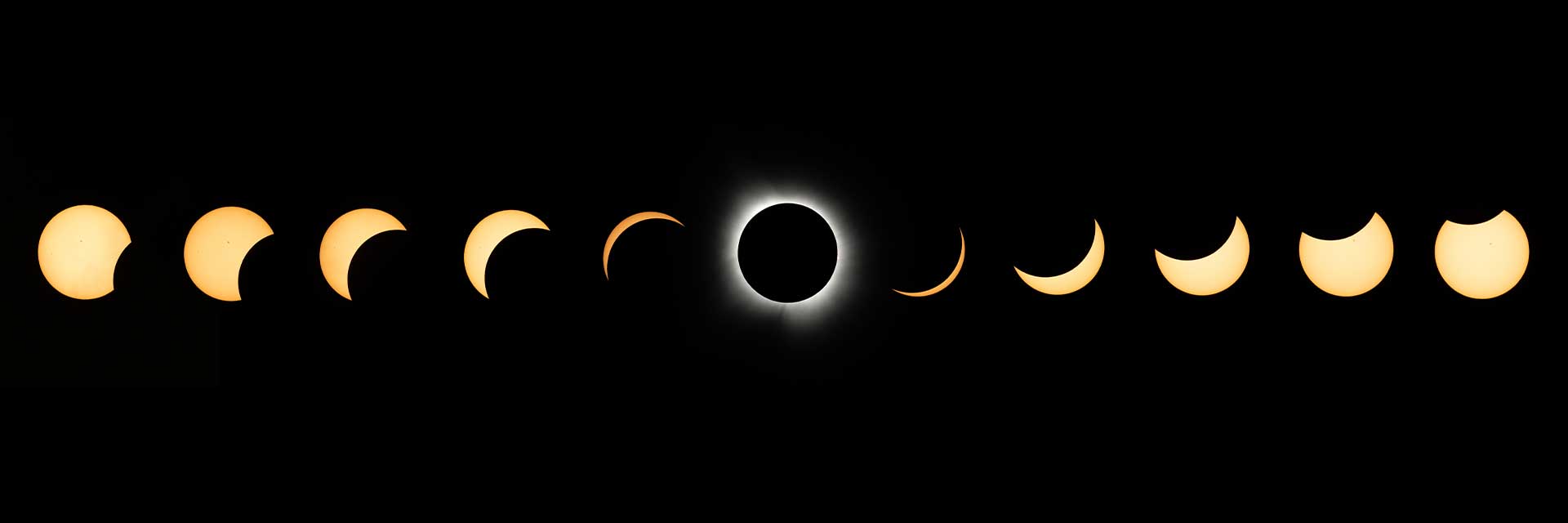
Multi-exposure composite of a total solar eclipse — the 2026 and 2027 eclipses offer two opportunities to use the same gear

Eclipse Gear Guide · 2026 & 2027

One Gear Kit for Two Eclipses: What to Buy for Both Aug 2026 and Aug 2027

The August 12, 2026 total solar eclipse over Spain and Iceland is just the beginning. On August 2, 2027, the "Eclipse of the Century" delivers 6 minutes 23 seconds of totality across North Africa — the longest totality until 2150. The smartest purchase you can make today is gear that works for both events. This guide covers solar glasses, filters, binoculars, and telescope accessories that serve double duty — plus critical considerations for the very different observing conditions between a European sunset eclipse and a North African midday event.

Eclipse 1Aug 12, 2026 · Spain/Iceland
Eclipse 2Aug 2, 2027 · North Africa
2027 totality6 min 23 sec (longest until 2150)
Buy-once strategyOne kit, two eclipses
By Elena Reyes Published: Updated: Reviewed & approved by Juhi Sahni, Senior Editor Editorial Standards
Elena Reyes — Senior Science Editor

Elena Reyes

Senior Science Editor

Covers NASA missions, space science discoveries, and astronomical events for Telescope Advisor. Translates complex astrophysical research into practical insights for backyard observers. Based in the San Francisco Bay Area.

Quick Answer: What One Kit Works for Both Eclipses?

A single kit built around two core items covers both eclipses: ISO 12312-2 certified eclipse glasses (one pair per observer) and a front-mounted solar filter for your telescope or binoculars. These two items cost roughly $30–150 combined and will serve you through both events — and every partial eclipse in between, including the February 2027 annular eclipse over South America.

The key difference between the two eclipses is observing conditions. The 2026 eclipse occurs near sunset over Spain (low altitude, humid Atlantic air, potential coastal fog) and in the morning over Iceland (cold, possible cloud). The 2027 eclipse occurs at midday over North Africa (high altitude, dry desert air, guaranteed clear skies, intense heat). Gear choices that seem minor in 2026 — a lens cleaning kit, a dust cap, a carrying case that seals — become essential in 2027.

This guide is organized by gear category. Each section shows which products serve both eclipses, what to consider for the different conditions, and whether a single purchase covers both events or you need separate items.

For a complete overview of the 2026 eclipse including livestreams, start times, and a minute-by-minute totality timeline, see our Eclipse Livestream Guide.


Eclipse Glasses — The One Purchase That Serves Both

ISO 12312-2 certified eclipse glasses are the single most cost-effective investment for both eclipses. A single pair costs $1–3 and works for any solar eclipse regardless of location, time of day, or weather. The same pair that serves you for the 2026 partial phases in Spain will serve you for the 2027 partial phases in Egypt — and for the February 2027 annular eclipse in between.

The only consideration for 2027 specifically is heat. If you are observing from North Africa in August, temperatures can reach 40–45°C (104–113°F) at midday. Eclipse glasses stored in direct sunlight or inside a hot car can degrade over time. Store them in a sealed opaque envelope inside your camera bag — not on the dashboard or in checked luggage.

Helioclipse ISO 12312-2 Eclipse Glasses

Helioclipse Eclipse Glasses (12-Pack)

ISO 12312-2 certified. Best value for families or group viewing. Individually sealed. Works for both 2026 and 2027 eclipses.

Lunt Solar Eclipse Glasses 5-Pack

Lunt Solar Eclipse Glasses (5-Pack)

ISO 12312-2 and CE certified. Lunt is one of the most trusted names in solar observing. Each pack contains five individually wrapped pairs.

✓ Dual-eclipse verdict: Buy one set of glasses now. Store them properly and they will serve you for 2026, the February 2027 annular eclipse, and the August 2027 total eclipse. The only failure mode is physical damage (scratches, delamination) — inspect before each use using our solar filter test guide.

Solar Binoculars — The Best Long-Term Value

ISO-certified solar binoculars are the best dual-eclipse purchase you can make because they serve double duty: they provide 10–12× magnification for eclipse viewing (far superior to glasses for seeing prominences and the corona), and they remain useful after eclipse week for general daytime observation.

Celestron EclipSmart 10x25 Solar Binoculars

Celestron EclipSmart 10×25

Compact, portable, and lightweight — the ideal travel companion for both eclipses. 10× magnification provides a significantly larger solar image than glasses. The permanently attached ISO filters cannot be removed accidentally. Fits in any bag or pocket.

Celestron EclipSmart 12x50 Solar Binoculars

Celestron EclipSmart 12×50

Higher magnification and larger objectives for brighter, more detailed views. The 12×50 provides superior prominence and corona detail during totality. Heavier at ~790 g — benefits from a tripod, especially for the low-altitude 2026 eclipse.

2027 heat warning: In North Africa, do not leave solar binoculars in direct sunlight or inside a closed vehicle. The fixed solar filters can potentially delaminate under extreme heat. Store them in an insulated camera bag or cooler (not with ice — just the insulated compartment) when not in use. Bring a microfiber cloth — desert dust settles on everything within minutes.

Telescope Solar Filters — What Sizes Serve Both Eclipses

If you plan to observe through a telescope, a front-mounted solar filter is essential for the partial phases. The good news: a single filter works for both eclipses as long as it fits your telescope. There is no "2026 filter" vs "2027 filter" — the Sun is the same, the Moon is the same, and the filter that blocks 99.999% of sunlight works identically regardless of which eclipse you are watching.

What changes between the two eclipses is the observing setup. For the 2026 eclipse in Spain, the Sun is low on the western horizon (20–30° altitude), so you may need a taller tripod or a right-angle finder for comfortable viewing. For the 2027 eclipse in North Africa, the Sun is high overhead (70–80° altitude), which means a different tripod angle and potentially different eyepiece positioning.

Celestron EclipSmart Universal Solar Filter

Celestron EclipSmart Universal Solar Filter

The universal filter fits telescopes from 70mm to 200mm using adjustable tension bands — no tools required. This is the most practical dual-eclipse purchase because it adapts to whatever telescope you bring to each event. If you upgrade your telescope between 2026 and 2027, the universal filter likely still fits.

✓ Dual-eclipse verdict: A single front-mounted solar filter works for both eclipses. If you are buying a filter for the 2026 eclipse, buy one that fits your current telescope — it will serve you identically in 2027. The only exception is if you plan to use different telescopes (e.g., a portable refractor for travel to Spain in 2026 and a larger scope for a fixed-site 2027 expedition).

H-Alpha Solar Scopes — The Premium Dual-Eclipse Investment

For the dedicated observer, a dedicated hydrogen-alpha solar telescope opens a completely different view of both eclipses. Unlike white-light filters that show only the Sun's surface, H-alpha scopes reveal solar prominences — the huge loops of plasma that arc off the Sun's limb — in vivid red detail. During totality, an H-alpha scope shows the chromosphere and prominences that are invisible in white light.

H-alpha scopes are expensive ($500–4,000+) but they serve for every solar observing session between the two eclipses — not just the two big events. If you are serious about solar astronomy, the 12 months between August 2026 and August 2027 offer an ideal window to develop your skills on the active Sun (which will be near solar maximum through early 2027).

Entry-level H-alpha options include the Coronado PST (Personal Solar Telescope) at ~$600 and the Lunt 40mm at ~$500. Both are portable enough for eclipse travel. For the 2027 eclipse, the dry, clear desert air of North Africa offers exceptional H-alpha observing conditions — better than what most European observers experience at home.

2027-Specific: Heat and Dust Protection for Optics

The August 2, 2027 eclipse path crosses the Sahara Desert and the Egyptian desert — environments that present unique challenges that simply do not exist for the 2026 eclipse over Europe. If you are investing in gear that will serve both eclipses, factor in these 2027-specific requirements.

🌡️ Extreme Heat (40–45°C / 104–113°F)

At midday in the North African desert, temperatures can exceed 45°C. Electronics — cameras, smart telescopes, battery packs — can overheat and shut down. Lithium-ion batteries degrade faster in heat. Bring a cooler (without ice) or an insulated bag to store electronics when not in use. A white or silver reflective cover for your telescope helps keep the optics cool. Consider a portable shade structure (pop-up canopy) for your observing station.

🏜️ Fine Desert Dust

Saharan dust is ultrafine and gets into everything — focuser mechanisms, eyepieces, camera sensors, filter threads. Bring a rocket blower, lens cleaning pen, and microfiber cloths (sealed in ziplock bags to keep them clean). Change lenses and filters inside a changing bag or inside a vehicle with windows up. Do not wipe dry dust off lenses — you will scratch the coatings. Use a rocket blower first, then a brush, then a wet cleaning method only if necessary.

☀️ Glare and Shade Management

The high-altitude midday Sun creates intense glare. A solar finder (not a regular optical finder, which can be damaged) is essential for quickly centering the Sun without looking through the main scope. A white-light solar filter is mandatory — the Sun's intensity at 70–80° altitude is significantly higher than at 20–30° (shorter atmospheric path = less attenuation). Bring a dark cloth to drape over your head and eyepiece for comfortable viewing.

Bottom line: If you are buying gear now that you plan to use for both eclipses, prioritize sealed storage (hard cases with foam, ziplock bags, sealed Pelican-style cases) and cleaning supplies (rocket blower, lens pen, sealed microfiber cloths). These cost $20–50 total and may save your equipment in the desert.

Travel Gear and Power Solutions for Both Eclipses

The logistics of getting to northern Spain in 2026 versus the Egyptian desert in 2027 are vastly different, but certain travel gear serves both trips.

Hard Carrying Case

A hard case with custom-cut foam protects your optics during both flights and desert transport. The Apache cases from Harbor Freight ($50–100) offer Pelican-like protection at a fraction of the price — worth considering for the gear you plan to take to both eclipses. For 2027 specifically, a case with a rubber gasket seal helps keep desert dust out.

Power Bank (20,000+ mAh)

Smart telescopes (Seestar, Dwarf 3, Origin) and camera batteries both benefit from USB power banks. A 20,000 mAh bank with Power Delivery (PD) provides enough charge for a full night of imaging or a day of eclipse photography. For 2027's extreme heat, choose a power bank with a higher operating temperature rating (many are rated only to 40°C — check the spec sheet).

Universal Tripod

If you are traveling to both eclipses, a lightweight carbon-fiber tripod that handles both binoculars and a small telescope saves checking luggage. The 2027 desert requires a tripod with spiked feet (sand can be loose and unstable) — standard rubber feet slip on desert sand. Bring a ground cloth to place under the tripod to prevent it from sinking.

Lens Cleaning Kit

A proper cleaning kit (rocket blower, lens pen, Zeiss wipes, sealed microfiber cloths) is nice-to-have for 2026 but essential for 2027. Buy a kit that comes in a sealed case so the cleaning cloths stay dust-free. Practice using the rocket blower before the eclipse — the instinct to wipe a dusty lens is strong, but wiping without blowing first will scratch the coatings.

Eclipse-to-Eclipse Comparison Table

Factor Aug 12, 2026 Aug 2, 2027 Gear Implication
Totality duration2 min 18 sec6 min 23 sec2027 allows more time for filter removal, camera adjustments, and naked-eye observing
Sun altitude~25° (low)~75° (high)2026 needs taller tripod; 2027 needs solar finder, different eyepiece angle
Temperature20–28°C (pleasant)40–45°C (extreme)2027 requires heat management, shade structure, cooling for electronics
Dust/hazeAtlantic moisture possibleFine desert dust constant2027 requires sealed cases, rocket blower, lens cleaning kit
Weather riskModerate — coastal fog/cloudVery low — guaranteed clear2026 may need flexible travel plans; 2027 is almost certain viewing
Corona appearanceSolar max — complex coronaLate solar max — still activeBoth offer excellent prominence and corona viewing
AccessibilitySpain — major airports, good roadsEgypt — well-developed tourism, remote sites possibleBoth accessible but 2027 requires more local planning

Frequently Asked Questions

Can I use the same eclipse glasses for 2026 and 2027?

Yes, as long as they meet ISO 12312-2 certification and are not damaged. Store them in a cool, dry place away from direct sunlight. Inspect them before each use — check for scratches, pinholes, or delamination using our solar filter test guide.

What gear works for both the 2026 and 2027 eclipses?

Eclipse glasses, solar binoculars, and front-mounted telescope solar filters all work for both eclipses. The Sun and the Moon are the same — the equipment that blocks sunlight safely for one eclipse works identically for the other.

Do I need different equipment for the 2027 eclipse heat?

Your solar viewing equipment (glasses, filters) works the same. But you need additional gear for the desert environment: a shade structure, sealed storage cases, rocket blower and lens cleaning supplies, a power bank rated for high temperatures, and a tripod with spiked feet for stability on sand.

Is the 2027 eclipse longer than 2026?

Yes, significantly. The 2026 eclipse has a maximum totality of 2 minutes 18 seconds. The 2027 eclipse has a maximum totality of 6 minutes 23 seconds — nearly three times longer and the longest total solar eclipse until 2150.

Should I wait to buy eclipse gear until closer to 2027?

No — buy now. Eclipse glasses and solar filters tend to sell out before major events, and prices on remaining stock rise as supply diminishes. Buying now ensures you have certified gear for the 2026 eclipse, and that same gear will serve you for 2027 at no additional cost.

What is the best solar filter for viewing both eclipses?

A front-mounted white-light solar filter that fits your telescope is the best investment. The Celestron EclipSmart Universal Solar Filter fits most telescopes from 70mm to 200mm. For higher contrast views of solar prominences, an H-alpha scope provides a different experience but is significantly more expensive.