
ESA News · Euclid Quasar Discovery · July 2026
Euclid Discovers the Most Ancient Quasars in the Universe
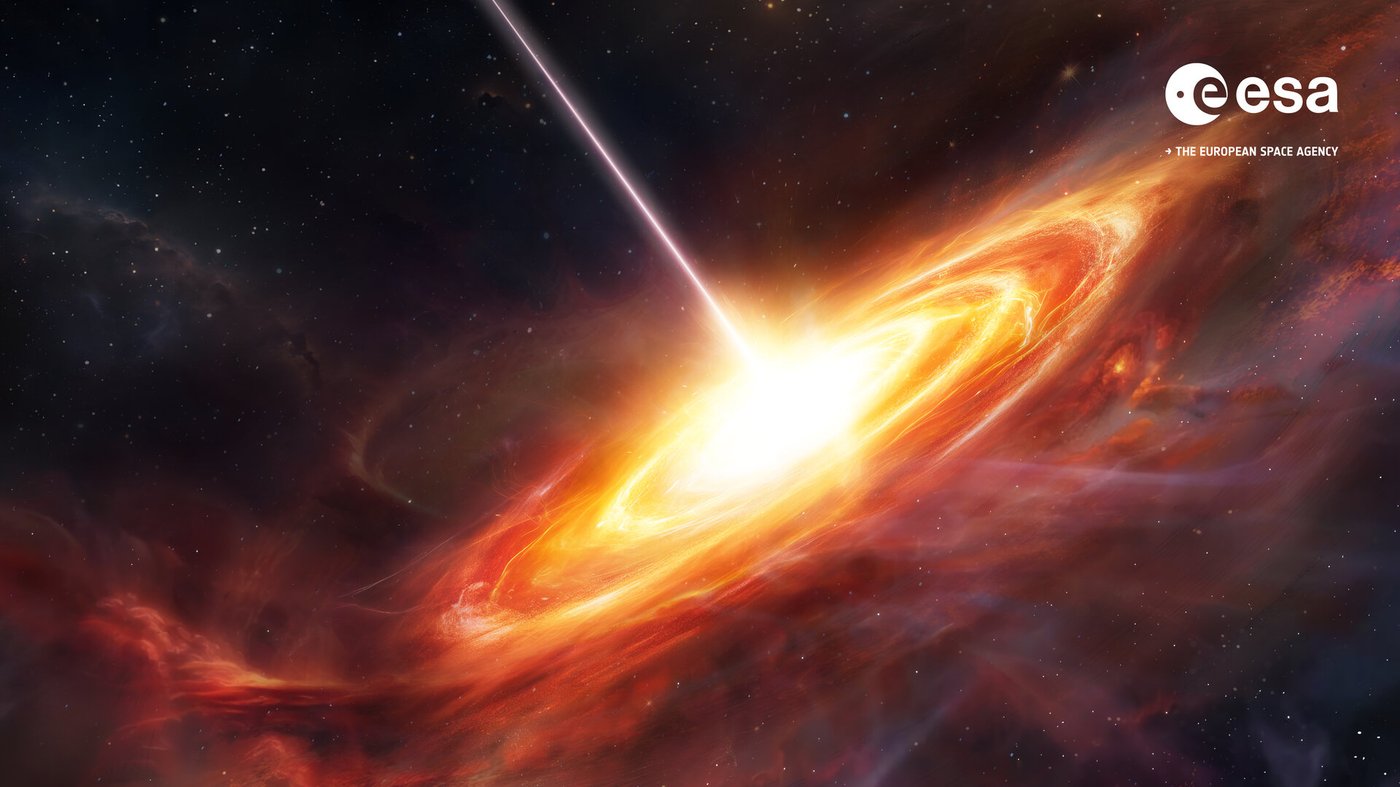
ESA's Euclid space telescope has discovered 31 extremely distant quasars — including two that are farther away than any previously known. The record-breaking objects blazed with the energy of a thousand billion stars when the Universe was just 670 million years old, more than doubling the number of known quasars from the cosmic dawn.
Discovery31 new ancient quasars
RecordRedshift 7.77 (oldest)
Age670 million years old
TelescopeESA Euclid
By Elena Reyes
|
Published:
|
Updated:
|
Reviewed & approved by Juhi Sahni, Senior Editor
Editorial Standards

Elena Reyes
Senior Science Editor
Covers NASA missions, space science discoveries, and astronomical events for Telescope Advisor. Translates complex astrophysical research into practical insights for backyard observers. Based in the San Francisco Bay Area.
Content reviewed by our editorial team. Research and drafting assisted by AI to ensure unbiased, data-driven analysis. Learn more about our editorial process.
The Discovery: 31 Ancient Quasars
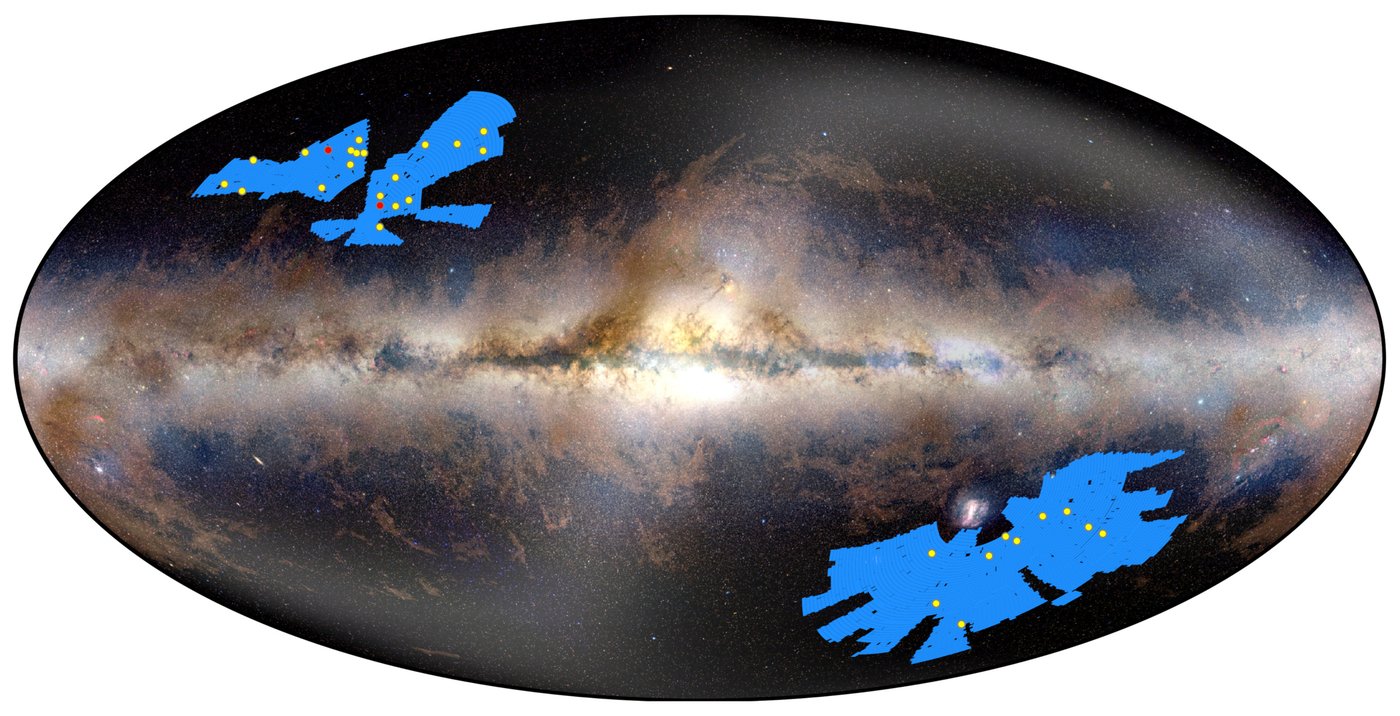
ESA's Euclid space telescope has discovered an unprecedented 31 new quasars in the early Universe, pushing back to a time when the cosmos was just 5% of its current age. The findings, published July 6, 2026 in Astronomy & Astrophysics, add 12 quasars at a redshift of 7 or above — corresponding to the first 770 million years of the Universe — more than doubling the number of known quasars from this ancient epoch.
"These early quasars date back to the Universe's infancy," says Daming Yang of Leiden University in the Netherlands, lead author of the Euclid discovery paper. "By finding and studying them, we can better understand how these enormous systems formed and grew so quickly — one of the greatest mysteries in astrophysics."
Quasars are among the most luminous objects in the cosmos, powered by supermassive black holes at the centres of distant galaxies. During its brief quasar phase, a galaxy's nucleus outshines everything else in the Universe, often shining hundreds to thousands of times brighter than the rest of its host galaxy combined.
The Record-Breakers: Redshift 7.77 and 7.69
The two most ancient quasars in the batch have shattered the previous distance record. Designated EUCL J172902.75+641018.1 and EUCL J125308.55+705432.3, these cosmic giants have redshifts of 7.77 and 7.69 respectively — surpassing the previous record-holder (redshift 7.64, discovered in 2021) and setting a new milestone for the most ancient quasars ever observed.
Both objects lie just over 13 billion light-years away and emerged during the Universe's first 670 million years. They blazed with a luminosity that outshines entire galaxies, powered by supermassive black holes that had already grown to enormous sizes in what astronomers consider a remarkably short time after the Big Bang.
The second most ancient quasar was studied in detail by Silvia Belladitta and collaborators, revealing that it is embedded in a dusty, gas-filled galaxy that is furiously forming new stars — providing rare insight into what the host galaxy of an early supermassive black hole looks like.
What This Means for Astronomy
The earliest quasars known until now were the rare, exceptionally bright outliers — the ones easiest to spot. Astronomers had simply not found enough of them to study as a population. Astronomers had not found enough quasars from the Universe's early days to study them properly as a group. Euclid's new finding changes that fundamentally, capturing not just the bright outliers but most of the ancient quasar population.
"Euclid is a true game-changer," says Daming Yang. "Before, we could only find a handful of the very brightest ancient quasars, but Euclid lets us search far more efficiently across huge areas of sky to capture much fainter light. It's a unique tool for quasar hunting."
Discovering the first 10 or so quasars at a redshift of 7 or above took astronomers more than a decade. Euclid has already discovered more than that in a single year. "The Euclid team has taken a true 'census' of quasars at the dawn of the Universe for the first time," adds Antonio La Marca, an ESA Research Fellow on the Euclid team. "It's a big step towards understanding these fascinating objects on a more fundamental level."
"Ancient quasars are rare discoveries. They're interesting in themselves, but also time machines that enable us to explore the early Universe and understand how the first generation of galaxies came to be," says ESA Euclid Project Scientist Valeria Pettorino.
The Epoch of Reionisation
These quasars hark back to a fascinating period in cosmic history known as the epoch of reionisation — when the Universe shifted from being cold and dark (the cosmic dark ages) to hot and ionised, split apart by energetic light from the first stars and galaxies. This transitional epoch was a crucial era that set the stage for everything we see today.
Understanding how supermassive black holes grew to millions or billions of solar masses in the first few hundred million years after the Big Bang remains one of the greatest unsolved problems in astrophysics. The discovery of 31 new ancient quasars provides astronomers with a statistically significant sample to begin answering this question — revealing how common these objects were, how quickly they grew, and what role they played in shaping the early Universe.
Why Euclid Is a Game-Changer
Launched in July 2023, Euclid began its routine science observations in February 2024. The telescope was designed primarily to study dark energy and dark matter by mapping the large-scale structure of the Universe across more than one-third of the sky. But its combination of wide-area coverage, depth, sharp imaging, and space-based infrared vision makes it uniquely suited to finding rare, extremely distant objects like ancient quasars.
"Euclid's capabilities are unrivalled," says Pettorino. "The telescope combines a large area, depth, sharp imaging, and unique space-based infrared vision in a way that lets us pick out rare, extremely distant objects far more efficiently than before." The 31 quasars were discovered in data from the Euclid Wide Survey, which will cover more than one-third of the total sky once complete — meaning many more ancient quasars are likely waiting to be found.
Euclid is a European mission built and operated by ESA, with contributions from its member states and NASA. The Euclid Consortium — more than 2,000 scientists from 300 institutes in 15 European countries, the USA, Canada, and Japan — is responsible for the scientific instruments and data analysis.
Also popular on Telescope Advisor
⚡ Prime Big Deal Days Telescope Deals
Oct 6–7 — what to buy this week
🎄 Telescope Christmas Gift Guide 2026
Every budget and recipient covered
Telescope Black Friday Deals 2026
Live deal tracking from Nov 20
How to Choose a Telescope
7-step buyer’s framework
Best Telescopes for Beginners 2026
13 reviewed & ranked picks
How Much Does a Telescope Cost?
Price guide: $80 → $2,500+
Frequently Asked Questions
What did Euclid discover?
ESA's Euclid space telescope discovered 31 new ancient quasars, including two that are the most distant ever found. The discovery more than doubles the number of known quasars from the Universe's first 770 million years.
How far away are the new quasars?
The two most ancient quasars, EUCL J172902.75+641018.1 and EUCL J125308.55+705432.3, have redshifts of 7.77 and 7.69 respectively, meaning they are over 13 billion light-years away. They existed when the Universe was just 670 million years old — about 5% of its current age.
What is a quasar?
A quasar is a brief phase in a galaxy's life when large amounts of material spiral into its central supermassive black hole, releasing enormous amounts of energy. During this phase, the galaxy's nucleus shines more brightly than anything else in the Universe, often outshining its host galaxy by hundreds to thousands of times.
Why is this discovery important?
This discovery more than doubles the number of known ancient quasars, providing astronomers with a statistically significant sample to study how supermassive black holes grew so quickly in the early Universe. It also demonstrates Euclid's unique capability to find rare, distant objects across huge areas of sky.
What is the epoch of reionisation?
The epoch of reionisation was a period in cosmic history when the Universe shifted from being cold and dark (the cosmic dark ages) to hot and ionised, split apart by energetic light from the first stars, galaxies, and quasars. It was a crucial transitional era that set the stage for everything we see in the Universe today.
How does Euclid find ancient quasars?
Euclid combines wide-area coverage, deep imaging, sharp resolution, and space-based infrared vision to identify rare, extremely distant objects. Its infrared sensitivity allows it to detect the redshifted light from the earliest quasars, which has been stretched from visible into infrared wavelengths by the expansion of the Universe over billions of years.
Continue Exploring
Keep the session going with the next useful answer
Choose the next page based on whether you need a recommendation, a comparison, or a practical observing plan.
Get a Telescope Recommendation
Fastest path if you want one model instead of another long guide.
Use the Buyer Framework
See the decision order that matters before you buy.
Plan Your Next Session
Turn your gear into a concrete observing list for tonight.
⚡ On sale now: Prime Big Deal Days telescope deals · or wait for Black Friday?
🎄 Holiday season: Telescope Christmas Gift Guide 2026 · Black Friday deal tracking
Sources
Explore More
🌌
🌟
🕳️
🔴
📱
⭐
Webb Reveals Centaurus A
Active galaxy in stunning infrared detail.
Webb Reveals Baby Stars in FS Tau
Protostars and outflows in Taurus.
What Is a Black Hole?
Complete beginner's guide.
Little Red Dot Galaxies Explained
JWST's mysterious early galaxies.
Best Astronomy Apps
Star maps and observing tools ranked.
Complete Constellations Guide
All 88 constellations and how to find them.