
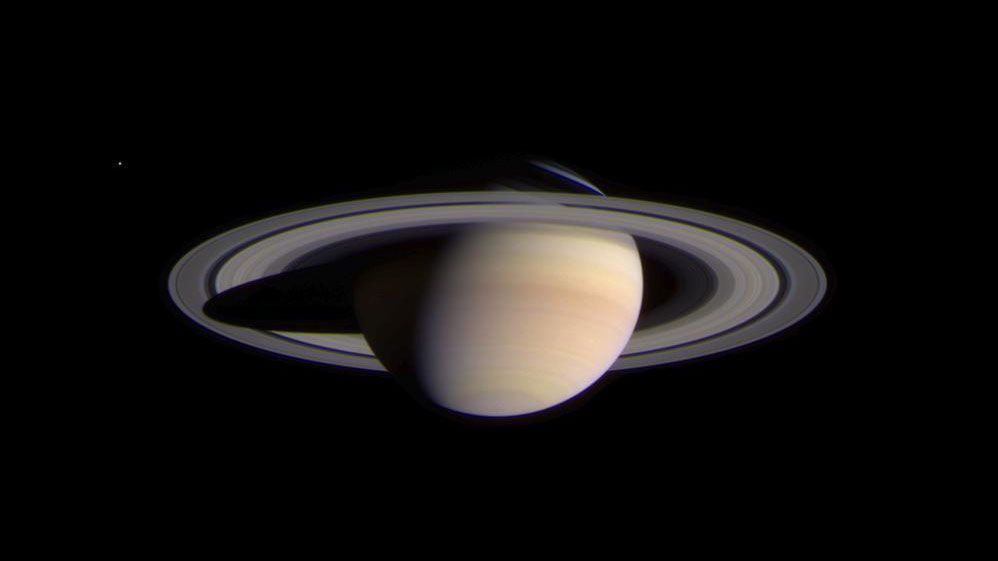
Quick Answer: What Does Saturn Look Like in a Telescope?
Through any telescope at 75× or higher, Saturn appears as a small but unmistakable cream-colored oval with rings extending from either side — like a tiny model of itself floating in space. The planet itself is about 15–20 arcseconds across (roughly the size of a peppercorn at arm's length), and the rings extend about 40 arcseconds from tip to tip. Through a 70mm telescope at 75×, the rings are clearly separated from the planet. Through an 8-inch telescope at 150×, you can see the Cassini Division (a dark gap between the A and B rings) and subtle cloud bands on the planet's disk. No telescope shows color as vividly as NASA photos — the visual reward is the shape, the rings, and the profound experience of seeing a world 800 million miles away.


