A Coruña Eclipse 2026: Total Solar Eclipse Guide — Times and Viewing Spots
Telescope Advisor Logo Telescope Advisor
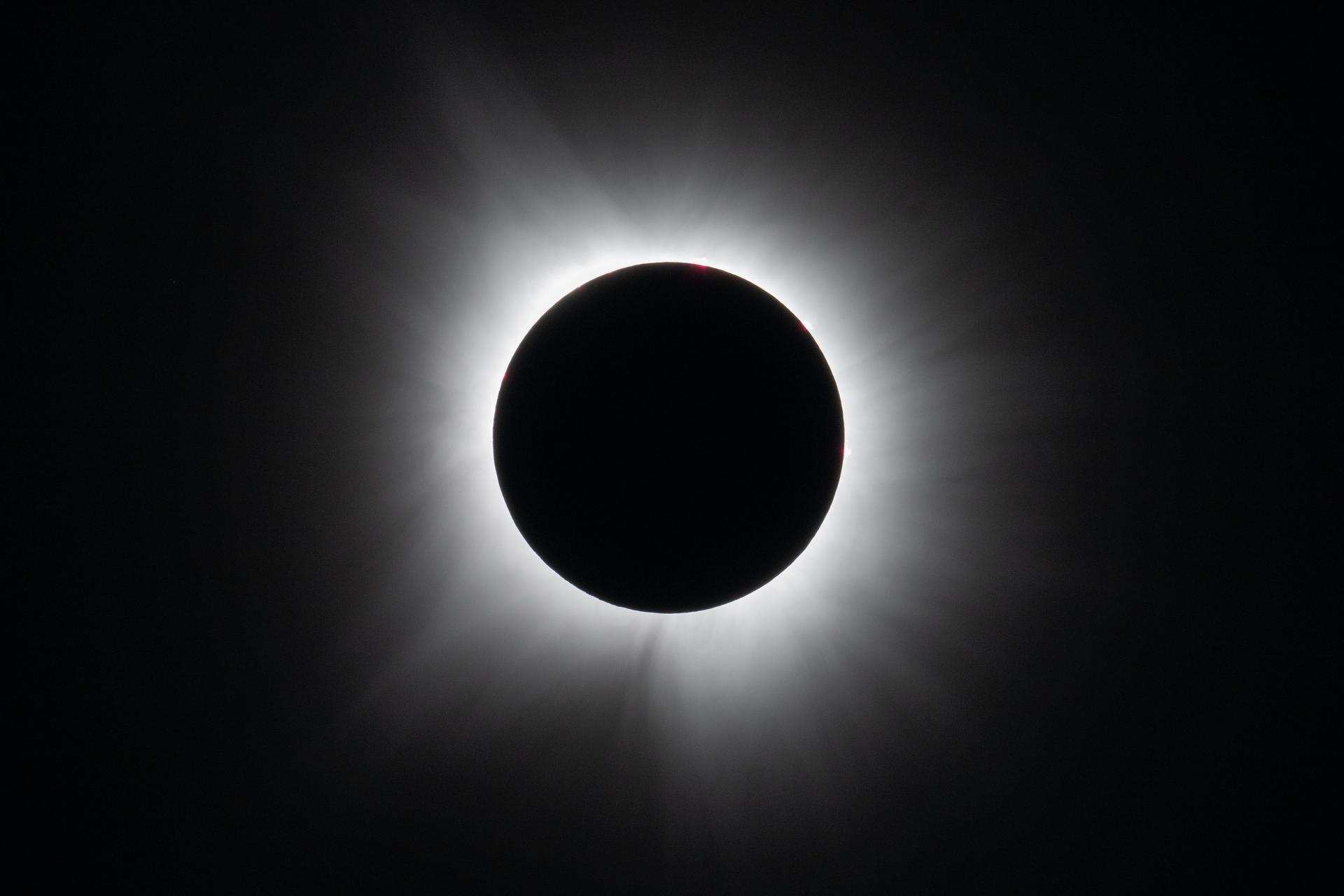
Total solar eclipse corona — the view that awaits observers in A Coruña, Spain on August 12, 2026

Eclipse Guide · A Coruña · August 12, 2026

A Coruña Eclipse 2026: Total Solar Eclipse Guide — Times, Coast Viewing Spots & Weather

A Coruña, the historic Atlantic port city in Galicia, is one of the most accessible totality locations in Spain for the August 12, 2026 total solar eclipse. This guide covers exact timing, the best coastal and city viewing positions, Atlantic weather patterns, and the eclipse-viewing gear you need to make the most of your minute and a half in the Moon's shadow.

Totality duration~1 min 40 sec
Totality begins~8:58 PM CEST
Sun altitude~7° above NW horizon
Cloud cover odds~55–65% August average
By Telescope Advisor Editorial Team Published: Updated: Editorial Standards

Quick Answer: Is A Coruña a Good Place to See the 2026 Total Eclipse?

Yes — A Coruña offers one of the longest totality durations of any Spanish city at approximately 1 minute and 40 seconds, placing it among the best locations in the entire path of totality for duration. The city's Atlantic coast location provides multiple expansive viewing sites with unobstructed north-western horizons — critical because the eclipse occurs with the Sun only about 7 degrees above the horizon.

The trade-off is weather. Galicia's Atlantic climate means August cloud cover is a real risk — historical data shows roughly 55–65% cloud cover probability in early August, higher than inland locations on the meseta like Burgos or Valladolid. However, coastal microclimates can work in your favour: sea breezes sometimes clear coastal strips even when inland Galicia is overcast. Choosing a viewing site on the exposed promenade or headlands maximises your chances.

Bottom line: If you want the longest possible totality in a beautiful coastal city with excellent food and culture, A Coruña is a strong choice — but have a cloud-escape plan to move inland if the forecast looks poor on the day. For eclipse chasers who prioritise weather certainty over duration, Burgos or Valladolid may be safer bets.

A Coruña Eclipse Timing & Totality Window — August 12, 2026

All times below are in Central European Summer Time (CEST, UTC+2). A Coruña is in the CEST time zone. The eclipse occurs in the late afternoon and early evening, with totality taking place as the Sun sits low in the north-western sky.

Phase Time (CEST) What's Happening
Partial eclipse begins (C1) ~7:42 PM The Moon's limb first touches the Sun's disc. Use solar glasses or a filtered telescope to watch the initial notch appear.
Totality begins (C2) ~8:58 PM The Moon completely covers the Sun. Remove all filters — the corona is safe to view with the naked eye. This is the moment. Duration: ~1 minute 40 seconds.
Maximum eclipse ~8:59 PM Mid-totality. The Sun is at its lowest altitude (~7°). Look for diamond ring effect just before and after this moment.
Totality ends (C3) ~9:00 PM Replace solar filters immediately. The partial phases resume, now very low in the sky.
Partial eclipse ends (C4) ~10:14 PM The Moon leaves the Sun's disc. Sunset is around 9:35 PM in A Coruña on August 12, so the final partial phases occur after sunset — below the horizon and not visible.

Critical: the Sun sets before the eclipse ends

Sunset in A Coruña on August 12, 2026 is approximately 9:35 PM CEST — about 35 minutes after totality ends. The final partial phases (after C3) will be very low in the sky and may be partially obstructed by horizon haze or terrain. Arrive early, set up well before C1, and ensure your viewing spot has a completely unobstructed view from north-west to north. For the best experience of the partial phases before totality, be ready and watching from at least 7:00 PM.

Best Viewing Spots in A Coruña for the Eclipse

With the Sun at only 7° altitude during totality, an unobstructed north-western horizon is non-negotiable. A Coruña's coastal geography offers several excellent natural viewing platforms. Here are the best options ranked by horizon clearance, accessibility, and crowd capacity.

1. Paseo Marítimo (A Coruña Promenade) — Best Overall

A Coruña's magnificent 13-kilometre seafront promenade is the city's greatest asset for eclipse viewing. The entire length faces north and west over the Atlantic, providing the unobstructed horizon you need. The section near the Torre de Hércules (Hercules Tower, a UNESCO World Heritage Site) offers the best combination of elevated viewing and clear sightlines to the north-west. Arrive early — this will be the most popular spot in the city. Parking is very limited; take bus lines 3, 3A, 5, or 11 to the tower area.

2. Monte de San Pedro — Best Elevated View

This hilltop park rises about 130 metres above sea level just west of the city centre. The panoramic viewpoint at the top of the Monte de San Pedro cable car (funicular from Avenida de la Marina) offers a sweeping 180° view over the Atlantic that extends well above any coastal haze. The elevation gives you a critical advantage — you'll be above the low-level clouds and sea mist that sometimes hug the coastline. The park has ample open space for setting up telescopes and solar viewing gear. The cable car runs until approximately 10:00 PM in summer.

3. Torre de Hércules Area — Most Iconic

The area surrounding the Roman lighthouse (the oldest working lighthouse in the world) is the most symbolic eclipse viewing location in A Coruña. The headland on which the tower sits extends into the Atlantic, providing a 270° unobstructed view. The open parkland around the tower can accommodate large crowds, and the elevated position (about 50 metres above sea level) helps with horizon clearance. Arrive by 5:00 PM to secure a good spot, especially near the western edge of the headland. The tower itself will not be open for climbing during the eclipse, but the grounds are public parkland.

4. Playa de Riazor / Playa del Orzán — Beach Viewing

A Coruña's two central city beaches face north-west and offer the most accessible viewing for anyone staying in the city centre. Riazor and Orzán are adjacent beaches with a combined length of about 1.5 km, backed by the promenade. The horizon over the Atlantic is completely open. The disadvantages: beach-level viewing means you have no elevation to escape ground-level haze, and the beaches will be crowded. However, for convenience — you can walk from most city-centre hotels — these are hard to beat. The beach at the Riazor end gives a slightly better angle on the north-western horizon.

General advice for all locations

Check the weather forecast on August 11 and have a backup plan. If the coast looks cloudy, consider moving inland — the difference between a clear coastal strip and an overcast inland sky can be as little as 10 km in Galicia. Have your solar viewing gear ready and tested before the eclipse day. Practice setting up your telescope or solar filter on the Sun a week before so you're not fumbling during the partial phases. Most importantly: during the 1 minute 40 seconds of totality, put down your camera and experience the corona with your own eyes.

Atlantic Weather: Cloud Cover & Microclimates in A Coruña

Weather is the single biggest uncertainty for eclipse viewing in A Coruña. Galicia's Atlantic climate is famously variable — locals say "if you don't like the weather, wait five minutes." Understanding the weather patterns is essential for making an informed decision about where to position yourself on eclipse day.

Historical August cloud cover data for A Coruña shows an average cloud cover of approximately 55–65% during the early evening hours. This is higher than inland meseta locations like Burgos (~35% cloud cover) or Valladolid (~40%), but lower than more exposed Atlantic locations further north. The good news is that August cloud cover in Galicia typically takes the form of passing sea fog or broken cloud rather than solid overcast — meaning there is a genuine chance of clear views even on an average day.

The local microclimate along the A Coruña coast can work in your favour. Sea breezes often create a coastal clearing effect, where a strip of clear sky hugs the shoreline even when inland areas are cloudy. This is most pronounced in the late afternoon and early evening — exactly the time of the eclipse. The Monte de San Pedro and Torre de Hércules headland positions are designed to take advantage of this: their elevated, exposed positions put you in the best possible location to catch any clearing in the sea-breeze zone.

Plan B: Inland escape routes

If the August 12 forecast looks unfavourable for the coast, A Coruña offers reasonably quick access to inland alternatives. The AP-9 motorway connects A Coruña to Santiago de Compostela (about 45 minutes south). Santiago is not in the path of totality — but further east, the towns of Lugo (about 90 minutes east) or Ourense (about 2 hours southeast) are within totality and often have better August weather than the coast. For the most decisive cloud escape, you could drive to Burgos (about 4 hours east), which offers the best weather odds in the entire Spanish path of totality. Have a destination decided by 12:00 PM on eclipse day and be ready to move.

The Low-Horizon Challenge: Only 7° Above the Horizon

All locations in the path of totality across Spain share one challenge: the Sun is very low at the time of the eclipse. In A Coruña, the Sun sits at approximately 7° above the north-western horizon during totality. For reference, 7° is less than the width of your fist held at arm's length (which is roughly 10°). This has several practical implications for your viewing plan.

First, you need a completely flat north-western horizon. Any buildings, trees, hills, or even distant terrain that rises more than a few degrees above the horizon will block the eclipse entirely. This is why the coastal promenade and headland locations are so important — they naturally provide an ocean horizon that is as flat as it gets. If you watch from a city street or a plaza surrounded by buildings, you will almost certainly miss totality as the Sun disappears behind rooflines.

Second, atmospheric extinction and turbulence are significant at such a low altitude. You are looking through roughly 6–8 times more atmosphere than when observing an object at zenith. This means the Sun may appear noticeably reddened, shimmering, or distorted — almost like a sunset Sun. For photographers, this creates a beautiful effect where the partial phases can be framed with foreground silhouettes of the Atlantic or the A Coruña skyline. For first-time eclipse viewers, be aware that the corona may not appear as bright or as sharply defined as in photographs taken from high-altitude eclipse locations. It will still be spectacular — but managing expectations is important.

Finally, the low altitude means arriving early and scouting your exact location is non-negotiable. Visit your chosen viewing spot at least a day before the eclipse — ideally at the same time of day (around 8:30–9:00 PM) — to confirm that the Sun's position is visible and unobstructed from that exact spot. A difference of 10 metres in your position can mean the difference between seeing totality and missing it behind a distant building or tree.

A Coruña vs Other Spanish Totality Cities

A Coruña is one of five Spanish totality cities that offer a complete travel-and-eclipse package. Here is how it compares to the other major options.

City Totality Duration Sun Altitude Cloud Cover (Aug) Best For
A Coruña 1 min 40 sec 55–65% cloud Coastal scenery, longest duration, Atlantic views
Oviedo 1 min 30 sec 6–7° 55–65% cloud Mountains + coast, Asturias scenery
Burgos 1 min 10 sec 7–8° ~35% cloud Best weather odds, inland meseta
Valladolid 1 min 30 sec ~40% cloud Long duration + good weather balance
Zaragoza 1 min 15 sec 8–9° ~30% cloud Lowest cloud cover, best weather odds
Mallorca (north) 1 min 5 sec 5–6° ~30% cloud Beach holiday + eclipse, Mediterranean setting

Cloud cover data based on historical August averages from Meteoblue and Spanish Meteorological Agency (AEMET). The actual conditions on August 12, 2026 will vary.

Eclipse Viewing Gear for A Coruña

To safely observe the partial phases and capture the full eclipse experience, you need proper solar viewing equipment. Here are our recommendations for A Coruña eclipse viewers.

Editor's Pick — Best Solar Filter for Telescopes
Celestron EclipSmart Universal Solar Filter — safe solar viewing for any telescope

Celestron EclipSmart Universal Solar Filter

ISO 12312-2 certified Fits 4–8 inch scopes White-light solar viewing

If you're bringing a telescope to A Coruña for the eclipse, a solar filter is the most important accessory you'll pack. The Celestron EclipSmart Universal Solar Filter uses Baader Planetarium solar film (the gold standard in safe white-light solar observation) and fits telescopes with objective lenses from 4 inches to 8 inches in diameter. The universal mounting system uses adjustable tension straps that attach securely to your telescope's dew shield or tube — no tools required. During the partial phases, you'll see sunspots and the Moon's silhouette advancing across the solar disc in crisp, high-contrast detail.

Remember: Remove the filter ONLY during the ~1 min 40 sec of totality. Replace it immediately when totality ends. Practice this sequence before the eclipse — the transition is fast and you don't want to miss a second of the corona.

View on Amazon →

Affiliate link — we may earn a small commission at no extra cost to you.

Celestron EclipSmart 10x25 Solar Binoculars — safe handheld solar viewing

Celestron EclipSmart 10×25 Solar Binoculars — Best handheld option

10× magnification ISO 12312-2 certified Built-in solar filter

Solar binoculars are the ultimate grab-and-go eclipse viewing tool. The Celestron EclipSmart 10×25 binoculars have permanently mounted solar filters built into the objectives — there is no way to remove them, which means they are 100% safe for direct solar viewing at all times. They require no setup, no filter attachment, and no technical knowledge. For the August 12 eclipse in A Coruña, these are ideal for watching the partial phases from any of the coastal viewing spots, and they provide a wider field of view than a telescope for the early stages of the eclipse.

During totality: you can safely look through these binoculars at the corona, but the view will be dimmed by the permanent solar filters. For the brightest possible view of the corona, remove your eclipse glasses and look with your unaided eyes or use regular (non-solar) binoculars during totality only.

View on Amazon →

Affiliate link.

Helioclipse Eclipse Glasses 12-Pack — ISO-certified eclipse eyewear

Helioclipse Eclipse Glasses 12-Pack — Group eclipse viewing

ISO 12312-2 certified 12 pairs CE certified

Every person watching the partial phases needs ISO 12312-2 certified eclipse glasses. A multi-pack is ideal for families, travel groups, or anyone hosting an eclipse-watching gathering. The Helioclipse 12-pack provides enough glasses for a small group at a cost of under $2 per pair. During the partial phases, everyone watches the advancing Moon with their glasses on — and during the 1 minute 40 seconds of totality, everyone removes their glasses and experiences the corona together. It is one of the most shared communal experiences in nature.

View on Amazon →

Affiliate link.

Prices and availability subject to change. All product links are affiliate links — see our editorial standards for our review process.

Travel & Accommodation Tips for A Coruña Eclipse 2026

A Coruña is well-connected and easy to navigate, but the eclipse will draw significant crowds. Here is everything you need to plan your trip.

Getting there: A Coruña has a regional airport (LCG) with connections from Madrid, Barcelona, London, and several European cities. The AVE high-speed train from Madrid to A Coruña takes approximately 3 hours 15 minutes. By car from Madrid, the A-6 motorway takes about 5 hours. If driving from elsewhere in Europe, the AP-9 motorway runs the length of Galicia's Atlantic coast from the Portuguese border to A Coruña.

Accommodation: Book eclipse weekend accommodation (August 10–13) as early as possible. Hotels in A Coruña will sell out months in advance. Consider staying in nearby towns with good road access — Sada, Oleiros, or Cambre are within 15–20 minutes of the city centre and offer more availability. If you have a car, cities like Santiago de Compostela (45 minutes south) offer more accommodation options with a quick morning drive to A Coruña for the eclipse.

Public transport on eclipse day: Local bus services will likely run on a normal August schedule, but expect delays and crowding near the coastal viewing areas. The Monte de San Pedro cable car is a popular tourist attraction and may have extended queues. Walking is the most reliable option for getting to the Paseo Marítimo or Torre de Hércules from central accommodation.

What to bring: Beyond eclipse glasses and solar viewing gear, pack warm clothing — even in August, the Atlantic coast can be cool and windy, especially after sunset. A light jacket or fleece is essential during the partial phases and totality. Bring a camping chair or blanket if you plan to stake out a spot for several hours. Water, snacks, and a red-light torch (to preserve night vision after totality) are also recommended.

Solar Safety: Filters, Glasses & Telescope Setup

Observing the Sun without proper eye protection can cause permanent retinal damage — including blindness — in seconds. The only time it is safe to view the Sun without filters is during the brief period of totality, when the Moon completely blocks the Sun's photosphere.

Safe viewing methods

  • ISO 12312-2 certified eclipse glasses (required for partial phases)
  • Telescope with full-aperture solar filter over the objective (never an eyepiece filter)
  • Solar binoculars with built-in permanent filters
  • Pinhole projector (indirect viewing — cheapest and safest if you have no other gear)
  • Welder's glass shade 14 or higher (not shade 10 or lower)

Unsafe methods — NEVER use

  • Regular sunglasses (any colour, any darkness)
  • Unfiltered camera viewfinder (DSLR optical viewfinders)
  • Eyepiece solar filters (they crack from heat concentration)
  • CDs, DVDs, Mylar food wrap, exposed film, smoked glass
  • Welder's glass shade 10 or lower

Telescope solar filter checklist

If using a telescope with a solar filter: 1) Attach the filter to the front of the telescope — never to the eyepiece. 2) Check that the filter is securely mounted before pointing at the Sun. 3) Cover your finderscope with aluminum foil or a finder cap — looking through an unfiltered finder at the Sun will instantly damage your eye. 4) During totality, remove the filter and enjoy the corona. When the diamond ring appears signaling the end of totality, immediately replace the filter. 5) Practice the entire sequence before eclipse day so muscle memory takes over during the excitement.

A Coruña Eclipse 2026 — FAQ

Is A Coruña in the path of totality for the August 12, 2026 eclipse?

Yes, A Coruña is well within the path of totality. The city centre experiences approximately 1 minute 40 seconds of totality, one of the longest durations of any Spanish city. The northern and western suburbs — closer to the coastline — may experience slightly longer totality by a few seconds, while the eastern edge of the city is closer to 1 minute 35 seconds.

What time does the total solar eclipse start in A Coruña?

The partial eclipse begins at approximately 7:42 PM CEST. Totality — when the Moon completely covers the Sun — begins at approximately 8:58 PM CEST and lasts about 1 minute 40 seconds. The maximum eclipse (mid-totality) occurs around 8:59 PM. Totality ends at approximately 9:00 PM, and the partial phases continue until about 10:14 PM — though the Sun will have set before then.

What is the best place to watch the eclipse in A Coruña?

The best viewing spot in A Coruña is the area around the Torre de Hércules (Hercules Tower) on the headland north of the city centre. This location offers a completely unobstructed north-western horizon over the Atlantic, is elevated above sea level, and has ample capacity. The Paseo Marítimo (promenade) and Monte de San Pedro (hilltop park, accessible by cable car) are also excellent choices. For all locations, arrive by 5:00 PM to secure a good position.

What is the weather typically like in A Coruña in August?

A Coruña has an Atlantic maritime climate with average August temperatures of 17–23°C (63–73°F). Cloud cover averages around 55–65% in early August — the coast can experience sea fog and broken cloud, especially in the afternoon and evening. However, coastal microclimates often create local clearings along the shoreline. If the weather forecast is unfavourable, have a backup plan to drive inland (e.g., to Lugo or Burgos).

Can I see the eclipse from a beach in A Coruña?

Yes. The city beaches of Riazor and Orzán face north-west over the Atlantic and provide unobstructed ocean horizons. Beach-level viewing means you sacrifice the elevation advantage of headland locations, but the horizon clearance is adequate for the 7° Sun altitude. Playa de Riazor, closest to the city centre, will be the most convenient option for many visitors.

Do I need eclipse glasses for the A Coruña eclipse?

Yes — ISO 12312-2 certified eclipse glasses are essential for viewing the partial phases before and after totality. You need them from the start of the eclipse (C1, ~7:42 PM) until totality begins (C2, ~8:58 PM), and again from the end of totality (C3, ~9:00 PM) until sunset. During the 1 minute 40 seconds of totality, you can safely remove your glasses and view the corona with your naked eyes.

What should I pack for the A Coruña eclipse?

Essential items: ISO 12312-2 certified eclipse glasses, a solar filter for any telescope or binoculars (if bringing optical gear), a camping chair or blanket, warm clothing (Atlantic wind chill, even in August), water and snacks, a camera with a tripod (if photographing), and a red-light torch. Also bring a backup plan — knowledge of alternative inland locations in case of cloud cover.

How does A Coruña compare to other Spanish eclipse cities?

A Coruña offers the longest totality duration of any Spanish city (1 min 40 sec) with beautiful Atlantic coastal scenery. The trade-off is higher cloud cover probability (55–65%) compared to inland meseta cities like Burgos (~35%) or Zaragoza (~30%). If your priority is maximum totality duration and you're willing to accept the weather risk, A Coruña is an excellent choice. For weather certainty, inland locations are safer. See the comparison table above for a full breakdown.

Related Guides