Barcelona Eclipse 2026: Partial Solar Eclipse Guide — Times and City Viewing
Telescope Advisor Logo Telescope Advisor
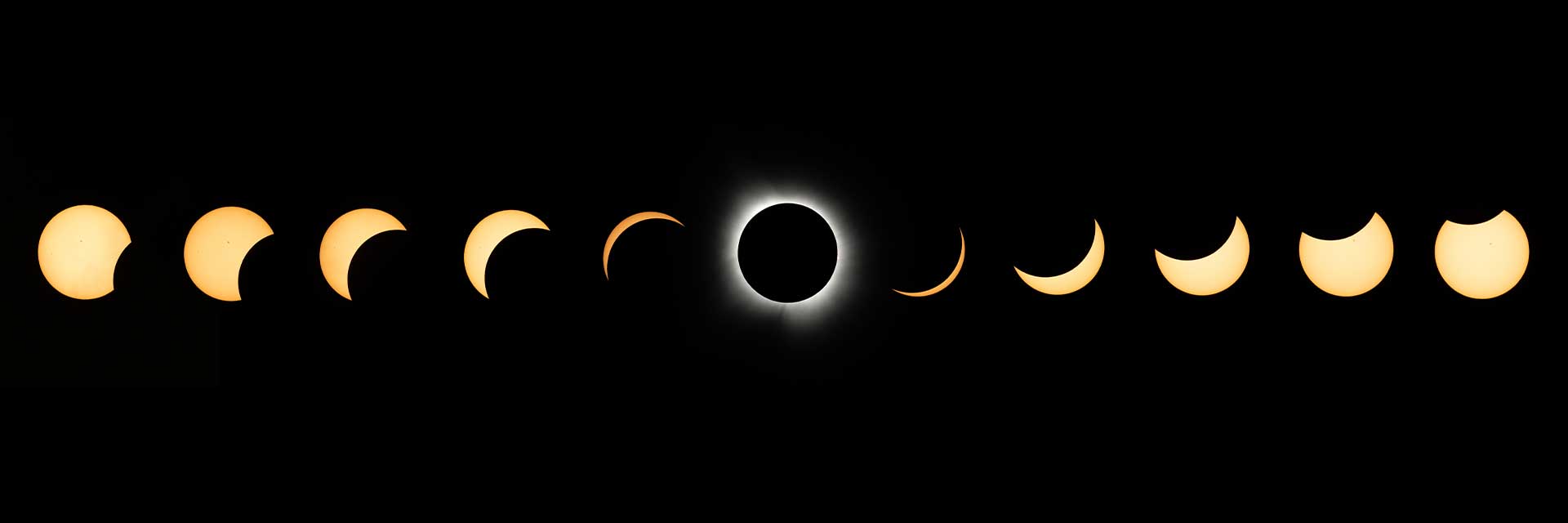
Partial solar eclipse progression — the view that awaits observers in Barcelona on August 12, 2026

Eclipse Guide · Barcelona · August 12, 2026

Barcelona Eclipse 2026: Partial Solar Eclipse Guide — Times, City Viewing & Safe Observation

Barcelona sits just outside the path of totality for the August 12, 2026 total solar eclipse — but with approximately 93% maximum coverage, the city will experience a deep partial eclipse that ranks among the most dramatic celestial events visible from the Catalan capital this decade. This guide covers the exact timing, the best urban viewing locations, and how to experience the profound dimming of a 93% partial eclipse safely.

Max. coverage~93% partial
Partial begins~7:47 PM CEST
Maximum eclipse~9:02 PM CEST
Sun altitude~6–8° at max
By Telescope Advisor Editorial Team Published: Updated: Editorial Standards

Quick Answer: What Will the Eclipse Look Like from Barcelona?

Barcelona will experience a deep partial eclipse reaching approximately 93% coverage at maximum. This means 93% of the Sun's diameter will be covered by the Moon — reducing the Sun to a dramatic, slender crescent. The sky will dim noticeably, though not to the darkness of totality. The temperature will drop by several degrees, and the quality of light will become eerie and metallic — similar to the light just before a severe thunderstorm, but quieter and more surreal.

Barcelona is not in the path of totality, so the corona will not be visible. This is the key difference between being in Barcelona versus driving 2 hours west to Zaragoza, where totality occurs. In Barcelona, you will see the Sun reduced to a thin crescent, with the sky taking on a deep twilight blue — but the Sun's bright photosphere will never be fully covered, meaning ISO-certified eclipse glasses are required at ALL times. You cannot look at the partially eclipsed Sun without protection, even at 93% coverage.

Should you drive to the path of totality? If you can — yes. The difference between a 93% partial and 100% totality is genuinely the difference between night and day (literally). The 2-hour drive from Barcelona to Zaragoza puts you in totality for about 1 minute 15 seconds. If you cannot travel, Barcelona's deep partial eclipse is still a profoundly memorable event — one that will not recur from this location until decades later.

Barcelona Eclipse Timing — August 12, 2026

All times below are in Central European Summer Time (CEST, UTC+2). The eclipse occurs in the late afternoon and early evening, with maximum coverage occurring as the Sun sits low in the north-western sky. Sunset in Barcelona on August 12 is approximately 8:50 PM CEST — meaning the maximum eclipse occurs just after sunset, when the Sun is already very close to or slightly below the horizon. The final phases of the eclipse will not be visible as the Sun will have set.

Phase Time (CEST) What's Happening
Partial eclipse begins (C1) ~7:47 PM The Moon's limb first touches the Sun's disc. Use solar glasses to watch the initial notch appear on the Sun's edge. The Sun is still relatively high (~25°).
Maximum eclipse ~9:02 PM 93% of the Sun's diameter is covered. The Sun appears as a thin crescent. Sky dims dramatically. Temperature drops. This is the most photogenic moment — just after sunset, meaning the thin solar crescent may be low on the horizon.
Sunset ~8:50 PM The Sun drops below the north-western horizon. From this point onward, the remaining partial phases are not visible from Barcelona city centre. An elevated viewing location could extend visibility by a few minutes.
Partial eclipse ends (C4) ~10:18 PM The Moon leaves the Sun's disc — but this occurs long after sunset and is not visible from Barcelona.

Critical timing note: the Sun sets before maximum eclipse

Maximum eclipse (9:02 PM) occurs about 12 minutes after sunset (8:50 PM) in Barcelona. This means the most dramatic phase — when 93% of the Sun is covered — will be at or very near the horizon. You need an elevated viewing location with a completely unobstructed north-western view to see maximum coverage. A hilltop, high-rise rooftop, or the top of Montjuïc will give you the extra minutes you need. From ground level in the city streets, the Sun may disappear behind buildings before maximum coverage is reached.

What 93% Partial Coverage Looks and Feels Like

If you have never experienced a deep partial eclipse above 90%, you are in for a genuine surprise. The difference between an 80% partial and a 93% partial is much larger than the numbers suggest. At 93%, the remaining uncovered sliver of the Sun is so thin that the light intensity drops dramatically — think of it like the last few seconds before the Sun fully sets, but stretched into several minutes.

Here is what to expect during the peak moments around 9:00 PM on August 12 from Barcelona:

The light changes

The most striking effect is the quality of light. Shadows become sharper and more defined than normal — this is because the remaining sunlight comes from a very small source (the thin crescent), which casts harder-edged shadows. Look at the ground beneath a leafy tree: you will see hundreds of tiny crescent-shaped shadows (pinhole projections of the eclipsed Sun) dappling the ground. This effect is strongest between 90% and 95% coverage. The overall light level will drop to approximately the equivalent of civil twilight — deep enough that streetlights may begin to flicker on in some areas.

Temperature and wildlife

The temperature in Barcelona during the eclipse will drop by an estimated 4–7°C (7–13°F). This rapid cooling often triggers noticeable animal behaviour: birds may stop singing and return to their nests, insects become quieter, and if you are near the coast or Parc de Montjuïc, you may hear a noticeable change in ambient sound levels. Dogs have been known to become confused or anxious during deep partial eclipses. The temperature drop combined with the dimming light creates an atmosphere that is unmistakably "eclipsy" — even at 93% rather than 100%.

What you WON'T see from Barcelona

Because Barcelona is outside the path of totality, you will not see the solar corona — the Sun's outer atmosphere that becomes visible only when 100% of the photosphere is covered. This is the single most spectacular feature of a total solar eclipse. You also will not experience true darkness — the sky will look more like deep twilight than night. The brightest stars and planets will not appear. If you can travel to the path of totality (Zaragoza, just 2 hours west by car or AVE train), we strongly recommend it. But even in Barcelona, a 93% partial eclipse is a rare and unforgettable experience — the next one this deep from Barcelona will not occur for many decades.

Best Viewing Spots in Barcelona for the Eclipse

Because the maximum eclipse occurs just after sunset, finding a location with an unobstructed north-western horizon is absolutely essential. Barcelona has several outstanding elevated locations that provide the horizon clearance you need. Here are the best options ranked.

1. Montjuïc Hill — Best Overall for Horizon Clearance

The hill of Montjuïc rises 173 metres above sea level on Barcelona's south-western edge, offering panoramic views over the city and the Mediterranean. For the eclipse, the key advantage is the unobstructed horizon to the north-west — Montjuïc's summit and the area around the Castell de Montjuïc provide clear sightlines over the city and the Llobregat delta towards the western horizon. The open spaces around the MNAC (Museu Nacional d'Art de Catalunya) and the Magic Fountain are also good, though slightly lower. Montjuïc is accessible by metro (Passeig de Gràcia on L2 and L3, then the Montjuïc funicular from Paral·lel station).

2. Bunkers del Carmel (Turó de la Rovira) — Best Panoramic View

The Bunkers del Carmel — a former anti-aircraft battery atop Turó de la Rovira, 262 metres above the city — offer Barcelona's most famous panoramic viewpoint. The 360° view extends from the Mediterranean to the Collserola hills and beyond. For the eclipse, the north-western perspective is excellent, with clear sightlines over the city towards the Serra de Collserola and beyond. This is likely to be the most popular eclipse viewing location in Barcelona, so arrive by 5:00 PM at the latest. Bring a blanket, snacks, and your eclipse glasses. The Bunkers are accessible by bus (V17 or 24) with a short uphill walk.

3. Park Güell — Most Iconic Setting

Antoni Gaudí's UNESCO-listed park on Carmel Hill (~150 metres elevation) offers a uniquely Barcelona setting for eclipse viewing. The main terrace area provides an expansive view over the city towards the north-west. The park's opening hours are until 9:30 PM in summer (last entry 8:00 PM), so you can access the monumental zone for the eclipse. The free upper area of the park (accessible 24 hours) also offers good views if you cannot get timed tickets. Note that the park will be extremely busy on eclipse day — book tickets well in advance.

4. Beachfront (Barceloneta / Bogatell) — Easy Access

Barcelona's beaches face south-east — away from the eclipse — so the beach is NOT a good viewing location for the partial eclipse itself. However, the western end of the Port Olímpic or the breakwater at the end of Barceloneta (where the beach curves around to face west) can work if you are willing to walk. In general, elevated locations are far superior for this particular eclipse because of the low Sun altitude. Stick with Montjuïc or the Bunkers for the best experience.

General advice for Barcelona eclipse viewing

August in Barcelona is hot (average high 29°C), humid, and the city is crowded with tourists. The eclipse occurs during peak tourist season. Factor in extra travel time for public transport and expect queues at popular viewing spots. Bring water, sun protection (for the partial phases when the Sun is still high), and your ISO-certified eclipse glasses. If you plan to drive to Montjuïc or the Bunkers, parking will be extremely limited — use public transport or a taxi.

Barcelona vs Other Spanish Cities: Eclipse Coverage Comparison

The August 12, 2026 eclipse is a total solar eclipse along a narrow path crossing northern Spain. Cities outside this path experience varying degrees of partial coverage. Here is how Barcelona compares to other major Spanish cities.

City Eclipse Type Coverage Time to Totality Best Feature
Barcelona Deep partial ~93% 2 hr drive to Zaragoza Beautiful urban setting, Mediterranean coast
Madrid Deep partial ~88% 2.5 hr drive to Valladolid Accessible to totality by high-speed train
Valencia Deep partial ~82% 3 hr drive to Mallorca or Zaragoza Best Mediterranean beach eclipse experience
Palma (Mallorca) Partial (near totality) ~99% 30 min drive to north coast totality Almost total from city; totality short drive away
Seville Moderate partial ~65% 6+ hr drive to totality Deep south — lower coverage, best for locals
Zaragoza TOTAL 100% Best weather odds + totality + easy access

Barcelona's 93% coverage makes it one of the best locations outside the path of totality. For comparison, the 1999 total eclipse visible from central Europe produced dramatic media coverage of the partial phases — and most viewers outside the path were amazed by the experience even at similar coverage levels.

The 2-Hour Drive to Totality: The Zaragoza Option

If you are in Barcelona on August 12, you have a relatively quick escape route to totality. Zaragoza — approximately 300 km west of Barcelona — lies well within the path of totality and offers about 1 minute 15 seconds of complete solar coverage. The city is accessible by both car (AP-2 motorway, approximately 2 hours 15 minutes) and high-speed AVE train (approximately 1 hour 30 minutes from Barcelona Sants station).

For those considering the drive, here is a suggested timeline. Leave Barcelona by 2:00 PM to arrive in Zaragoza by 4:15 PM with time to find a viewing location. Set up at a location with an unobstructed north-western view — the Parque Grande José Antonio Labordeta or the area around the Expo 2008 site on the banks of the Ebro river are both excellent choices. The partial eclipse begins in Zaragoza at approximately 7:45 PM CEST, with totality from about 8:58 PM to 9:00 PM (approximately 1 minute 15 seconds). After totality, you can drive back to Barcelona (arriving around 11:30 PM) or stay overnight in Zaragoza.

The AVE high-speed train is the stress-free alternative. The 1.5-hour journey from Barcelona Sants to Zaragoza Delicias station costs approximately €60–€90 round trip if booked in advance. Trains run frequently in the afternoon. From Zaragoza Delicias, it is a 20-minute walk or short taxi ride to the city's best viewing locations. Book your tickets as early as possible — eclipse day trains to Zaragoza from Barcelona will sell out.

Our recommendation: make the trip

If you are physically able to travel and can arrange transport, we strongly recommend going to Zaragoza for the full total eclipse experience. The difference between 93% and 100% is not incremental — it is transformative. The corona, the diamond ring, the 360° sunset horizon, the emergence of bright stars and planets in daytime — none of these are visible from Barcelona. A 2-hour drive or 1.5-hour train journey is a small investment for an experience that ranks among the most profound natural phenomena on Earth. If you absolutely cannot travel, however, Barcelona's 93% partial eclipse remains a deeply memorable celestial event.

Barcelona Weather in August: What to Expect

Barcelona has a Mediterranean climate with hot, dry summers. August is the warmest month, with average high temperatures of 29°C (84°F) and average lows of 23°C (73°F). The good news for eclipse viewers is that August afternoon cloud cover in Barcelona averages only about 25–35% — significantly lower than Atlantic-coast locations like A Coruña (55–65%).

The typical August afternoon weather pattern in Barcelona involves clear skies in the morning and early afternoon, with some cumulus cloud development over the Collserola hills in the late afternoon. However, these clouds tend to be scattered and dissipate towards sunset — which is exactly when the eclipse occurs. The coastal location also means that the sea breeze (southern/south-eastern wind) keeps the air moving and helps keep skies clear.

The main weather risk for the Barcelona eclipse is not cloud cover, but the low Sun altitude coupled with the Mediterranean haze layer. Even on a clear day, the horizon in Barcelona often has a band of haze or light pollution that dims and reddens the Sun when it is below 10° altitude. For the maximum eclipse at ~6° altitude, this haze will reduce contrast. Observers at higher elevations (Montjuïc, Bunkers del Carmel) will have a significant advantage over ground-level viewers because they are above the densest layer of the haze.

Solar Safety for Deep Partial Eclipses

The safety rule for a partial eclipse is absolute: ISO 12312-2 certified eclipse glasses must be worn at all times when looking at the Sun. Even at 93% coverage, the remaining 7% of the Sun's photosphere is intense enough to cause permanent retinal damage. The eclipse glasses block 99.999% of visible light and 100% of harmful ultraviolet and infrared radiation.

Barcelona's deep partial eclipse presents a particular psychological risk: because the sky will dim dramatically and the remaining solar crescent will be very thin, there is a temptation to remove eclipse glasses "just for a second" to see the thin crescent more clearly. This is extremely dangerous. The thin crescent is still intensely bright — it is the same surface brightness as the full Sun — and looking at it without protection for even a few seconds can cause permanent retinal damage. Keep your glasses on throughout the partial phases. The only time it is safe to view a solar eclipse without protection is during totality, which Barcelona will not experience.

Essential gear for Barcelona

  • ISO 12312-2 certified eclipse glasses (one pair per person)
  • Solar telescope filter (if bringing a telescope)
  • Solar binoculars (optional, but excellent for handheld viewing)
  • Pinhole projector (easy DIY alternative for groups)

Products we recommend

  • Helioclipse Eclipse Glasses 12-Pack — best value for groups
  • Celestron EclipSmart 10×25 Solar Binoculars — safe handheld viewing
  • Celestron EclipSmart Universal Solar Filter — for telescope users
Editor's Pick — Best Eclipse Glasses
Helioclipse Eclipse Glasses 12-Pack — ISO-certified eclipse eyewear

Helioclipse Eclipse Glasses 12-Pack

ISO 12312-2 certified 12 pairs CE certified

The Helioclipse 12-pack provides enough ISO 12312-2 certified eclipse glasses for a family or small group at a per-unit cost of under $2. Every person watching the partial phases from Barcelona needs their own pair. The glasses block 99.999% of visible light and meet the international safety standard for direct solar viewing.

View on Amazon →

Affiliate link — we may earn a small commission at no extra cost to you.

Celestron EclipSmart 10x25 Solar Binoculars — safe handheld solar viewing

Celestron EclipSmart 10×25 Solar Binoculars — Best handheld solar viewing

10× magnification ISO 12312-2 certified Built-in solar filter

Solar binoculars with permanently mounted solar filters offer the best portable eclipse viewing experience. The 10× magnification lets you see the Moon's progress across the solar disc in vivid detail — including any sunspots that may be present on the solar surface during the partial phases. The permanently installed filters are non-removable, guaranteeing safe operation at all times.

View on Amazon →

Affiliate link.

Celestron EclipSmart Universal Solar Filter — telescope solar filter

Celestron EclipSmart Universal Solar Filter — For telescope users

ISO 12312-2 certified Fits 4–8 inch scopes Baader Planetarium film

If you plan to bring a telescope to Montjuïc or the Bunkers for the eclipse, a solar filter is non-negotiable. The Celestron EclipSmart Universal Solar Filter uses Baader Planetarium solar film — the industry standard for safe white-light solar observation — and fits telescopes with objective lenses from 4 to 8 inches in diameter. With it, you can watch sunspots and the Moon's silhouette in crisp detail throughout the partial phases.

View on Amazon →

Affiliate link.

Prices and availability subject to change. All product links are affiliate links — see our editorial standards for our review process.

Photographing the Partial Eclipse from Barcelona

A 93% partial eclipse at sunset, with the Mediterranean coastline in the foreground, offers some of the most striking eclipse photography opportunities available anywhere outside the path of totality. Here are specific tips for capturing the event from Barcelona.

Smartphone photography

  • Use a solar filter over your phone's lens for partial phases
  • Frame the thin solar crescent with Barcelona's skyline (Sagrada Familia silhouette, Montjuïc, or the Mediterranean horizon)
  • Use the phone's "Pro" or manual mode: ISO 100–200, 1/500th to 1/1000th sec shutter for the partially eclipsed Sun
  • A tripod or phone mount is essential for sharp images in low-light conditions near maximum eclipse
  • For the maximum eclipse at sunset, you may be able to capture the thin crescent just above the horizon without a filter during the brief moment of deepest coverage — but only if the Sun is very low and dimmed by the horizon haze. Be extremely careful.

DSLR / Mirrorless photography

  • 200mm–500mm lens for detailed solar crescent images
  • Solar filter mandatory for all partial phase shots (removable only if Sun is very low and dimmed by horizon haze)
  • ISO 100–400, f/8–f/16, 1/500th to 1/2000th sec for partial phases with filter
  • Wide-angle shot (24–50mm) with the Barcelona skyline at maximum eclipse — the dimming light will be stunning
  • Shoot in RAW for maximum post-processing flexibility
  • Bracket exposures around maximum eclipse — the dynamic range between the thin crescent and the twilight sky is extreme

Composition tip: Barcelona's skyline at maximum eclipse

The most memorable photographs from the Barcelona eclipse will not be close-ups of the solar crescent — they will be wide shots that capture the city's iconic skyline under the eerie twilight of a 93% eclipsed Sun. Position yourself on Montjuïc or the Bunkers del Carmel with the city spread below you. The combination of the thin solar crescent low on the horizon, the Mediterranean Sea, and Barcelona's architecture will create images that are instantly recognisable and deeply atmospheric.

Barcelona Eclipse 2026 — FAQ

Will Barcelona experience totality during the August 12, 2026 solar eclipse?

No — Barcelona is not in the path of totality. The city will experience a deep partial eclipse with approximately 93% maximum coverage. The solar corona will not be visible. If you want to experience totality, you need to travel to Zaragoza (about 2 hours west by car or 1.5 hours by AVE train), which lies within the path of totality and offers about 1 minute 15 seconds of complete coverage.

What time is the eclipse in Barcelona on August 12, 2026?

The partial eclipse begins at approximately 7:47 PM CEST, with maximum coverage (~93%) occurring around 9:02 PM CEST. However, sunset in Barcelona is at approximately 8:50 PM CEST — meaning maximum eclipse occurs just after sunset. You need an elevated viewing location with an unobstructed north-western horizon to see maximum coverage.

Do I need eclipse glasses for a 93% partial eclipse?

Yes — absolutely. Even at 93% coverage, the remaining visible portion of the Sun is intensely bright and can cause permanent retinal damage. ISO 12312-2 certified eclipse glasses are required at all times during the partial phases. The only time it is safe to view the Sun without protection is during totality, which Barcelona will not experience.

Where is the best place in Barcelona to watch the eclipse?

The best viewing locations are elevated spots with unobstructed north-western horizons. Montjuïc Hill (especially around Castell de Montjuïc and MNAC) and the Bunkers del Carmel (Turó de la Rovira) are excellent choices. Park Güell offers a beautiful but crowded setting. All locations require arriving by 5:00 PM to secure a good spot.

Should I drive from Barcelona to see the total eclipse?

If you can, yes. Zaragoza is approximately 2 hours from Barcelona by car (AP-2 motorway) or 1.5 hours by AVE high-speed train. The difference between a 93% partial eclipse and 100% totality is profound — the corona, diamond ring, and 360° sunset are only visible from within the path of totality. Book eclipse day train tickets well in advance as they will sell out.

Will the sky go dark in Barcelona during the eclipse?

The sky will become noticeably darker — similar to deep civil twilight — but it will not become dark enough to see stars or planets. The quality of light will become eerie and metallic, with sharp-edged shadows and crescent-shaped projections under trees. The temperature will drop by several degrees.

Related Guides