Oviedo Eclipse 2026: Total Solar Eclipse Guide — Times and Asturias Viewing
Telescope Advisor Logo Telescope Advisor
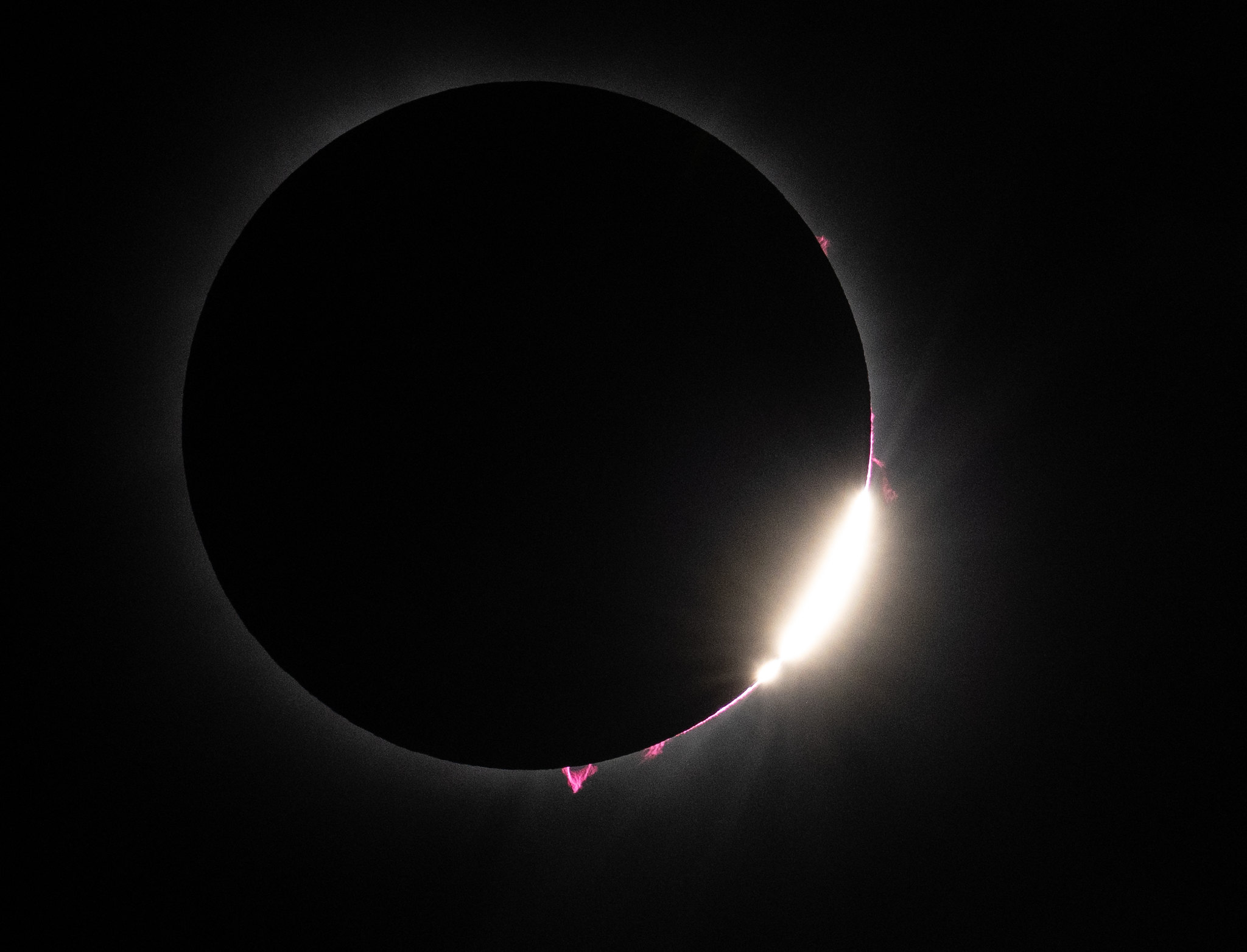
Total solar eclipse showing prominences and Bailey's beads — the spectacle awaiting observers in Oviedo and Asturias on August 12, 2026

Eclipse Guide · Oviedo · August 12, 2026

Oviedo Eclipse 2026: Total Solar Eclipse Guide — Times, Mountain & Coast Viewing in Asturias

Oviedo, the capital of Asturias in northern Spain, lies within the path of totality for the August 12, 2026 total solar eclipse. With approximately 1 minute 30 seconds of totality, Oviedo offers eclipse chasers a unique combination of mountainous terrain and Atlantic coastline — but the rugged geography also presents specific challenges for finding an unobstructed western horizon. This guide covers everything you need to know to plan your Oviedo eclipse experience.

Totality duration~1 min 30 sec
Totality begins~8:58 PM CEST
Sun altitude~6–7° above NW
Cloud cover odds~55–65% August
By Telescope Advisor Editorial Team Published: Updated: Editorial Standards

Quick Answer: Is Oviedo a Good Place for the 2026 Total Eclipse?

Oviedo is an excellent but challenging eclipse destination. It offers approximately 1 minute 30 seconds of totality — slightly less than A Coruña to the west but still a very respectable duration. The city's location in the Asturian foothills, surrounded by the mountainous landscape of northern Spain, creates both opportunities and obstacles for eclipse viewers.

The key advantage of Oviedo is that it offers two distinct viewing environments within a short drive: the mountains of the Picos de Europa to the east and the rugged Asturian coast to the north. If clouds block the view from one environment, you can drive to the other. This flexibility is unique among Spanish totality cities — most offer only one geographic option.

The key challenge is the mountainous terrain itself. Oviedo is surrounded by hills and ridges that can block the low north-western horizon where the eclipsed Sun will sit at only 6–7° altitude. Finding a viewing site with a completely unobstructed north-western horizon requires careful site selection — ideally scouted in advance. The coastal viewing options near Gijón or Avilés (20–30 minutes north of Oviedo) offer flatter horizons and may be safer choices for eclipse-first visitors.

Oviedo Eclipse Timing & Totality Window — August 12, 2026

All times below are in Central European Summer Time (CEST, UTC+2). As with all Spanish totality locations, the eclipse occurs in the late afternoon and early evening, with the Sun low in the north-western sky.

Phase Time (CEST) What's Happening
Partial eclipse begins (C1) ~7:43 PM The Moon's limb first touches the Sun's disc. Use solar glasses or a filtered telescope to watch the first notch appear on the solar limb.
Totality begins (C2) ~8:57 PM The Moon completely covers the Sun. Remove all filters — the corona is safe to view with the naked eye. Duration: ~1 minute 30 seconds.
Maximum eclipse ~8:58 PM Mid-totality. The Sun at ~6–7° altitude in the north-west. Look for the diamond ring effect moments before and after totality.
Totality ends (C3) ~8:59 PM Replace solar filters immediately. The partial phases resume as the Moon begins to uncover the Sun.
Partial eclipse ends (C4) ~10:12 PM The Moon leaves the Sun's disc. Sunset in Oviedo is approximately 9:30 PM, so the later partial phases will not be visible.

Critical: low Sun + mountainous terrain = horizon clearance is everything

The Sun is only 6–7° above the north-western horizon during totality in Oviedo. In a mountainous region like Asturias, ridges and hills that rise more than a few degrees above the horizon will completely block the eclipse. This is the most important factor in choosing your Oviedo viewing location. The city itself is in a valley surrounded by hills — you almost certainly need to drive to an elevated or coastal location with a clear north-western view. Do not assume that any random park or plaza in Oviedo will work; scout your location in advance, ideally at the same time of day (around 8:30–9:00 PM) on August 11.

Asturias Geography: Mountain vs Coast Viewing

Asturias is one of Spain's most geographically diverse regions. The southern part of the province is dominated by the Picos de Europa mountain range — dramatic limestone peaks that rise to over 2,600 metres. The northern edge of Asturias is the Cantabrian Sea coast, a rugged shoreline of cliffs, headlands, and hidden beaches. Oviedo sits in the central Asturian foothills, approximately 25 km inland from the coast at an elevation of about 230 metres above sea level.

This geography creates two distinct eclipse-viewing strategies. The coastal strategy involves driving north from Oviedo to the Asturian coast (Gijón, Avilés, or the headlands between them), where the horizon over the Cantabrian Sea is completely flat and unobstructed. This is the safer, more reliable option for most eclipse visitors — the ocean horizon eliminates the terrain obstruction problem entirely.

The mountain strategy involves driving south or east from Oviedo into the Picos de Europa foothills, where you can gain significant elevation — potentially putting you above any low-lying cloud or haze. However, mountain ridges can also block the horizon, so you need to find a westward-facing slope or summit with a clear line of sight to the north-western horizon. This is the option for experienced mountain travellers with a vehicle capable of reaching elevated viewpoints on potentially rough roads.

Coastal viewing advantages

  • Flat ocean horizon — no terrain obstruction
  • Sea breeze can keep skies clearer than inland
  • Easy access from Oviedo (20–30 min drive)
  • Urban infrastructure in Gijón and Avilés
  • No mountain driving or hiking required

Mountain viewing advantages

  • Higher elevation above low cloud/haze
  • Dramatic landscape photography backdrop
  • Potentially above the Atlantic sea fog layer
  • Less crowded than coastal or city locations
  • Unique "eclipse from the mountains" experience

Best Viewing Spots in Oviedo and Asturias

Here are the best-elevated and best-situated viewing locations in and around Oviedo for the eclipse, ranked by horizon clearance, accessibility, and reliability.

1. Monte Naranco — Best Oviedo-Area Location

Monte Naranco is the hill that rises to the north-west of Oviedo city centre, reaching about 630 metres elevation — roughly 400 metres above the city. This is the closest elevated viewing location to Oviedo and offers panoramic views over the city and the Cantabrian Mountains to the north and west. The summit area, accessible by car via a winding road from Oviedo (about 15 minutes from the city centre), provides the best horizon clearance in the immediate Oviedo area. The views to the north-west — directly along the eclipse azimuth — stretch over the coastal plain towards the sea. Arrive early (by 4:00 PM) as access roads are narrow and parking at the summit is limited.

2. Cabo Peñas — Best Coastal Headland

Cabo Peñas is the northernmost point of Asturias, a dramatic headland about 45 km north of Oviedo (approximately 40 minutes by car via the A-8 motorway to Gozón, then local roads to the cape). The lighthouse at Cabo Peñas sits atop 100-metre cliffs with a completely unobstructed 270° view of the Cantabrian Sea. The north-west horizon — exactly where the eclipsed Sun will be — is absolutely clear. This is arguably the best coastal eclipse viewing location in all of Asturias, combining accessibility with a spectacular natural setting. The area around the lighthouse has ample open space and parking. Arrive by 4:00 PM to secure your spot.

3. San Esteban de Pravia / Playa de San Pedro — Beach + Headland Combo

The area around the beach of San Pedro de la Ribera, near the mouth of the Río Nalón, offers a combination of beach and headland viewing. The western side of the beach provides clear views to the north-west over the sea, and the low cliffs on the approach to the beach offer slight elevation. This location is approximately 35 km north of Oviedo (about 35 minutes via the A-8 to Pravia, then coastal roads). The advantage here is the sheltered aspect — the cliffs block the wind while the sea horizon remains clear. The town of San Esteban de Pravia has limited facilities, so bring everything you need.

4. Puerto de Somiedo — Mountain Option (Advanced)

For experienced mountain travellers, the Somiedo Natural Park south-west of Oviedo offers high-altitude viewing above the cloud layer. The Puerto de Somiedo mountain pass sits at approximately 1,500 metres elevation. From the pass, the views to the north and west stretch over the Asturian mountains towards the sea. This location is about 80 km from Oviedo (1 hour 15 minutes drive via the AS-15 highway, then mountain roads). This option is only recommended if you have a suitable vehicle (high-clearance or 4WD recommended), experience with mountain driving, and are confident in your ability to navigate the roads after sunset. The advantage: you are above most cloud layers and atmospheric haze, giving you the clearest possible view of the corona.

General advice for Oviedo area viewing

Regardless of which location you choose, arrive at least 3 hours before totality (by 5:30 PM) to set up equipment, check your horizon, and settle in. The partial phases from 7:43 PM onwards are a beautiful prelude and should not be rushed. Bring warm clothing — even in August, the Asturian coast and mountains can be cool, especially after sunset when the eclipse ends and temperatures drop rapidly. If using a telescope, ensure your solar filter is securely mounted before pointing at the Sun. Practice the filter-removal sequence so you can transition smoothly during the brief 90 seconds of totality.

Coastal Alternatives: Gijón, Avilés & the Asturian Coast

If you are staying in Oviedo but want the safety of a coastal viewing location, the cities of Gijón and Avilés are both excellent alternatives. They are close enough to Oviedo to drive to on eclipse day but offer the flat ocean horizon that Oviedo's valley location cannot provide.

Gijón (30 km north of Oviedo, 25-minute drive via A-66/A-8) is Asturias's largest city. The western end of the San Lorenzo beach (Playa de San Lorenzo) and the headland of Cerro de Santa Catalina (home to the Eduardo Chillida sculpture "Elogio del Horizonte") offer outstanding north-western views over the Cantabrian Sea. The Cerro is elevated about 80 metres above sea level and provides a clear horizon — one of the best urban eclipse viewing locations in all of northern Spain.

Avilés (25 km north of Oviedo, 20-minute drive via A-66) is smaller and historically less touristy than Gijón. The best viewing location in Avilés is the Paseo de la Ribera along the Ría de Avilés estuary, near the Oscar Niemeyer International Cultural Centre. The open plaza in front of the Niemeyer Centre offers wide views to the north-west over the estuary — an iconic modernist backdrop for the eclipse. Avilés will be less crowded than Gijón on eclipse day.

Both Gijón and Avilés have AVE high-speed train connections to Oviedo (approximately 20–30 minutes), and local trains and buses run frequently. If you do not have a car, taking the train to Gijón for the eclipse is a practical and stress-free option. The last trains back to Oviedo after the eclipse (around 10:30–11:00 PM) should be available — but check the schedule in advance.

Weather: Atlantic North Coast Patterns

Oviedo and the Asturian coast share a similar Atlantic climate to A Coruña — which means similar cloud cover challenges. Historical August cloud cover in Oviedo averages approximately 55–65%, comparable to A Coruña and significantly higher than inland meseta locations like Burgos (~35%) or Zaragoza (~30%). The Atlantic weather patterns that affect Asturias are driven by westerly winds bringing moist air from the ocean, which condenses into cloud and fog as it meets the Cantabrian Mountains.

However, there is an important local dynamic that can work in your favour. The Cantabrian Mountains force incoming moist air to rise, cool, and condense — this creates more cloud cover on the southern (inland) side of the coastal plain than on the coast itself. In practice, this means that the coastal strip from Gijón westwards to Cabo Peñas often has less cloud cover than Oviedo, which is 25 km inland. On days when Oviedo is overcast, the coast can be clear. This is a strong argument for basing your eclipse viewing on the coast rather than in the city.

August temperatures in Oviedo and the Asturian coast average 18–23°C (64–73°F) — pleasant but cooler than inland Spain. The sea breeze can make the coast feel noticeably cooler than Oviedo, so bring layers. There is always a chance of rain (August averages about 6–8 rainy days), but most rain in Asturias comes in the form of short showers rather than persistent drizzle. The eclipse window (7:30–9:30 PM) is statistically one of the drier periods of the August day.

Oviedo vs A Coruña: Which Atlantic City Is Better for the Eclipse?

Oviedo and A Coruña are the two Atlantic-coast totality cities in northern Spain. They share similar weather patterns and total eclipse durations — but there are meaningful differences that could influence your choice.

Factor Oviedo A Coruña
Totality duration ~1 min 30 sec ~1 min 40 sec
Sun altitude at max 6–7°
Terrain challenge High — mountainous, valley city Low — coastal city, flat ocean horizon
Coastal access 25 min drive to coast City is on the coast
Mountain option Yes — Picos de Europa nearby No — flat coastal terrain
Tourist crowds Moderate — fewer international tourists High — popular cruise ship stop
Weather odds 55–65% cloud cover 55–65% cloud cover
Best for Mountain + coastal flexibility Easy viewing, longest duration

Our recommendation

If you want the simplest, lowest-risk eclipse viewing experience, choose A Coruña — the city is directly on the coast with easy promenade and headland access to a flat ocean horizon, and you gain 10 seconds of totality. If you are drawn to the idea of combining the eclipse with the dramatic landscapes of the Picos de Europa, or you want the flexibility of both mountain and coastal viewing options, choose Oviedo. Either way, have a backup plan: Oviedo's coastal alternatives (Gijón, Avilés, Cabo Peñas) are excellent options if the Oviedo valley is cloudy on eclipse day.

Solar Safety & Telescope Setup for Mountainous Terrain

The mountainous terrain around Oviedo adds complexity to the already-critical task of safe solar observation. Here are the essential products and setup tips for eclipse viewing in Asturias.

Editor's Pick — Premium Eclipse Viewing
Lunt Solar Eclipse Glasses 5-Pack — ISO-certified premium eclipse eyewear

Lunt Solar Eclipse Glasses 5-Pack

ISO 12312-2 certified Premium printed cardboard 5 pairs

Lunt Solar is one of the most respected names in solar observing equipment, and their eclipse glasses are widely considered the gold standard for comfort and optical clarity. The 5-pack is perfect for a small family or travel group heading to Oviedo or the Asturian coast for the eclipse. Each pair is individually certified to ISO 12312-2 and comes in a protective sleeve. The rigid cardboard frame is more durable than budget alternatives — important if you're hiking to a mountain viewing site where equipment gets knocked around in a backpack.

View on Amazon →

Affiliate link — we may earn a small commission at no extra cost to you.

Celestron EclipSmart 70mm Solar Filter — solar safety for small telescopes

Celestron EclipSmart 70mm Solar Filter — For smaller telescopes

Specifically for 70mm scopes ISO 12312-2 certified Baader Planetarium film

If you are bringing a compact travel telescope — a 70mm refractor or small Maksutov — the Celestron EclipSmart 70mm solar filter is the perfect match. It attaches securely over the telescope's objective lens using adjustable tension straps and uses Baader Planetarium solar safety film for crisp, high-contrast white-light solar views. During the partial phases, you will see sunspots and the Moon's silhouette in beautiful detail. The 70mm size is ideal for the kinds of portable telescopes that travellers to Oviedo might pack.

View on Amazon →

Affiliate link.

Celestron EclipSmart 10x25 Solar Binoculars — grab-and-go solar viewing

Celestron EclipSmart 10×25 Solar Binoculars — Best grab-and-go

10× magnification Permanently filtered ISO 12312-2 certified

For hikers heading to mountain viewing spots like Puerto de Somiedo or the Monte Naranco summit, the lightweight Celestron EclipSmart 10×25 solar binoculars are the ideal take-anywhere eclipse optic. At under 300 grams, they add negligible weight to your pack, require no setup, and are permanently safe for direct solar viewing. The 10× magnification brings the solar crescent into clear view during the partial phases, and during totality you can use them without the solar filter (since the Sun is completely covered) for a magnified view of the corona.

View on Amazon →

Affiliate link.

Prices and availability subject to change. All product links are affiliate links — see our editorial standards for our review process.

Travel & Accommodation in Asturias for the Eclipse

Asturias is well-connected but less internationally touristed than Spain's Mediterranean coast, which means accommodation is more available — though eclipse weekend will still fill up. Here is what you need to know for planning an Oviedo eclipse trip.

Getting to Oviedo: Asturias Airport (OVD) is located near Avilés, about 30 km north of Oviedo, with flights from major European cities including London, Paris, Brussels, and Frankfurt, as well as domestic flights from Madrid and Barcelona. The AVE high-speed train connects Oviedo to Madrid in approximately 3 hours 30 minutes, and to Barcelona in about 5 hours. By car from Madrid, the A-6 and A-66 motorways take about 4 hours 30 minutes to Oviedo.

Accommodation: Book eclipse weekend (August 10–13) as early as possible. Oviedo has a good range of hotels from budget to luxury, concentrated in the city centre and around the Calle Uría area. If Oviedo is fully booked, consider staying in Gijón (30 km north) or Avilés (25 km north), which offer more accommodation options and put you closer to the coastal viewing locations. Rural tourism accommodation (casas rurales) in the Asturian countryside is also an option — many are in elevated locations that could serve as eclipse viewing sites in their own right.

Getting around on eclipse day: Having a car is strongly recommended for the Oviedo eclipse. The best viewing locations (Monte Naranco, Cabo Peñas, mountain passes) are not accessible by public transport. If you do not have a car, the train to Gijón and Avilés is practical — both cities have coastal viewing locations within walking distance of their train stations. Taxis and ride-sharing services operate in Oviedo but will be in very high demand on eclipse evening.

Food and culture: Asturias is famous for its cider (sidra), seafood, and the hearty bean stew fabada asturiana. Plan to make a weekend of it: arrive August 11, scout your viewing location in the afternoon and enjoy the local cuisine in the evening, experience the eclipse on August 12, and spend August 13 exploring the Picos de Europa or the Asturian coast. The region's pre-Romanesque architecture (UNESCO-listed churches like Santa María del Naranco on Monte Naranco itself) adds a cultural dimension to your eclipse trip.

Oviedo Eclipse 2026 — FAQ

Is Oviedo in the path of totality for the 2026 eclipse?

Yes, Oviedo is within the path of totality. The city centre and surrounding areas in central Asturias will experience approximately 1 minute 30 seconds of total solar eclipse on August 12, 2026, beginning at approximately 8:57 PM CEST.

What time is the total eclipse in Oviedo?

The partial eclipse begins at approximately 7:43 PM CEST. Totality — when the Moon completely covers the Sun — begins at approximately 8:57 PM CEST and lasts about 1 minute 30 seconds. The maximum eclipse occurs around 8:58 PM CEST. Totality ends at approximately 8:59 PM CEST.

Where is the best place to watch the eclipse in Oviedo?

The best location near Oviedo is Monte Naranco (630m elevation, 15 minutes from the city centre), which offers panoramic views to the north-west. For the most reliable horizon clearance, drive to the Asturian coast: Cabo Peñas (45 km north) is the best coastal headland, while Gijón's Cerro de Santa Catalina and Avilés's Niemeyer Centre plaza are excellent urban coastal options.

What is the weather like in Oviedo in August?

Oviedo has an Atlantic climate with average August temperatures of 18–23°C (64–73°F). Cloud cover averages around 55–65% — similar to A Coruña. The coastal strip (Gijón, Cabo Peñas) can be clearer than inland Oviedo due to the rain shadow of the Cantabrian Mountains. Have a coastal backup plan.

Do I need eclipse glasses in Oviedo?

Yes — ISO 12312-2 certified eclipse glasses are essential for viewing the partial phases before and after totality. You need them from approximately 7:43 PM until totality begins at 8:57 PM, and again from 8:59 PM until sunset. During the ~90 seconds of totality, you can safely remove your glasses to view the corona with your naked eyes.

Should I choose Oviedo or A Coruña for the eclipse?

A Coruña offers longer totality (1 min 40 sec vs 1 min 30 sec) and easier coastal viewing without terrain challenges. Oviedo offers the unique combination of mountain and coastal viewing options, fewer international tourists, and the dramatic backdrop of the Picos de Europa. Choose based on your priorities: simplicity and duration (A Coruña) versus flexibility and landscape (Oviedo).

Related Guides